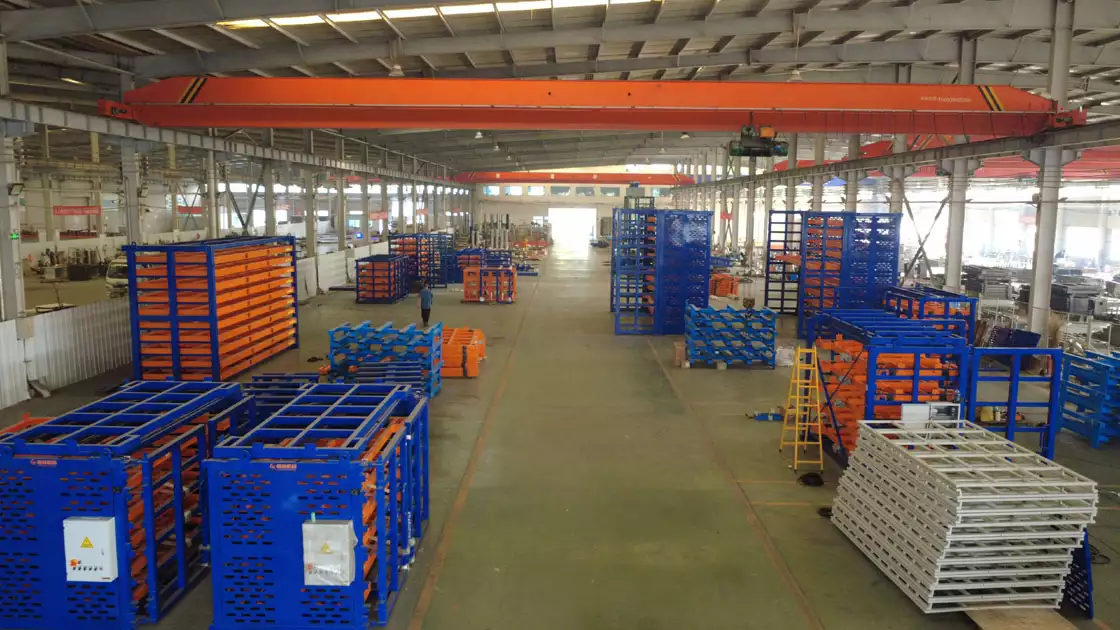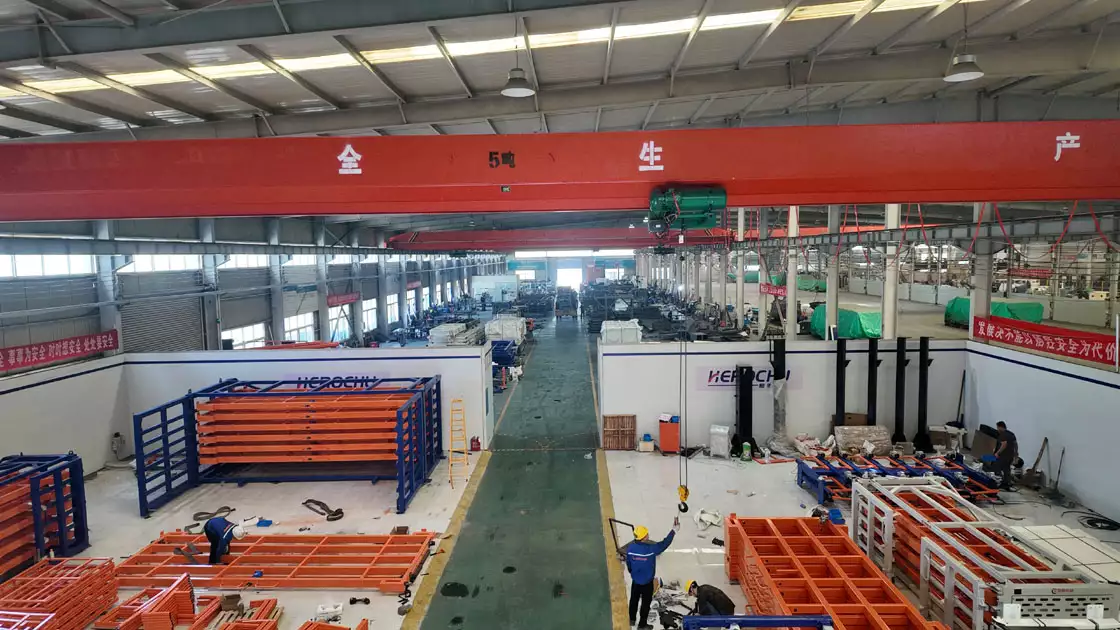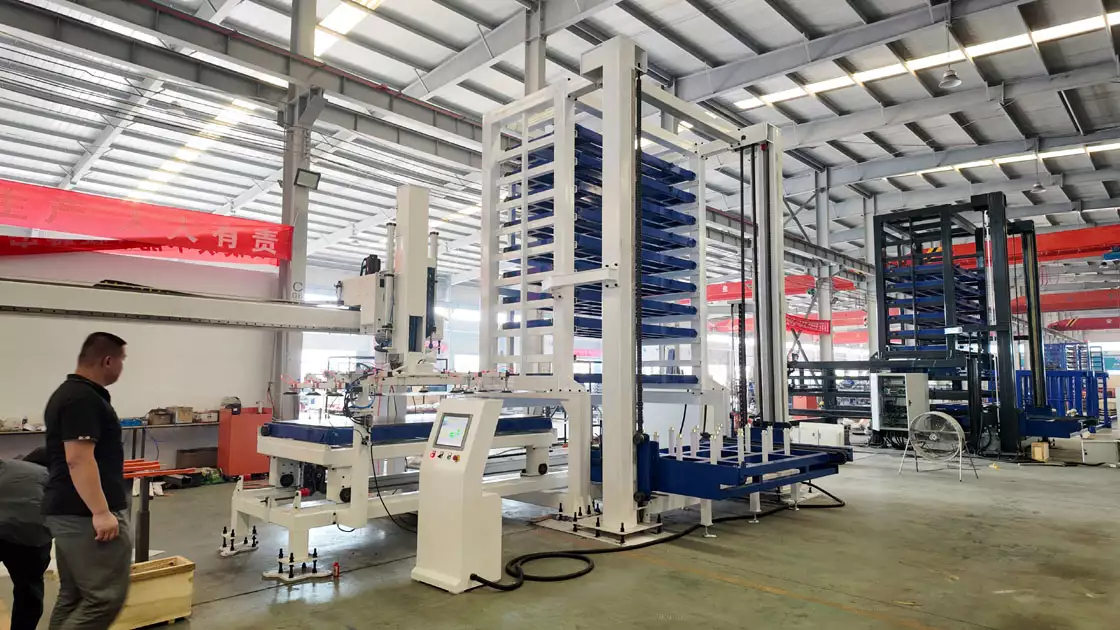
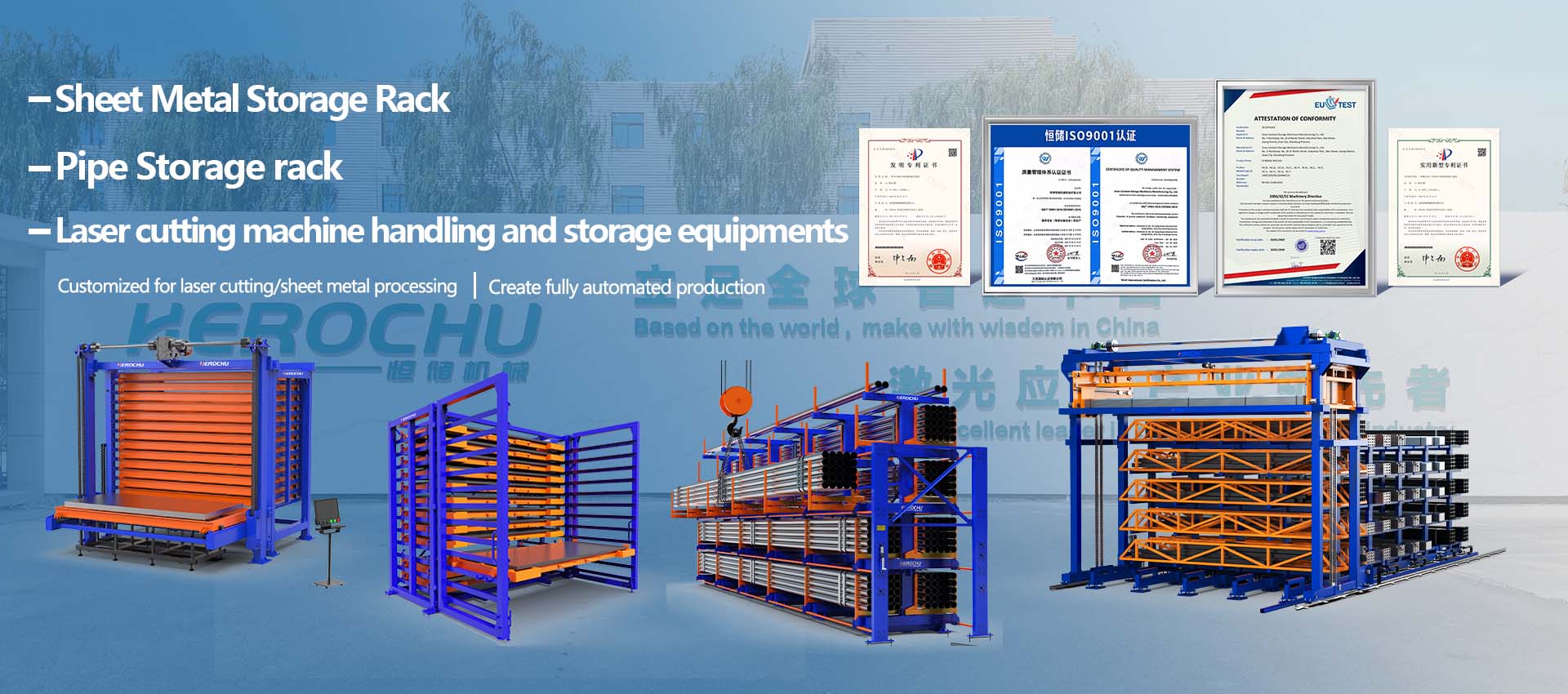
Production speed in a modern fabrication shop depends as much on how quickly material reaches the machine as it does on how quickly the machine processes it. A fiber laser table that spends 40 percent of its operating hours idle while an operator hunts for the next sheet of steel represents a significant capital inefficiency. The solution lies in material staging systems engineered for rapid single-operator access, and Herochu has developed its roll-out cantilever storage bed product line specifically to close this gap between material availability and machine throughput.
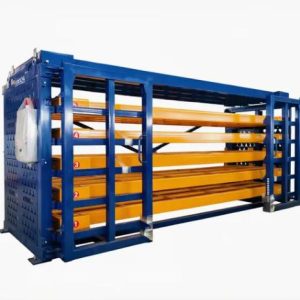
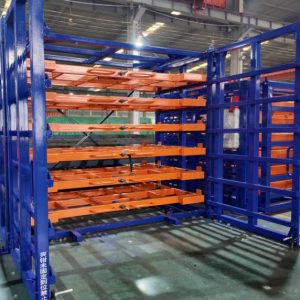
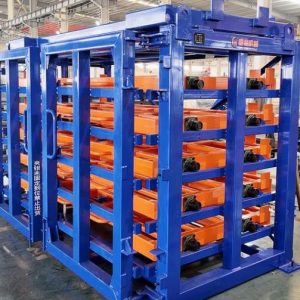
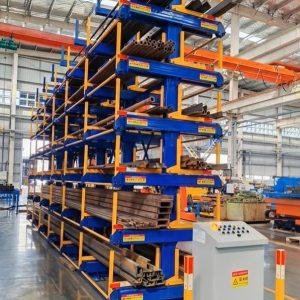
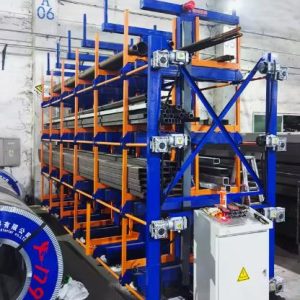
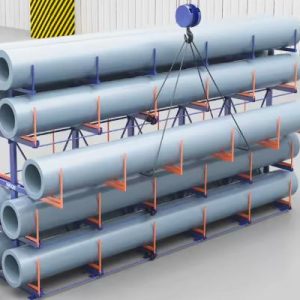
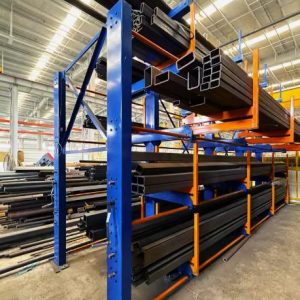
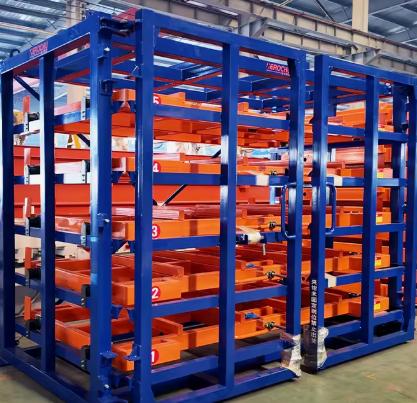
The roll-out cantilever design represents a deliberate departure from conventional racking architecture. Where standard pallet racking requires forklift access from one or both sides and typically stores material in single-deep configurations, Herochu roll-out beds place every stored sheet within direct reach of a single operator working with an overhead lifting device. The cantilever arms extend outward from a central vertical column, supporting sheet metal loads without obstructive front posts or cross-bracing that would interfere with vacuum lifter or magnetic hoist operation.
Why Cantilever Geometry Matters for Sheet Metal
Storing sheet metal on flat shelves presents a practical problem: the sheet itself must be accessible from above for vacuum lifting. Shelf surfaces obstruct the lifting path, forcing operators to slide sheets off the edge before engaging the lifter — an operation that scratches the material surface and introduces handling risk. Cantilever arms eliminate this obstruction. Each arm supports the sheet from beneath along a narrow contact line, leaving the entire top surface exposed for direct lifter engagement.
Herochu fabricates its cantilever arms from the same Q235B structural steel used throughout its heavy-duty racking product range. The arm cross-section, weld geometry, and attachment points to the vertical column are engineered to handle concentrated loads at the outer cantilevered end, where bending moment reaches its maximum. For a fully loaded arm supporting a 3000-by-1500-millimeter plate weighing 3 metric tons, the bending stress at the column connection demands precise structural calculation. Herochu validates these calculations through finite element modeling during the design phase and through physical load testing on production units.
The column structure itself warrants attention. Each vertical column in a Herochu cantilever storage bed anchors to the facility floor through a base plate assembly designed to resist overturning moment. When all arms on one side of a column are loaded to rated capacity while the opposite side remains empty — a common scenario during material consumption cycles — the column experiences a substantial unbalanced moment. The base plate anchoring system, typically employing chemical anchor bolts in reinforced concrete floor slabs, is specified to handle this worst-case loading condition with an appropriate safety factor.
Single-Operator Workflow with Assisted Lifting
The operational workflow enabled by Herochu roll-out cantilever storage distinguishes itself from conventional sheet storage methods through its emphasis on single-operator capability. In a traditional setup, retrieving a heavy plate from a stack might require a second person to steady the load as a forklift slides tines beneath it. With cantilever storage and an overhead vacuum lifter or magnet, one operator manages the entire retrieval sequence.
The process begins at the control pendant or remote interface. The operator selects the desired storage location — identified by bay, column, arm level, and material specification — and the motorized drawer system extends the designated cantilever bed to its fully deployed position. With the sheet now positioned beneath the overhead crane or jib arm, the operator lowers the vacuum lifter, engages the suction pads or magnetic contact surface, and lifts the plate clear of the cantilever arms. The drawer retracts automatically or on command, and the operator traverses the lifter to the laser table or punch press for loading.
Returning processed sheets or remnants follows the reverse sequence. The lifter deposits the material onto the extended cantilever arms, the operator confirms placement, and the drawer retracts into its stored position. The entire out-and-back cycle, including lifter engagement and traverse time, typically completes within three to five minutes depending on travel distance and plate weight.
The Herochu lock-in and lock-out mechanism serves a critical function during these operations. When the cantilever drawer reaches full extension, the mechanical lock engages automatically, preventing any unintended retraction during loading or unloading. Only after the operator deliberately releases the lock — typically through a foot pedal or pendant control — can the drawer return to its stored position. This hard mechanical interlock provides a level of safety assurance that software-only interlocks cannot match.
Material Organization by Specification
Sheet metal workshops process a diverse material mix: carbon steel in grades from commercial quality through high-strength low-alloy, stainless steel in multiple grades and finishes, aluminum alloys, copper, brass, and occasionally titanium or nickel alloys. Each material has distinct storage requirements. Stainless steel sheets must not contact carbon steel surfaces to prevent galvanic corrosion at the contact points. Aluminum needs separation from steel to avoid contamination that produces weld defects in downstream processing. Copper and brass tarnish when exposed to certain workshop atmospheres.
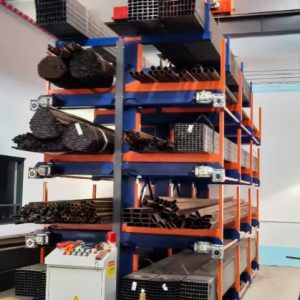
Herochu cantilever storage beds support this material segregation natively. Each cantilever level can be designated for a specific material grade or thickness range, with physical separation between levels preventing cross-contamination. The open-arm design allows air circulation around stored sheets, reducing the condensation risk that accelerates corrosion in enclosed storage configurations.
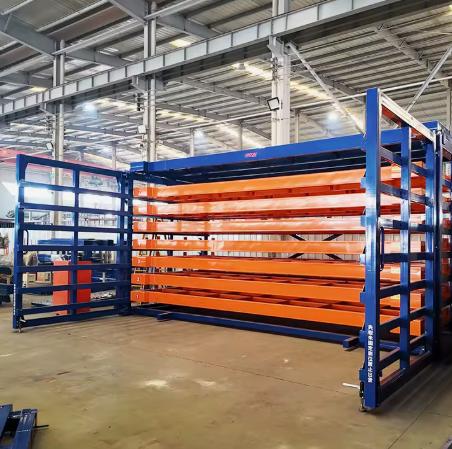
Inventory tracking improves substantially when material location is fixed rather than variable. A production planner looking to schedule a job requiring 304 stainless at 1.5 millimeters thickness consults the storage map and confirms that the required stock exists at Cantilever Bay 3, Level 2. The operator retrieving material for that job goes directly to the specified location without searching. This fixed-location logic eliminates the inventory reconciliation problems that plague shops where material gets moved between floor stacks by different shifts.
Space Efficiency in Vertical Orientation
Floor space in manufacturing facilities is expensive, and the economics of vertical storage are straightforward. A single cantilever column occupying roughly 1.5 square meters of floor area can store multiple layers of sheet metal spanning up to 6000 millimeters in length — material that, if laid flat on the floor, would consume over 12 square meters per layer. Stacking sheets on the floor recovers some of this space but introduces the handling difficulties and damage risks described earlier.
Herochu cantilever systems optimize vertical space by stacking storage layers as closely as practical while maintaining the clearance needed for lifter operation. The available partition height of 220 millimeters per layer accommodates the combined thickness of stored sheets plus the lifter pad engagement clearance. Where a shop stores predominantly thin-gauge material, compartments can be subdivided to increase layer count within the same overall rack height.
The floor-level clearance of 355 millimeters beneath the bottom cantilever arm provides practical access for housekeeping and maintenance. Forklift tines, pallet jacks, and cleaning equipment can pass beneath the rack without obstruction. This clearance also keeps the lowest stored material above the splash zone for cutting fluids and general workshop debris.
Motorized Extension and Motion Control
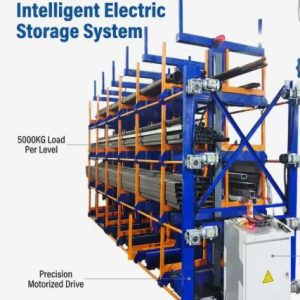
The extension and retraction of a fully loaded cantilever bed demands controlled motion. A 5-ton drawer moving at uncontrolled speed carries substantial kinetic energy, and abrupt stops or starts can shift material on the arms. Herochu addresses this through electric motor drives with programmed acceleration and deceleration ramps.
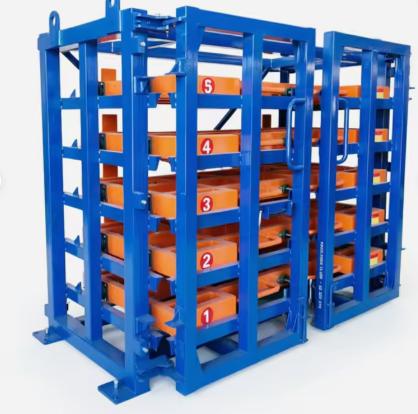
The drive motor, sized for the rated drawer load, couples to the drawer carriage through a gear reduction that multiplies torque while reducing output speed to the desired travel rate. Travel speeds range from approximately 2.28 meters per minute for smaller models to 5.27 meters per minute for larger configurations. These speeds represent a deliberate engineering compromise: faster travel would reduce retrieval time but increase motor size, structural stress, and the risk of load shifting. The selected speeds keep retrieval cycles under two minutes while maintaining controlled motion throughout the travel profile.
Position sensing ensures that the drawer stops precisely at full extension and full retraction. Limit switches or encoder-based positioning provides the control system with real-time drawer location, enabling automatic stop functions and preventing over-travel in either direction. The soft-stop programming decelerates the drawer during the final portion of travel, eliminating the mechanical impact that would otherwise occur when a moving drawer carrier contacts hard end-stops.
Maintenance and Service Life
Industrial storage equipment operates in environments that are hostile to mechanical systems. Metal dust from grinding operations, cutting fluid mist, mill scale from hot-rolled steel, and general workshop grime all find their way into moving parts. Herochu designs its cantilever storage systems with maintenance access in mind.
The motor and gearbox assemblies mount in accessible positions rather than buried within the frame structure. Grease fittings on bearing points are positioned for reach with standard lubrication equipment. The roller or slide mechanisms that guide drawer extension are selected for service life under contaminated conditions and can be replaced without dismantling the entire rack assembly.
Structural inspections form part of the recommended maintenance schedule. Welds at cantilever arm-to-column connections, column base plate anchors, and drawer carriage attachment points should be visually inspected at intervals determined by usage intensity. Any deformation, cracking, or anchor loosening must be addressed before it progresses to a failure condition. Herochu provides inspection checklists and recommended intervals as part of its product documentation package.
Complementing the Production Line
Roll-out cantilever storage beds do not operate as standalone islands; they function as integrated components of the material flow system. Positioned adjacent to laser cutting tables, punch presses, shear lines, and press brakes, they serve as live buffers that hold raw stock within immediate reach of production operators.
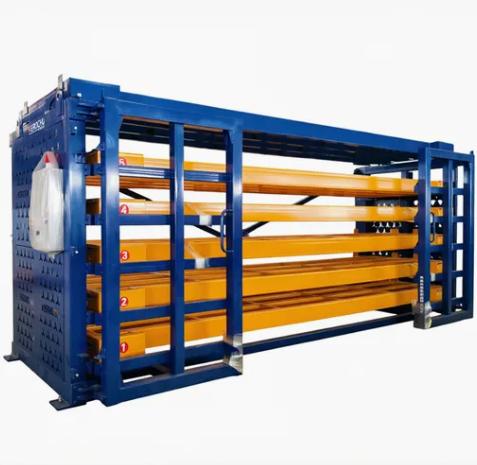
For a punch press running high-volume production of electrical enclosure panels from pre-cut blanks, the cantilever storage bed holds the blanks organized by part number and material gauge. When the press completes one production run, the operator extends the drawer containing blanks for the next job, retrieves the stack with a vacuum lifter, and stages them at the press infeed. Changeover time between jobs shrinks from a process measured in tens of minutes to one measured in single digits.
The storage system’s contribution to workplace safety extends beyond the mechanical interlocks already described. When material is stored in designated locations, walkways remain clear of trip hazards. When lifting is done with overhead equipment rather than manual handling, back injuries and crush incidents become vanishingly rare. When every sheet has a home, the chaotic floor conditions that lead to slips, trips, and falls are systematically eliminated.
Herochu roll-out cantilever storage beds bring discipline to what has historically been one of the least disciplined areas of sheet metal fabrication: the space between receiving and processing. By giving every plate a designated, accessible, and safe storage location, they transform material handling from a necessary evil into a structured process that directly supports production throughput. For shops that have invested in high-speed laser and punch press capability, the storage bed is the link that ensures those machines spend their time cutting, not waiting.