Precision-Engineered Gantry Robotics for Automated Steel Plate Loading and Unloading
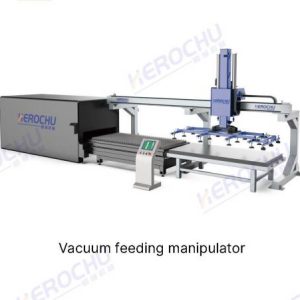
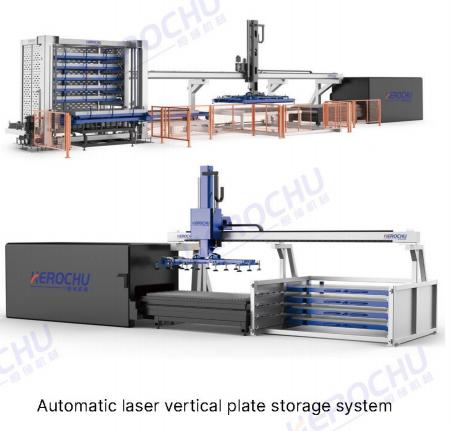
The modern steel fabrication facility faces a persistent challenge: manual material handling remains the single largest bottleneck between raw plate inventory and finished component output. Every minute a laser cutter or CNC machining center sits idle while waiting for steel plates to be loaded, positioned, or removed represents lost revenue, wasted labor, and compromised production capacity. The Herochu CNC Gantry Robot Auto Steel Plate Load Unload System directly addresses this operational constraint through an integrated automation architecture that transforms standalone processing equipment into continuously productive manufacturing cells.
Designed specifically for the rigorous demands of heavy steel plate processing, the Herochu system combines high-load-capacity gantry robotics with intelligent control logic to deliver reliable, repeatable, and rapid material transfers across the entire production floor. From 3-ton steel plates destined for structural fabrication to precision aluminum sheets requiring delicate handling, this automated loading and unloading solution adapts to the material, the machine, and the production schedule without compromising throughput or safety.
Structural Engineering and Rigidity Framework
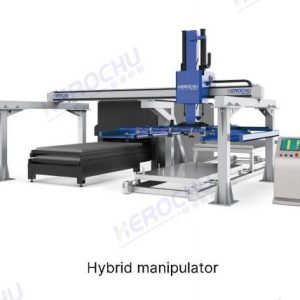
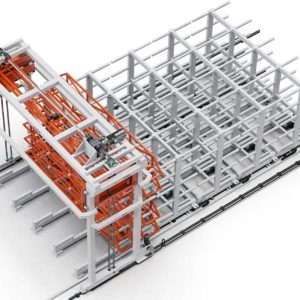
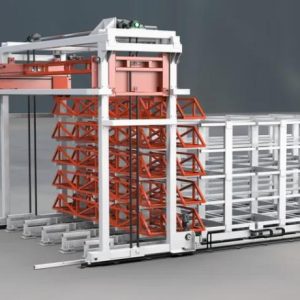
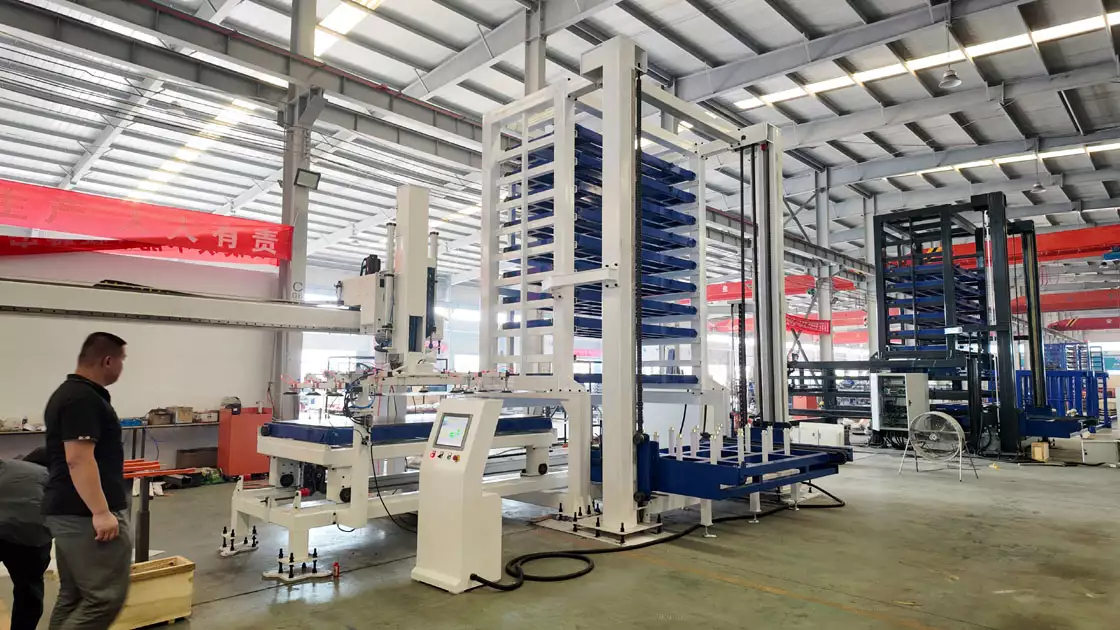
The mechanical foundation of the Herochu CNC Gantry Robot Auto Steel Plate Load Unload System relies on heavy-duty, stress-relieved structural frameworks engineered to eliminate dynamic deformation and resonance during high-acceleration cycles. The main frame utilizes a dual-sided, overhead bilateral gantry truss architecture fabricated from high-tensile profile steel and heavy rectangular steel tubing, spanning across multiple machine zones or material libraries. This bilateral design distributes the dynamic loads evenly across both support rails, preventing the torsional stress that plagues single-sided cantilever designs when handling plates exceeding 3,000 kilograms.
Critical mounting faces and linear guide alignments undergo precision machining on large-scale column gantry milling machines. This ensures absolute parallelism of the rail axes, minimizing mechanical wear and eliminating tracking friction that would otherwise degrade positioning accuracy over extended service life. The entire moving structure is shrouded in protective industrial sheet metal, acting as a barrier against flying metallic debris, oil mist, and dust while providing high structural safety.
Kinematics, Motion Dynamics, and Performance Specifications
The drive systems are designed to maximize machine uptime by outpacing standard CNC and laser cutting shuttle table cycles. Horizontally along the X and Y axes, the gantry utilizes variable-frequency servo motors coupled with heavy-duty linear guide rails and ground rack-and-pinion or chain drive systems, achieving horizontal travel speeds up to 50 meters per minute. Vertical lifting is powered by synchronized pneumatic cylinders or high-torque hydraulic rams, achieving speeds of 9 to 12 meters per minute. High-resolution encoders ensure sub-millimeter repeated positioning accuracy, preventing part-nesting misalignments or cutting-head collisions during material drop-off.
The system’s load-handling capability ranges from 100 kilograms to 3,000 kilograms on the Z-axis, accommodating everything from thin gauge aluminum sheets to thick structural steel plates. This broad capacity spectrum allows a single Herochu gantry robot to serve multiple processing stations with varying material requirements, reducing the need for dedicated handling equipment for each production line.
Advanced End-Effector and Smart Gripper Technology
The end-effectors use adaptive technology to handle raw plates, delicate materials, and complex skeleton sheets without surface marring. For flat sheets, the system utilizes a matrix of oil-resistant vacuum suction cups with spacing that can be physically adjusted to handle profiles from 3,000 by 1,500 millimeters up to 6,000 by 2,500 millimeters. The vacuum manifold is split into independent sectors via the control interface, allowing the system to activate specific suction zones to handle solid plates, pre-cut parts nests, or scrap skeleton frames without losing vacuum pressure.
To overcome oil-film adhesion between stacked plates, the system executes automated micro-flexing, localized air-blowing, or magnetic sheet separation routines. Integrated sensors pause the cycle immediately if a double-sheet feed is detected, preventing catastrophic damage to cutting heads and avoiding material waste. The manipulator integrates a pneumatic or hydraulic rotary axis, allowing parts to be rotated exactly 90 degrees mid-transit to match the specific orientation of the processing machine.
Multi-Machine Coordination and Workflow Integration
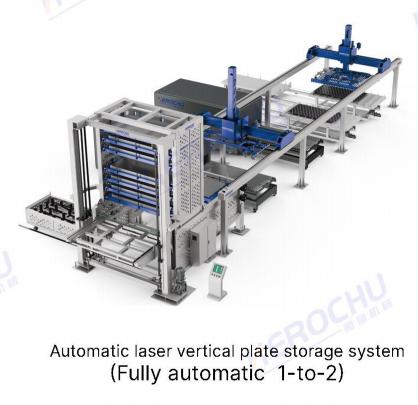
Herochu gantries are configured to operate in a high-efficiency one-to-two continuous loop, serving multiple CNC or laser processing stations simultaneously. The gantry extracts raw sheets from storage, stages them over the target machine, loads the material table the moment it cycles open, and simultaneously reclaims finished cut pieces or skeleton frames. By turning material handling into a parallel background process, the system minimizes spindle and laser idle times to near zero, enabling automated, unattended night shifts.
A single Herochu gantry robot can feed and evacuate two laser cutters, a shear center, and an adjacent deburring station in parallel, with the task scheduler prioritizing material flow based on real-time production demands. This multi-machine coordination capability delivers a level of operational flexibility that standalone loaders cannot match.
Control Matrix, Safety, and Vertical Storage Integration
The digital control system establishes a fail-safe, data-driven environment capable of fully autonomous manufacturing. Core system logic is governed by Siemens PLCs, material tracking is guided by Omron sensors, and electrical distribution is managed via Schneider Electric components. The touchscreen Human-Machine Interface displays live spatial coordinates, vacuum pressure levels, and inventory data. Integrated load cells weigh material frames automatically to prevent system overloads.
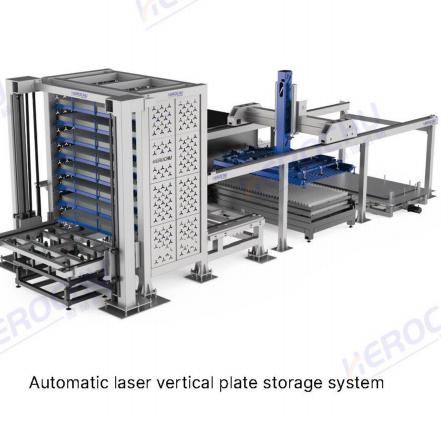
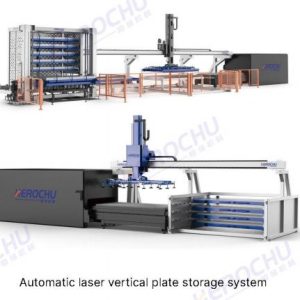
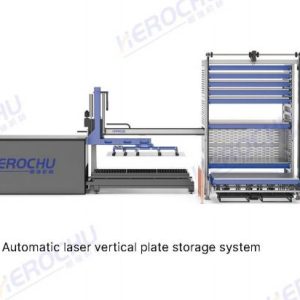
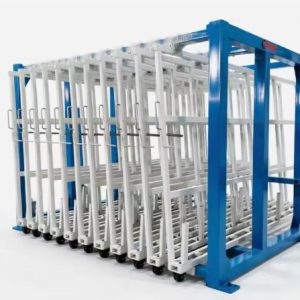
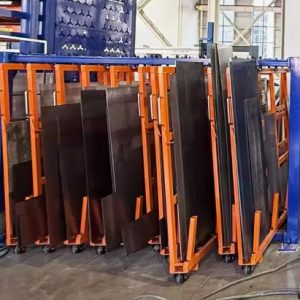
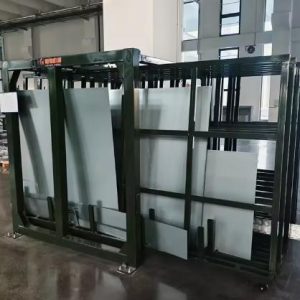
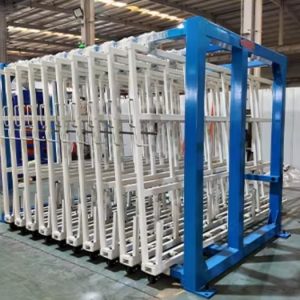
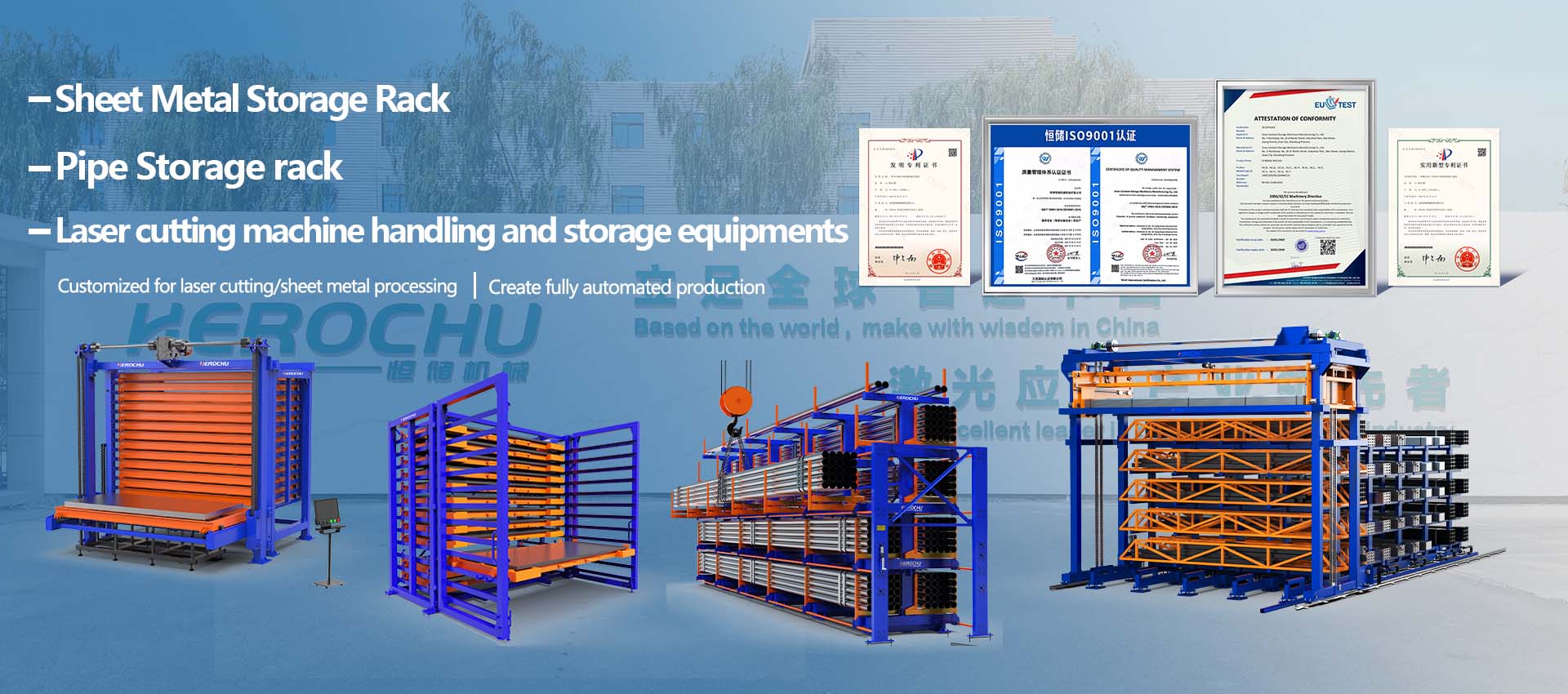
The gantry directly interfaces with multi-tier vertical cantilever storage towers supporting up to 8 to 13 levels, with each layer accommodating payloads of 3,000 to 5,000 kilograms. This vertical integration reclaims up to 70 percent of floor space compared to conventional flat storage methods. To ensure CE and ISO 9001 compliance, the system integrates fail-safe check valves that maintain gripper pressure during sudden shop air failure, LiDAR path scanners for obstacle detection, and perimeter safety light curtains.