Steel pipe warehouses share a familiar problem. Round tubes, square hollow sections, and galvanized conduits arrive in bundles six or twelve meters long, then sit on the floor in uneven stacks that block aisles, hide inventory, and corrode where they touch. Forklift drivers prod the pile to find what they need, dragging coated surfaces across each other and leaving scratches that customers reject at inspection. The conventional fixed cantilever shelf was supposed to solve this, yet its static arms force operators to lift bundles over lower tiers, bending long pipes under their own weight and leaving the bottom level effectively unreachable.
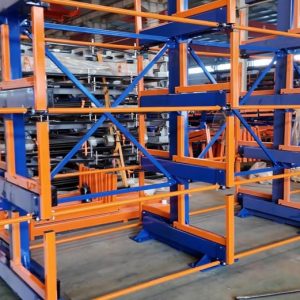
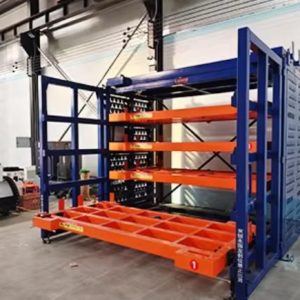
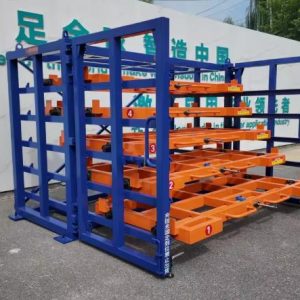
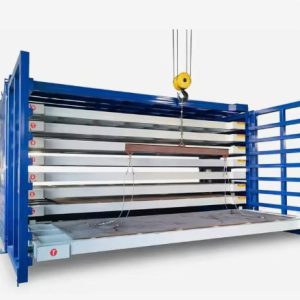
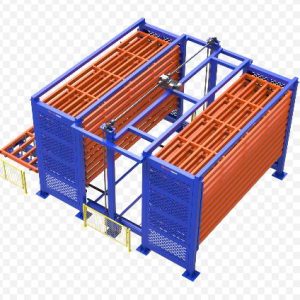
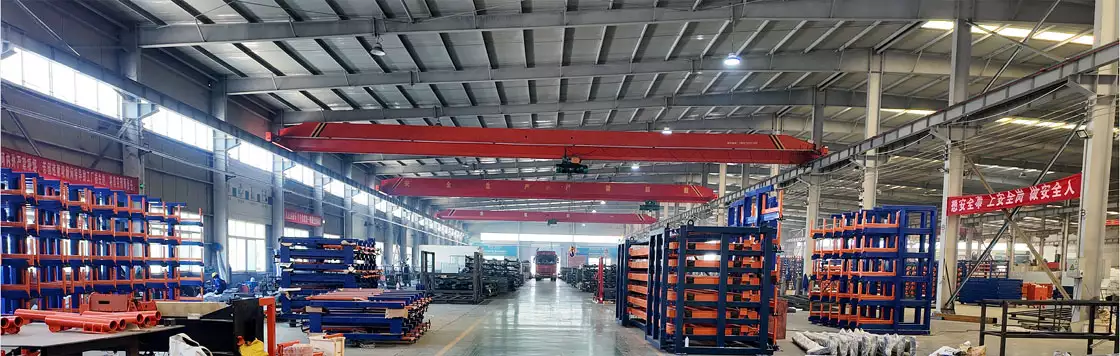
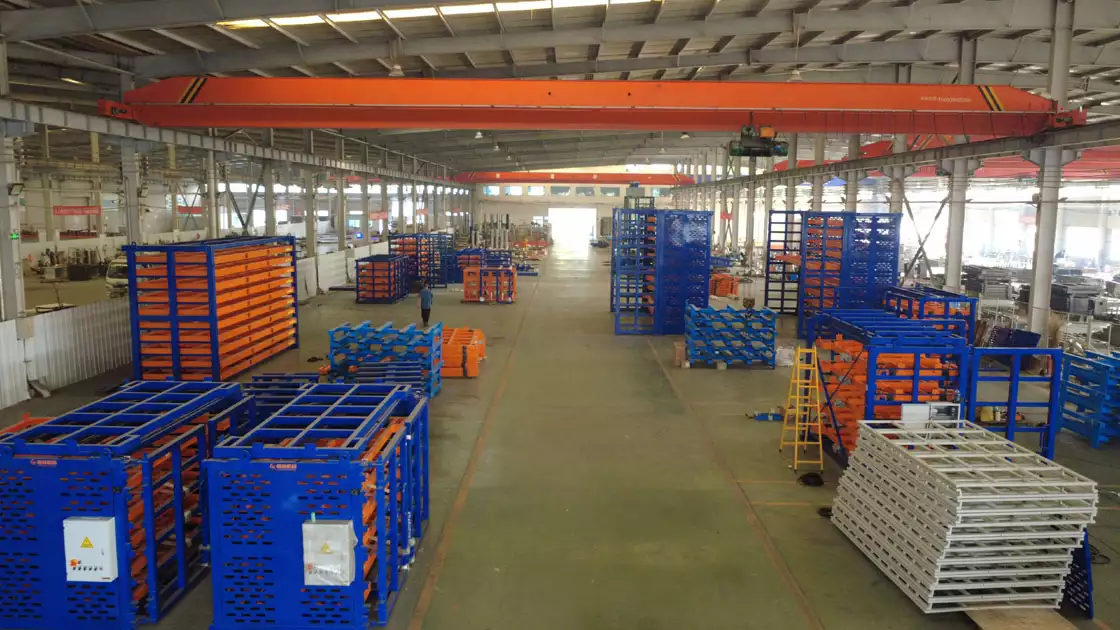
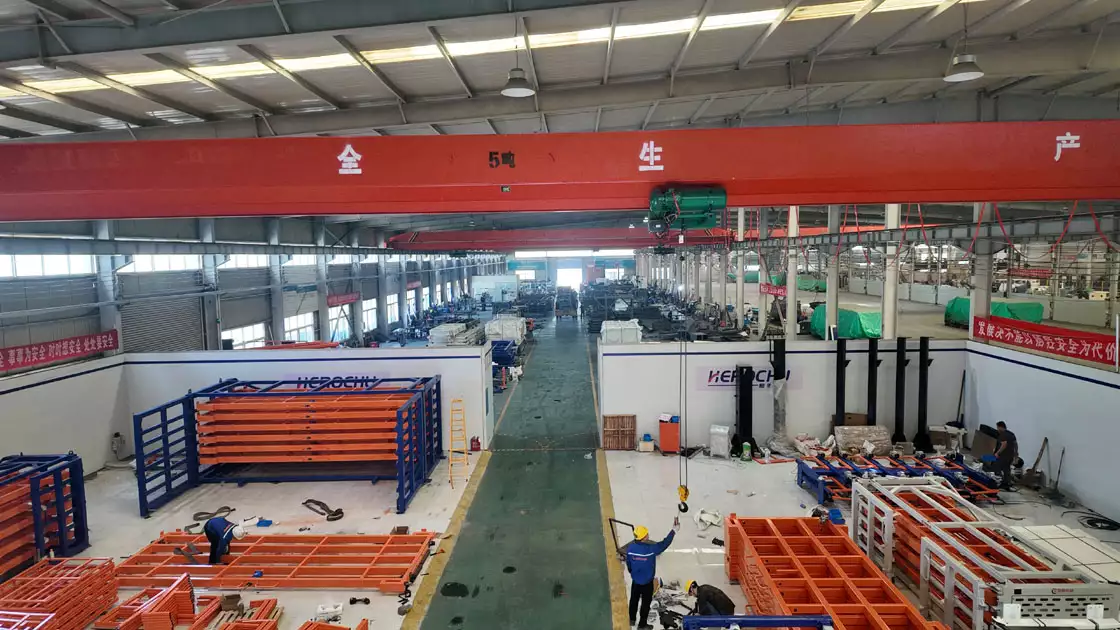
The Herochu telescopic cantilever rack for steel pipe storage was built to retire that compromise. Instead of arms fixed permanently outward, each tier slides out into the aisle on a guided track, presents the bundle directly to an overhead crane or forklift, and then retracts back into the frame footprint until the next retrieval. The mechanics matter, but the outcome is simpler: every bundle sits level, every tier is reachable, and the aisle stays narrow.
Why Telescopic Arms Outperform Static Cantilever Shelving
A static cantilever arm projects from a column at a fixed angle. To load a six-meter bundle onto the third tier, the crane operator must hover above the arm, lower the load past the upper tiers, and set it down blind — the columns and higher arms obscure the landing point. When the bundle is long, heavy, or slightly bowed, it drags across the arm lip during placement. Over months, this friction strips galvanizing and scores painted surfaces.
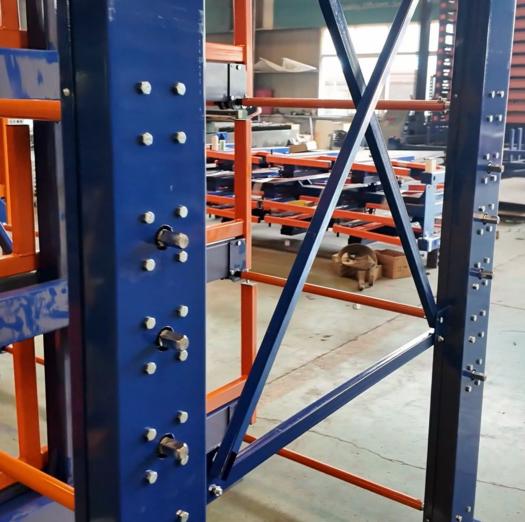
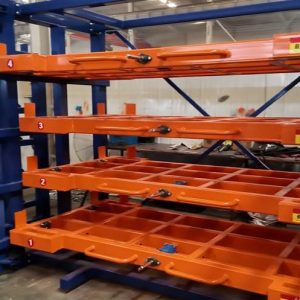
Herochu addresses this by mounting each arm assembly on a telescopic carriage. The arm pair extends outward into the operating aisle along the full width of the frame, so the crane can lower the bundle straight down onto the extended arms with clear line of sight from every angle. No overshooting, no dragging, no blind landings. Once the sling is released, the arms retract, carrying the bundle into its stored position inside the frame envelope. The crane hook clears, and the next retrieval begins on any other tier without delay.
Q235B Dual-Beam Crossbars Absorb Dynamic Loading
Pipe bundles do not sit gently. An overhead crane releasing a three-ton pack of seamless tubes transmits a dynamic shock load the moment the sling goes slack. A single-beam arm will twist under that impulse, especially when the load distribution is uneven — and in real warehouses, it almost always is. A bundle that was banded slightly off-center places more mass on one arm than the other.
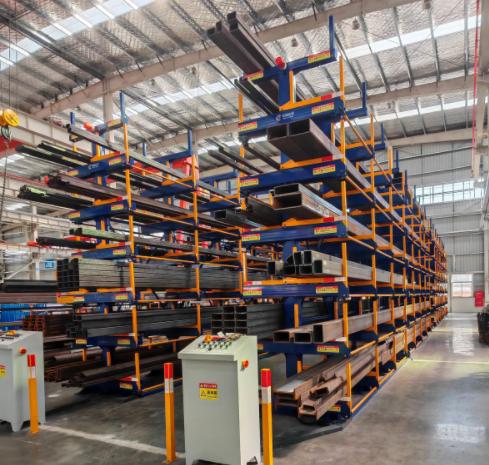
The Herochu HC-G series counters this with a dual-beam crossbar welded from national-standard Q235B cold-rolled steel. Two parallel beams share the bending moment, doubling the contact surface that supports the bundle and halving the point pressure on any single weld. Under uneven loads, the pair resists torsional twist that would rack a single-beam arm out of alignment. This is the reason the frame holds its tier-to-tier alignment after years of heavy cycling — the structure was designed for the impulse loads cranes actually generate, not just the static weight printed on a specification sheet.
600 Millimeters of Vertical Clearance for Slings and Sight Lines
A detail that separates a usable rack from a frustrating one is the vertical gap between tiers. Herochu leaves a default 600 millimeters of clear vertical space above each stored bundle. That clearance serves two functions that warehouse planners often overlook until the rack is installed.
First, it gives the crane sling enough room to pass between the bundle and the tier above it. A choker sling wrapped around a bundle needs vertical travel to tighten and release. Compress that space and the sling binds, forcing operators to pry it free with bars — a slow and hazardous routine. Second, the 600 mm gap preserves a direct line of sight for visual inventory. A supervisor walking the aisle can read bundle tags and gauge stock levels on every tier without climbing a ladder or pulling a bundle out to check. The gap that looks like wasted space on a drawing is, in practice, the difference between a rack that flows and one that stalls.
Dual-Side Discharge Keeps Long Bundles Square
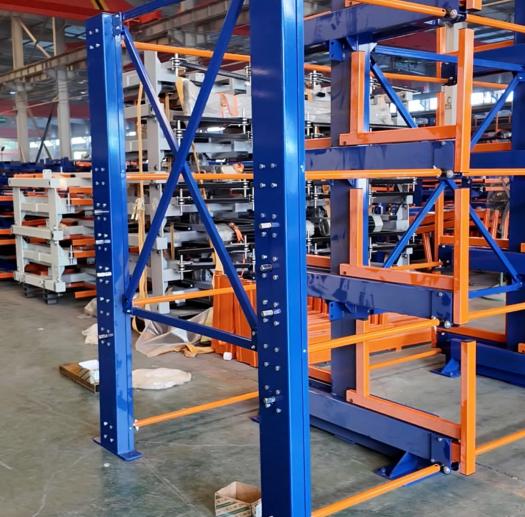
Steel pipe bundles have a tendency to skew when they move. A six-meter pack of round tubes, if loaded against a single-sided stop, will creep sideways under vibration until one end projects past the arm and the other retreats behind it. A skewed bundle is harder to pick, harder to band, and more likely to roll during retrieval.
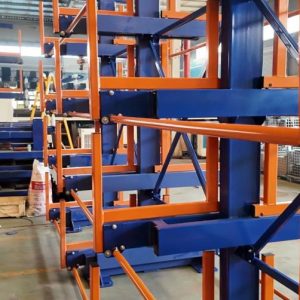
Herochu equips the HC-G series with dual-side discharge mechanisms, meaning the arms extend and retract from both ends of the frame simultaneously. The bundle is driven outward evenly, both leading edges moving in parallel, so long packs stay square to the aisle through the full extension stroke. Forklift and crane access from either side is symmetric. When the warehouse needs to stage outbound orders on one face and receive inbound material on the other, the dual-side geometry lets both flows proceed without one queueing for the other.
Vertical Density That Pays for Itself
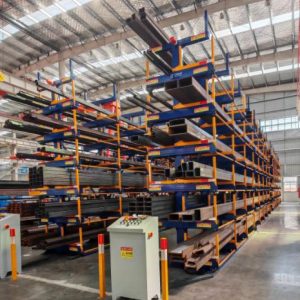
The financial case for telescopic cantilever storage is arithmetic, not opinion. Traditional ground stacking of six- and twelve-meter pipe bundles consumes warehouse floor in direct proportion to inventory volume — each added bundle extends the footprint outward, widening aisles to admit forklifts, and eventually exhausting the bay. A five-tier Herochu rack stacks those bundles vertically in the same column of air, reducing the required footprint by more than seventy percent compared to floor stacking. Aisle widths narrow by several meters because the arms deliver the load to the operator rather than forcing the forklift to reach into a deep pile.
The cost reduction compounds. Material damage drops because bundles are no longer dragged across each other or dropped from height onto hard arms. Scrap and rework decline. Search time per pick collapses to seconds — the operator extends the target tier, lifts the identified bundle, and retracts, with no need to excavate the surrounding pile. The full system pays for itself inside a typical multi-year cost evaluation window, and the tier that paid for the rack is the one that reclaimed the floor space a competitor is still leasing.
A Rack Engineered for the Materials You Actually Store
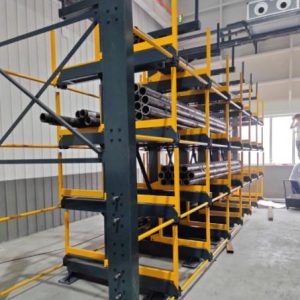
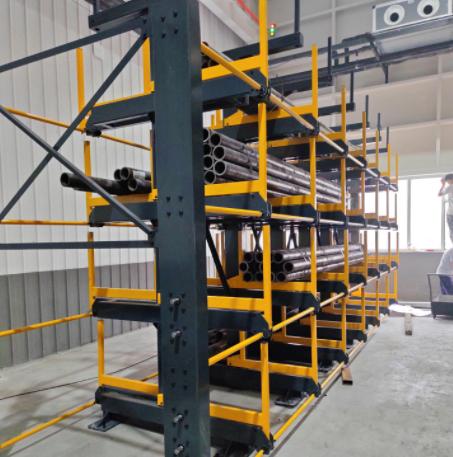
Round tubes, square pipes, structural profiles, rebar, aluminum extrusions — the Herochu telescopic cantilever rack for steel pipe storage handles each without reconfiguration, because the support logic is the same: extend, load level, retract, protect. Independent compartments on both sides of the frame allow whole bundles to sit alongside loose cut-offs sorted by diameter, wall thickness, or alloy grade, so the inventory that arrives as a six-meter pack can be consumed as shorter drops without a second storage system.
For operations that have reached the limit of floor stacking and are weighing a building expansion against a storage upgrade, the telescopic cantilever rack is the upgrade that delays the expansion. Herochu builds the HC-G series to the capacities your crane and forklift fleet already support, and the footprint it reclaims is the footprint you no longer need to lease.