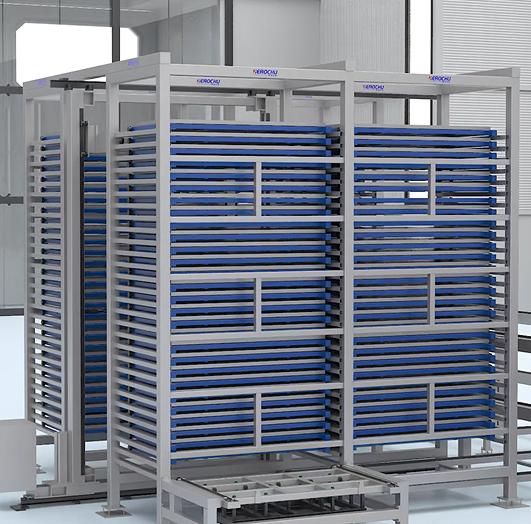
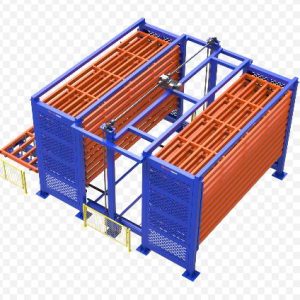
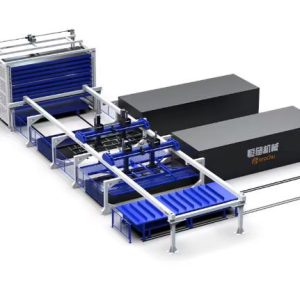
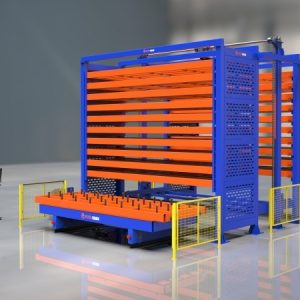
Steel plate is the heaviest, densest, and most punishing material a fabrication warehouse handles. A single 6000×2000 mm plate at 20 mm thickness weighs over 1.8 tons, and a depot storing plate by the layer rather than by the pallet needs structural engineering that respects what that weight does to a rack frame over time. A double-tower vertical steel plate storage depot is built around that reality — two parallel vertical storage structures, a central extraction mechanism, and a load path designed for tier capacities up to 5000 kg.
Steel plate is the heaviest, densest, and most punishing material a fabricationwarehouse handles. A single 6000×2000 mm plate at 20 mm thickness weighs over 1.8 tons, and a depot storing plate by the layer rather than by the pallet needs structural engineering that respects what that weight does to a rack frame over time. A double-towerverticalsteelplate storage depot is built around that reality — two parallel vertical storage structures, a central extraction mechanism, and a load path designed for tier capacities up to 5000 kg.
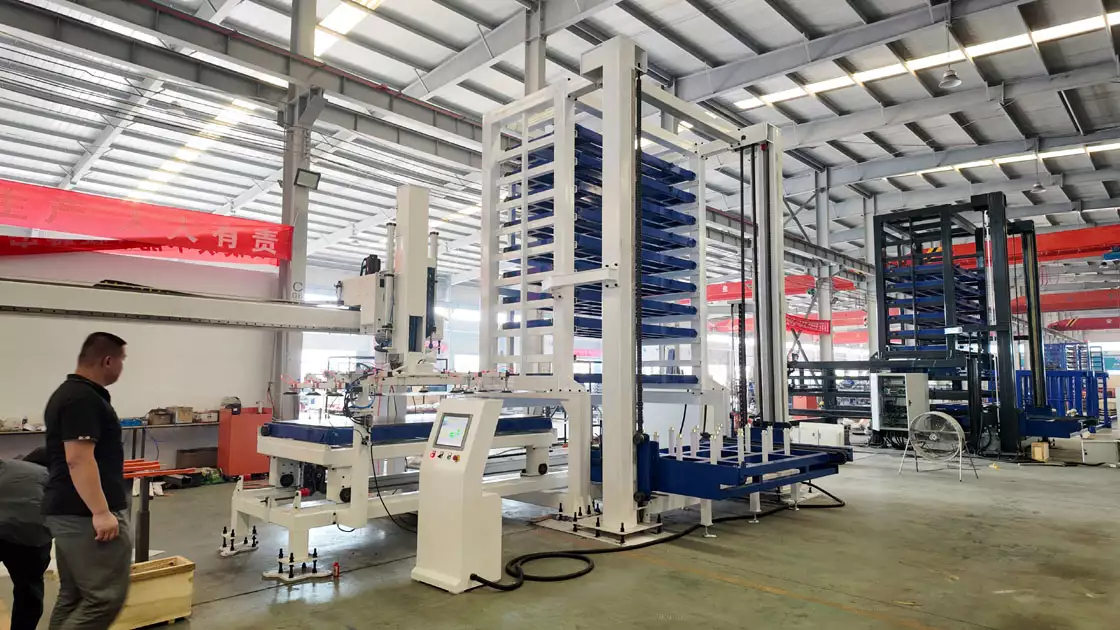
Herochu’s double-tower plate depot is not a general-purpose vertical rack adapted for steel. It is a steel plate storage machine — the structural frame, the elevator chain assembly, the drawer cassette rails, and the foundation interface are all specified for the working loads that plate inventory imposes. The difference between storing 3 mm stainless sheet and 25 mm carbon plate is not a label change; it is a different machine.
Structural Steel Construction
The depot frame is welded structural steel, designed and fabricated to carry the cumulative load of every filled layer. On the HC-S4020-2-105 and HC-S6020-2-155 models — both rated at 5000 kg per level — the frame engineering accounts for the full stored load plus the dynamic forces generated during cassette extraction and elevator travel. A ten-layer system at 5000 kg per tier holds 50,000 kg of plate. A fifteen-layer system holds 75,000 kg. The frame, the foundation, and the elevator assembly all carry ratings that reflect those numbers.
Critical structural members are galvanized or zinc-coated for corrosion resistance, particularly in plants where plate storage sits near cutting, welding, or washdown operations that generate humidity, fume, or chemical exposure. The powder-coated surface finish on the remainder of the structure provides a secondary corrosion barrier. For plate destined to electronic-component or precision fabrication, ESD protection is integrated to prevent static discharge on stored metal surfaces — a defect source that conventional racking ignores entirely.
Five-Ton Layer Capacity
The 5000 kg per level rating on the larger models is the spec that separates a plate depot from a sheet rack. A layer rated for 5 tons accommodates heavycarbon steel plate — the 10 mm, 15 mm, 20 mm, and 25 mm stock that structural fabricators, heavy equipmentmanufacturers, and pressure vessel shops cut from daily. A layer rated for 3 tons, which applies to the HC-S3015-2-63 and HC-S4015-2-83, is engineered for lighter-gauge sheet — the 1 mm to 6 mm material that enclosure, sign, and light-fabrication operations run.
Both load ratings are real engineering specs, not nominal figures. Herochu designs the rail mounting, the cassette frame, and the elevator chain to the rated load with the margin that industrial continuous-duty service demands. The system does not function adequately at 5000 kg per level — it is built to run at that load, shift after shift, for the service life of the structure.
Drawer Cassettes for Plate Protection
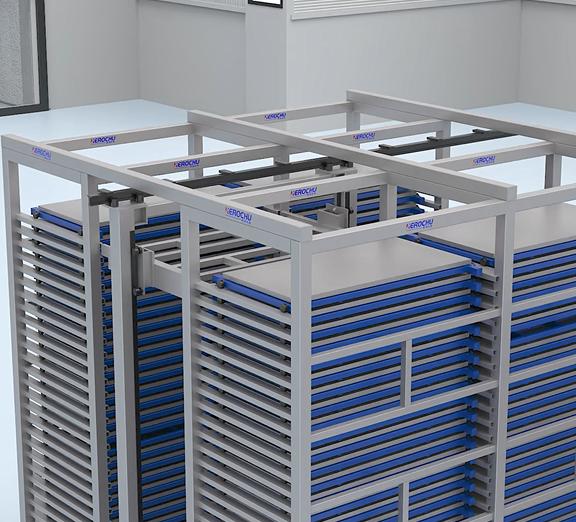
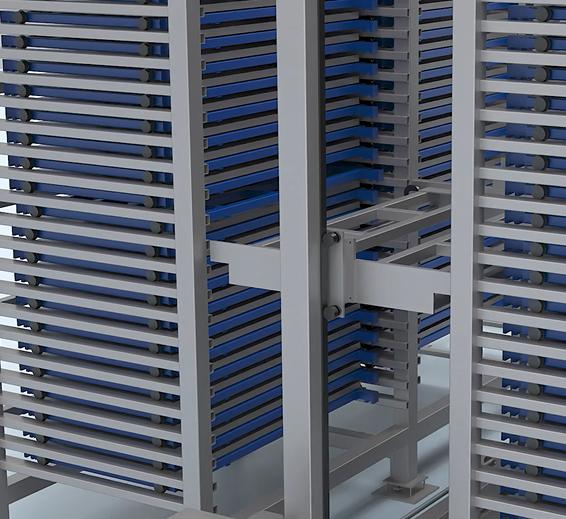
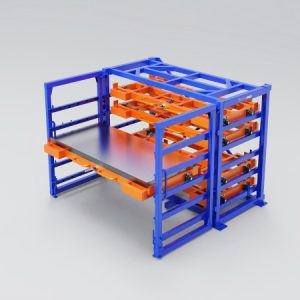
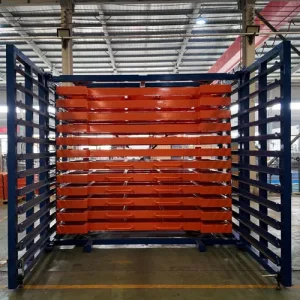
The depot stores plate on removable drawer-type cassettes, not stacked directly on rack shelves. Each cassette is a heavy-duty tray that slides on guided rails into its assigned storage slot. The plate sits on the cassette. The cassette rides on the rails. The rails carry the load into the vertical frame. At no point does the plate surface contact the rack structure, another plate, or a forklift fork.
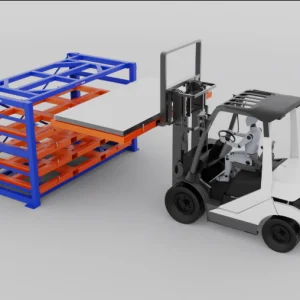
This is the engineering response to the surface damage problem that has plagued plate storage for as long as fabricators have stacked steel. Forklift extraction from a conventional plate rack means steel forks sliding between plates, edge contact, and the gouging and scratching that accumulates on every retrieval. In a double-tower depot, the cassette extracts horizontally under guided rail control, the plate rides with it, and the discharge station presents the plate to the outbound handling system — overhead crane, vacuum lifter, or gantrymanipulator — without fork contact. For plate destined to cosmetic stainless fabrication, painted aluminum, or any application where surface condition is a quality specification, this is non-negotiable.
Vertical Architecture and Capacity Range
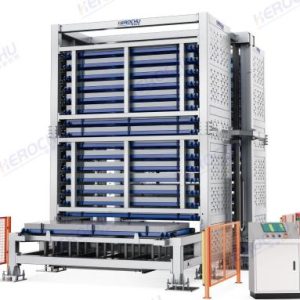
The depot climbs from 5 meters to 15 meters in system height, depending on the model and the available building clearance. Standard plate formats run from 3015 (3000×1500 mm) through 4015, 4020, 6015, 6020, and 6025 — covering the plate dimensions that carbon steel and stainless service centers stock and that fabrication shops cut from. The two-tower count is standard; the layer count and clear space between levels are customizable to the inventory profile.
Clear space between layers is 240 mm standard, adjustable for thicker plate stacks. A depot running 25 mm plate needs more vertical clearance per layer than one running 3 mm sheet, and the customization accommodates that. The depot is not a fixed-specification product — it is a configurable structure engineered to the specific plate inventory and building constraints of the installing facility.
Central Elevator and Extraction
The extraction mechanism is a dual-column elevator running on a chain and linear guide rail system. It travels vertically between the two towers, engaging drawer cassettes on either side at the designated layer height. Transfer speed runs 5 to 15 meters per minute. Positioning repeatability is ±2 mm, maintained through laser closed-loop feedback that compensates for chain elongation and thermal expansion over the vertical travel distance.
The dual-column elevator is heavier than a single-column lift, and the reason for the extra structure is the twin-tower duty cycle. Serving two storage structures from one central mechanism means the elevator travels less idle distance per retrieval cycle — what would be an empty return stroke on a single-tower system becomes a loaded extraction from the opposite tower. Throughput rises, and the mechanism earns its heavier construction.
Discharge and Downstream Connection
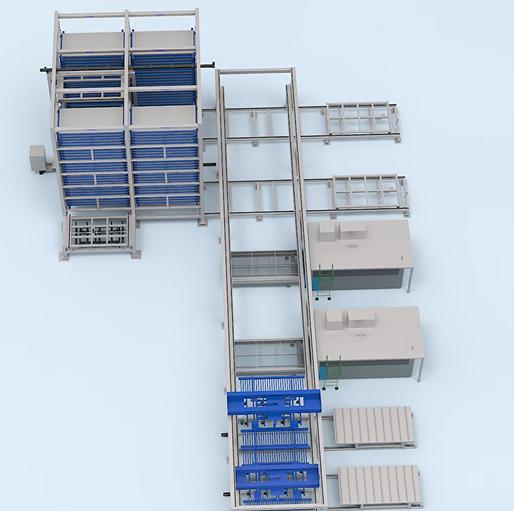
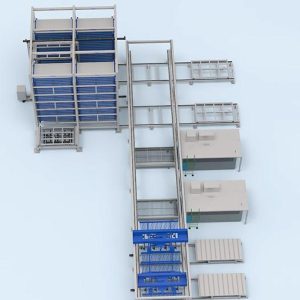
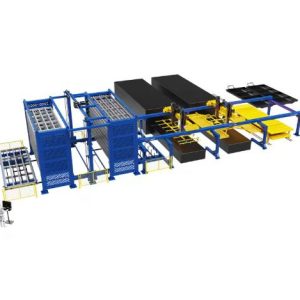
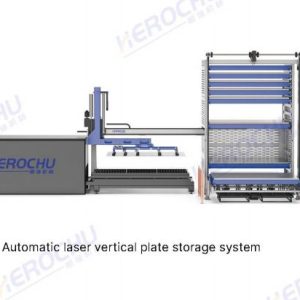
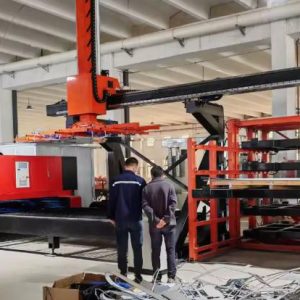
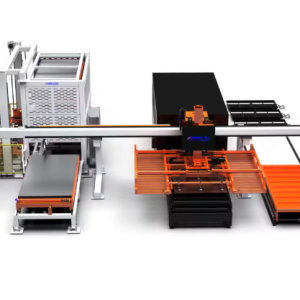
Plate exits the depot at the discharge station, where it is presented to the outbound handling system. Herochu’s double-tower depots support rear or side discharge configurations, allowing alignment with the downstream process — typically a laser cutting bed, a plasma table, or a press brake feeding station. An integrated overhead gantry truss with electric loading manipulators can pick plate from the discharge position and transfer it directly to the cutting bed, serving both towers and potentially multiple machines from a single manipulator.
This is where the depot stops being storage and becomes a material handling hub. A depot that discharges plate onto a waiting cart for manual transfer to a laser is a storage depot. A depot that discharges plate directly onto a laser bed through an integrated manipulator is a production cell component. Herochu’s double-tower architecture supports both, and the integrated configuration is where the depot delivers its full value.
Certification and Compliance
CE and ISO 9001certifications apply across the model range. The depot ships with documentation supporting machinerysafety compliance — relevant for plants subject to safety audit, for operations exporting equipment to regulated markets, and for facilities that require verified load ratings and safety interlocks before commissioning a heavy-storage structure. The certifications are not decorative; they reflect a design and manufacturing process that meets international safety and quality standards.
FAQ
Here are some frequently asked questions about our sheet metal racks and pipe storage solutions. We hope you find them helpful!
Q1: Can I request a custom size or color? Absolutely. We offer complimentary design services and deliver efficient, tailored solutions to meet your specific requirements.
Q2: Are you a manufacturer or a distributor? We are a direct manufacturer with over 15 years of industry experience and expertise.
Q3: Is there a minimum order quantity? No. We welcome orders of any size, starting from a single unit.
Q4: How can I get detailed product information? Click the “Get a Quote” button to receive product images, detailed specifications, and videos. Our team is always ready to assist.
Q5: How do I provide my storage rack requirements? Simply share the type, dimensions, and quantity of materials you plan to store, along with any other specific needs. We will develop a professional storage solution for you. Alternatively, leave your contact details for a personalized consultation.
Q6: Do you offer automated loading systems or robotic arms? Yes. We provide loading robotic arms and integrated loading/unloading systems tailored to your laser cutting machine’s table size and material handling method (e.g., board rack, exchange platform, or material warehouse). Contact us with your details for a customized proposal.
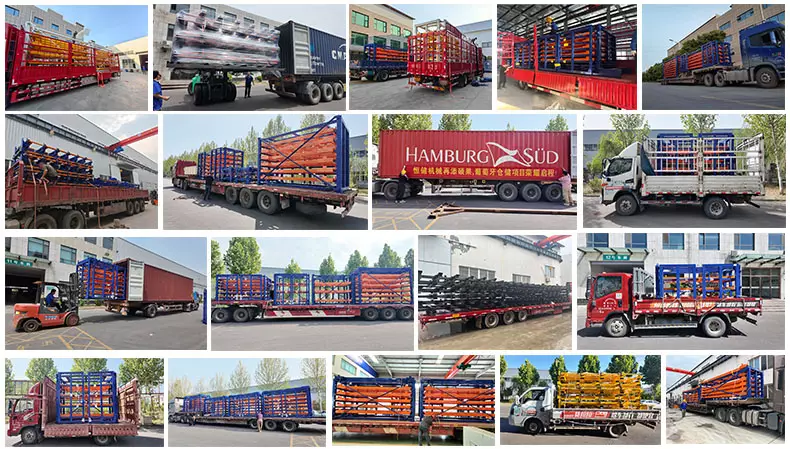
Q7: Do you provide on-site installation and debugging? Yes. Our technicians can travel to your facility for installation and debugging, ensuring successful operation. We have served clients globally, including in the USA, South Korea, Russia, Qatar, Mexico, South Africa, Egypt, and Lebanon.
Q8: How do you ensure product quality? Our quality assurance includes:
A team of over 40 technical engineers for professional debugging and support.
A dedicated quality control department compliant with ISO9001 standards.
CE certification for all exports.
Rigorous load testing before shipment to ensure structural safety and reliability.
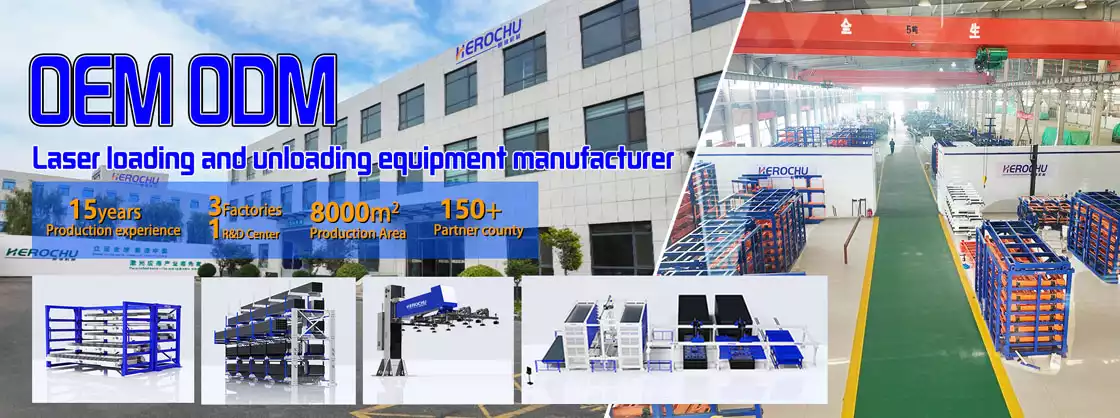
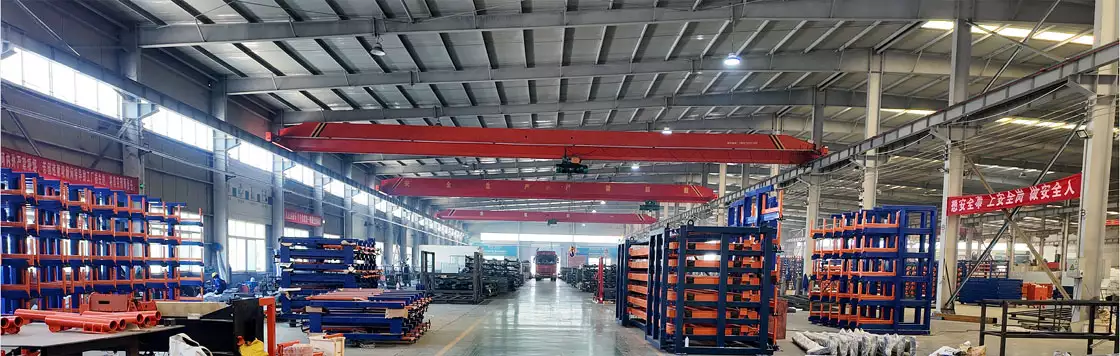
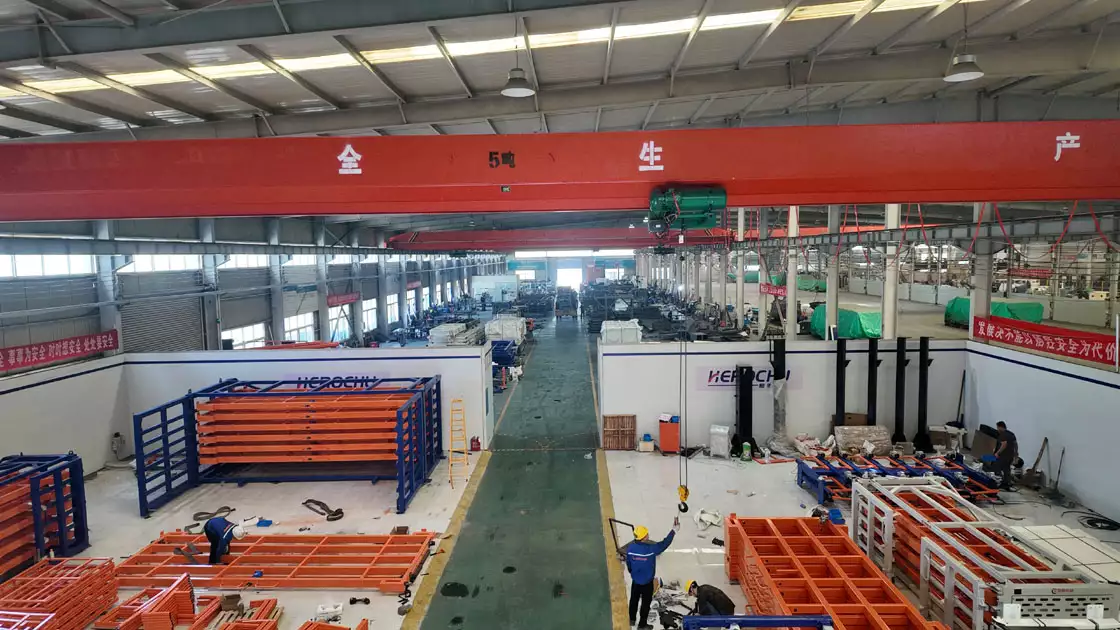
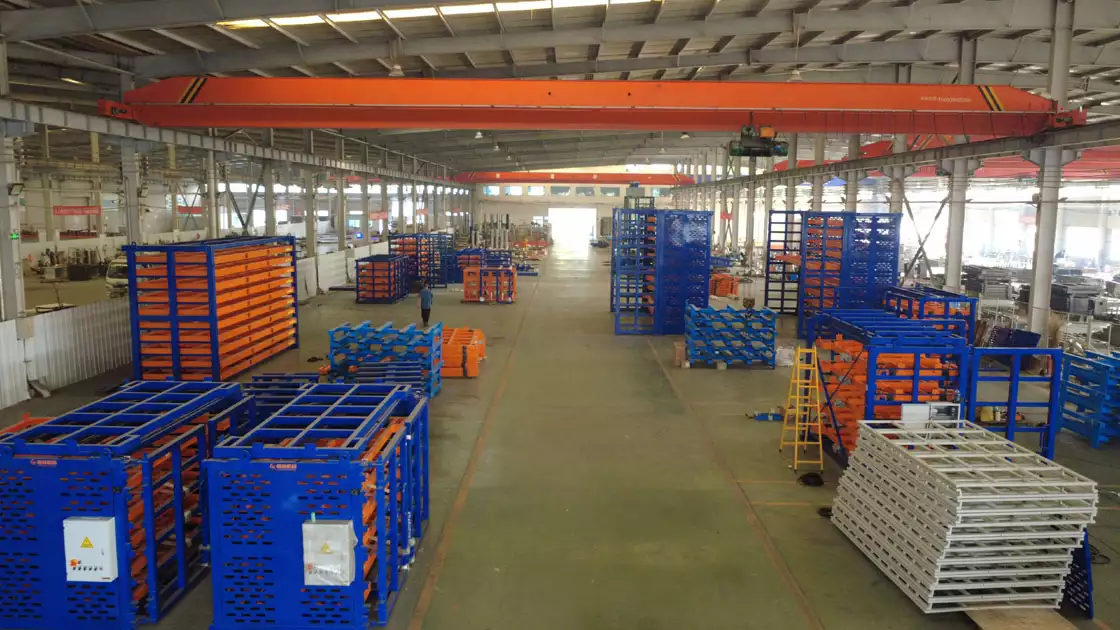
Q9: Where is your factory located? Our modern 10,000-square-meter manufacturing facility is located in Jiyang Industrial Park, Jinan, Shandong, China.
Q10: How can I evaluate your company’s capabilities? We offer virtual video factory tours and warmly welcome on-site visits.
Q11: What does your company specialize in? Jinan Constant Storage Machinery Manufacturing Co., Ltd. is a high-tech enterprise specializing in the R&D, production, sales, installation, and service of intelligent storage solutions. Our product range includes sheet material warehouses, drawer-style shelves, cantilever racks, servo manipulators, gantry loaders, and fully automated handling systems. Supported by a skilled technical team and advanced equipment, we are committed to delivering high-performance storage products and solutions to customers worldwide.
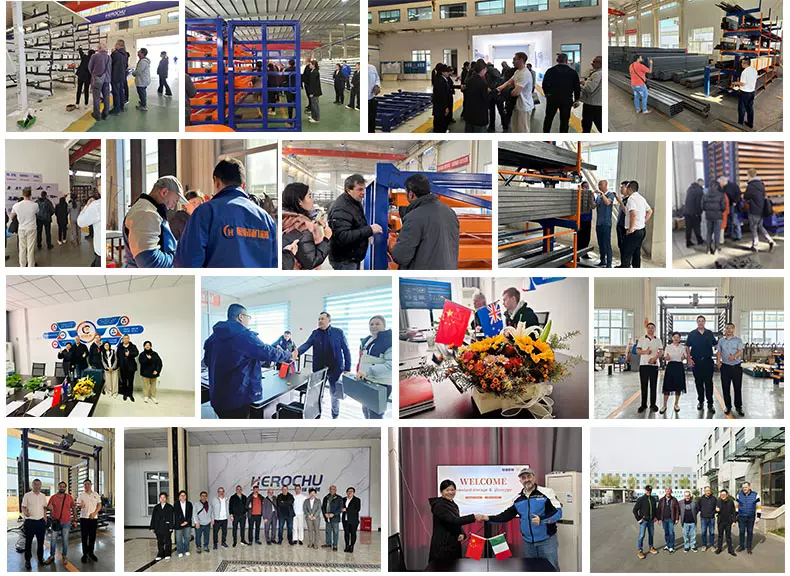
Customer visit
Herochu has always been adhering to the market-centric approach to meet customer requirements to the maximum extent, and the business philosophy of “creating brands with heart and gaining reputation with sincerity”. It provides customers with high-quality products and services with rigorous military quality, professionalism, and excellence, and has won unanimous praise in the Chinese aerospace, Chinese weapons, Chinese railways, automobile manufacturing, engineering machinery, non-ferrous metal titanium alloy and other industries.