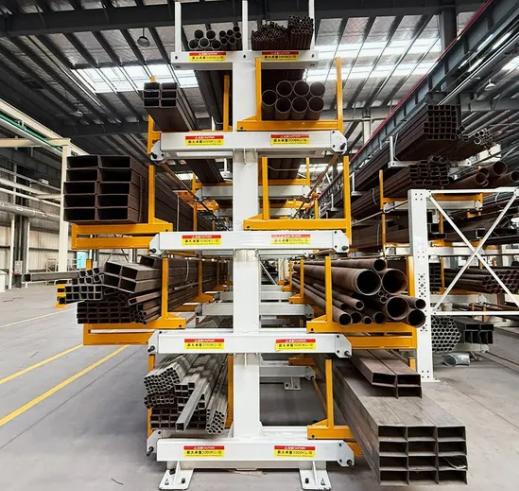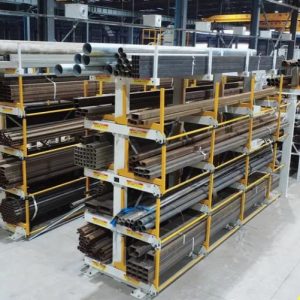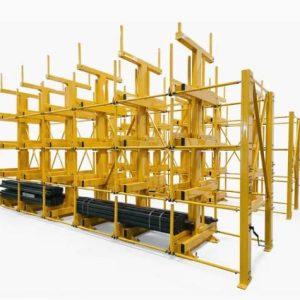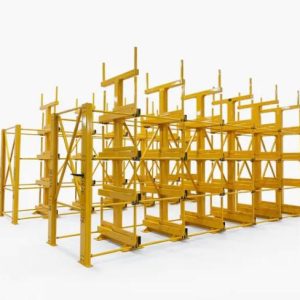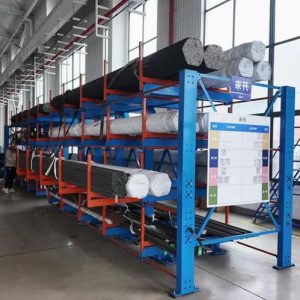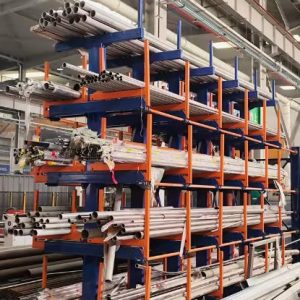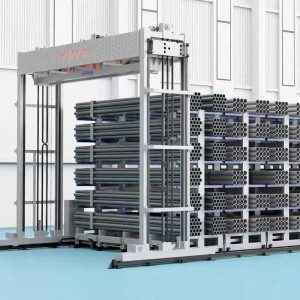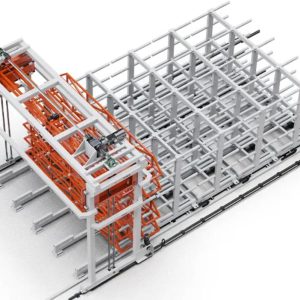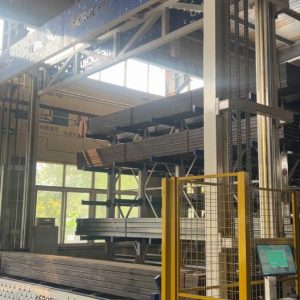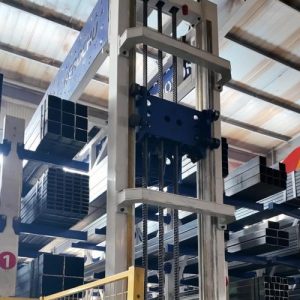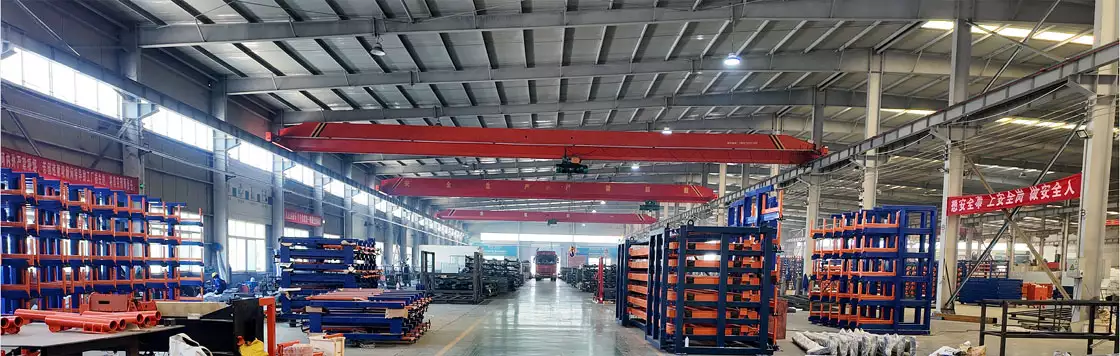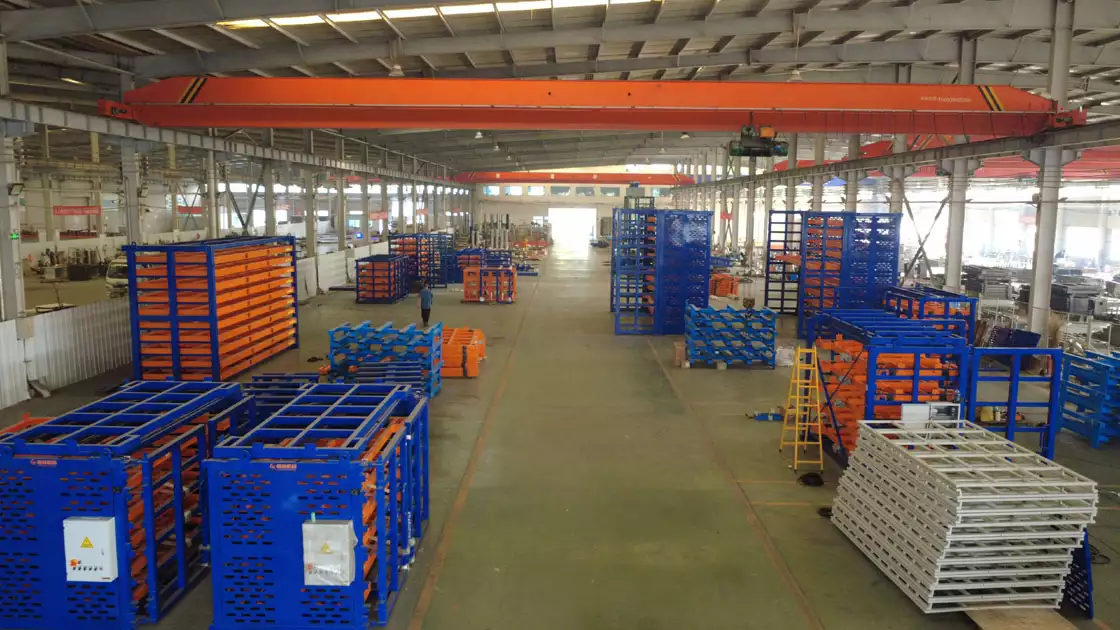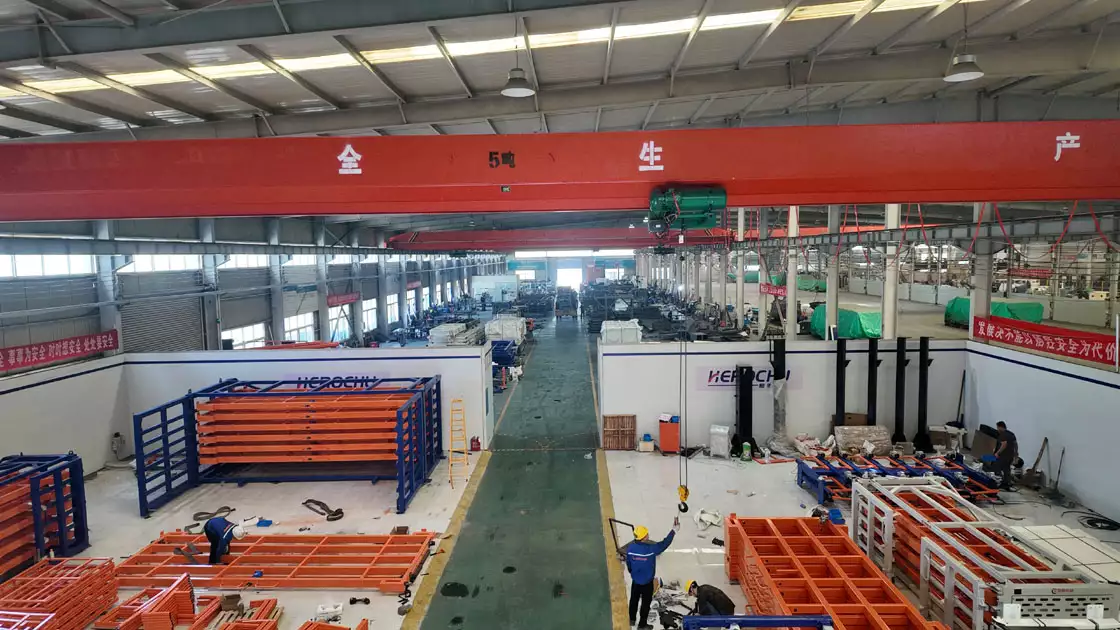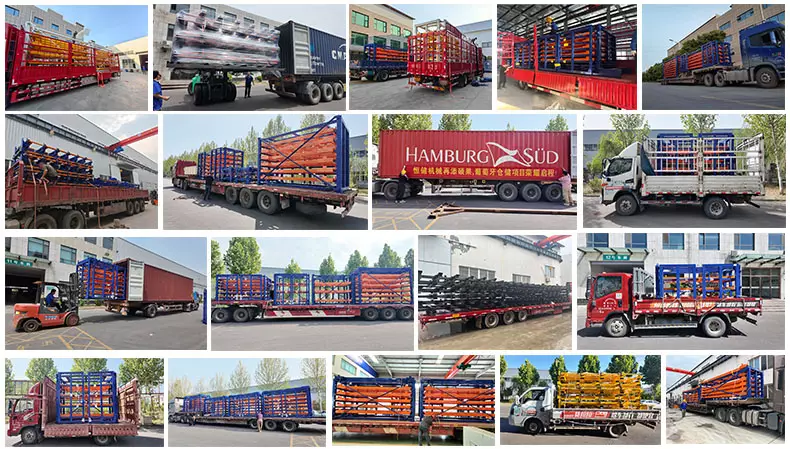
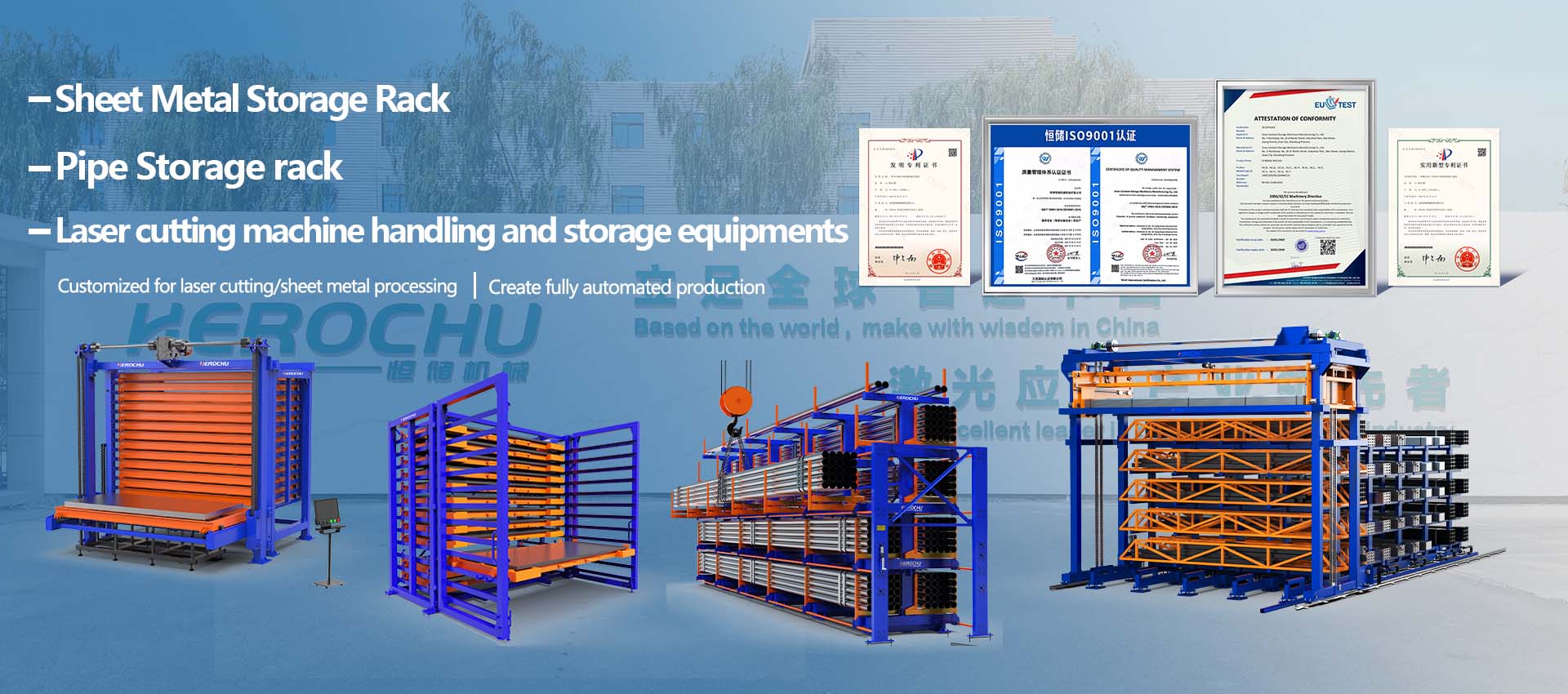
Steel pipe inventory occupies a disproportionate share of warehouse floor area in metal distribution centers, fabrication shops, and construction supply depots. The geometry of the material itself works against efficient storage: lengths measured in meters, circular cross-sections that resist stable stacking, and unit weights that rule out lightweight shelving. An industrial cantilever steel pipe warehouse storage rack solves the spatial equation by orienting pipes horizontally across open-faced cantilever arms, stacking multiple tiers vertically within a single footprint column.
Herochu designs industrial cantilever steel pipe warehouse storage rack systems with the operational realities of high-throughput warehouses in mind. Beyond the structural capacity to hold heavy loads, the system must integrate with existing material handling workflows, support rapid inventory access, and maintain organization across thousands of individual pipe lengths spanning multiple diameters and wall thicknesses. The following sections examine how these systems transform warehouse pipe storage from a space-consuming liability into an organized, accessible asset.
Warehouse Layout Integration
The footprint efficiency of cantilever racking derives from its single-aisle access pattern. Unlike double-deep pallet racking that requires reach trucks and creates honeycombing losses, a cantilever configuration presents every storage position to the aisle directly. A forklift operator or overhead crane can retrieve any pipe bundle without shifting adjacent stock, and the open-front design eliminates the need for maneuvering clearance between rack uprights.
Aisle width calculations for cantilever pipe storage depend on the handling equipment used. Side-loading forklifts operating in guided very narrow aisle (VNA) configurations can work in aisles as narrow as 1.8 meters, while conventional counterbalance trucks typically need 3.5 to 4 meters. Herochu works with the warehouse layout and equipment fleet during the specification phase to optimize rack spacing for the actual material handling tools in use, avoiding both wasted aisle width and tight clearances that slow operations.
Column spacing along the rack run is dimensioned to match the longest pipe length stored. The standard Herochu industrial cantilever steel pipe warehouse storage rack accommodates 6,000 mm, 9,000 mm, and 12,000 mm lengths through the HC-G6053, HC-G9065, and HC-G12065 model series respectively. For warehouses that stock mixed lengths, multiple rack runs can be configured with different column spacings, or variable arm positions can support shorter materials within a longer frame bay.
Classified Storage Logic and SKU Organization
Pipe inventory in a typical metal service center may include hundreds of distinct SKUs differentiated by material grade, outer diameter, wall thickness, and surface finish. Without systematic storage, similar-looking pipes become indistinguishable, picking errors increase, and physical inventory counts diverge from system records. Herochu cantilever racks support classified storage strategies by providing clearly defined compartments per tier and per column bay.
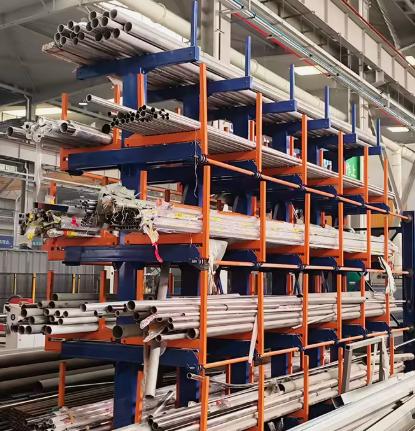
The independent compartment design assigns one product type to each storage position. Lower arms can hold heavy-wall structural pipe in diameters from 100 mm to 300 mm, middle tiers accommodate standard schedule pipe in 50 mm to 150 mm diameters, and upper arms store lighter thin-wall tube and small-diameter mechanical tubing. Each position carries a visible location code that integrates with warehouse management system (WMS) pick paths, allowing operators to confirm material identity before loading or retrieval.
For facilities that process both bundled and loose pipe inventory, the rack configuration can mix compartment types across the same column run. Bundled pipe arriving from the mill stacks directly onto wide-profile arms, while loose individual lengths picked for customer orders occupy adjacent compartments organized by diameter. This flexibility keeps incoming and outgoing material in the same rack system rather than requiring separate storage areas for different material states.
Throughput and Handling Cycle Efficiency
The time required to retrieve a pipe bundle from storage directly affects order fulfillment speed and labor cost. Cantilever racks minimize retrieval cycles through several design characteristics. The open arm structure allows forklift tines or crane slings to engage the material from above without clearing side obstructions. Operators can visually identify the target SKU from the aisle without dismounting from equipment. Material discharge from either side of the rack — the Herochu dual-side mechanical assistance feature — means operators can load from one aisle and unload from the opposite side without rack reorientation.
For high-turnover SKUs, positioning frequently accessed pipe sizes on the middle and lower arms reduces lift height and speeds cycle times. Slow-moving or specialty grades occupy upper positions where occasional access justifies the additional handling time. This velocity-based slotting approach, combined with the cantilever rack’s direct-access design, can reduce per-pick handling time compared to floor-stacked or A-frame storage methods.
Structural Design for Continuous Warehouse Service
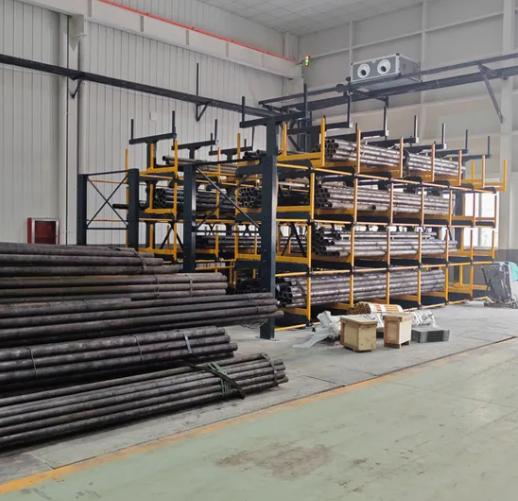
Warehouse racking operates under cyclic loading conditions that differ from static structural design cases. Each material placement and removal subjects the rack frame to a load-unload cycle, and the cumulative effect of thousands of cycles over years of service influences long-term structural behavior. Herochu addresses fatigue considerations through conservative design margins, full-penetration welding at critical joints, and the dual-beam crossbar configuration that stiffens the column assembly against lateral movement.
The Q235B steel frame provides the strength and toughness required for this duty cycle. Column sections are sized for the combined effects of vertical compression from stored material weight and bending from eccentric arm loads. Base plate dimensions and anchor bolt patterns are calculated for the overturning moment envelope including seismic load cases where applicable. Each rack bay carries a clearly marked capacity rating, typically 3,000 kg per level for 6-meter models and 5,000 kg per level for 9-meter and 12-meter configurations.
Integration with Material Handling Equipment
The value of an industrial cantilever steel pipe warehouse storage rack depends partly on how well it works with the handling equipment already in the facility. Herochu racks are compatible with a range of loading methods: overhead bridge cranes for heavy bundled pipe, side-loading forklifts for narrow-aisle operation, conventional counterbalance trucks for standard-width aisles, and manual loading for lightweight small-diameter tube on lower arm positions.
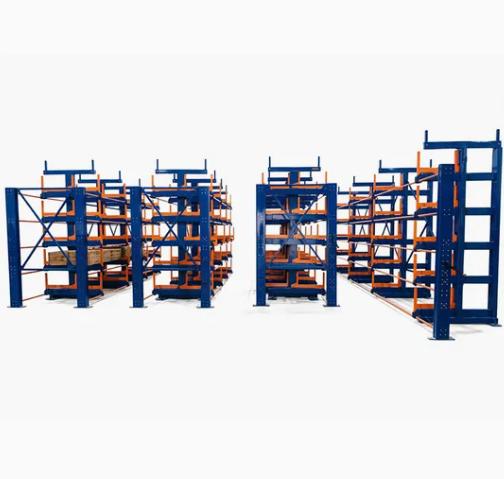
Arm height spacing is set during installation to provide adequate fork clearance above the highest point of the stored material. For bundles, this means accounting for the effective stack height rather than individual pipe diameter. The clearance dimension, standardized at 600 mm in Herochu configurations with customization available, ensures the fork or sling can enter and exit the compartment without contacting the arm above or the material below.
Safety Systems and Operational Discipline
Organized rack storage improves warehouse safety by replacing unstable floor stacks with engineered support structures. Pipes stacked directly on the floor or on dunnage can shift, roll, or collapse, particularly when lower layers are withdrawn for order picking. Cantilever arms provide positive support along the pipe length, and the slight upward arm inclination keeps round stock biased toward the column rather than the open end.
Load rating signage on each bay communicates capacity limits to operators at the point of use. Retention accessories, including arm-end stops and anti-roll pins, add mechanical restraint for loose round stock. Regular inspection of arm connections, column plumb, and base anchor integrity forms part of an ongoing rack safety program that supports long service life and regulatory compliance.