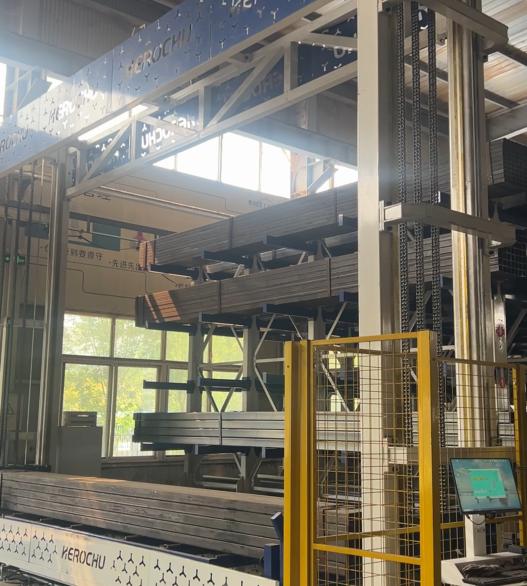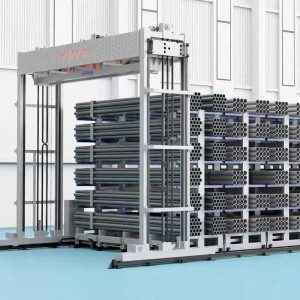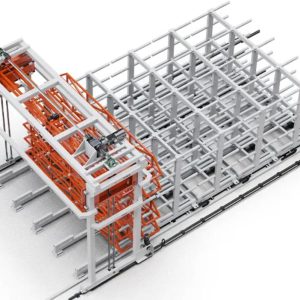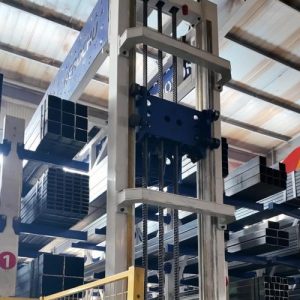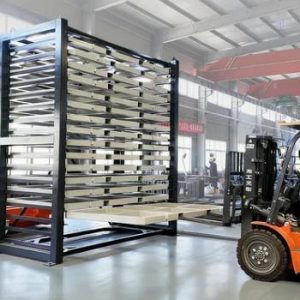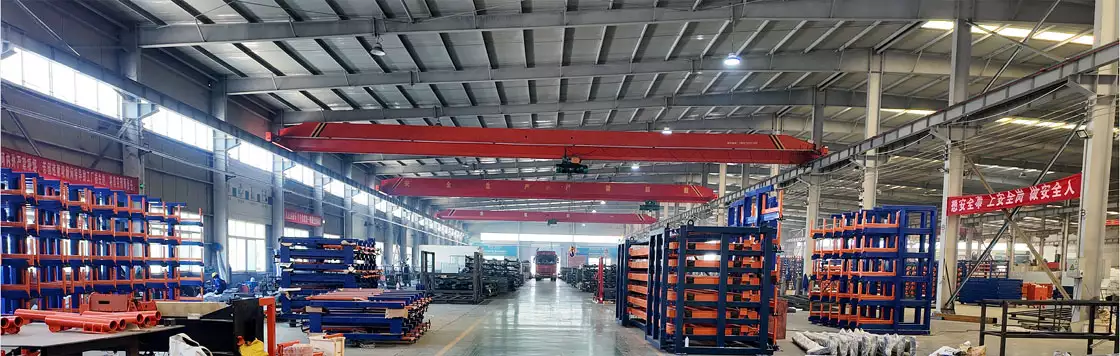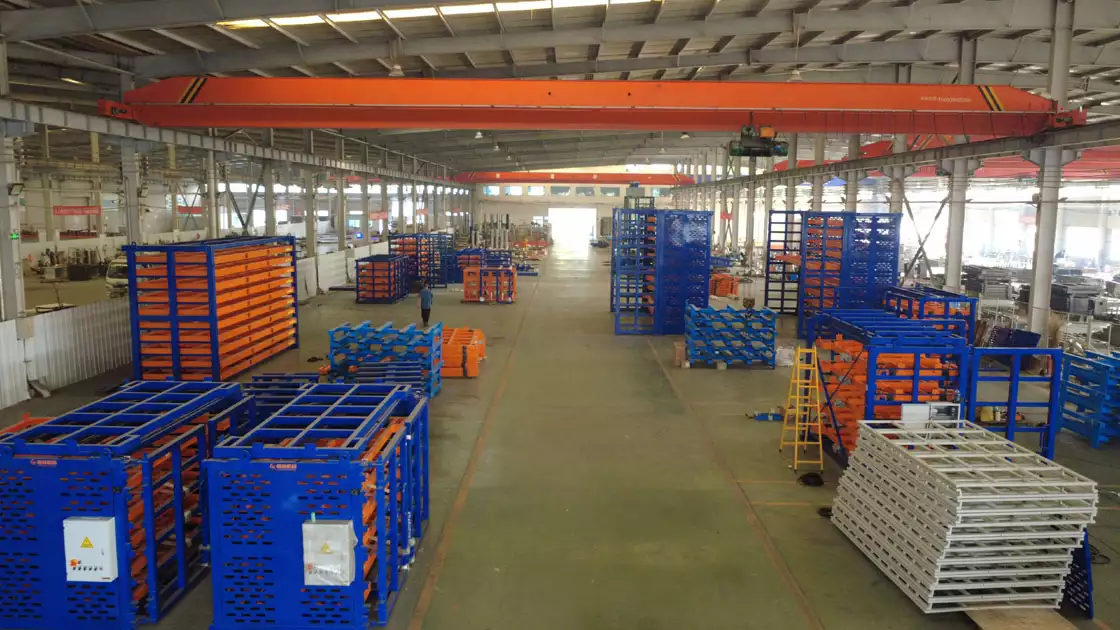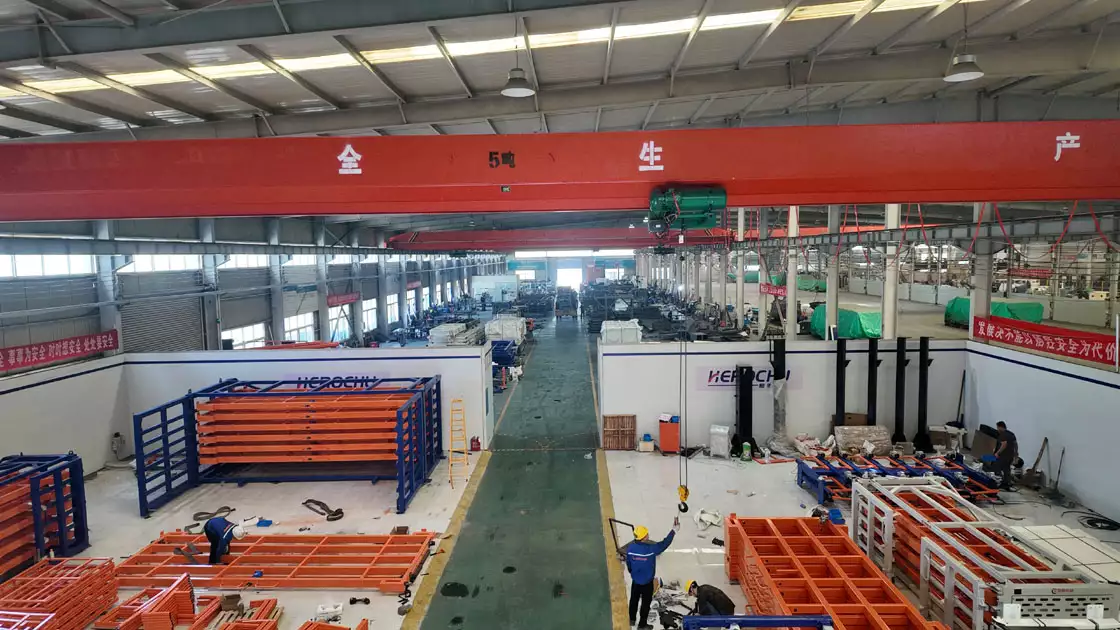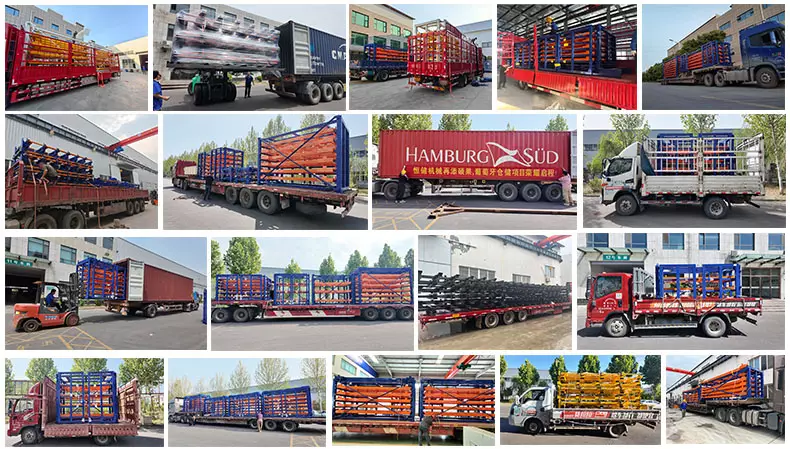
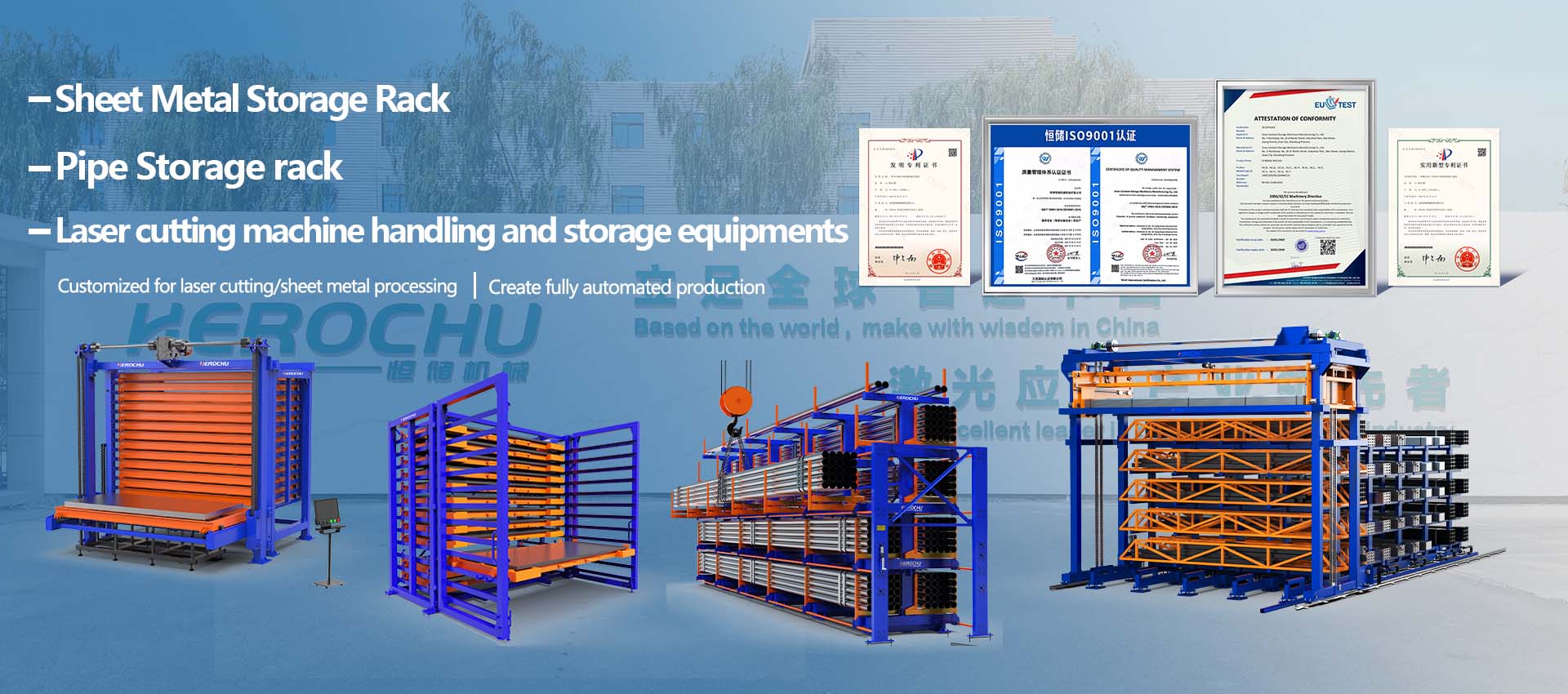
Warehouses and fabrication shops that process heavy steel bar stock face a distinct set of storage challenges that lighter-duty racking systems cannot adequately address. Bars weighing hundreds of kilograms each, often in lengths exceeding six meters, impose structural demands on racking frames, introduce safety risks during manual handling, and occupy disproportionate floor area when stored horizontally. Herochu’s Heavy-Duty Steel Bar Storage System is purpose-built for these environments — combining load-rated vertical towers, automated retrieval mechanisms, and industrial-grade structural engineering to handle the weight, length, and throughput volumes of serious steel processing operations.
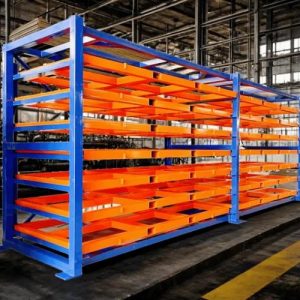
Load capacity sits at the foundation of the design. Each storage layer in the Herochu system is rated for 3,000 to 5,000 kg depending on the tower configuration, with the structural calculation accounting for both static weight and the dynamic forces generated during tray acceleration and deceleration. The frame uses Q235B structural steel with welded and bolted connections sized through Simsolid finite-element analysis, ensuring that deflection under maximum load remains within the tolerance band required for smooth tray sliding and precise gantry positioning. Unlike general-purpose pallet racking retrofitted for bar storage, the tower structure is designed specifically for the concentrated line loads that heavy bar stock imposes along tray support beams.
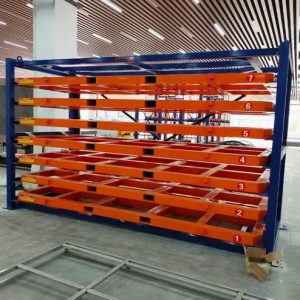
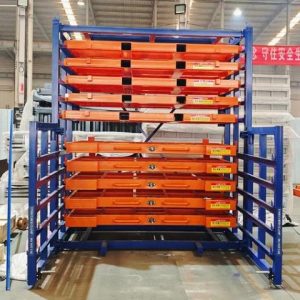
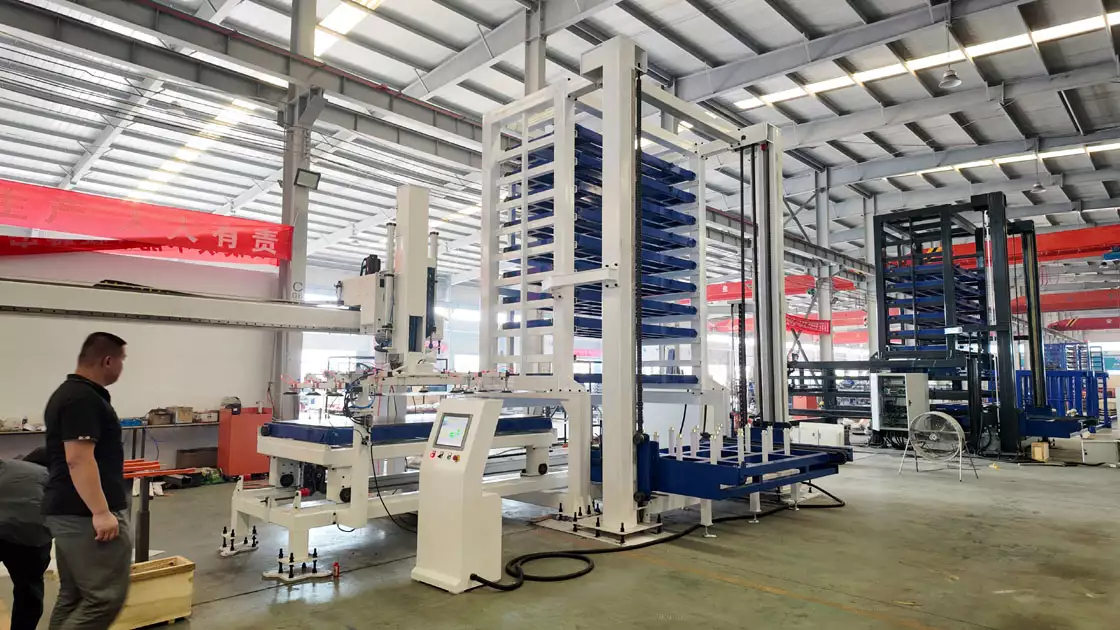
The tray assemblies themselves represent a considered engineering choice. Each tray features reinforced longitudinal beams with intermediate cross-members spaced to prevent bar stock from sagging during long-term storage — a detail that matters when storing precision-ground shafting, chrome-plated hydraulic cylinder rod, or polished stainless bar where surface defects from contact marks are unacceptable. Tray side walls are dimensioned to contain loose bundles without material spillage during gantry movement, and the tray coupling mechanism engages positively with the lift carriage to prevent tray slippage during vertical transport.
For fabrication shops where material variety is high — carbon steel, tool steel, alloy bar, stainless rounds, hex bar, and hollow sections all coexisting in the same inventory — the system’s bin-level organization delivers immediate operational benefits. Each tray can be subdivided into multiple compartments, each assigned to a specific SKU. When a laser cutting or machining cell needs a particular grade and diameter, the operator retrieves exactly that bin to the picking station. The time previously spent searching through stacked racks, reading faded chalk markings, and manually measuring stock to confirm specifications is eliminated from the workflow.
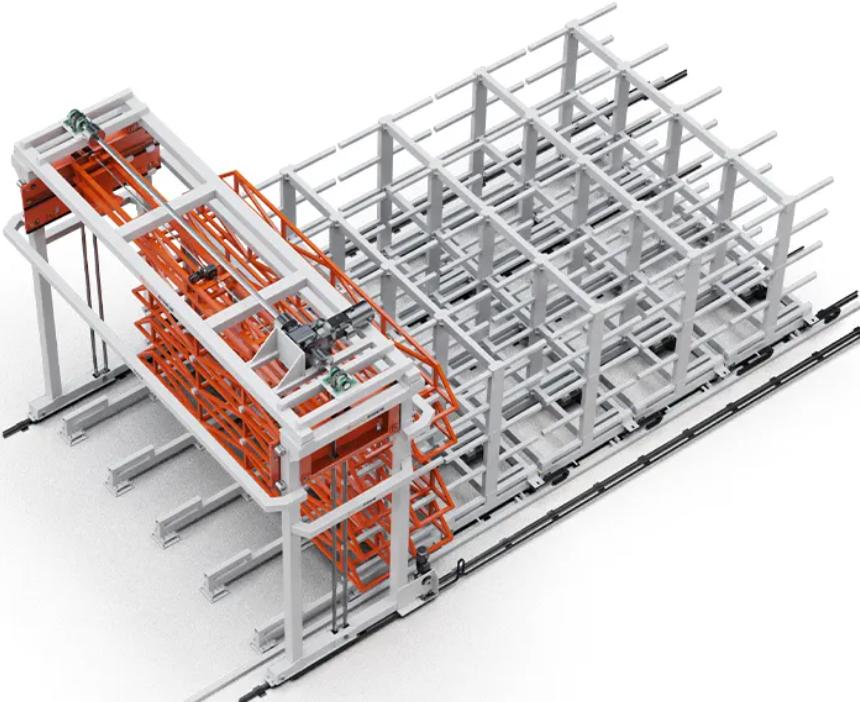
The floor-rail gantry architecture contributes directly to heavy-load handling capability. By transferring forces vertically into the floor rather than cantilevering them from an overhead structure, the design avoids the bending moments that limit the payload capacity of suspended crane systems operating at comparable spans. The shared picking aisle configuration — one gantry servicing racks on both sides — means that the gantry investment is amortized across a larger volume of stored material, improving the capital efficiency of the overall installation.
Warehouse environments present additional demands beyond pure load handling. Temperature swings in unconditioned storage buildings cause thermal expansion in both the racking structure and the stored steel. The Herochu system’s guide rail mounting incorporates expansion joints and sliding connections that accommodate dimensional changes without binding or introducing positioning errors into the gantry control system. Dust and scale — inevitable byproducts of steel storage — are managed through sealed bearing housings on the gantry drive wheels and covered chain guides that prevent particulate accumulation in the transmission components.
Inventory management in a heavy-bar context carries financial weight beyond operational convenience. A single misplaced bundle of 6-meter 316 stainless round bar represents several thousand dollars of working capital that is effectively frozen until located. The Herochu PLC-based inventory system tracks every put-away event and maintains an auditable record of what material resides in which location, when it was stored, and when it was retrieved. This traceability supports both production planning and financial reconciliation, turning the storage system into a de facto asset management tool for raw material inventory.
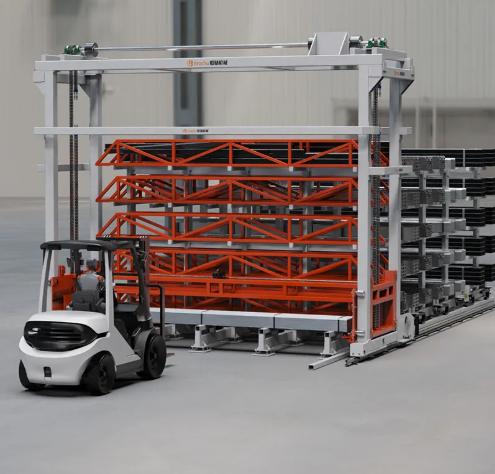
Safety improvements in heavy-bar handling are both qualitative and quantitative. The elimination of manual bar rolling, overhead crane lifts above operator work zones, and forklift maneuvering with long projecting loads removes the highest-risk activities from daily warehouse operations. Bars remain contained within trays during all automated movements, and the picking station design places the operator outside the load path during tray presentation. The reduction in forklift hours also translates into lower fuel or battery costs and reduced maintenance expenditure on the lift truck fleet.
Scalability is built into the modular tower design. A fabrication shop starting with a single two-tower installation can later add towers along the same gantry rail as material throughput grows. The PLC control system accommodates additional storage locations without software reconfiguration beyond updating the rack map. This modular growth path allows businesses to align storage investment with revenue growth rather than over-building capacity that may sit underutilized during early-stage adoption.
For warehouse operators and fabrication shop managers evaluating heavy-duty storage solutions, Herochu’s system addresses the full chain of concerns — structural integrity under extreme loads, handling speed consistent with production line demands, inventory accuracy that supports lean manufacturing principles, and safety provisions that protect both personnel and stored material. In an industry where the cost of damaged stock and inefficient material flow directly erodes margin, engineered storage automation delivers returns that compound with every retrieval cycle.