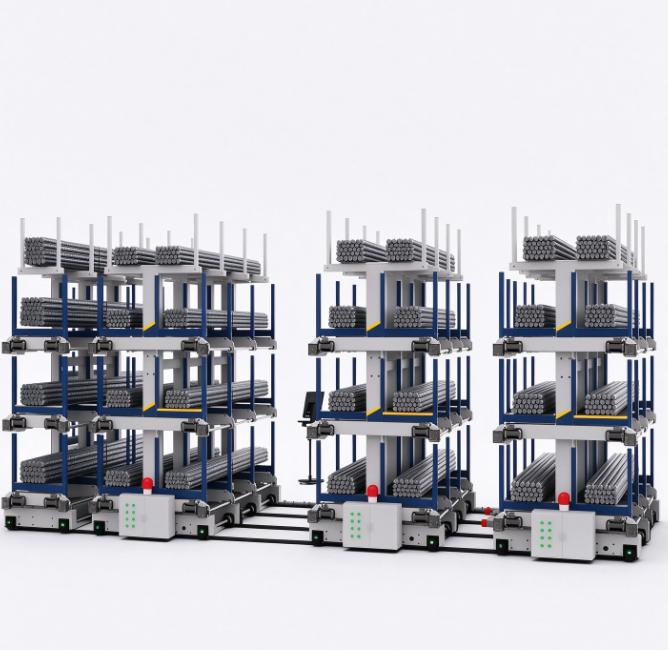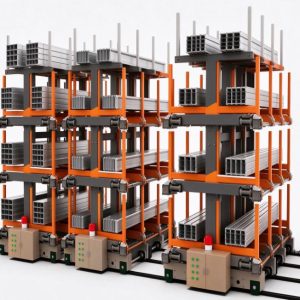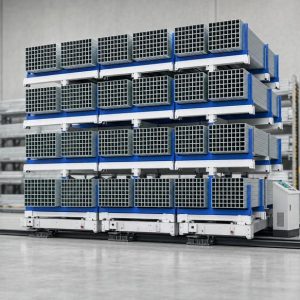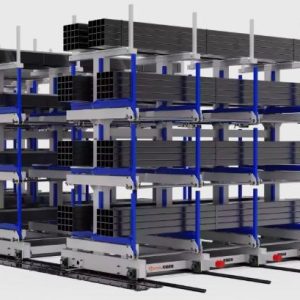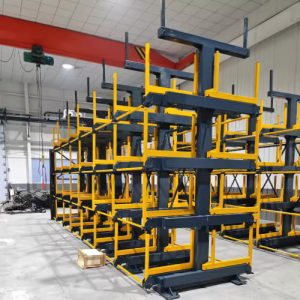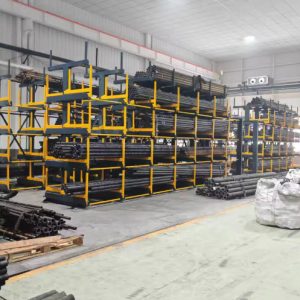
Can rails be added to an existing cantilever rack? Only if the frames were designed for carriage mounting. A static rack base is not a carriage, and retrofitting one changes the load path.
How much floor does the rail itself take? A surface-mounted run occupies a strip about 200 mm wide per tower line, plus the base plate footprint.
Does the PLC need a network connection? No. The panel runs standalone. Remote diagnostics are optional and usually added where maintenance is contracted out.
What happens if a tower is overloaded? The drive stalls or the overload trips before structural yield, but the margin is finite. Rated load is a hard limit, not a target.
Can the lifting carriage serve every level? Yes. Each level is powered and stops at its own programmed position.
How long does a full-height lift take? At 9 m/min, a 9 m lift takes about one minute; in and out movement at 12 m/min adds seconds.
Is the vertical rack suitable for a low building? It works, but the density argument weakens: in a 7 m building, a four-level frame captures most of the height without a tall column.
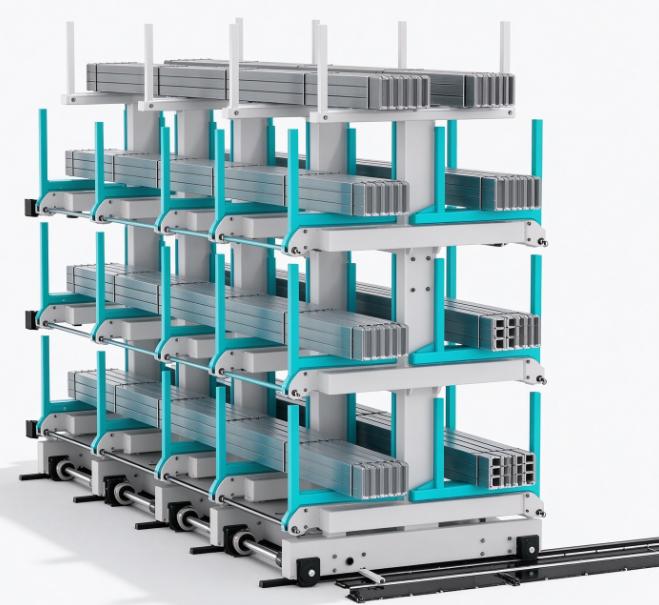
Can pipes of different lengths share one tower? Yes, within arm length and load limits. Short pieces overhang inward rather than into the aisle.
How many aisles does the system need? One shared picking aisle for the whole block. Two appear only where a building column or fire wall splits the block.
Can the layers be changed after installation? Layer count is fixed at fabrication. Arm positions can be adjusted within the design, but adding levels changes the load case and needs engineering review.
Does the drive work in an unheated shed? Yes. Lubricant grade and control enclosure rating are specified for the site temperature range.
What drives lead time? Frame fabrication and rail length. Slab survey and anchor design come first, because a rail set in the wrong place cannot be corrected by adjusting the rack.