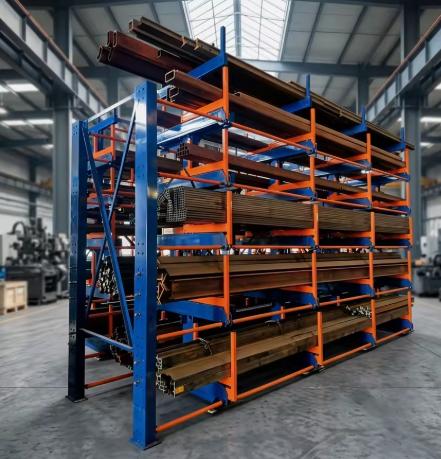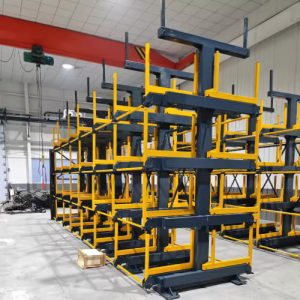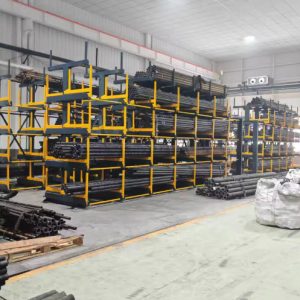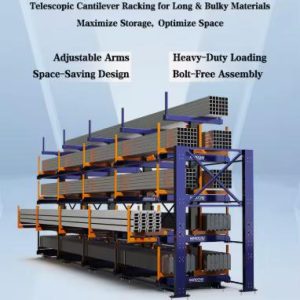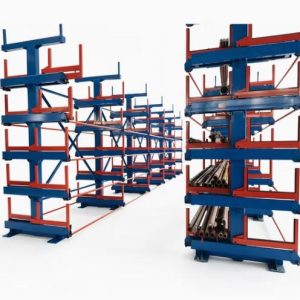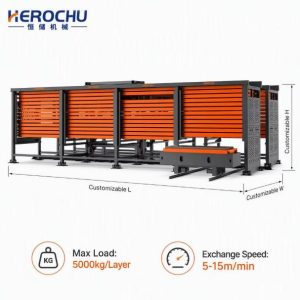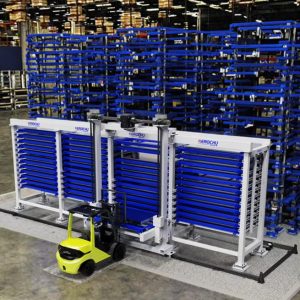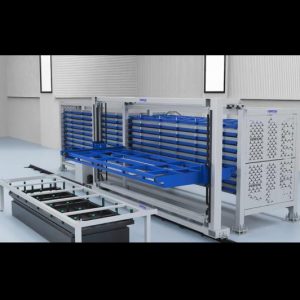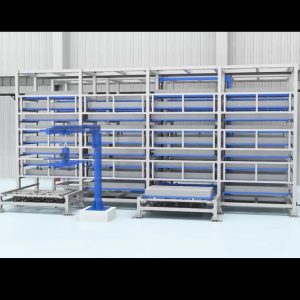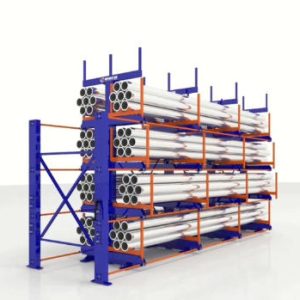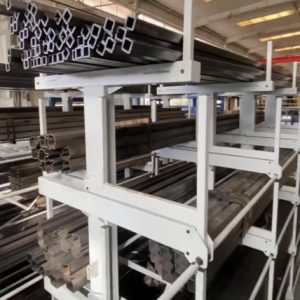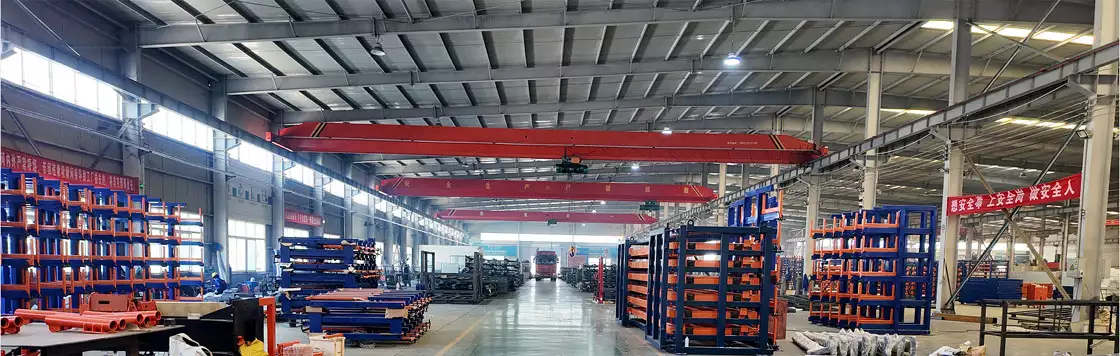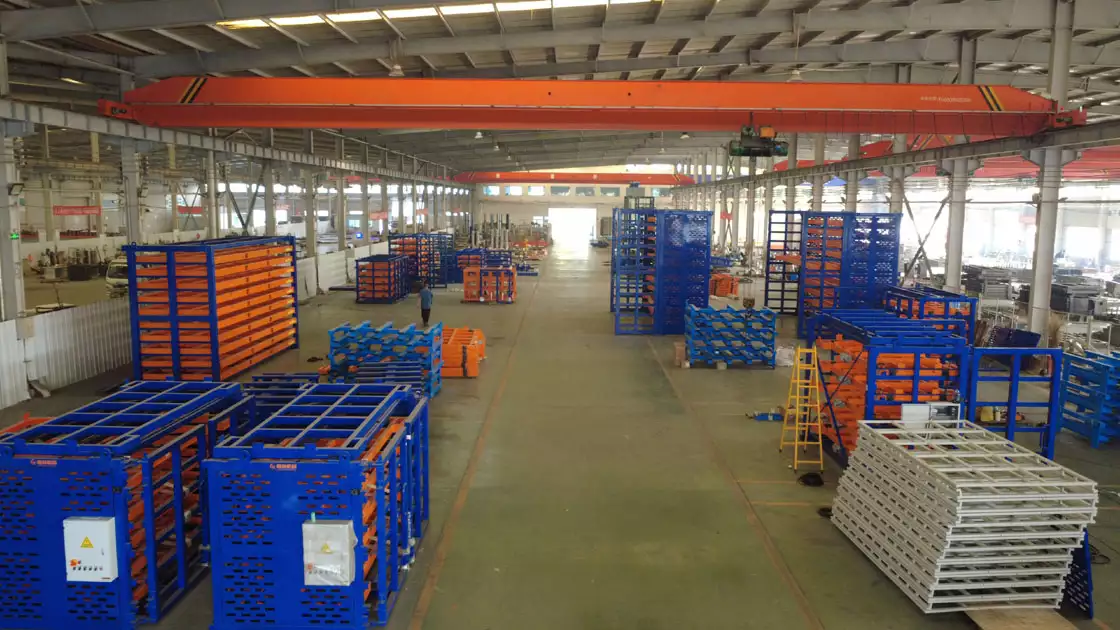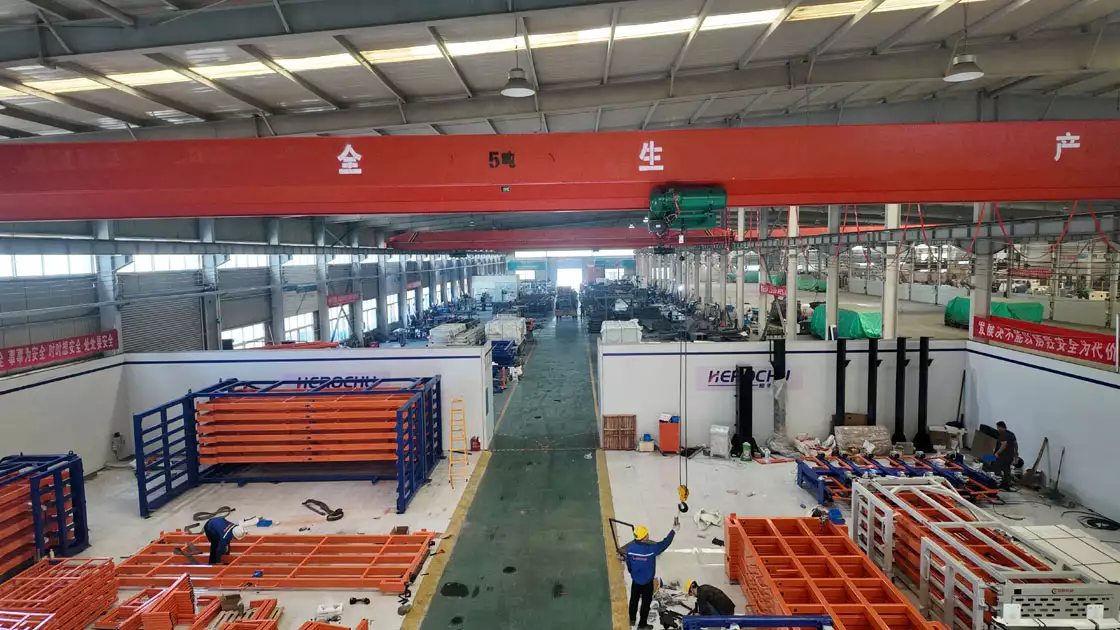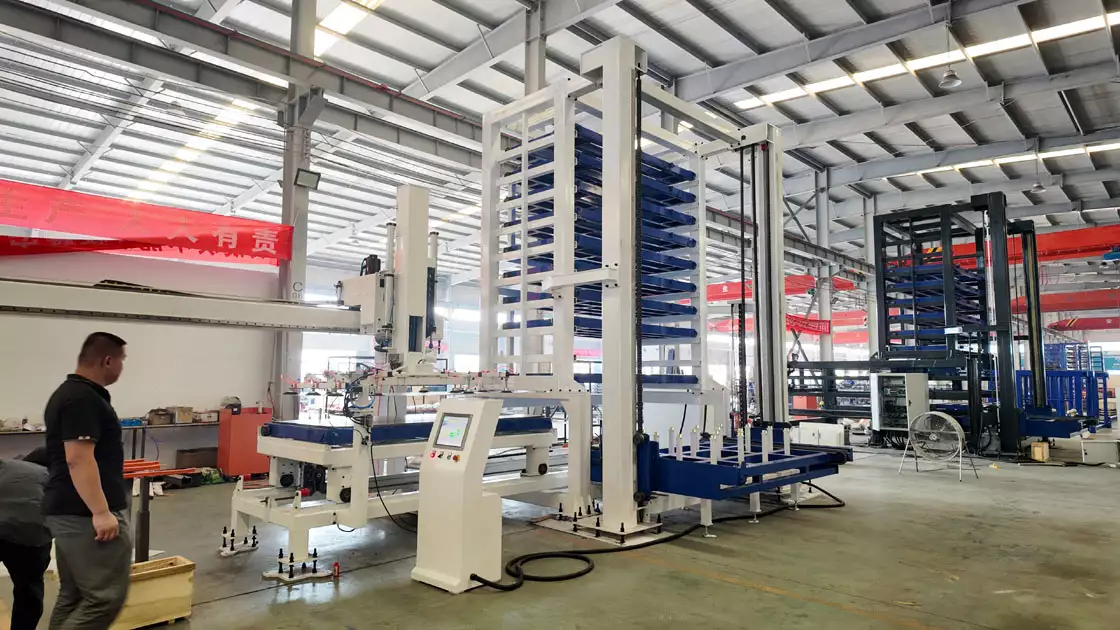
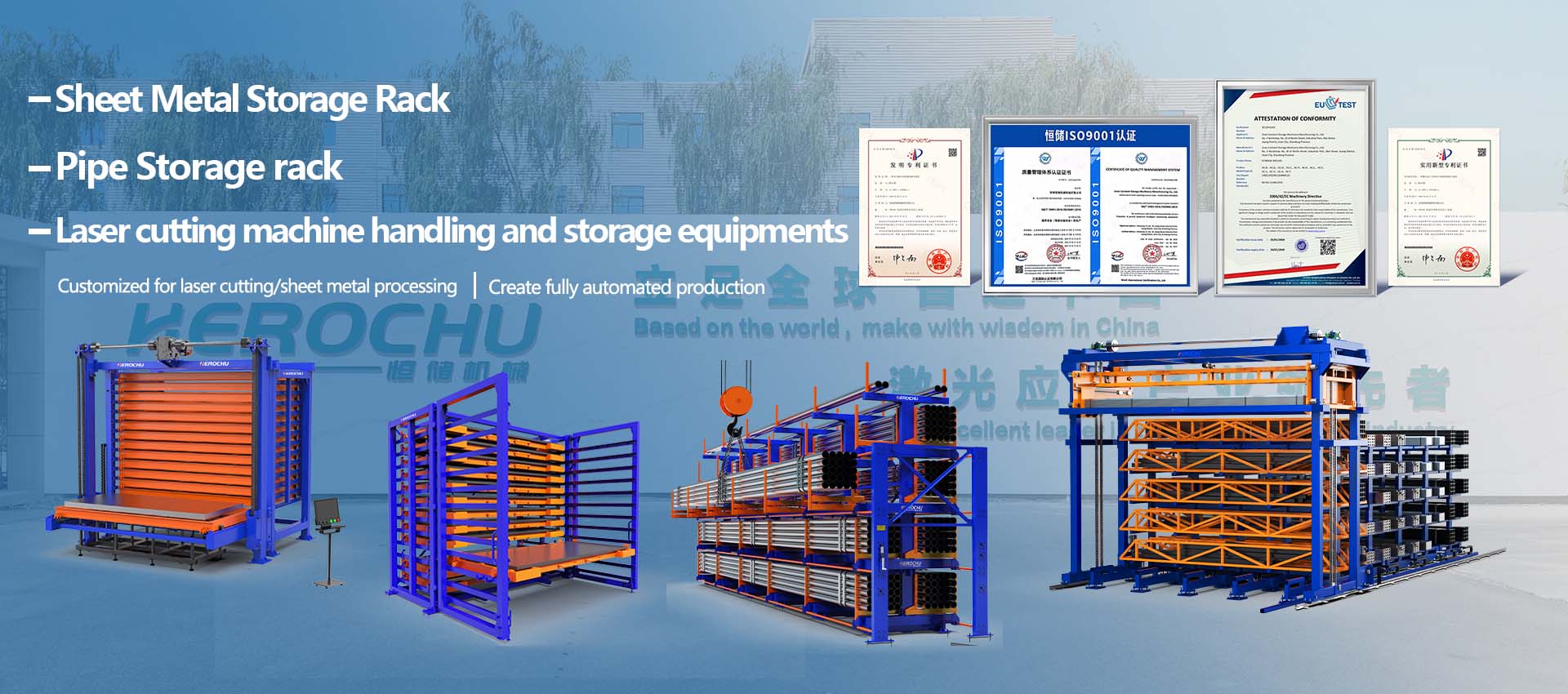
EHS managers and operations directors often arrive at the same conclusion from different directions. The operations team sees a crane sitting idle while operators wait for a forklift to clear an aisle. The safety team sees a 12-metre tube being carried through a shared workspace on forks, with visibility reduced and turning awkward. Both are describing the same storage design problem. A heavy-duty industrial cantilever steel pipe rack, specified around overhead lifting rather than forklift retrieval, addresses both the throughput loss and the exposure in one structural decision.
The Forklift-and-Long-Tube Combination Is a Moving Hazard
When a forklift carries a long tube through a narrow aisle, the truck becomes a moving strike hazard. Visibility drops, turning becomes awkward, and even a small steering error can hit people, rack columns, or nearby equipment. The risk is not solved by driver training alone. If the physical storage method still forces routine long-tube aisle travel, training cannot fully remove the exposure. The storage system has to change the handling method, not just the operator’s behaviour.
How a Roll-Out Cantilever Pipe Rack Changes the Handling Method
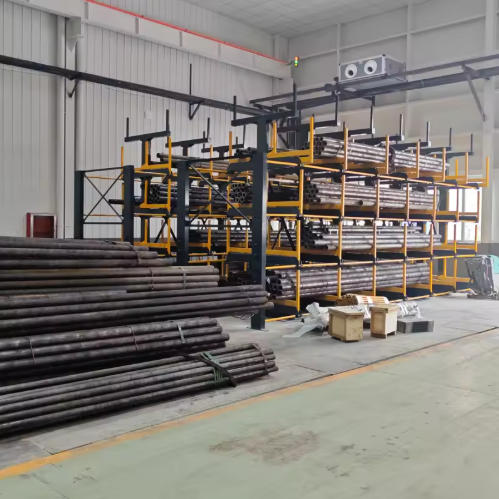
Instead of driving the tube through the aisle on forks, the selected layer extends outward and the overhead crane lifts the load vertically from a controlled position. Floor stacking, by contrast, forces repeated rehandling and unstable travel patterns; a telescopic cantilever rack creates a defined lifting point and removes much of the improvised motion that causes near-misses. The aisle no longer needs to accommodate a counterbalance truck’s turning circle. A roll-out system can function in roughly 1.4 metres of clear aisle, while a conventional forklift-loaded cantilever layout typically requires 3.5 to 5 metres.
What “Industrial” and “Heavy-Duty” Should Mean in Practice
The term heavy-duty is used loosely across the racking market. For pipe and tube storage, the relevant specifications are per-arm capacity, column section, base configuration, and the rigidity of the extension carriage under a full bundle. Herochu’s roll-out telescopic tiers support up to 5–6 metric tons per layer on the relevant models, with synchronised carriage travel on both columns to prevent the loaded tier from racking sideways during extension. The frame geometry is designed to minimise deflection, and the powder-coated finish resists coolant splashes, humidity, and workshop grime in fabrication environments. For outdoor or wash-down areas, hot-dip galvanised options are available on request.
Floor Space, Inventory Control, and the Throughput Argument
The safety case is usually enough to start a conversation. The throughput case closes it. Freeing up to 50% of floor space is a realistic outcome when the wide forklift aisle disappears from the layout and the crane operates over a narrow operator zone. Inventory control improves because every tier is a defined, labelled storage location rather than a floor pile that changes shape with every retrieval. Drawer dividers and full drawers keep short or flexible material contained, and the crane operator can see the full tier when it is extended, reducing the guesswork that leads to double-handling.
What to Send Before Requesting a Proposal
A serious layout review starts with the current risk picture and the operating constraints. Photos of the existing aisle risk, the longest tube length, the heaviest bundle weight, crane details including hook height and coverage, and any recent incident pattern are enough to begin. Herochu’s roll-out cantilever pipe racking is configured around that information, with single- or double-sided uprights, manual or electric tier extension, and arm counts set from the actual pipe and tube schedule rather than a catalogue default.
Q: Does a roll-out cantilever pipe rack eliminate the forklift entirely?
A: Not always. Forklifts may still handle inbound receiving and other tasks. The goal is to eliminate routine long-tube aisle travel, where the strike hazard is highest.
Q: Why is a roll-out rack safer than ordinary floor stacking for pipe?
A: Floor stacking forces repeated rehandling and unstable travel patterns. A telescopic cantilever rack creates a defined lifting point and removes much of the improvised motion that causes near-misses.
Q: What aisle width should be planned for crane-loaded pipe storage?
A: A roll-out system needs approximately 1.4 metres for the operator and the extended tier, compared with 3.5 to 5 metres for a forklift-loaded standard cantilever layout.
Q: What load capacity can Herochu specify for heavy pipe and tube bundles?
A: Roll-out telescopic tiers are engineered for up to 5–6 metric tons per layer on the relevant models, with customisation for specific tonnage requirements.
Q: What information does Herochu need to start a warehouse tube storage layout?
A: Longest tube length, heaviest bundle weight, crane hook height and coverage, current aisle constraints, and whether the preference is manual or electric tier extension.