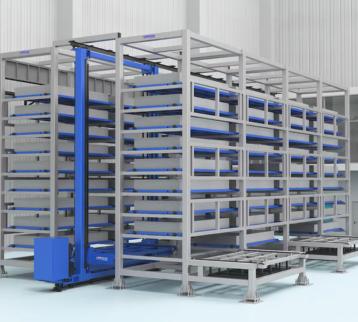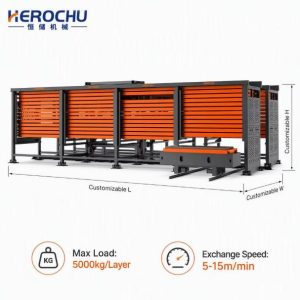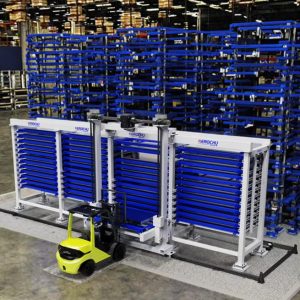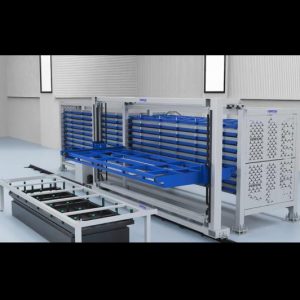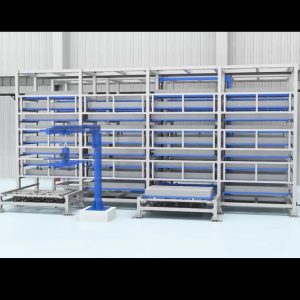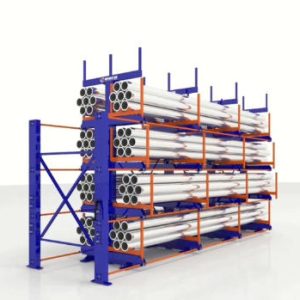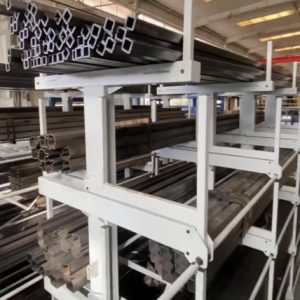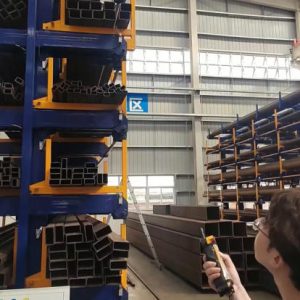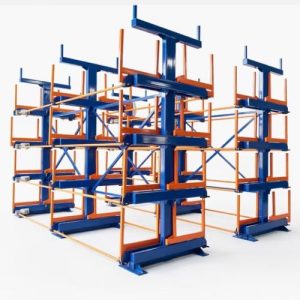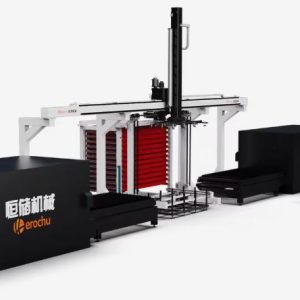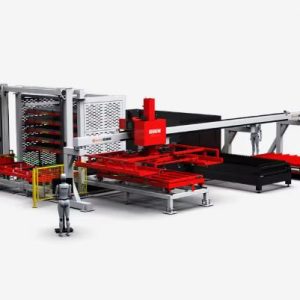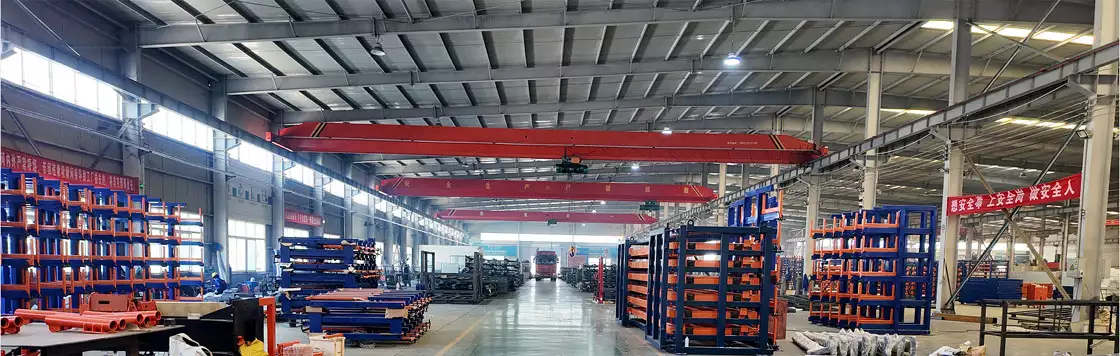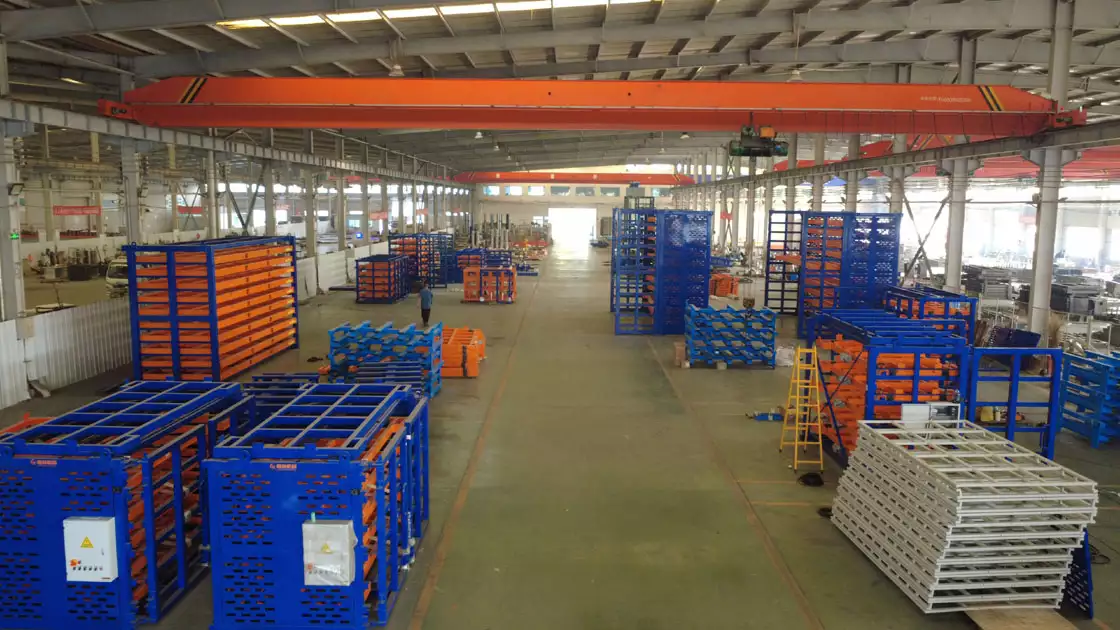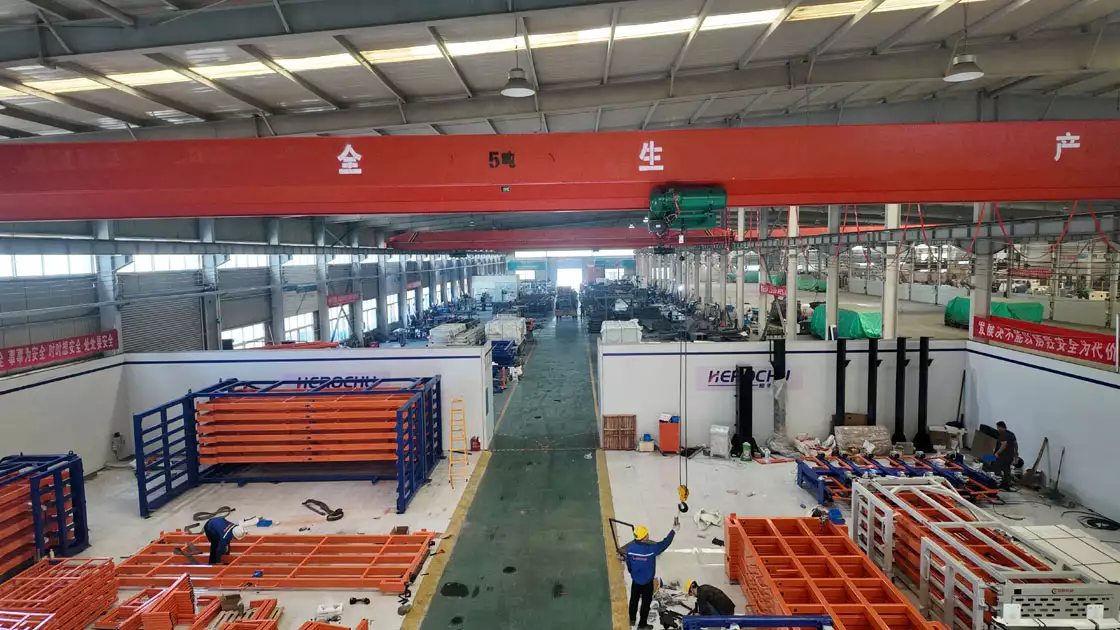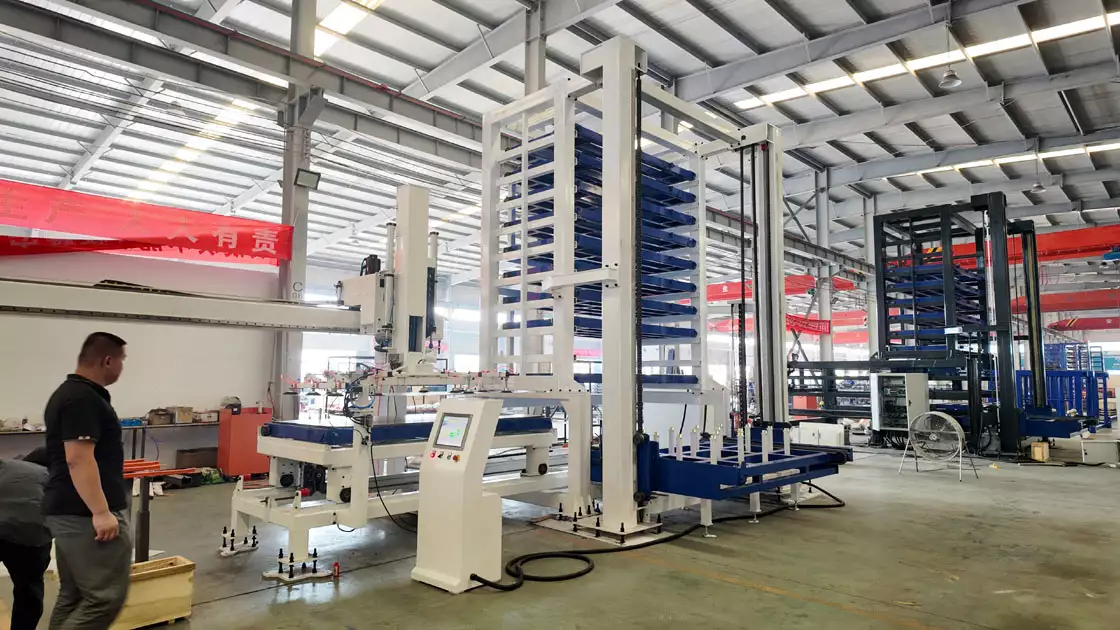
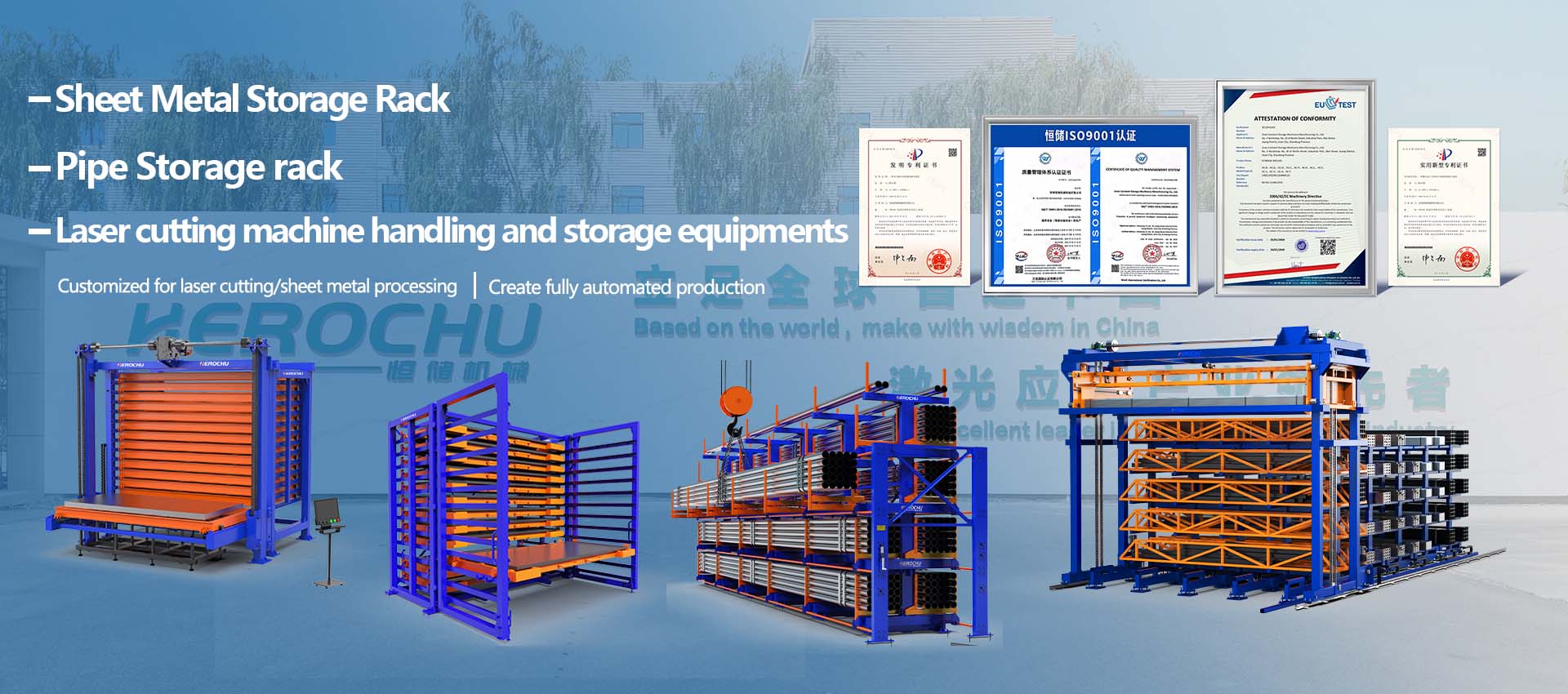
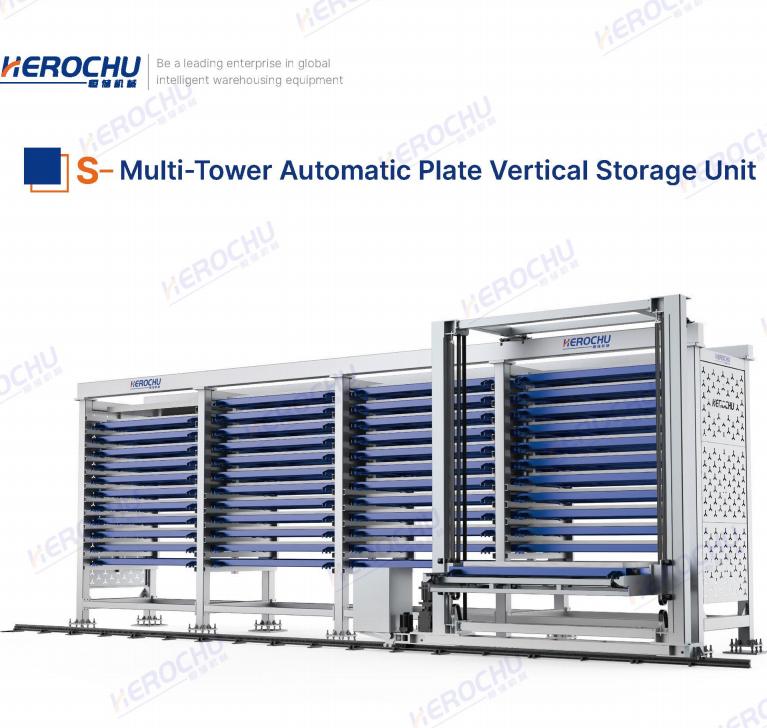
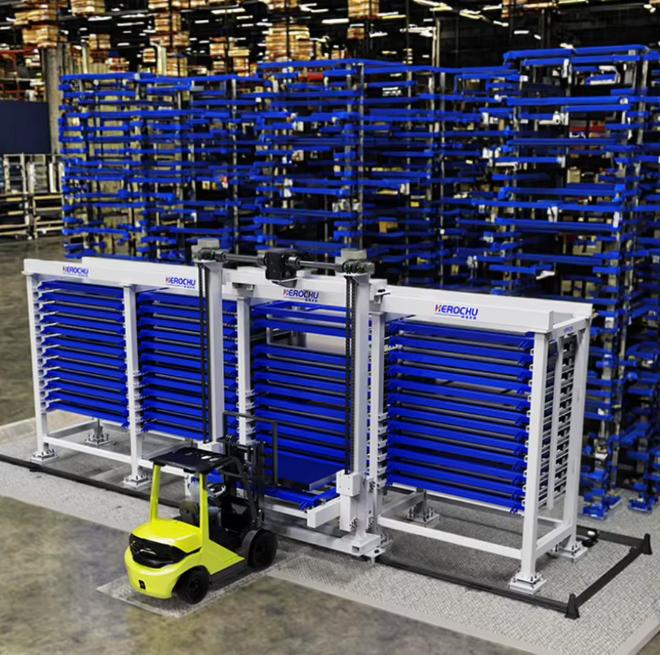
A heavy duty vertical board storage warehouse holds thick plate in multi-level towers, typically 5,000 kg per level and up to 12 levels per tower. Loads ride on steel trays inside a rigid frame, are retrieved by a PLC-controlled extractor at 5-15 m/min, and are tracked in a WMS. Herochu rates the S-series to 6,000 x 2,000 mm plate with ±2 mm repeatability.
Where light-duty storage stops working
A rack built for 2 mm mild steel at 3,000 x 1,500 mm is a different machine from one handling 40 mm plate at 6,000 x 2,000 mm. Thick plate arrives with mill scale, often with a flame-cut edge that is not square, and with a load centre further out than the drawing suggests. Trays deflect, frames twist, and an extractor that ran cleanly on thin sheet starts to bind.
The answer is heavier sections, shorter spans between supports, and a load path that carries weight into the base frame rather than through the mast. That is the logic behind the Herochu S-series heavy configuration, and why a heavy duty board warehouse should be specified from the plate list, not the building height.
The arithmetic that sets the rating
A 6,000 x 2,000 mm plate at 20 mm measures 0.24 m3, which at 7,850 kg/m3 is 1,884 kg. At 50 mm the same plate reaches 4,710 kg, close enough to the rating that a shop cutting thick sections should check every size, not the average.
| Plate size | Thickness | Weight |
|---|---|---|
| 3,000 x 1,500 mm | 10 mm | 353 kg |
| 4,000 x 2,000 mm | 20 mm | 1,256 kg |
| 6,000 x 2,000 mm | 25 mm | 2,355 kg |
| 6,000 x 2,000 mm | 50 mm | 4,710 kg |
Weights are calculated at 7,850 kg/m3 and exclude edge trim, cradles and dunnage. A twelve-level tower loaded that way carries about 60 tonnes; a four-tower bank reaches 240 tonnes. Those figures belong with the structural engineer before the foundation drawing is signed.
Load path and floor preparation
Vertical storage concentrates weight. A 5,000 kg level transfers through four or six tray supports into the columns, then into base plates on a slab or plinth. Two checks decide whether installation runs smoothly:
- Point load per base plate. This is what the slab must take, not the tonnage averaged over the footprint.
- Flatness along the tower line. Out-of-level floor makes the frame shim itself, and a shimmed frame loses the vertical accuracy the extractor depends on. Most projects specify a measured level survey.
Herochu reviews both values with the customer’s engineer and issues anchor layouts early; foundation work is the one task that cannot be compressed later.
Designing levels around real handling
Clear space of 240 mm between levels is standard and adjustable at build stage. For thick plate the constraint is usually the lifting tool rather than the sheet. A permanent magnet lifter on a crane hook needs clearance above the load; a vacuum pad on thick, scaled plate may not hold at all. Shops handling 30 mm and above generally keep a crane or lifting beam at the load-out station and use the tower for storage and sequencing.
Layer numbering matters as much as layer height. Heavy plate low down shortens lift travel, reduces mast loading and keeps the tray easy to inspect. Thin sheet and offcuts go higher, where the load is light and retrieval less frequent. Fixing that pattern before commissioning saves re-slotting later.
Safety rules that are not optional
A vertical board warehouse moves tonnes above head height, so guarding carries more weight than control features. A properly specified system has:
- An enclosed, interlocked aisle. Access during automatic operation stops the machine, not just the cycle.
- Light curtains or scanners at the load-out station, so a hand reaching for a sheet interrupts transfer before the tray moves.
- Level detection that confirms the tray is fully home before the lift descends. A partly seated tray damages load and machine together.
- Overweight or misplaced sheets flagged at storage, not after the lift has raised them.
- Mast and chain maintenance from a designated platform, never from a tray.
These are order-stage decisions. Retrofitting interlocks means downtime, and on a heavy unit that is measured in weeks.
What heavy plate storage changes in production
Thick plate work is low volume and high value: one waterjet or plasma nest may run six hours on a single sheet. When that sheet sits under twenty others, the machine waits. A vertical warehouse keeps each plate accessible, so the nest is cut when the schedule says. The second gain is offcut control: a slot with a recorded size makes a 1,200 x 900 mm remnant findable instead of scrap.
Both gains rest on one discipline: every sheet scanned in, every removal scanned out. The machine enforces positioning; only the process enforces the record.
FAQ
How much weight can one level hold? Herochu rates the heavy S-series at 5,000 kg per level, with the 3,000 mm model at 3,000 kg. Confirm the heaviest single sheet rather than the average.
Can the warehouse take plate longer than 6,000 mm? The standard range covers up to 6,000 x 2,000 mm, with custom sizes available. Longer plate usually changes the handling concept and is treated as a project variant.
Is a crane still needed? For plate above roughly 25 mm, yes, at the load-out point. The tower replaces the crane journey inside the store, not the final lift onto the bed.
How often does the frame need inspection? Intervals follow the load cycle and are fixed at commissioning. Herochu supplies the check list for columns, tray supports, chains and interlocks.
A heavy duty vertical board warehouse is a structural decision as much as a handling one. Herochu scopes the S-series against the plate list, the slab and the cutting schedule so the unit fits the building it lands in.