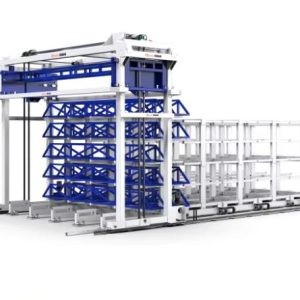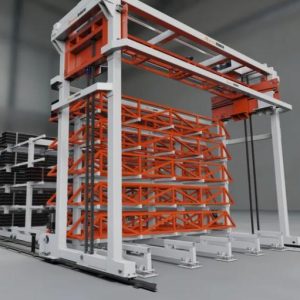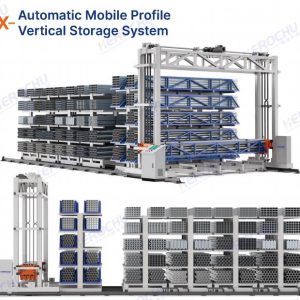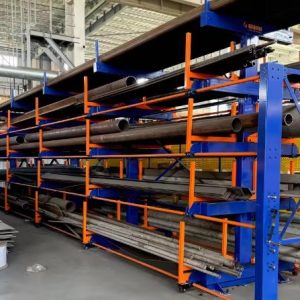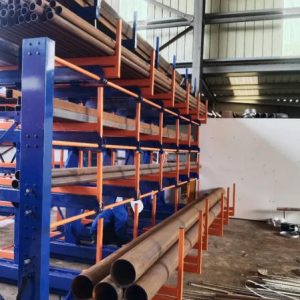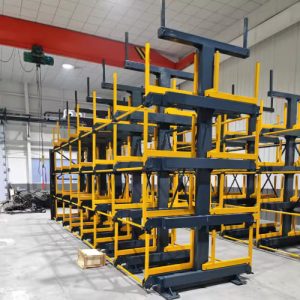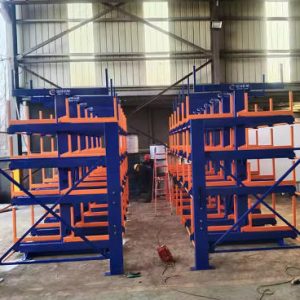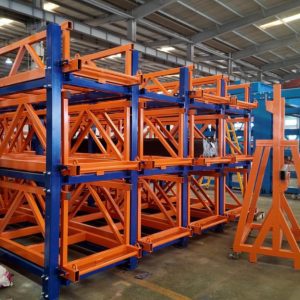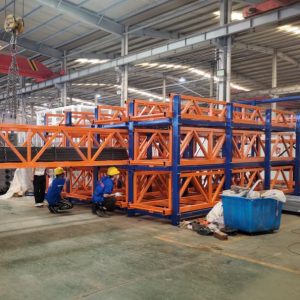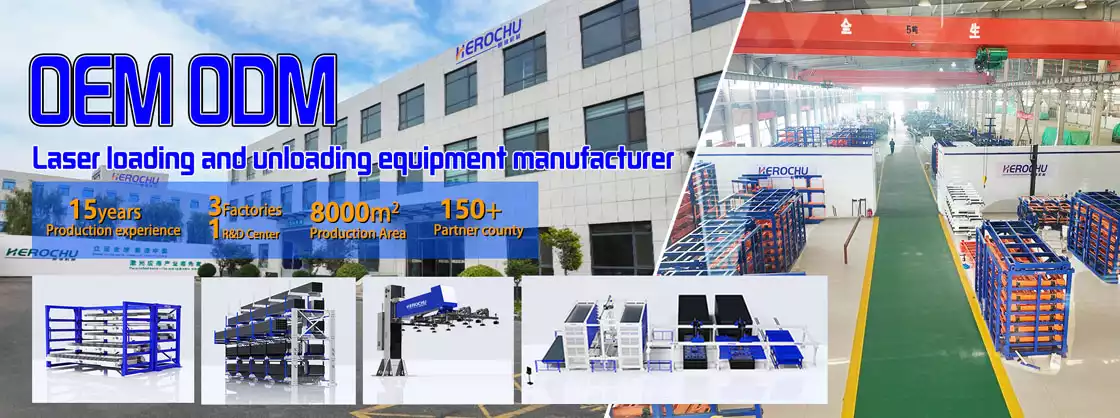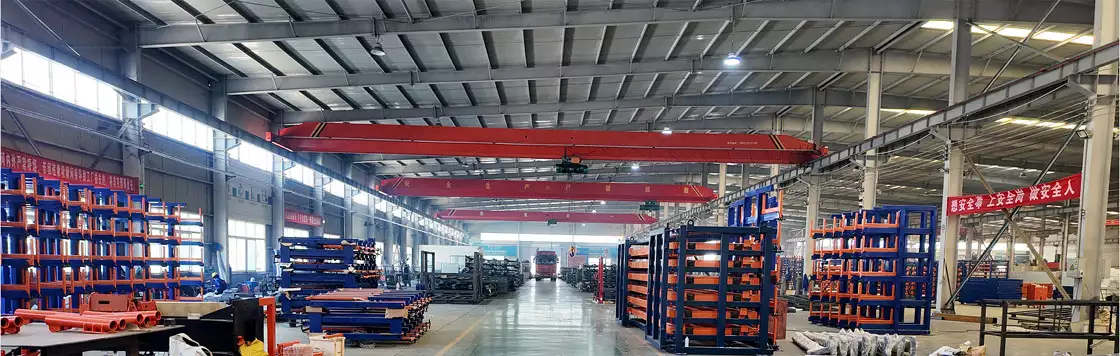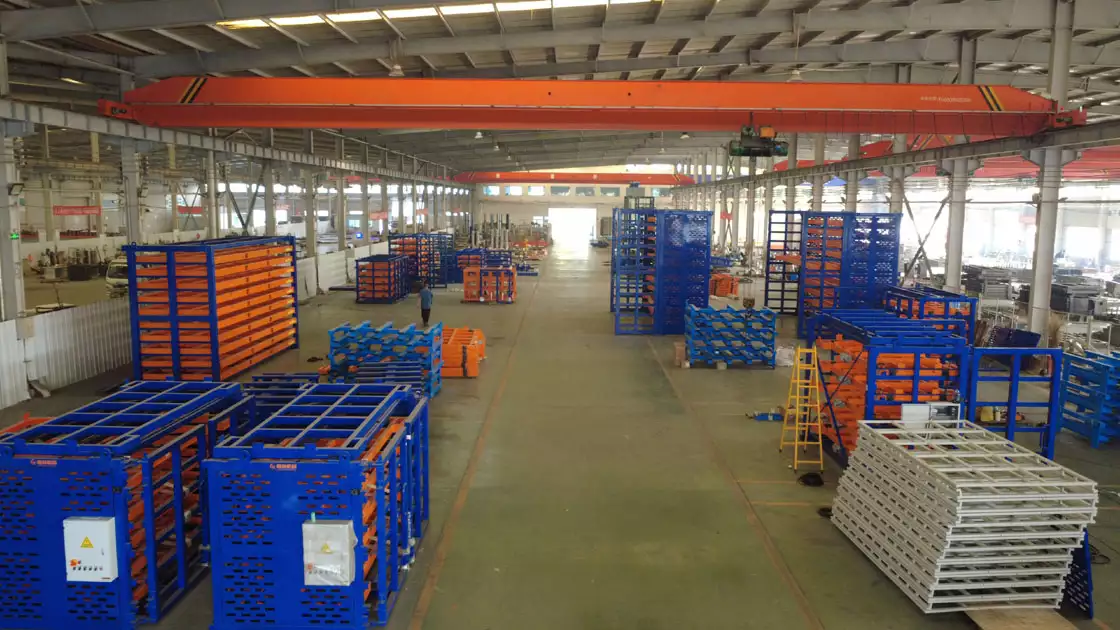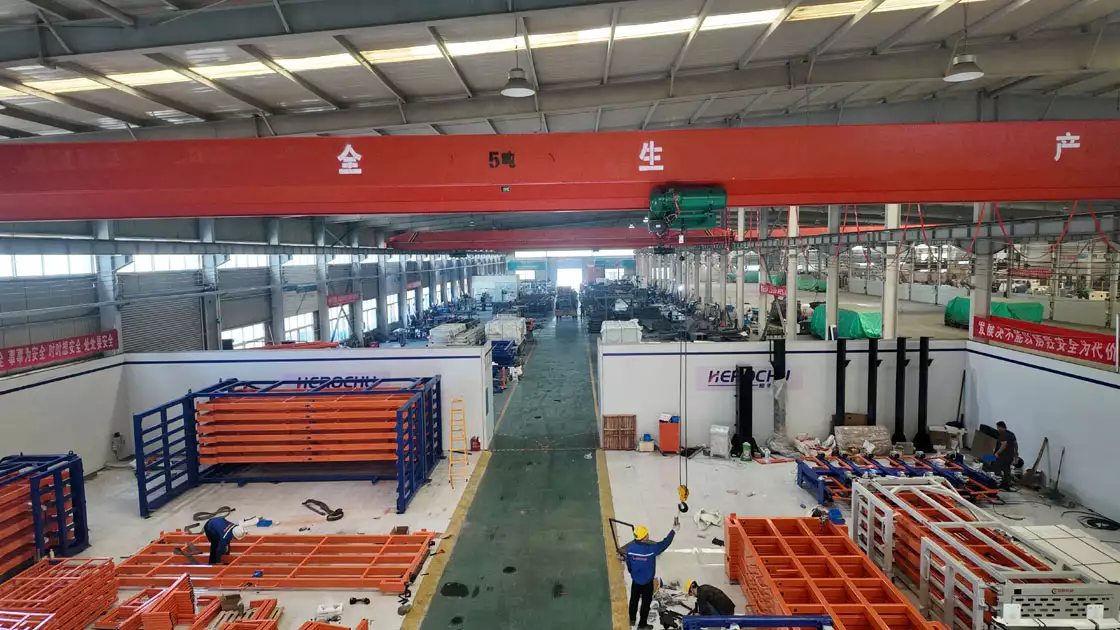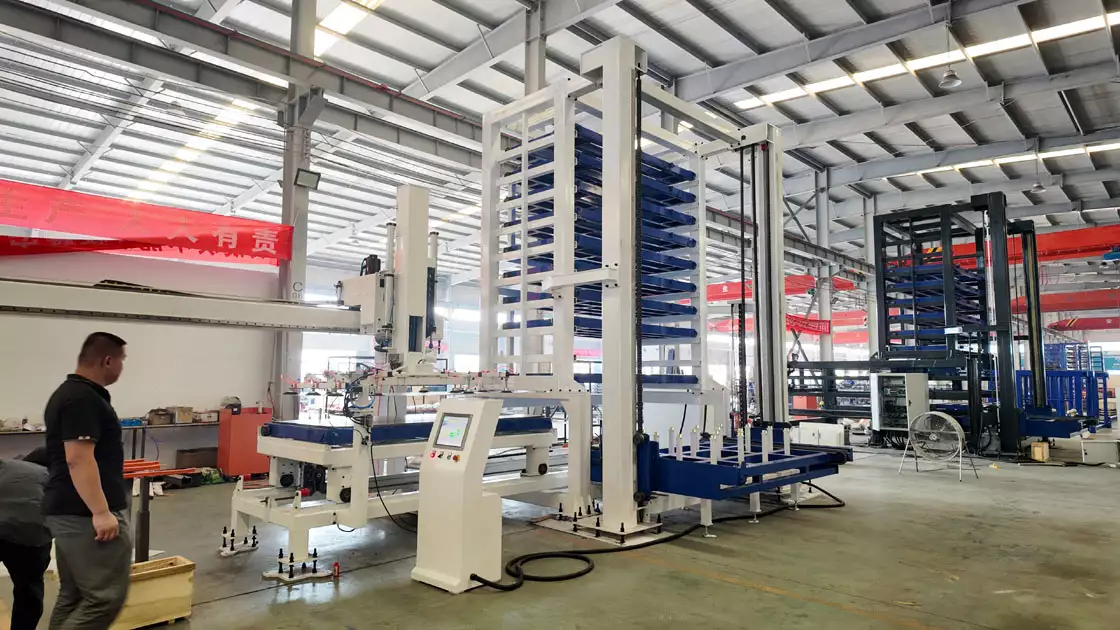
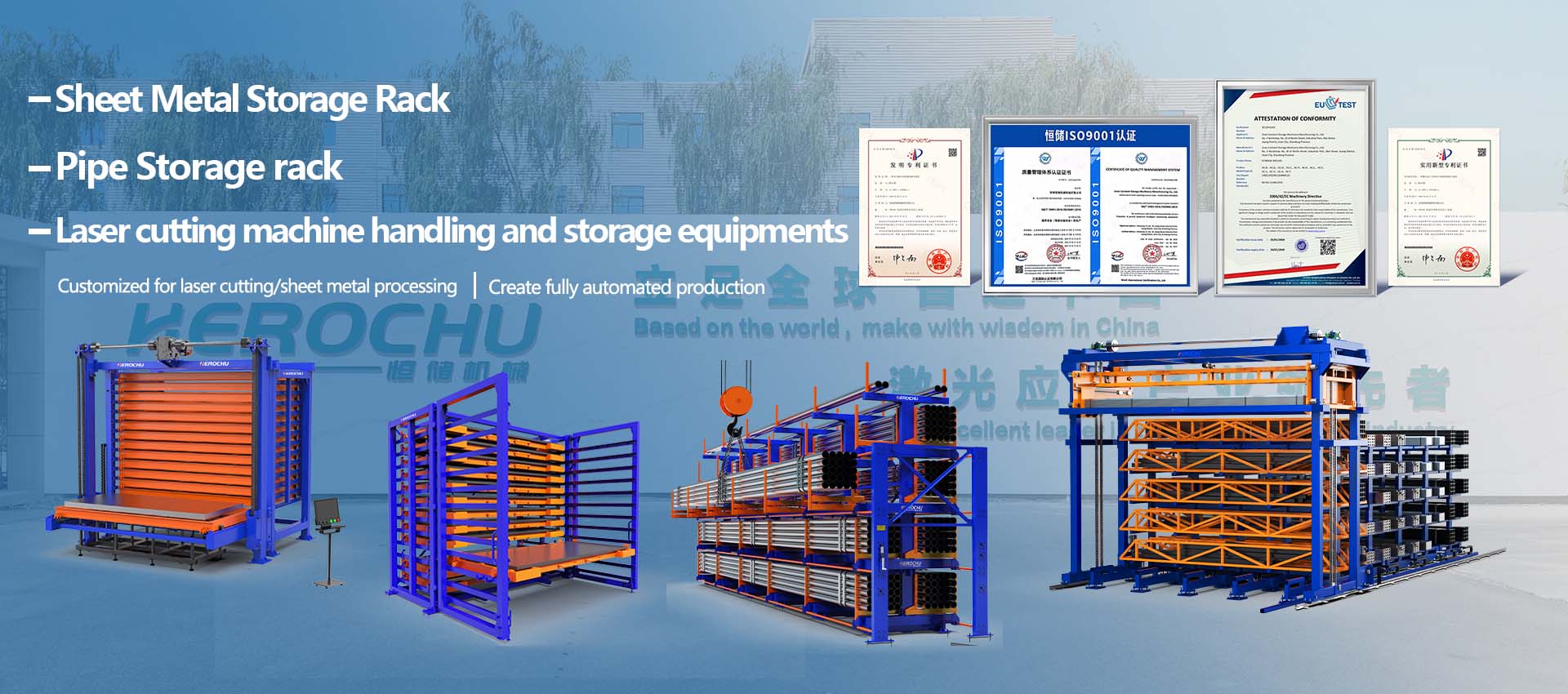
An automated long material storage rack system for laser cutting lines holds tube, pipe and profile stock in high-density vertical racks and delivers the right bundle to the machine infeed on request. The point is not storage for its own sake — it is removing the non-cutting minutes that pile up every time an operator leaves the machine to find, lift or measure material.
Laser cutting is fast at the cut and slow everywhere around it. Herochu builds rack systems that target the slow parts: retrieval, identification, and the return of remnants to a known location.
Where a laser line loses time
Walk a tube cutting shop for one shift and the losses follow a pattern.
A bundle sits at the back of a cantilever row, three layers up, behind two alloy grades. The operator needs four bars, not the bundle: forklift, spotter, partial unload, re-band, return trip. Twenty-five minutes of machine time, and the laser idle for most of it.
Then the remnant problem. Offcuts lean against a column, and by week’s end nobody knows which of eleven pieces of 120 × 120 × 6 tube suits the next order. Material that exists but cannot be found is, for planning purposes, material that does not exist.
Automated retrieval fixes both the same way: every length sits in a known pocket, reachable without moving anything else.
What the rack system has to do at the infeed
The interface between storage and machine decides most projects. Three requirements shape it.
Bundle-to-bar handoff. A tower stores bundles; a laser consumes bars. The outfeed must present material so one piece can be taken without the bundle collapsing. Herochu designs fork and outfeed table around the machine’s loading direction.
Buffer positions. Schedules change faster than storage cycles. A few pockets near each laser let the gantry pre-position the next two jobs while the current one runs, which is what keeps retrieval off the critical path.
Remnant return. Offcuts need a home as organized as the raw stock. Short-material pockets in the same structure let an operator return a remnant in one movement and see it in the WMS immediately — the only way remnant reuse becomes habit.
Density without an aisle per machine
Most long-material rack systems serve more than one machine, so the layout question is how to place storage without giving every machine an aisle it uses twice a shift.
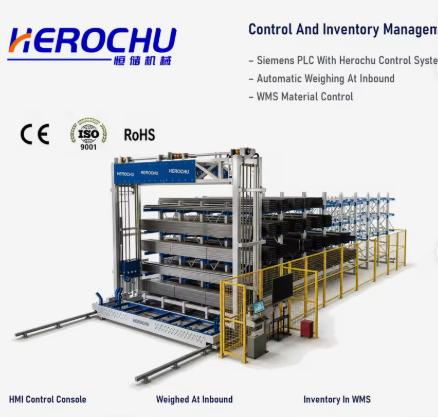
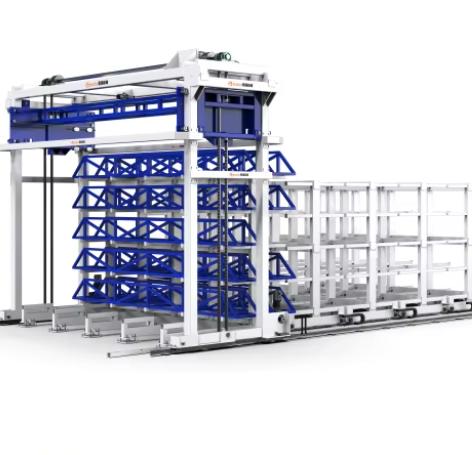
The shared-corridor approach solves it. Racks stand in a bank, floor-mounted rails run along one side, and a single gantry serves every column. Machines connect to the same corridor through outfeed stations. Because all rack faces present toward that strip, the floor given to handling is one corridor instead of an aisle per face — a difference measured in hundreds of square meters on a four-machine floor.
Controls: from nesting software to rack pocket
- ERP holds the order and the material requirement.
- Nesting decides which bars to cut and what remnants result.
- WMS translates that into bundles and remnants, with alloy, size and heat number.
- WCS executes gantry path, layer, fork sequence and outfeed position.
- Machine control receives material and confirms consumption.
When the chain closes, the cutting list knows what stock exists before release. When it breaks — usually between nesting and the rack — the schedule rests on inventory that only looks available. Herochu integrates through defined ERP and MES interfaces and keeps a standalone WMS mode for plants that run storage before touching production software.
What the system does not fix
It will not compensate for a schedule that changes every two hours, and it will not make a poor nesting strategy profitable. It removes handling from the critical path; it does not redesign the path. Nor does it replace discipline: if operators leave cut remainders on the floor, the inventory record drifts within a week. The fix is procedural — remnants are returned at the pocket and scanned, so gaps surface as variance.
Performance figures worth tracking
| Metric | What it captures | Direction after automation |
|---|---|---|
| Machine standby minutes | Laser waiting for material | Down |
| Picks per operator hour | Handling productivity | Up |
| Inventory accuracy | Book stock versus physical | Up |
| Remnant reuse | Offcuts consumed, not scrapped | Up |
Collect these before installation too. A baseline is the only way to answer the question managers ask six months later: was it worth it?
Frequently asked questions
Can the rack system feed a laser automatically? It presents material at the outfeed in a controlled position. Automated final transfer depends on the machine loader, and Herochu specifies that interface with the machine builder.
How does it handle mixed alloys of the same size? Through pocket allocation and WMS records: columns are reserved by material family, and request logic refuses a pick that does not match the alloy and heat number on the order.
What length range is practical? Stock frames cover 6,000 mm to 8,000 mm, 5 to 8 layers, 3,000 kg to 5,000 kg per level. Longer material is engineered per project.
Does it suit a shop with one laser and a hundred bundles? It suits a shop where retrieval time is a real constraint. At low pick frequency a well-organized cantilever layout may be cheaper, and Herochu quotes both.
How is the machine protected from a wrong pick? By WMS request logic, load confirmation at the fork and a check at the outfeed: a bundle that does not match the job is not released.
The practical conclusion
An automated rack system pays for itself by keeping the laser cutting. Density frees floor, software makes stock trustworthy, and a shared corridor keeps handling out of the machine’s way. Herochu designs rack, gantry and inventory layer as one system, because the value sits in the interface.