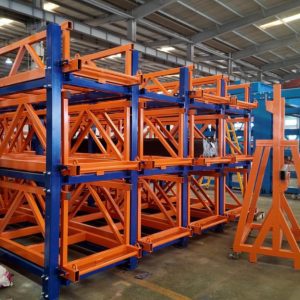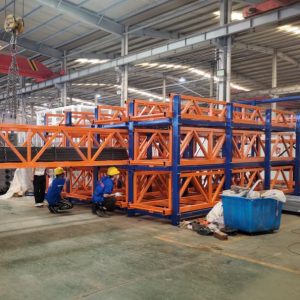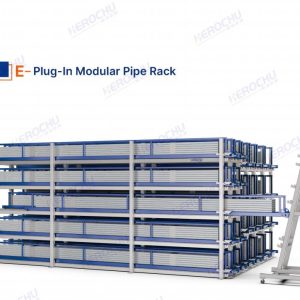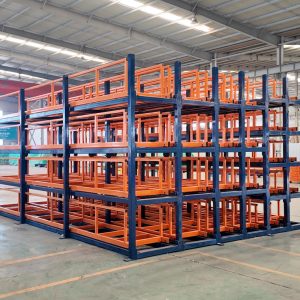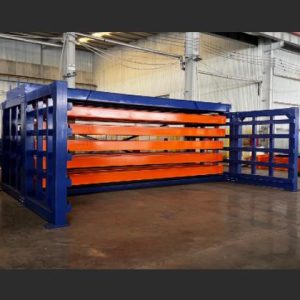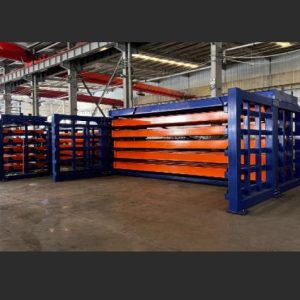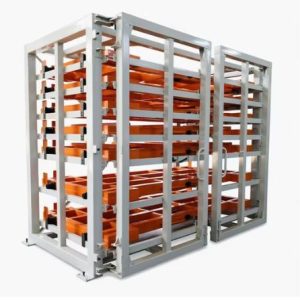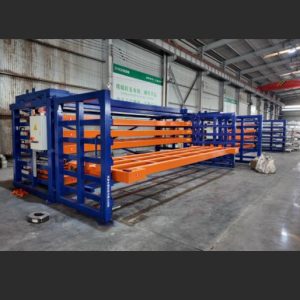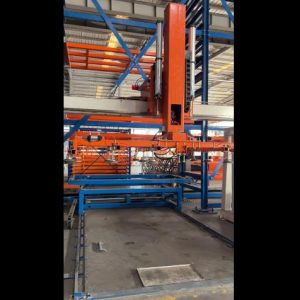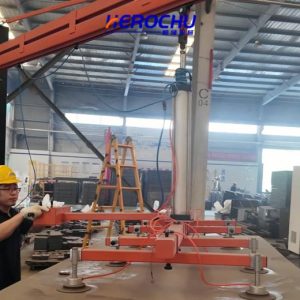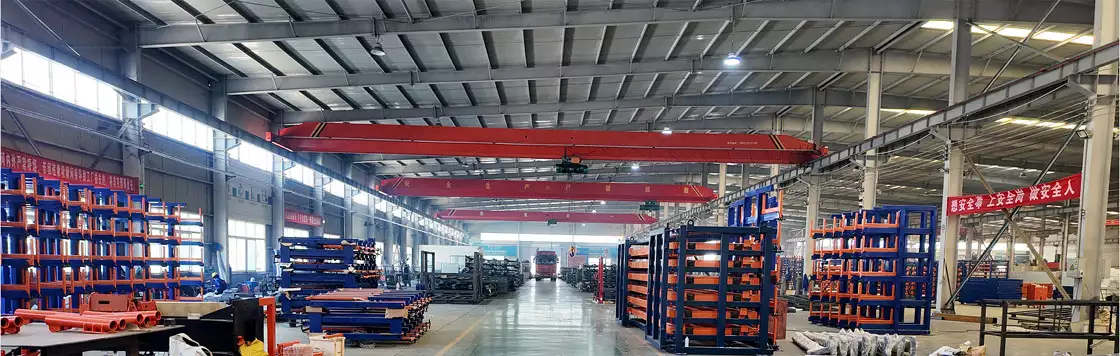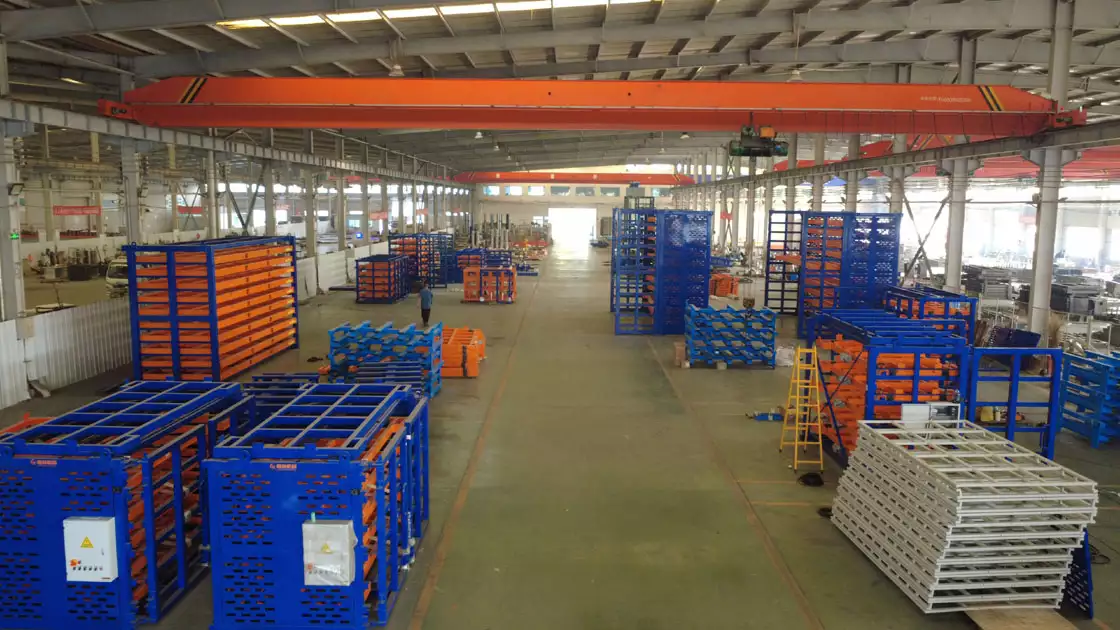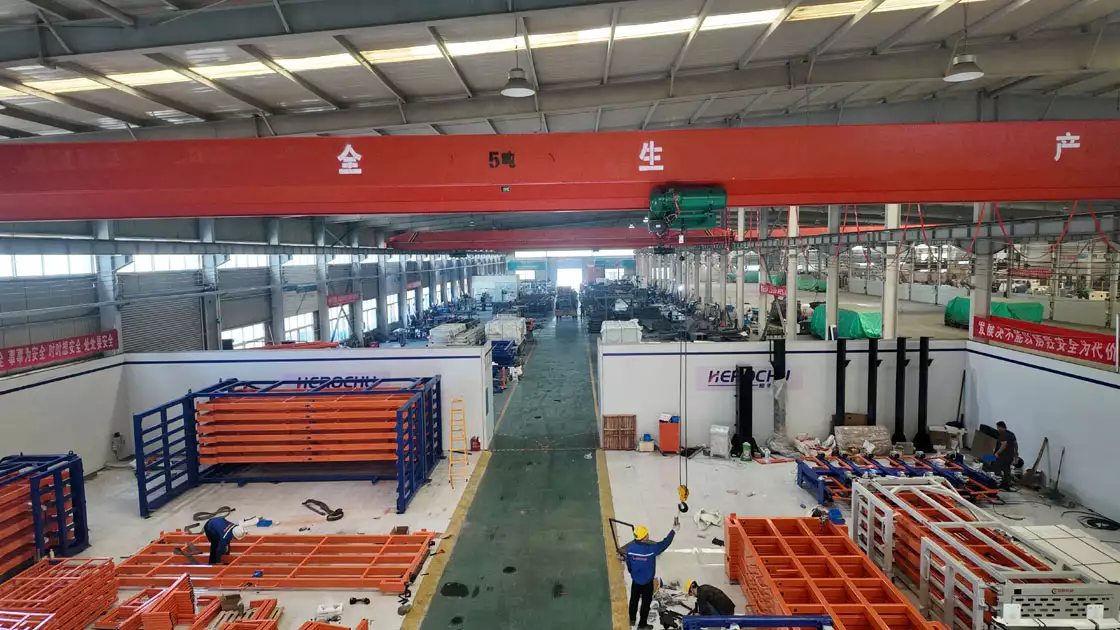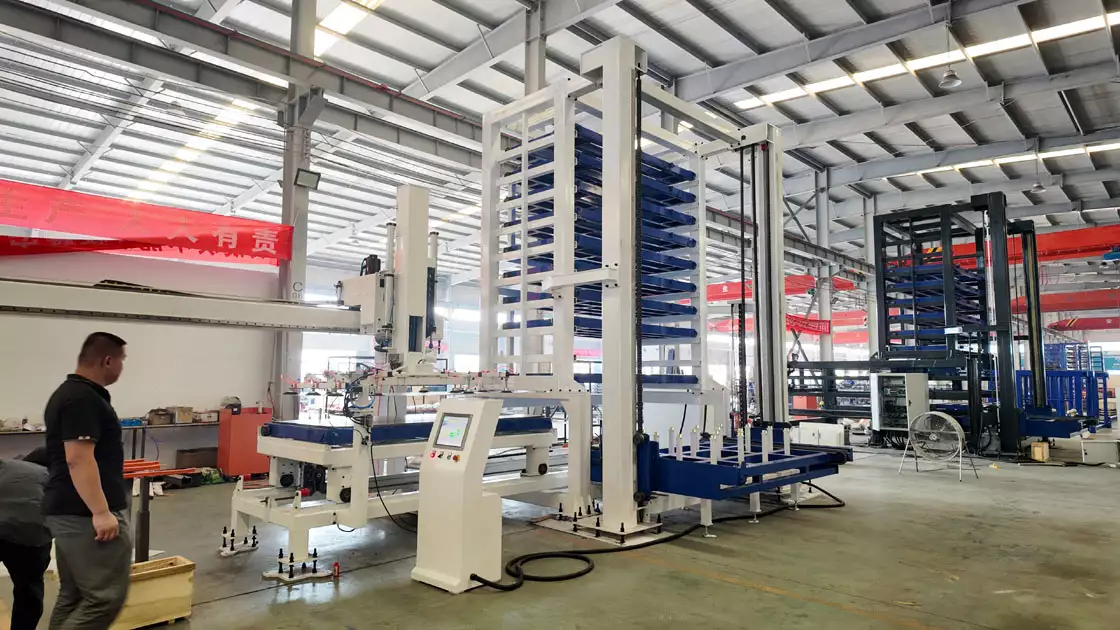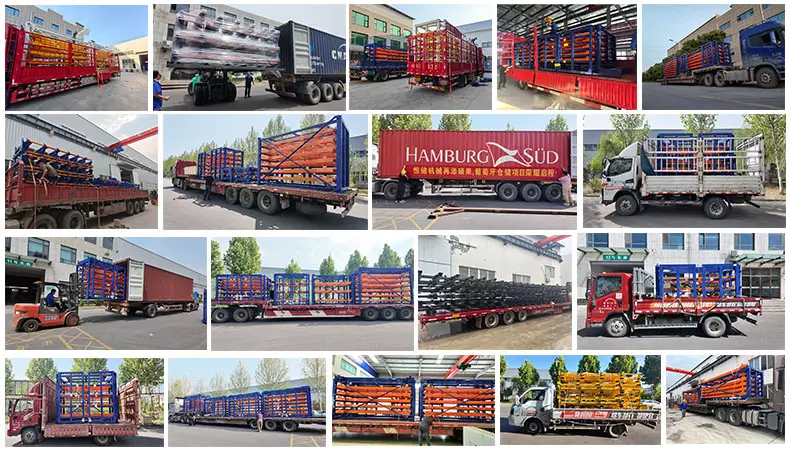
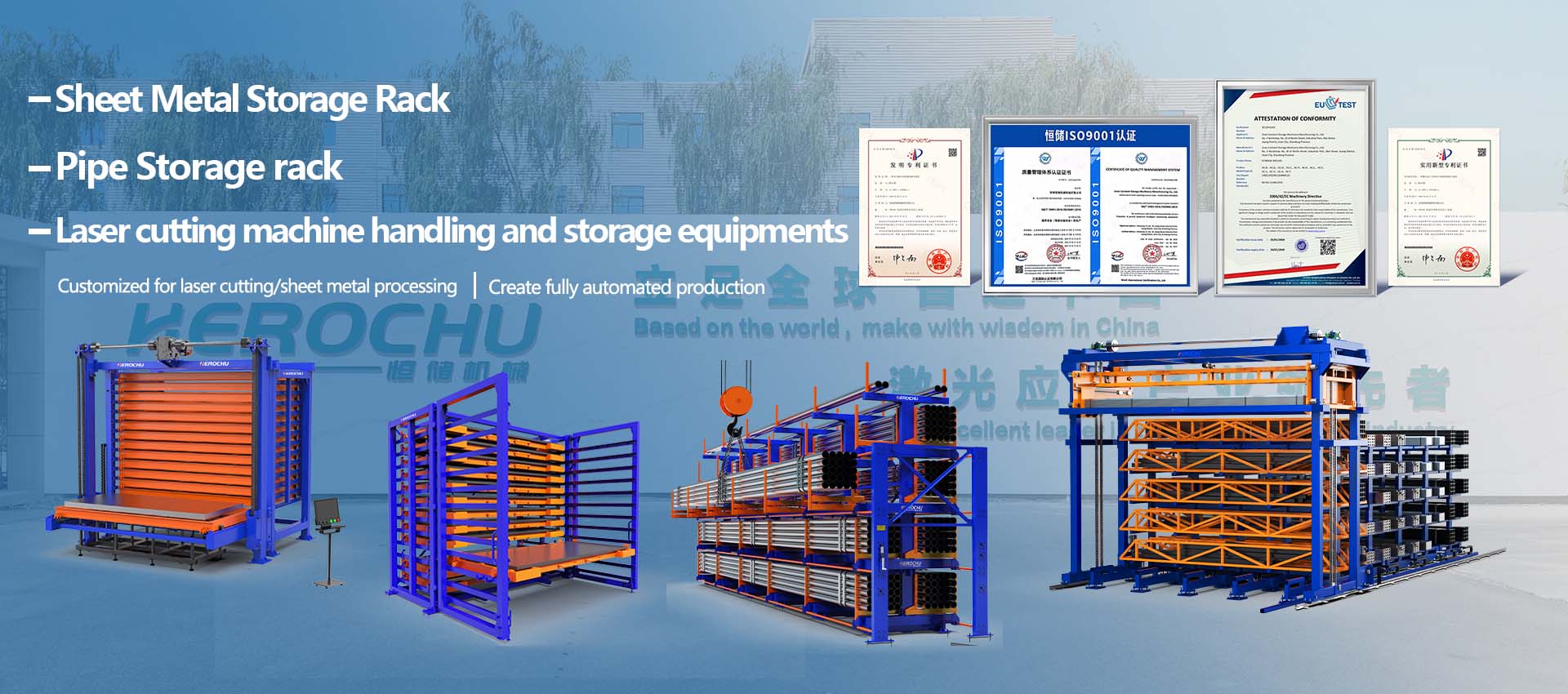
Most storage decisions fail at the edges: the rack that fits today’s material list, the bay that cannot grow by two, the frame that needs a new foundation to extend. A modular roll out cassette rack is designed against that failure mode. The structure is assembled from repeatable steel modules, each holding independent pull-out cassettes, so the block extends in unlimited adjustable slots as the material range changes.
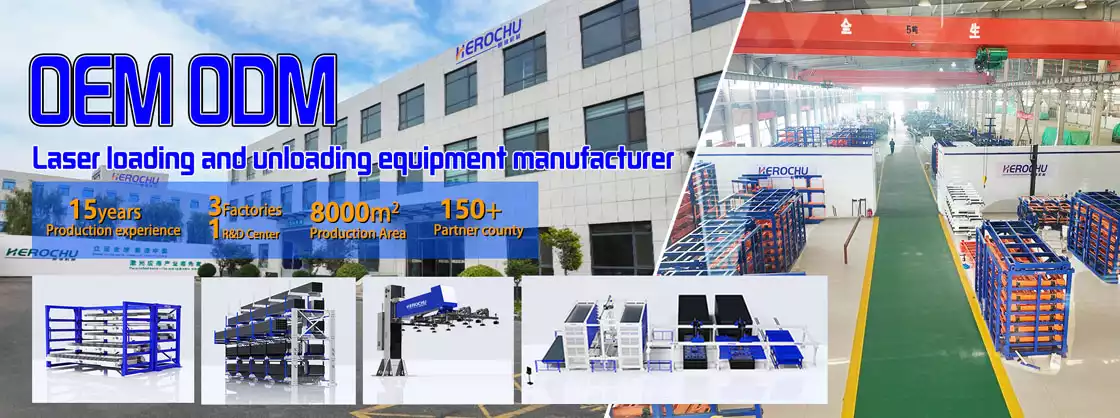
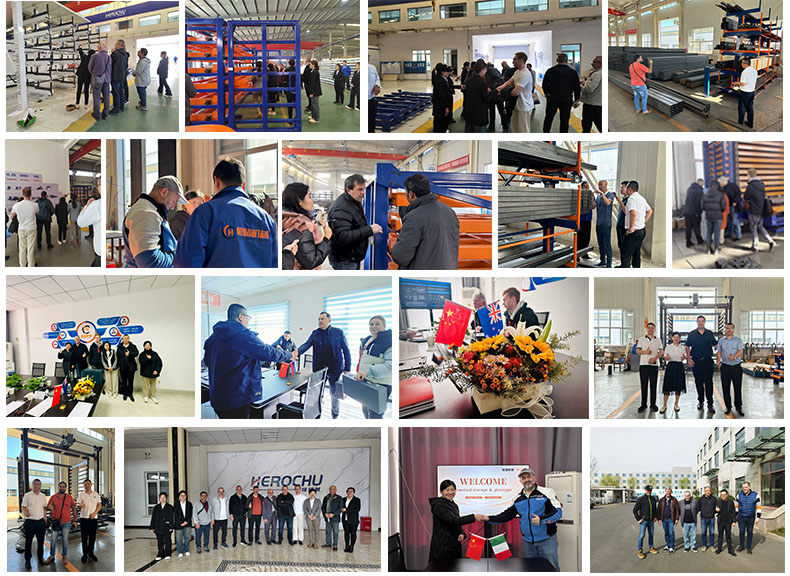
Herochu builds this system for long bars, tubes and profiles, with CE-certified construction and bay counts customized from 24 to 36.
Quick answers
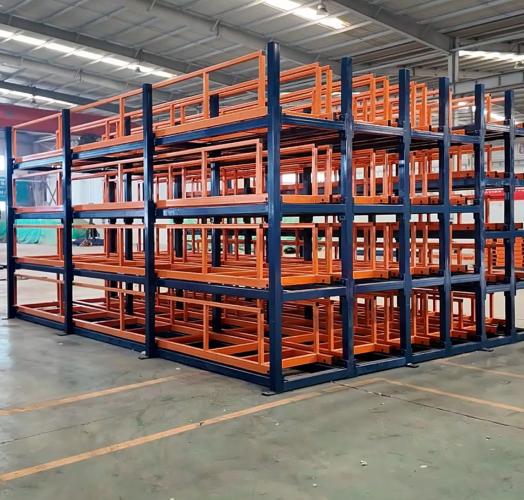
What is a roll out cassette rack? A vertical honeycomb storage structure in which each material compartment is a cassette that slides out independently, letting a worker reach one dimension without disturbing the rest of the stack.
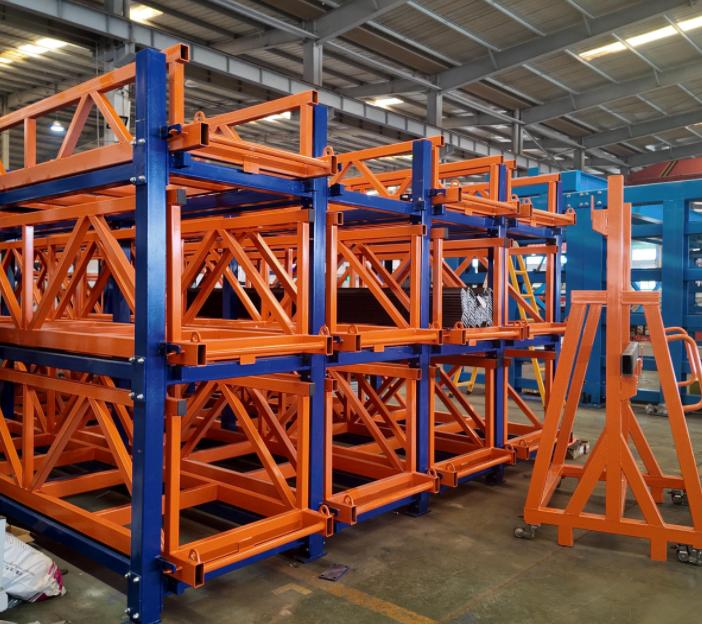
What does modular mean in practice? Bays, levels and clear heights come from standard modules. The rack extends sideways or upward, and unused positions stay available for future material.
What does CE certification cover? The structure is designed and manufactured to applicable European requirements, with documented load ratings and a declaration of conformity supplied for the installation.
Which materials does it suit? Long bars, tubes, profiles, flat bars and angles — particularly thin or flexible stock that deforms on open cantilever arms.
Why modularity is a purchasing issue
A shop that buys a fixed-size rack is buying a decision it cannot reverse. Material lists change faster than buildings do: a new customer brings 12 m tube into a shop standardized on 6 m, an aluminium line is added, a grade is discontinued.
Modular construction answers that with repetition. The same column and cassette module builds a 24-bay unit or a 36-bay unit, and the same module can be added later. Nothing is welded to a bespoke dimension that cannot be repeated.
Inside the cassette
A cassette is a shallow steel tray on runners that forms one cell of the honeycomb structure, sized to its material and rated to the level load. It must carry a full bundle without permanent deflection, slide out under load with mechanical assistance, and stop at a defined position so the operator is not chasing a tray that keeps travelling.
Herochu’s arrangement puts one dimension per cassette. That costs more cassettes than a mixed shelf and buys something more valuable: the picker never sorts. The cell either holds the size on the picking list or it does not — the difference between a two-minute pick and a ten-minute search through a bundle.
Clear space is the specification to get right first. The standard opening is 720 mm and customizable, and it must clear the bundle plus the crane’s lifting gear. Undersizing it is the most common and most expensive mistake in this category.
What CE certification means for the buyer
CE marking declares that the product meets applicable European requirements, supported by a technical file, a risk assessment and a declaration of conformity. For storage structures that means documented load ratings, defined installation conditions and a design checked against recognized standards rather than shop-floor guesswork.
The documentation matters as much as the mark. Ask for:
- the declaration of conformity and the standard it references
- the load rating per level and the basis for it
- installation and anchoring requirements, including point loads
- the inspection and maintenance schedule
A CE-certified rack installed on an unprepared slab is not a compliant installation. The certificate covers the structure as designed; the site engineer owns the foundation.
Specification and expansion path
| Model | Pipe length | Bays | Max. load per level | Clear space |
|---|---|---|---|---|
| HC-H6024-02 | 6,000 mm | 24 (customized) | 2,000 kg | 720 mm (customized) |
| HC-H9032-03 | 9,000 mm | 32 (customized) | 3,000 kg | 720 mm (customized) |
| HC-H12036-03 | 12,000 mm | 36 (customized) | 3,000 kg | 720 mm (customized) |
Discharge on all three models uses mechanical assistance. Bay count, clear height and level load are the variables Herochu adjusts per project; pipe length fixes the base module.
A sensible expansion sequence is to install the frame for the eventual bay count and fit cassettes only for live dimensions. Empty positions cost less than a second rack and keep the option open.
Installation and the crane cycle
Loading is a crane operation, not a forklift one. The bridge crane lands a bundle on an extended cassette at any level, the cassette is pushed in, the crane moves on. No mast enters the structure, so there is nothing to strike and no forklift aisle to reserve.
That changes the building requirement. The rack needs hook height above the top level plus lifting gear, and a floor that carries the column loads. It does not need an operating aisle in front, which is where the floor-area saving comes from.
FAQ
How many bays should a first installation have? Fit cassettes to the dimensions in use and buy frame capacity for the next two years of growth. Frame is the slow item to extend.
Can the rack be extended later without dismantling? Yes. The modular frame accepts additional bays and levels, and unused positions remain available.
Is the 720 mm clear space fixed? No. It is a standard figure, customized to bundle size and the lifting gear on site.
Does it replace cantilever racking entirely? Not always. Full-bundle dispatch still suits crane-served cantilever. The cassette rack wins where material is picked piece by piece from many dimensions.
How is the rack inspected? Visual inspection of cassettes, runners and column connections at defined intervals, with load ratings re-checked whenever the stored material changes.
Specifying with Herochu
The useful starting document is a material list, not a floor plan: every length, diameter, bundle weight and how many dimensions must be live simultaneously. From there Herochu sets bay count, clear space and level rating, and confirms the chosen frame accepts the mezzanine or expansion the site expects. A modular roll out cassette rack is worth buying for the positions not yet filled.