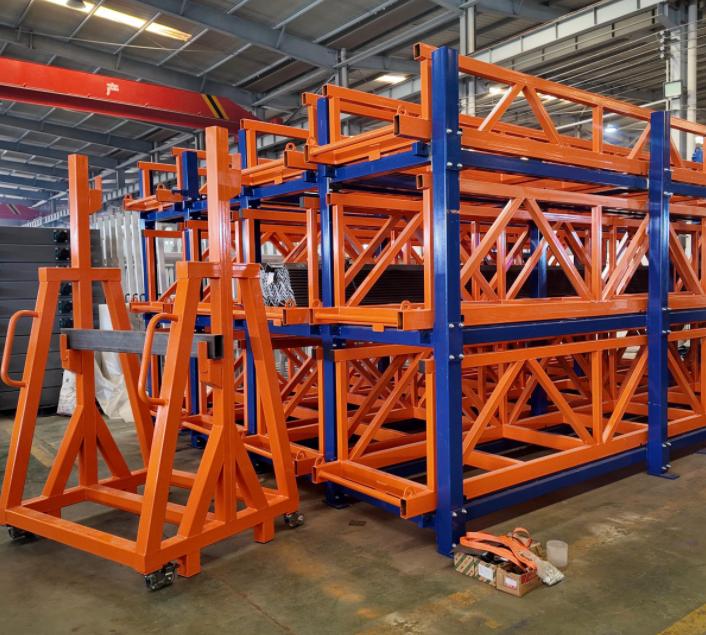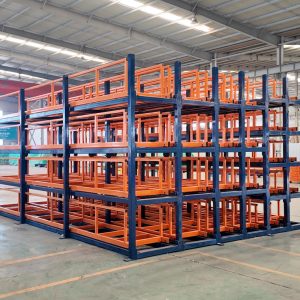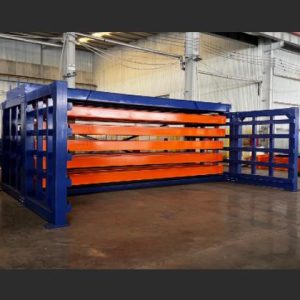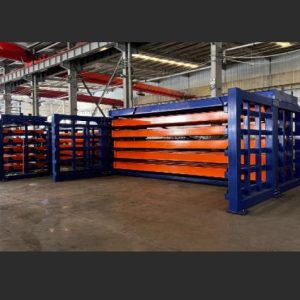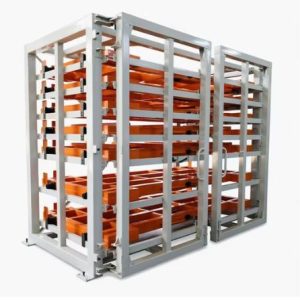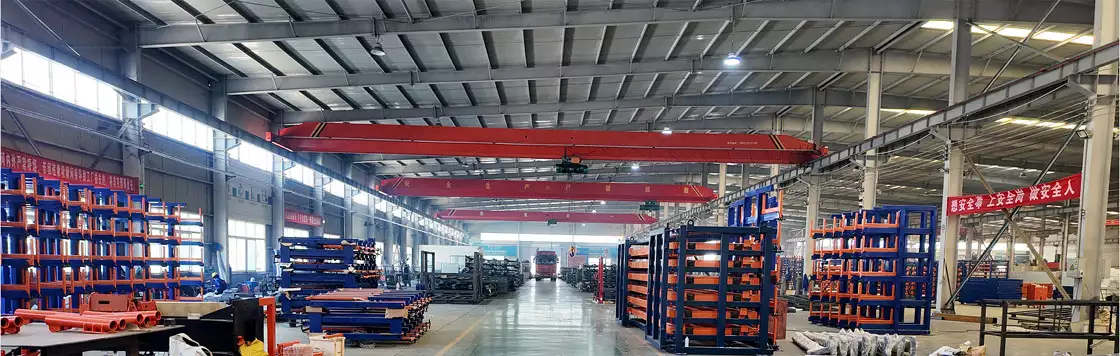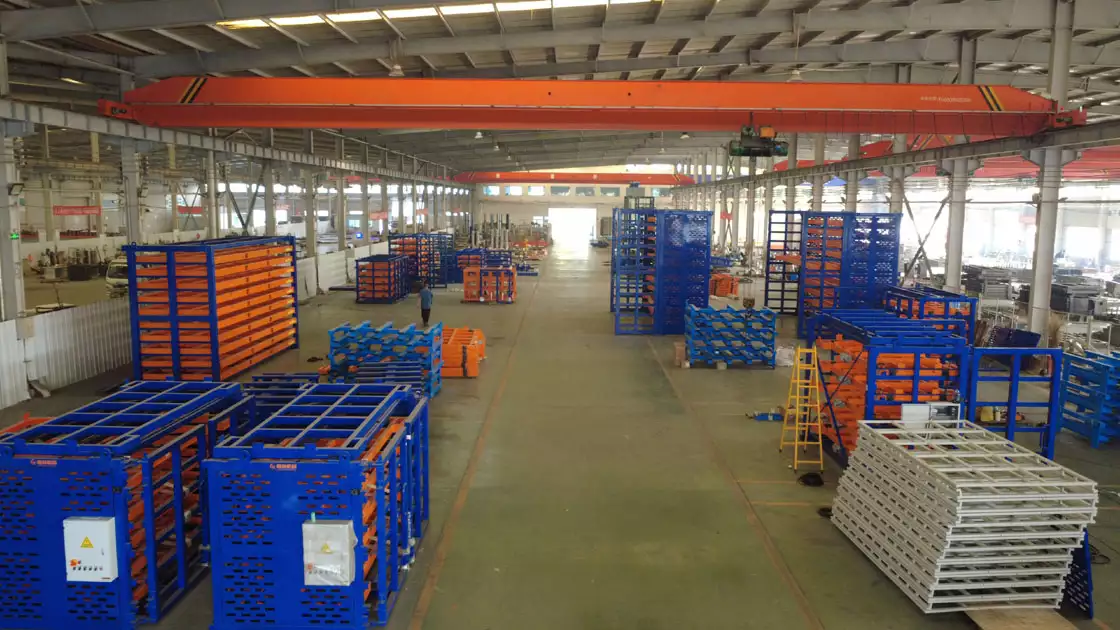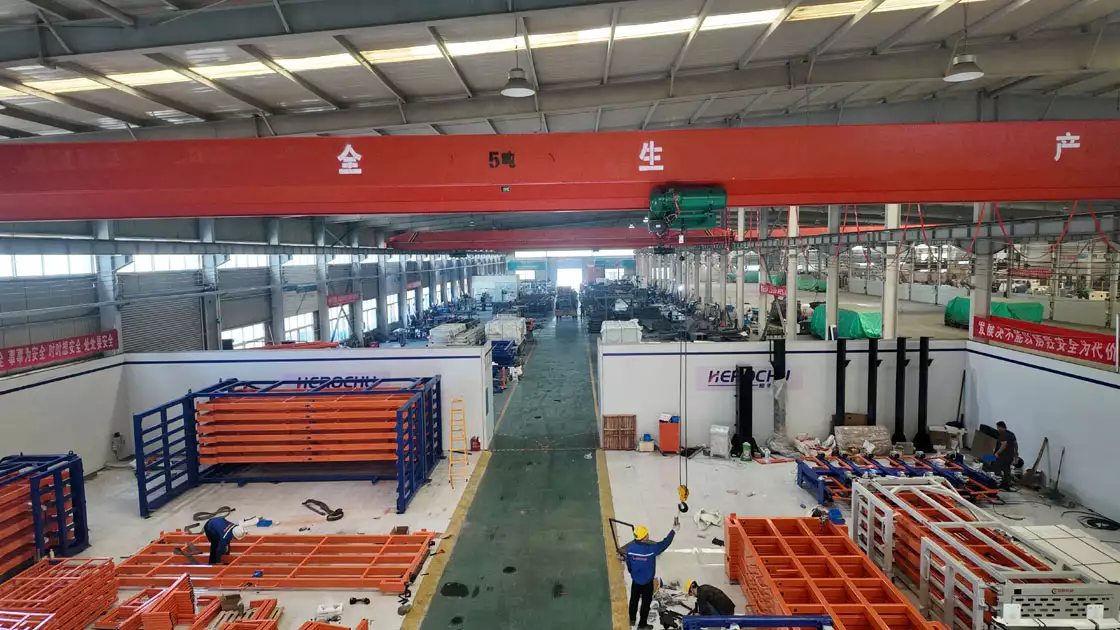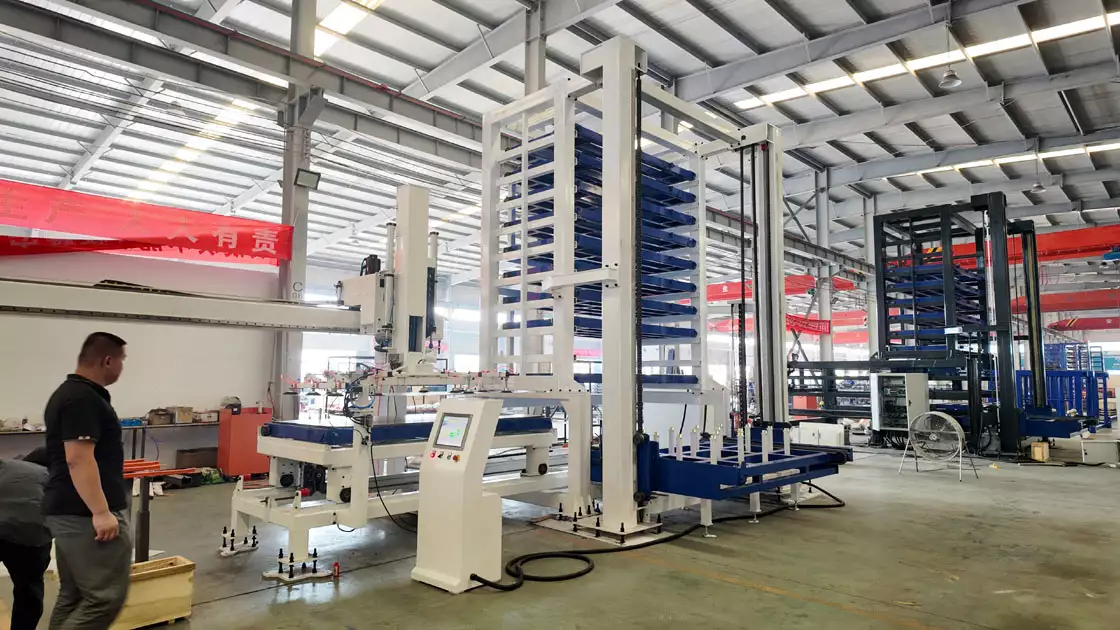
A heavy duty roll out honeycomb rack solves a problem most warehouses handle badly: long stock that cannot sit on a pallet, cannot go in a bin, and cannot stay on the floor without consuming the aisles around it. Bars, tubes and profiles arrive in bundles, get cut in ones and twos, and slowly turn a clean bay into a tangle of overlapping ends.
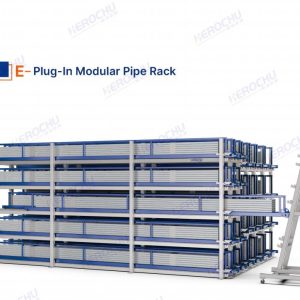
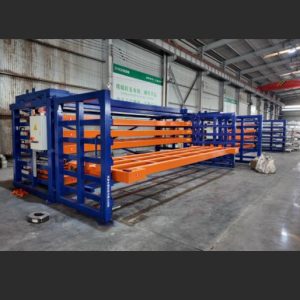
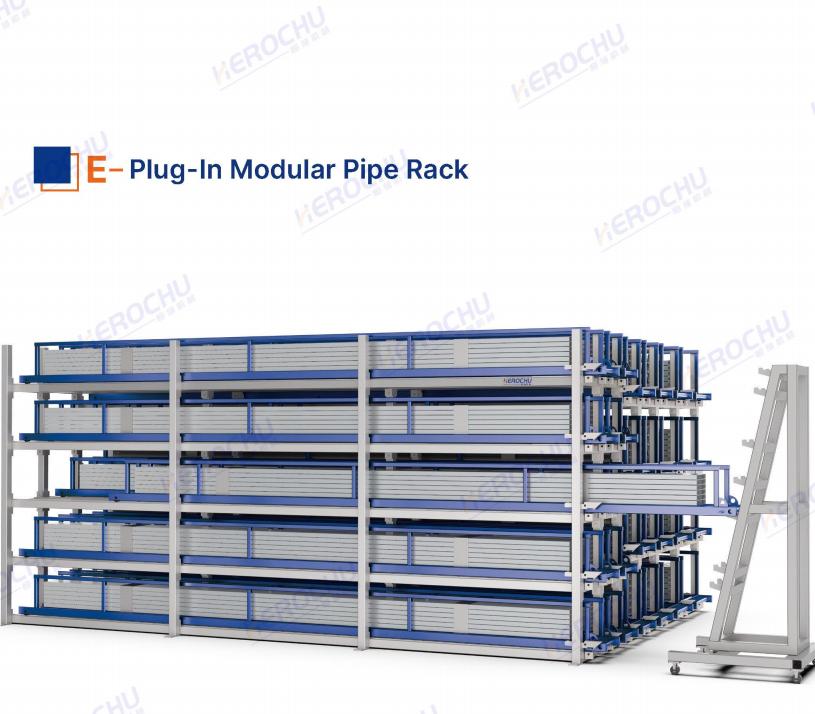
Herochu builds the rack as a stack of steel cells rather than a shelf. Each cell holds one material dimension, each pulls out on its own cassette, and the structure grows upward instead of outward.
Quick answers
What is a heavy duty roll out honeycomb rack? A steel vertical storage structure divided into stacked honeycomb cells, each an independent pull-out compartment for long bars, tubes or profiles. Bundles land by overhead crane; pieces are drawn out by hand.
How much load does one level carry? 2,000 kg per level on Herochu’s HC-H6024-02 and 3,000 kg on the 9 m and 12 m models.
Does it need a forklift? No. Loading uses a bridge crane, picking uses the cassette.
Can the compartment count change? Yes. Bay counts on all three models are customized, and the modular frame accepts additional bays later.
Why long stock resists normal storage
A 12 m tube bundle does not behave like a pallet. On a shelf, the span deflects under its own weight. Stacked on the floor, the bottom layer is unreachable until the top is cleared. Leaned against a wall, the ends splay — which is how bundles get bent and how pickers get hurt.
Cantilever racking is the usual compromise: strong, open, generous with height, but hungry for floor length. A bay holding 12 m stock needs an aisle wide enough for the forklift and load, plus clearance at both ends. Two or three runs and the bay is full of air.
The honeycomb approach removes the aisle from the equation. Material is stored vertically in short, deep cells, loaded from above by crane, retrieved by drawing the cell out. Floor space is consumed once, at the base.
Inside the honeycomb cell
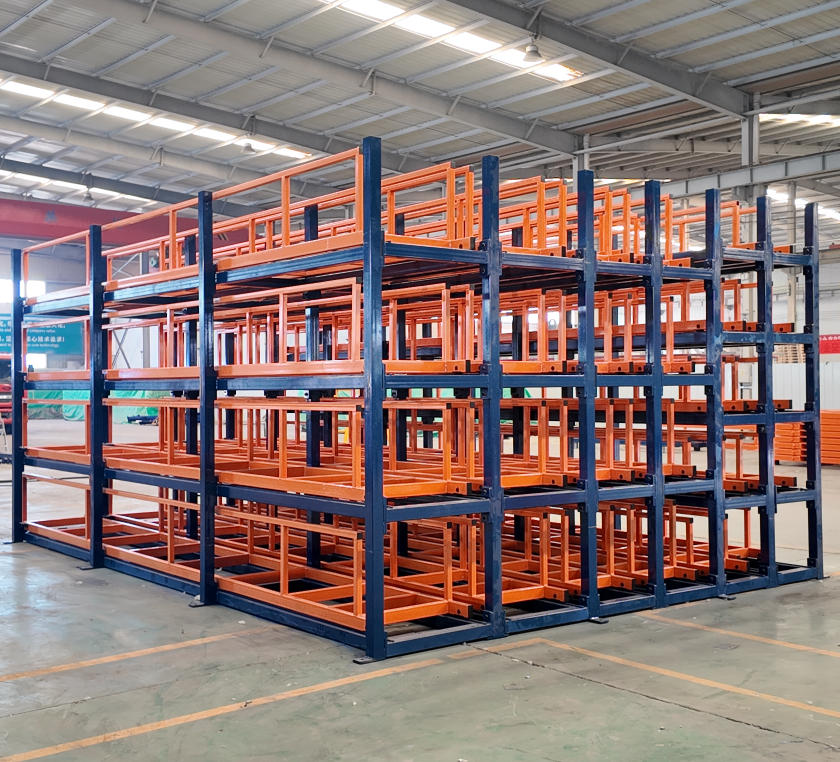
The internal layout resembles a honeycomb: a grid of compartments stacked in rows and columns, each isolated from its neighbours. In Herochu’s design those compartments are not fixed shelves. Each is an integrated pull-out cassette on its own runners, so a worker at the rack face can bring any single cell forward without touching the twenty cells around it.
That isolation is the practical value. One dimension per cell means no mixing of 48.3 mm and 60.3 mm tube in the same opening, no searching through a bundle for the size on the picking list, and no re-stacking after every cut. Inventory becomes visible at a glance: empty cell, full cell, half cell.
Three details decide whether the specification works:
- Clear space. Standard opening is 720 mm, customizable. It must clear the largest bundle plus the crane’s lifting gear, not just the material.
- Discharge method. Mechanical assistance is standard, keeping draw effort low at full load.
- Level rating. Rated per level, so the figure must reflect the heaviest single-dimension bundle, not the average.
Loading and picking
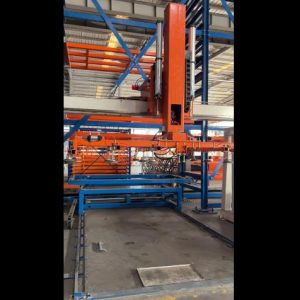
Loading follows the crane cycle, not the forklift cycle. The bridge crane lands a bundle on the extended cassette, the cassette is pushed home, and the crane is free again inside a minute. Nothing is driven into the rack, so there is no mast to strike and no fork pocket to align.
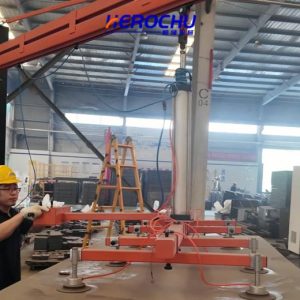
Picking is the reverse and happens far more often. A worker pulls the cassette for the required dimension, lifts the pieces by hand or with a light hoist, and closes it. Travel distance is a step, not an aisle. Because cells are independent, a size stored at the top is as quick to reach as one at the bottom.
Model selection
| Model | Pipe length | Bays | Max. load per level | Clear space |
|---|---|---|---|---|
| HC-H6024-02 | 6,000 mm | 24 (customized) | 2,000 kg | 720 mm (customized) |
| HC-H9032-03 | 9,000 mm | 32 (customized) | 3,000 kg | 720 mm (customized) |
| HC-H12036-03 | 12,000 mm | 36 (customized) | 3,000 kg | 720 mm (customized) |
All three use mechanical assistance for discharge. The 6 m unit suits fabrication shops cutting standard stock; the 9 m and 12 m units suit structural and process pipe work where bundles arrive long and heavy.
Racking, shelving or honeycomb?
The choice comes down to two questions: how heavy is the item, and how do you reach it? Pallet racking is built for unit loads a forklift presents and retrieves. Shelving is for light items picked by hand from a static level. The honeycomb rack fills the gap between them: heavy, long material that a person selects piece by piece but a machine delivers in bundles.
Where the picking list is dominated by cut lengths, the honeycomb layout wins on density and labour. Where material leaves in full bundles, crane-served cantilever remains simpler, and Herochu advises on which pattern the site actually runs before fixing the frame.
FAQ
How many material dimensions fit in one rack? One per bay — 24, 32 or 36 depending on model. That is usually more variety than a comparable cantilever run.
Can it go into an existing bay with a bridge crane? Yes, provided the hook clears the top level plus lifting gear. Height, not floor area, is normally the limit.
Is a concrete foundation required? The rack is free-standing, but column point loads should be checked against the slab before installation, and the frame top is designed to take a mezzanine floor where the site wants a second level.
Specifying with Herochu
Herochu configurations start from the material list: lengths, diameters, bundle weights and how many dimensions must be live at once. From that, bay count, clear space and level rating are fixed, and the frame is extended in modular increments. A heavy duty roll out honeycomb rack is not a catalogue item with a fixed size — it is a structure assembled around the stock it holds.