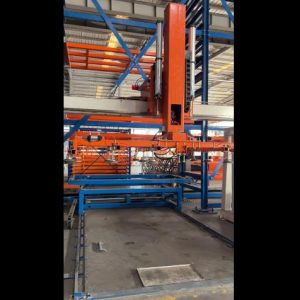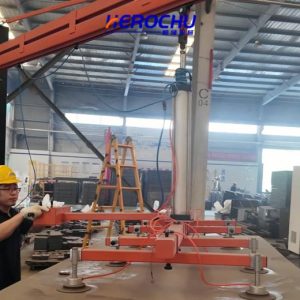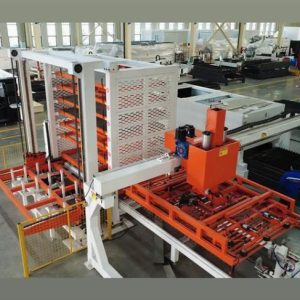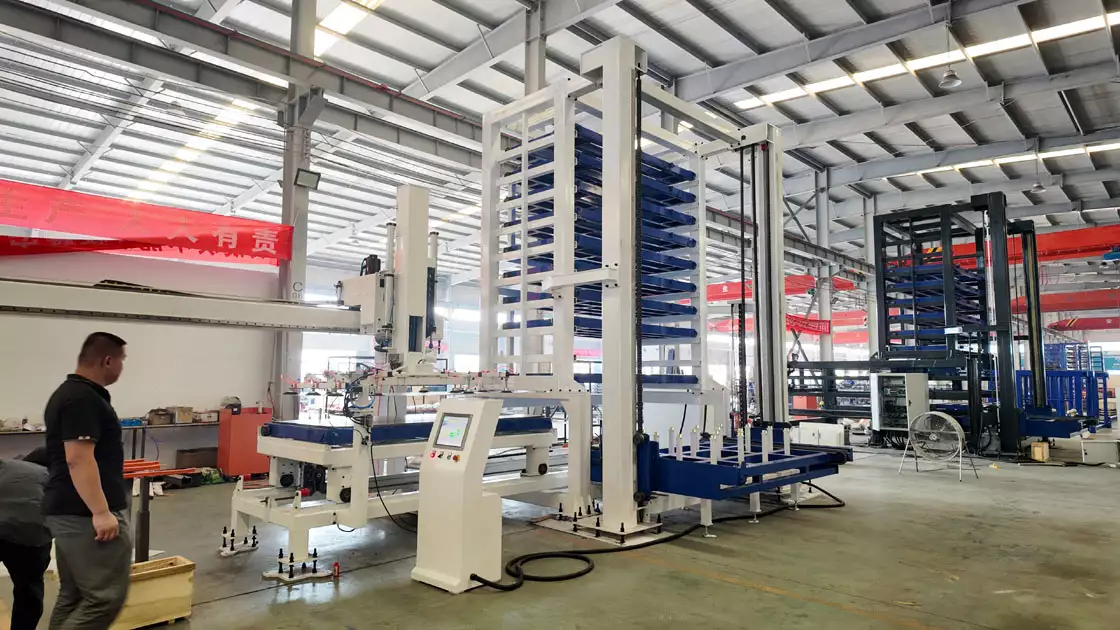
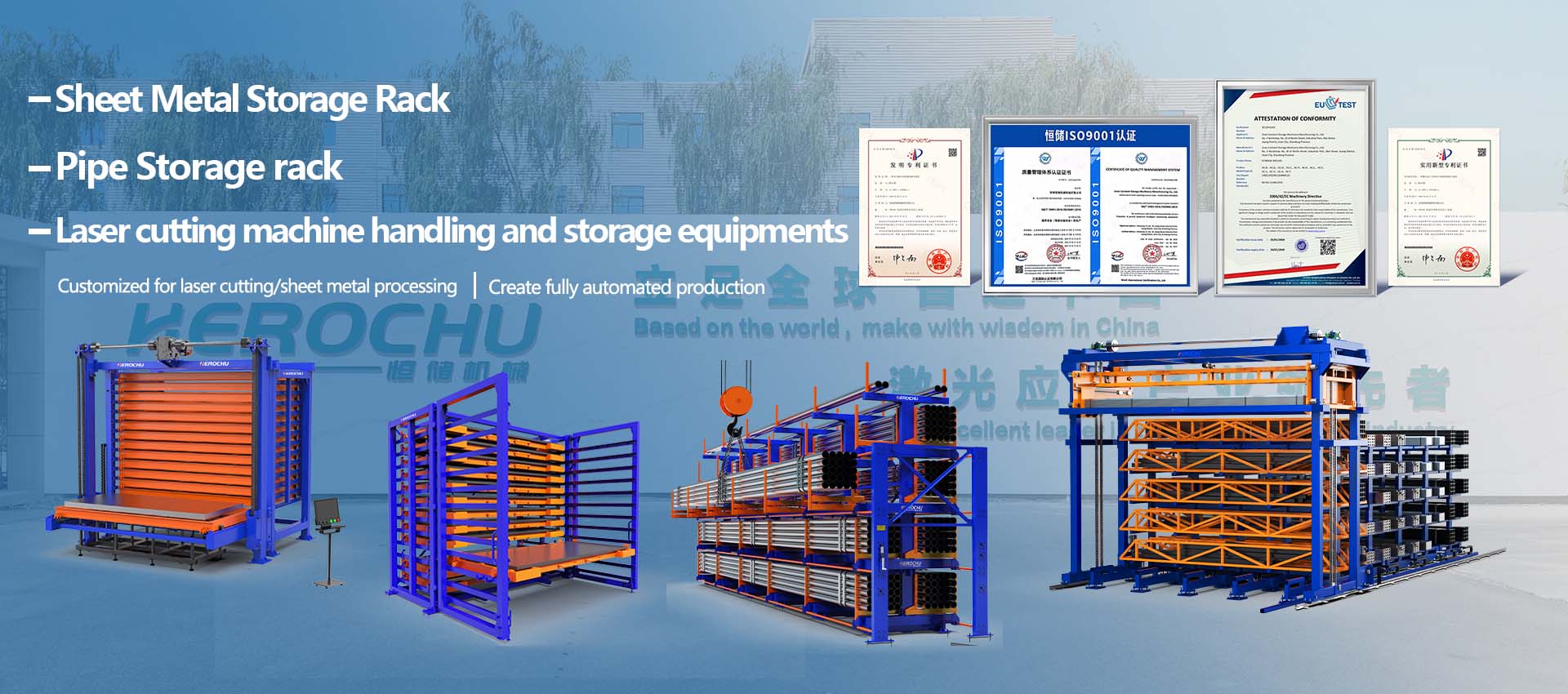
An automated gantry loading system for flat sheet laser cutters is defined by six numbers: sheet envelope, stack weight, lifting stroke, repeatability, travel speed, and air supply. Get those right and the rest is integration. Herochu’s HC-RL2513-300 and HC-RL3015-500 cover 2500×1300 mm and 3000×1500 mm formats at 300 kg and 500 kg.
Start with the material, not the machine
Buyers open a specification with the laser: 6 kW, 3000×1500 mm, brush table. That is the wrong starting point, because the loader’s constraints come from the material stream — what arrives on the pallet, how heavy that pallet is, how flat the sheet lies, and how much oil or scale sits on the surface.
A 6 kW source and a 12 kW source need the same loader if they handle the same sheets. Two 6 kW machines need different loaders if one cuts 1 mm cold-rolled from a clean pallet and the other cuts 8 mm hot-rolled from a stack that sat in a yard.
Write down four facts before requesting a quote: maximum sheet size, maximum thickness, maximum pallet weight from your supplier, and surface condition.
The six specifications that define the system
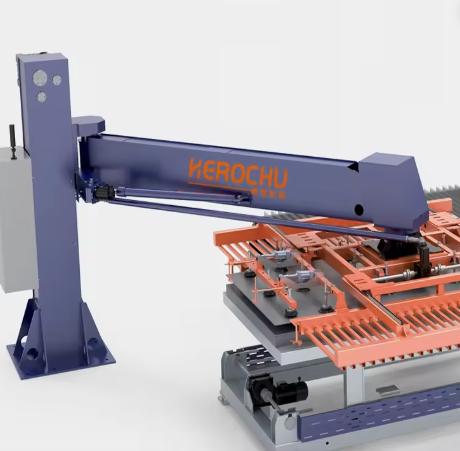
1. Sheet envelope. 2500×1300 mm or 3000×1500 mm in Herochu’s standard range. Specify the largest blank you will ever run, not today’s typical job. Upsizing the vacuum frame later is not a field modification.
2. Stack capacity. 300 kg on the HC-RL2513-300, 500 kg on the HC-RL3015-500. This is the weight of the whole stack, not one sheet. Multiply sheet weight by pallet count, then add 10 percent for oil, scale, and packing.
3. Lifting stroke. 700 mm standard, customizable. Measure from the top of a full pallet to the table surface, add 100 mm, and quote that. Cheapest option to change at order, most expensive afterwards.
4. Repeatability. ±2 mm on both models covers nesting margins of 8–15 mm with room to spare. Ask whether the figure is repeatability (same point, repeated) or accuracy (absolute position). Suppliers quote whichever is better unless you specify.
5. Travel speed. 5–10 m/min. Faster travel shortens the transfer leg and does nothing for pick, settle, or release, so treat it as secondary.
6. Air supply. 0.6–0.7 MPa, driving the vacuum ejectors. If plant air dips below 0.6 MPa at shift changes, fit a receiver tank at the machine — vacuum loss at the moment of pick is the most common cause of dropped sheets.
Integration: the handshake matters more than the hardware
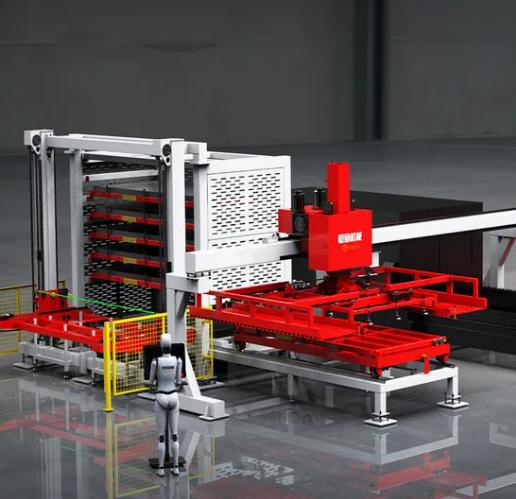
A loader that cannot talk to the laser is a crane. The minimum is a set of discrete signals in both directions.
| Direction | Signal | Purpose |
|---|---|---|
| Laser → loader | Table clear / program end | Permission to unload |
| Laser → loader | Sheet present | Confirms the load landed correctly |
| Loader → laser | Sheet loaded, ready | Starts the program |
| Loader → laser | Fault / maintenance mode | Blocks a cut cycle on a half-loaded table |
Most fiber laser controllers expose these through a standard peripheral interface. Get the I/O list in writing from both suppliers before signing. Where loader and laser come from different vendors, one integrator day is cheap next to a machine sitting idle because two signals were defined in opposite polarity.
Herochu builds to a standard handshake and ships the signal map with the machine, so the customer’s electrician can complete wiring without a factory visit.
Safety beyond the fence
Automation removes the operator from under a 300 kg sheet, the single largest gain. It also creates hazards: a bridge travelling at 10 m/min, a frame descending without warning, tines extending at table height.
Three measures cover most of the risk. Light curtains on the loading aisle, interlocked so the gantry stops before the frame enters the zone. Guarding at the rail ends, where a person can be trapped between bridge and end stop. A maintenance mode that requires deliberate re-enabling, so a technician cleaning slats is not surprised by a cycle start.
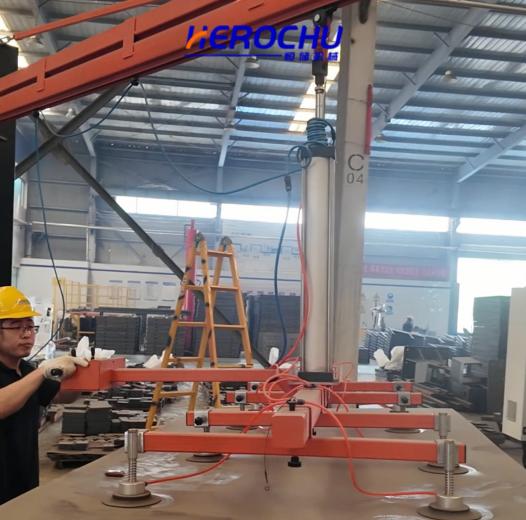
The remaining risk is the sheet itself. A 3 mm blank held by four cups can swing if the cups are unevenly loaded. Corner cup placement, per-group vacuum verification, and a slow first 100 mm of lift handle that.
Commissioning and the first month
A single loader on an existing machine typically needs two to four days on site: rail alignment, electrical and signal wiring, calibration and dry cycles, then operator training on the actual job mix. Cup inspection weekly, rail lubrication on the manufacturer’s interval, vacuum filter changes when cutting coated material, and a check for bent tines after any collision — that is the whole routine.
Log every fault for the first 200 cycles: vacuum faults point to cup placement or surface condition, positioning faults to stop wear or slat height. Most nuisance faults in that period are setpoints, not hardware.
FAQ
What sheet sizes can an automated gantry loading system handle? Herochu’s standard models cover 2500×1300 mm and 3000×1500 mm; larger formats are built to order. Specify your maximum blank rather than your average job, because the vacuum frame is sized once.
How much air pressure does the vacuum system need? 0.6–0.7 MPa, supplied continuously. Fluctuating plant air is the leading cause of pick failures, so a dedicated receiver tank at the machine is worth specifying on sites with heavy compressed-air demand.
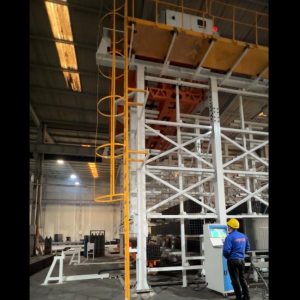
Can the loader run unattended overnight? Yes, when paired with a pallet magazine or storage tower holding several stacks. A single-pallet loader runs out of material and stops, so automation continues only as long as material supply does.
What repeatability should I ask for? ±2 mm is the working standard, since nesting software already leaves 8–15 mm of edge margin. Tighter figures add cost without improving part quality — cut accuracy comes from the laser, not the loader.
Key takeaways
- Specify from the material stream, not from the laser’s power rating.
- Six numbers define the system: envelope, stack weight, stroke, repeatability, speed, air.
- Stroke is cheap at order time and expensive later, so measure it properly.
- The I/O handshake, not the mechanics, decides whether a retrofit works.
- Loader output is capped by material supply, so plan the pallet or tower side early.