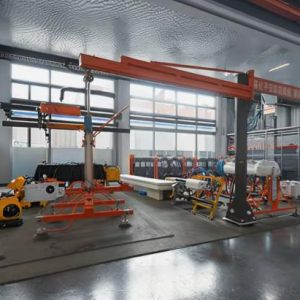
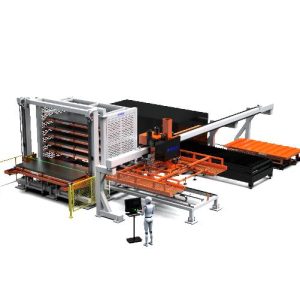
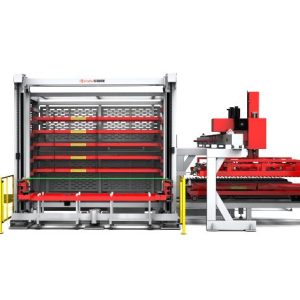
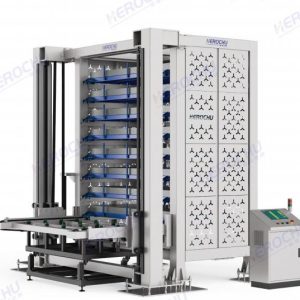
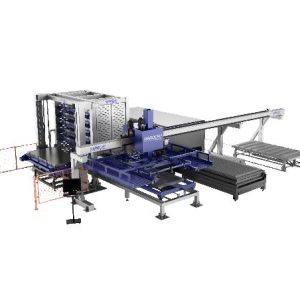
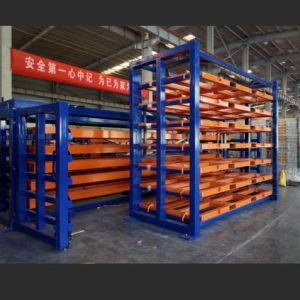
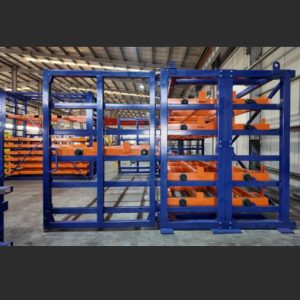
Moving heavy metal sheets across a workshop floor has always tested both human endurance and equipment limits. Forklifts damage sheet edges. Chains scratch surfaces. Magnetic lifters only work on ferrous materials. A crane mounted vacuum lifter solves these problems by using atmospheric pressure to grip sheets firmly from above, letting an overhead crane handle the transport.
Herochu designs crane mounted vacuum lifters specifically for workshops processing carbon steel, stainless steel, and aluminum sheets. The system attaches directly to an existing overhead crane hook, turning a standard crane into a precision sheet handling station without structural modifications to the building.
How Crane Mounted Vacuum Lifters Work
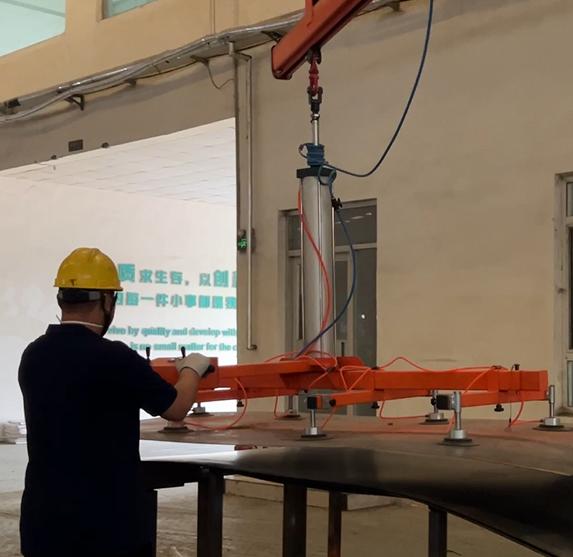
The lifter generates vacuum through a powered pump connected to an array of suction cups. When the cups contact a flat sheet surface, the pump evacuates air between the cup and the material, creating a pressure differential that holds the sheet securely. A vacuum reservoir maintains grip even if power drops momentarily, and a check valve system preserves suction during crane transit.
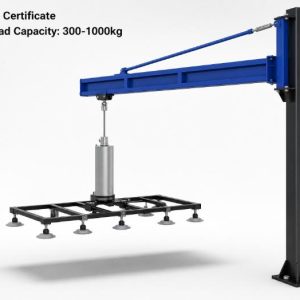
Herochu equips its crane mounted units with eight suction cups measuring 200 mm in diameter. This multi-cup layout distributes holding force across the sheet surface, preventing sagging on thinner gauges and accommodating sheets up to 4000 × 2000 mm.
Core Features
Lightweight Structural Design
The lifter body uses a modular frame that disassembles into manageable sections. This construction reduces overall crane load, leaving more rated capacity for the sheet itself. Workshop teams can disassemble the unit for maintenance without specialized lifting equipment.
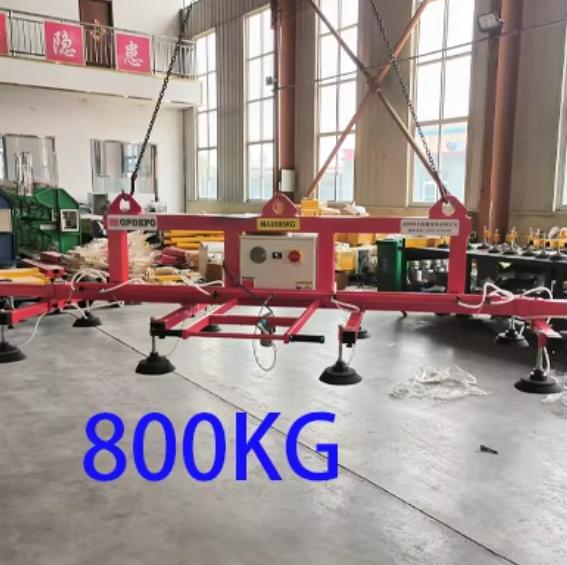
Every Herochu crane mounted vacuum lifter ships with emergency air cut-off protection as standard. If the air supply or power is interrupted, the system holds the sheet for a controlled descent rather than an instantaneous release. An automatic braking system locks mechanical components during emergencies, protecting both personnel and the material below.
Versatile Material Compatibility
The vacuum cups grip carbon steel, stainless steel, and aluminum sheets equally well. Unlike magnetic lifters, vacuum systems do not depend on the material’s magnetic properties. This means a single Herochu lifter can move a batch of mild steel plates and then immediately handle aluminum or stainless sheets without equipment changes.
Technical Specifications
| Parameter | HC-RP3015-300 | HC-RP4020-500 |
|---|---|---|
| Sheet Dimensions | 3000 × 1500 mm | 4000 × 2000 mm |
| Max. Load Capacity | 300 kg | 500 kg |
| Rotation Angle | 220° | 220° |
| Lifting Stroke | 700 mm | 700 mm |
| Column Height | 3600 mm | 3600 mm |
| Boom Length | 3600 mm | 3600 mm |
| Vacuum Cups | 8 | 8 |
| Cup Diameter | 200 mm | 200 mm |
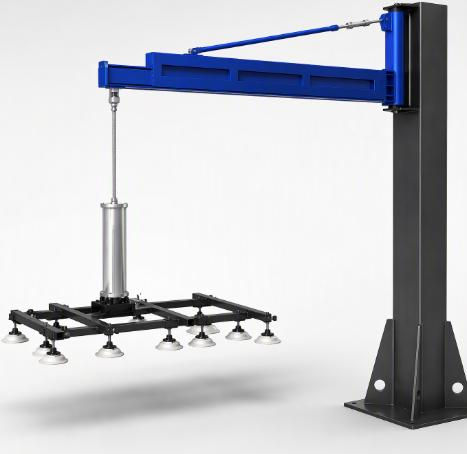
The 220° rotation angle allows operators to turn sheets for orientation changes without setting the load down. A 700 mm lifting stroke provides clearance over machine beds and storage racks.
Workshop Applications
Steel service centers use crane mounted vacuum lifters to move sheets from delivery trucks to storage racks, and from storage to cutting tables. Fabrication shops deploy them above laser cutting machines, plasma tables, and press brakes. In each scenario, the vacuum lifter eliminates the manual lifting, pushing, and positioning that cause musculoskeletal injuries.
The sheet separation function addresses a common workshop problem: oiled sheets sticking together. When a vacuum lifter picks the top sheet from a stack, a separation mechanism breaks the oil film bond, preventing double-sheet pickups that can jam feeding systems.
Comparing Vacuum and Magnetic Lifting Methods
Workshops choosing between vacuum and magnetic lifters should consider material range, surface protection, and operational flexibility. Magnetic lifters only grip ferrous materials—carbon steel and some stainless grades. They cannot handle aluminum, copper, or non-magnetic stainless alloys. Vacuum lifters grip any flat, non-porous surface, making them suitable for mixed-material operations.
Magnetic lifters also leave residual magnetism in thin sheets, which can interfere with downstream processes like welding or laser cutting. Vacuum lifters leave no physical or magnetic residue on the sheet surface. For operations supplying cut parts to precision fabrication downstream, this surface cleanliness matters.
The trade-off is that vacuum lifters require a clean, relatively flat sheet surface to achieve full holding force. Heavily rusted or warped sheets reduce cup contact area and holding capacity. In practice, most workshop sheet stock arrives in condition suitable for vacuum handling.
Why Choose Herochu
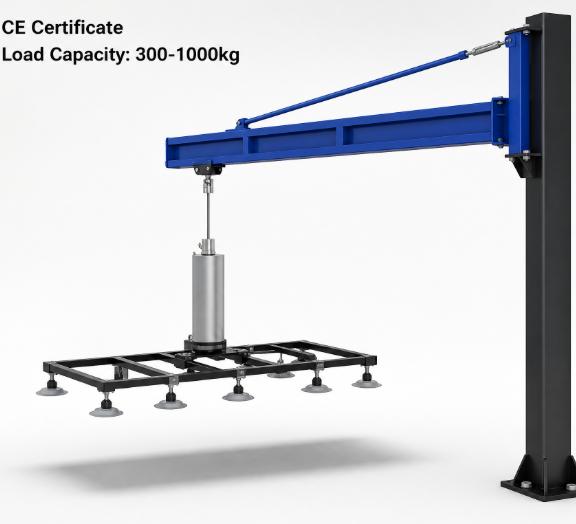
Herochu engineers its vacuum lifting systems around three priorities: operator safety, material protection, and throughput. The modular frame design means spare parts swap out quickly, minimizing downtime. The standardized safety systems meet workshop compliance requirements without adding operator complexity.
The CE, ISO 9001, and RoHS compliance marks on Herochu equipment confirm that the design, manufacturing process, and material selections meet international standards. One year warranty coverage backs every unit.
Frequently Asked Questions
What sheet sizes can a crane mounted vacuum lifter handle?
Herochu crane mounted vacuum lifters accommodate sheets up to 4000 × 2000 mm with a maximum load capacity of 500 kg, depending on the model. The eight-cup configuration with 200 mm diameter cups provides stable contact across the full sheet surface.
Can a vacuum lifter handle stainless steel and aluminum sheets?
Yes. Vacuum suction cups grip any flat, non-porous surface regardless of magnetic properties. Herochu lifters handle carbon steel, stainless steel, and aluminum sheets interchangeably, which makes them more versatile than magnetic lifters in mixed-material workshops.
What happens to the sheet if power fails during a lift?
Herochu crane mounted vacuum lifters include emergency air cut-off protection that maintains suction during power interruptions. The vacuum reservoir holds the sheet long enough for a controlled descent, and the automatic braking system locks mechanical components to prevent uncontrolled drops.
How does the sheet separation function work?
When the vacuum cups contact the top sheet of a stack, the separation mechanism applies controlled force to break oil film bonds between sheets. This prevents the lifter from picking up two sheets simultaneously, which protects downstream equipment from jams and material damage.