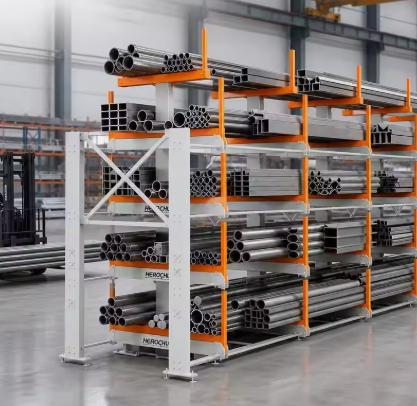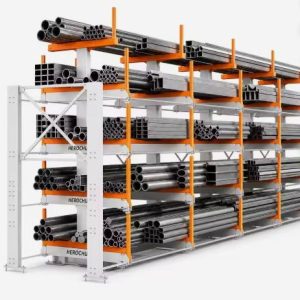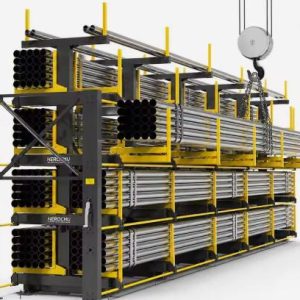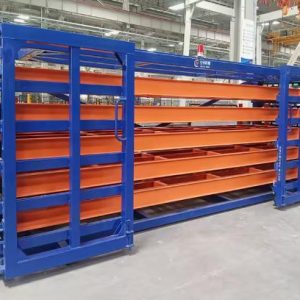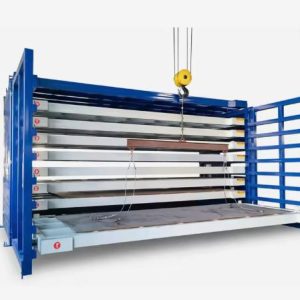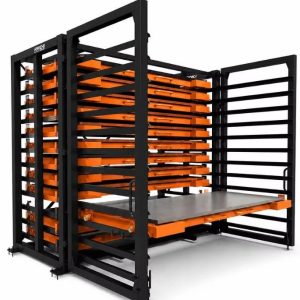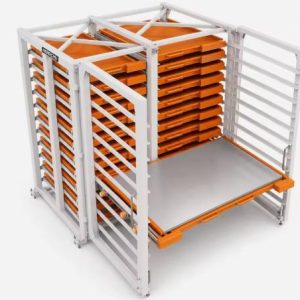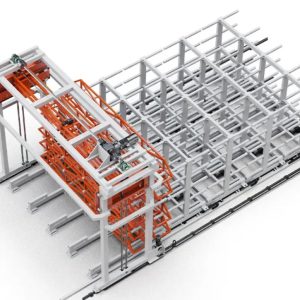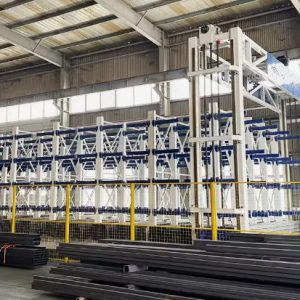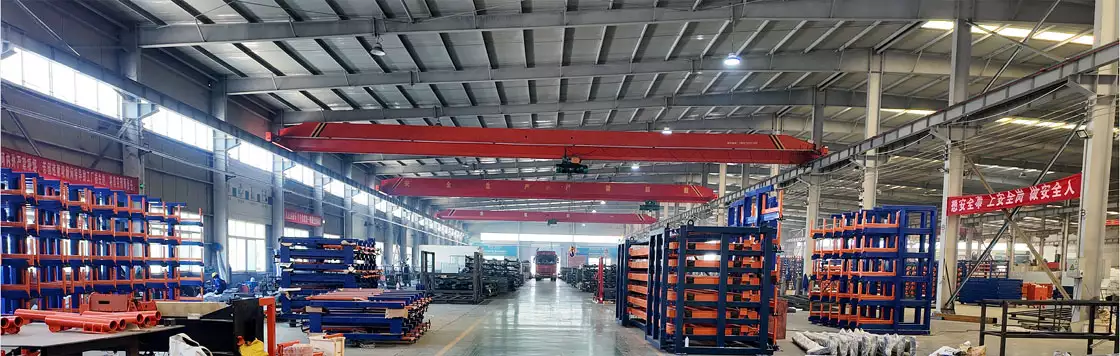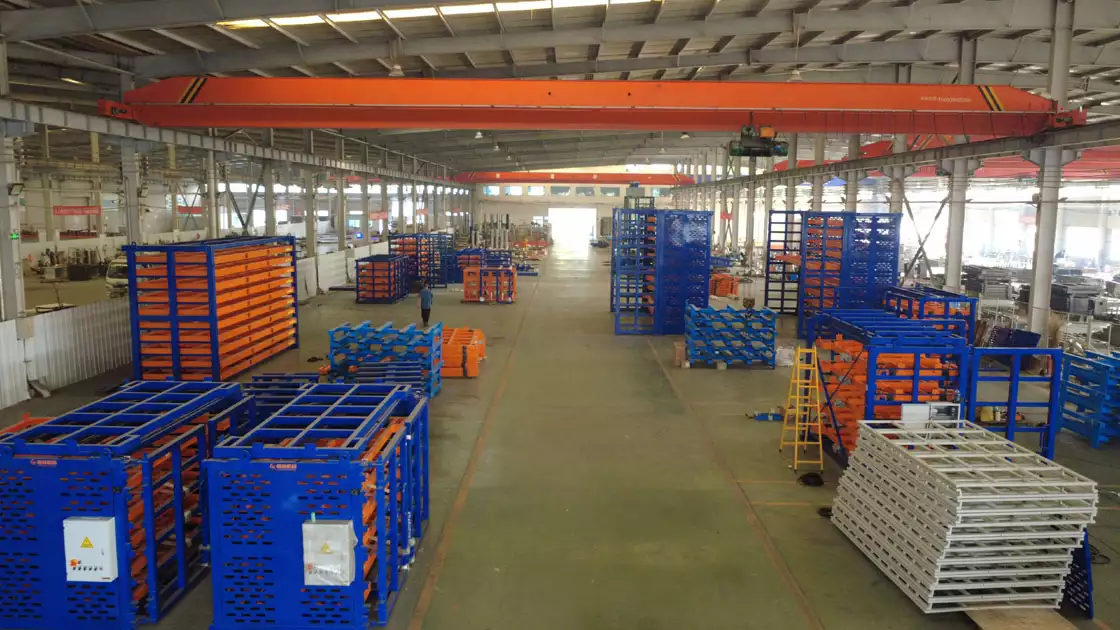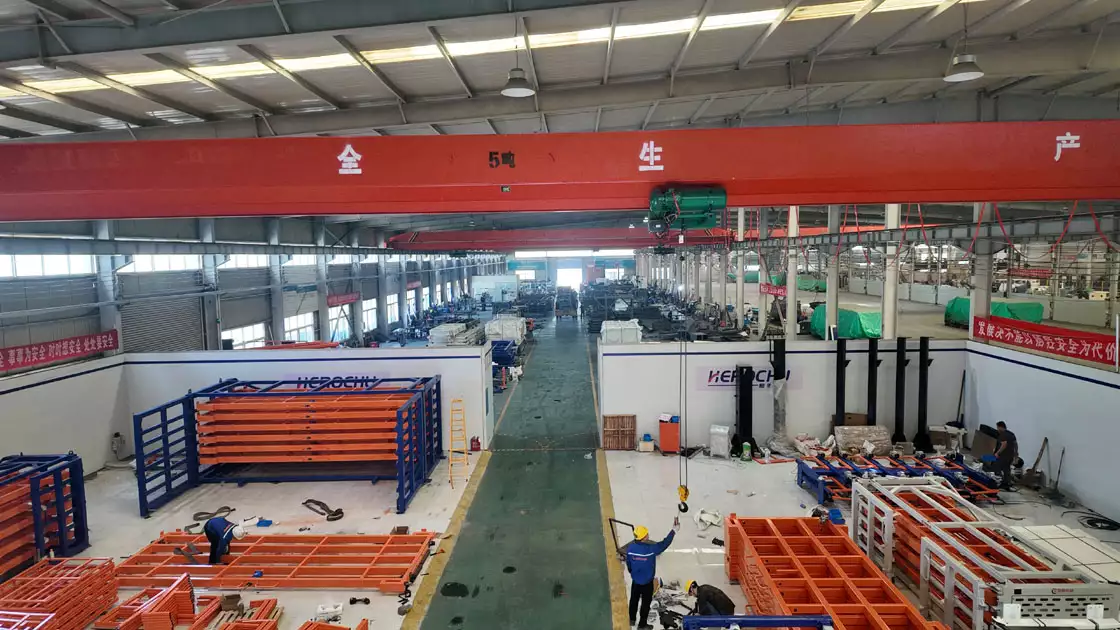
Steel service centers, metal distribution hubs, and structural stockyards share a common operational headache: long, heavy steel sections do not fit neatly into conventional pallet racking. Six-meter bars, I-beams, angle iron, and channel sections each carry their own weight, shape, and handling demands. A storage system built for boxed goods buckles under these loads, wastes vertical space, and turns retrieval into a slow, manual ordeal. Herochu designed its heavy duty warehouse racking solution for steel section storage to close that gap—combining structural steel engineering with modular, bolt-together architecture that steel distributors can deploy, reconfigure, and scale as inventory shifts.
Structural Foundation: Q235B High-Strength Steel Frame
The load-bearing core of every Herochu steel section racking system is a Q235B high-strength steel frame. Q235B is a structural carbon steel grade widely specified in industrial construction for its predictable yield strength, weldability, and toughness under cyclic loading. Herochu selects this grade because steel service centers store materials that impose dynamic point loads—drops from overhead cranes, forklift contact, and shifting bundle weights all transmit force into the rack frame. A frame that cannot absorb these forces deflects, develops stress cracks, and eventually fails.
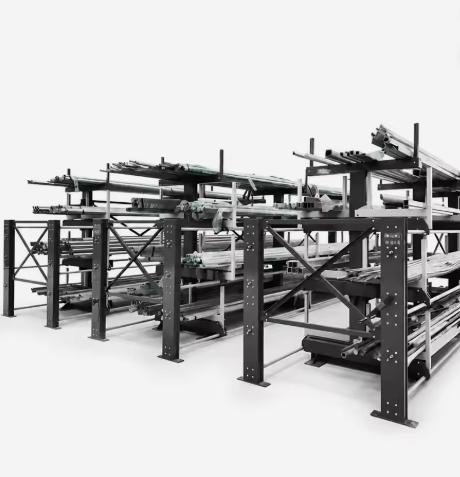
The dual-beam crossbar design reinforces this foundation further. Rather than a single cross-member tying the upright columns together, Herochu uses a paired crossbar configuration that distributes lateral force across two load paths. This matters most when the rack is loaded asymmetrically—one side full, the other side empty—which is exactly how classified storage works in practice. The dual-beam geometry prevents column twist and keeps the upright plumb even under uneven loading.
Load Capacity Engineered for Real-World Steel Inventory
Each cantilever arm in the Herochu system is rated for 5,000 kg and factory load-tested to a 1.5x safety factor, meaning the arm withstands 7,500 kg before any deformation occurs. This margin is not theoretical padding—it accounts for the shock loads that happen when a bundle is set down too quickly, when a forklift fork taps the arm during placement, or when an operator misjudges the bundle weight. At 3,000 to 5,000 kg per compartment across four model variants, the rack accommodates the full spectrum of steel section storage:
- HC-G6053S: 6,000 mm pipe length, 3,000 kg per level, 5 layers
- HC-G6053: 6,000 mm pipe length, 3,000 kg per level, 5 layers
- HC-G9065: 9,000 mm pipe length, 5,000 kg per level, 6 layers
- HC-G12065: 12,000 mm pipe length, 5,000 kg per level, 6 layers
The clear space between arms is 600 mm as standard and fully customizable, allowing steel distributors to dial in compartment width for different section profiles—narrow slots for small-diameter tubing, wider bays for large structural beams.
Corrosion Protection for Long-Term Steel Service Center Use
A steel storage rack in a service center faces a hostile environment: humidity fluctuations, condensation on cold-rolled stock, grinding dust, and occasional chemical exposure from cutting fluids. Bare steel would rust within months. Herochu applies two protective layers. First, the cantilever arms use galvanized steel, which forms a self-healing zinc layer that resists rust even where the surface is scratched during material handling. Second, the main frame receives an electrostatic powder-coated finish that bonds a durable polymer layer to the steel surface, sealing out moisture and providing a clean, professional appearance that holds up over years of heavy-duty use.
This dual-protection strategy extends service life and reduces the maintenance overhead that welded, bare-steel racks demand. Steel service centers operating near coastal areas or in humid climates benefit most—the galvanized arms and powder-coated frame resist the accelerated corrosion those environments cause.
Modular Bolt-Together Construction
Welded racking is permanent. Once a welder assembles it in the warehouse, moving it means cutting it apart—and that destroys structural integrity. Herochu takes a different approach: the entire frame uses bolt-together modular construction with zero on-site welding. Two workers can assemble a full rack unit in approximately four hours using standard hand tools. The bolted connections maintain full structural rating because each joint is engineered and tested, not field-improvised.
This modularity pays off when inventory profiles change. A distributor who initially stocked short bars may later take on longer sections. Rather than scrapping the old rack, they extend the arm reach, add upright height, or reconfigure tier spacing. The plug-in design means arms slot into the upright column and lock at 75 mm intervals—offering near-infinite configuration flexibility for any steel section dimension.
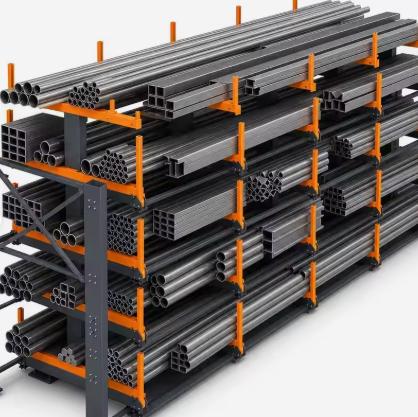
Floor-Mounted Stability Under Full Load
A rack is only as stable as its anchor. Herochu equips every upright base with reinforced base plates secured by 20 mm anchor bolts floor-mounted into the concrete slab. This anchoring strategy prevents the single most dangerous failure mode in cantilever racking: tipping under full load during material placement. When a forklift operator deposits a 3,000 kg bundle onto an arm, the resulting moment force tries to rotate the upright backward. The anchor bolts transfer that force into the floor, keeping the column plumb and the load secure.
Classified Storage for Operational Efficiency
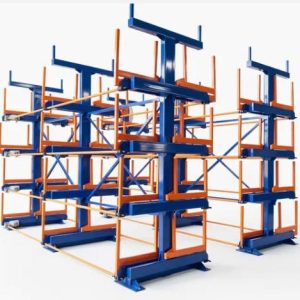
The double-sided design gives each tier independent compartments on both faces of the rack. This is not a cosmetic feature—it directly reduces retrieval time and material damage. When every section type—round bar, square tube, angle, flat—has a dedicated slot, operators find what they need on the first walk-through. No digging through mixed bundles, no pulling the wrong piece and dropping adjacent stock. The manual crank mechanism enables space-saving loading and unloading without requiring wide aisles for mechanical withdrawal, which means more rack rows fit into the same warehouse footprint.
Upright Column Heights and Tier Configuration
Upright columns are available from 2,000 mm to 6,000 mm in height, with arm levels adjustable every 75 mm along the column. This means the rack is not locked into the five or six standard tiers it ships with. A distributor who later needs to store a different section profile can re-tier the entire column without replacing components. Short columns suit small-diameter tubing stored in many tiers; tall columns accommodate large-diameter pipe that needs vertical clearance between layers.
Certification, Warranty, and Documentation
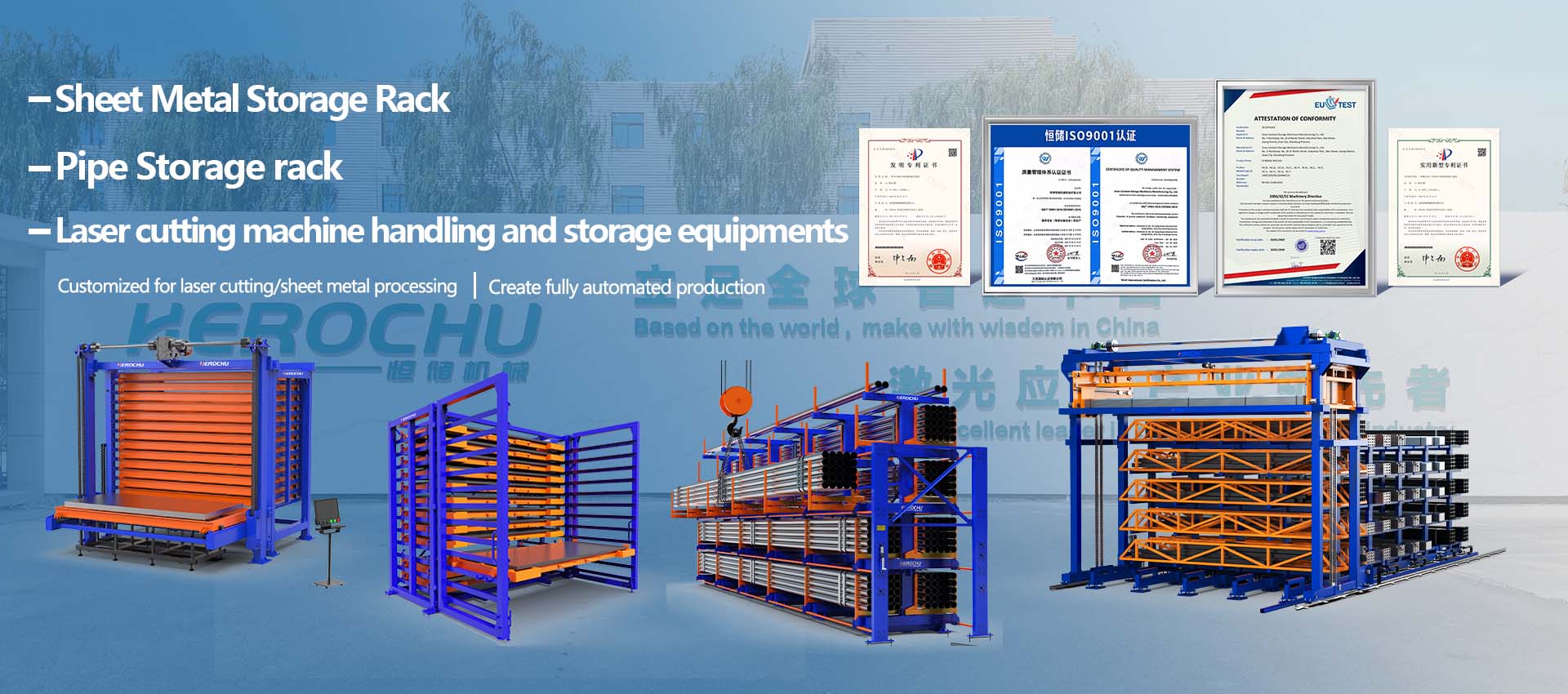
Herochu manufactures every system under CE certification and ISO 9001 quality management. Each shipment includes a detailed assembly manual and foundation drawing, giving the installing contractor engineering-level guidance rather than guesswork. A three-year structural warranty covers all components, reflecting the confidence that comes from load-tested, factory-verified engineering.
For steel service centers that need a racking solution built around the realities of long, heavy section storage—dynamic loads, corrosion exposure, evolving inventory, and worker safety—the Herochu heavy duty warehouse racking system delivers a structurally sound, modular, and corrosion-resistant platform that scales with the operation.