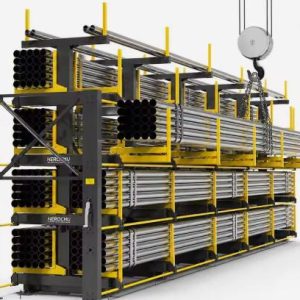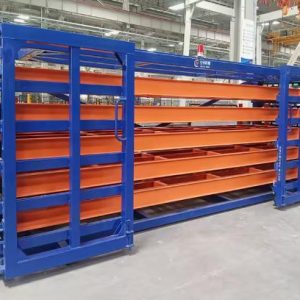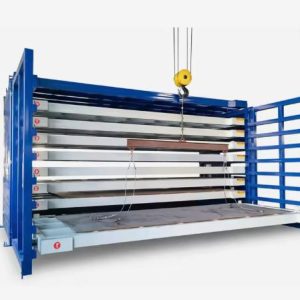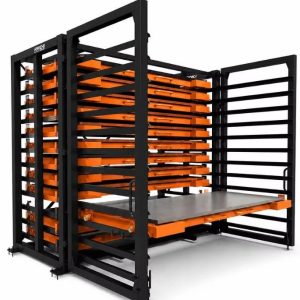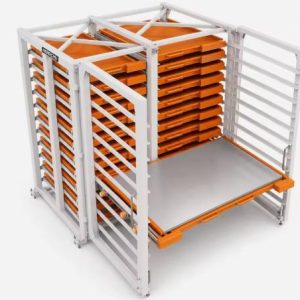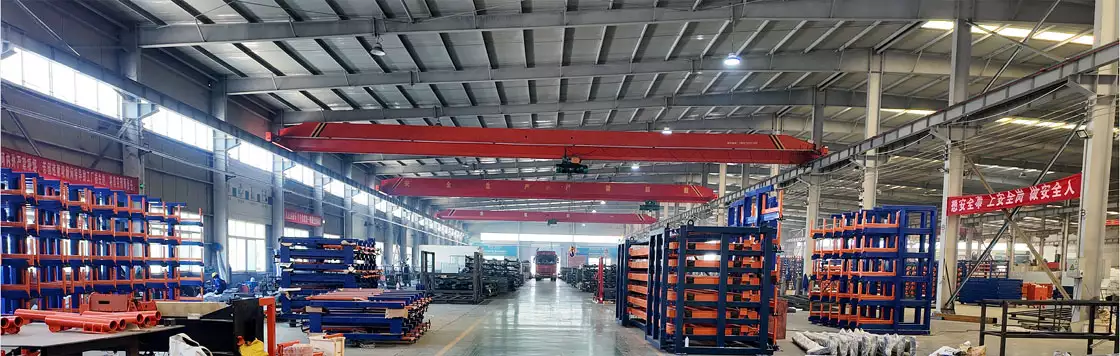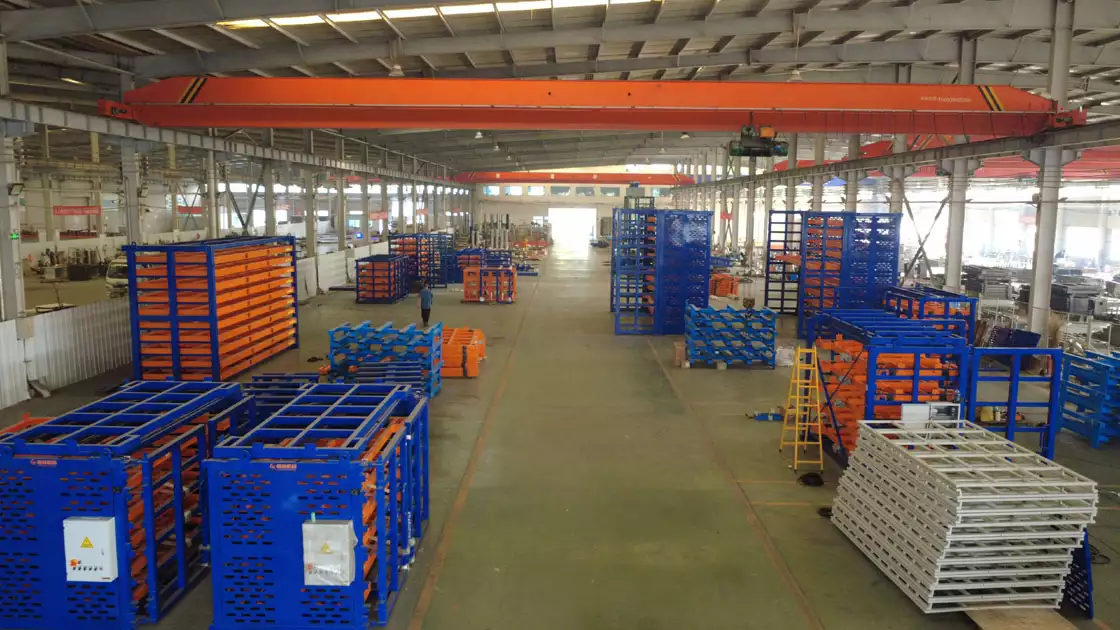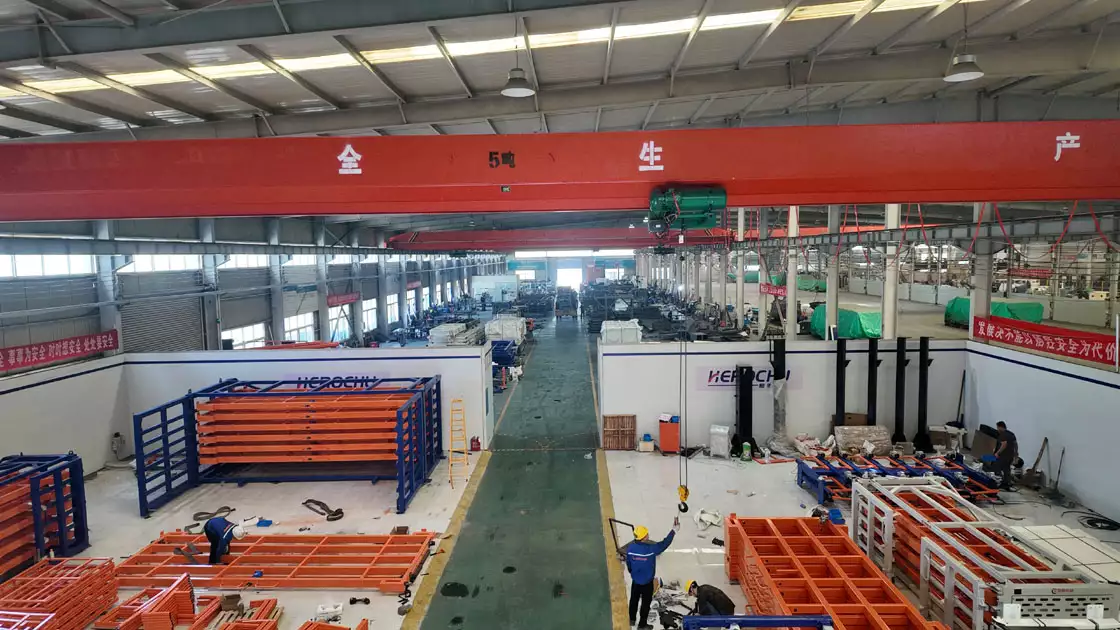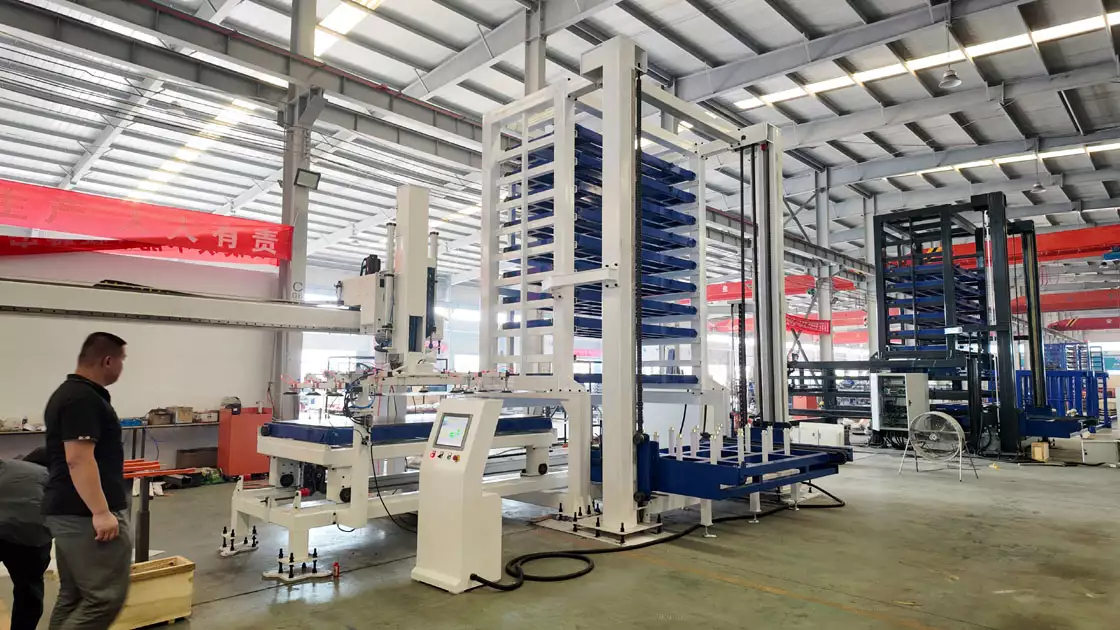
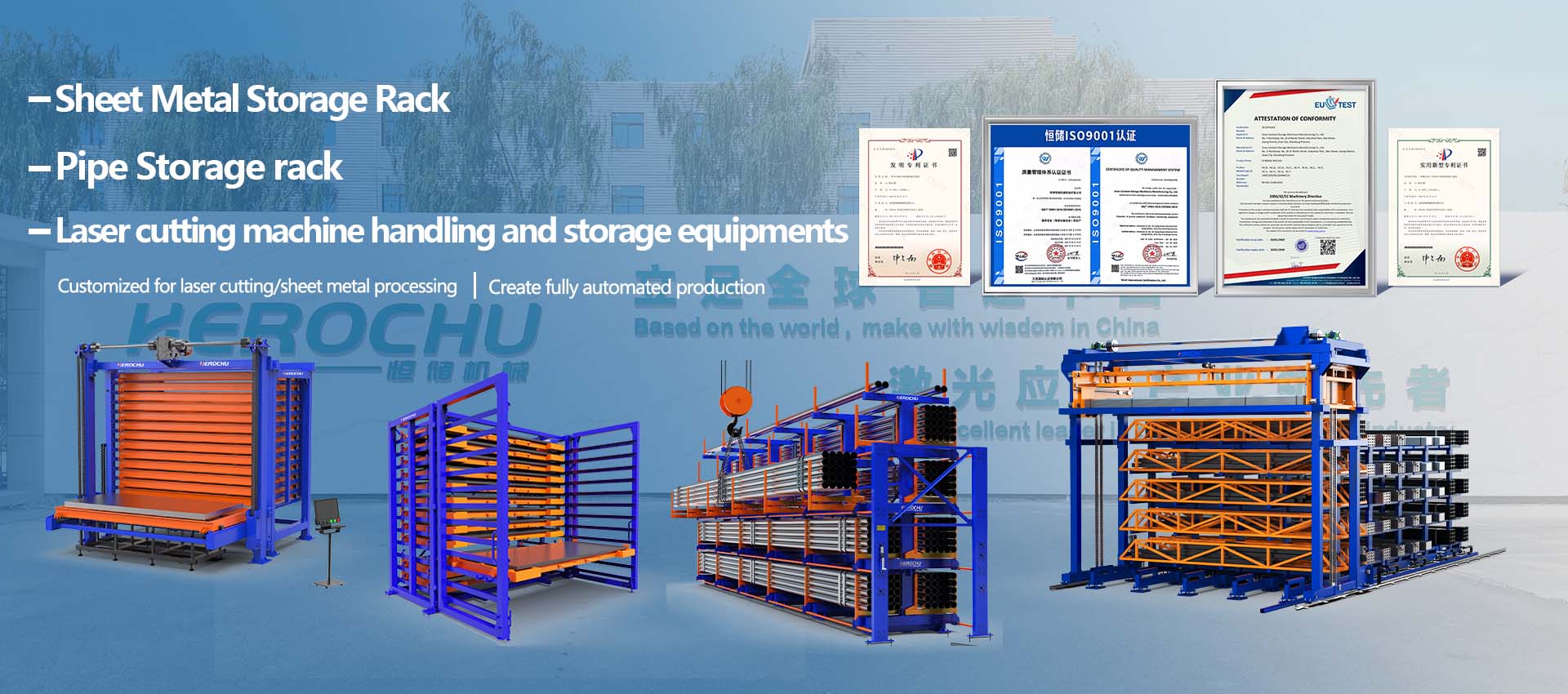
The economics of sheet metal storage are not determined by the cost of the rack alone. They are determined by the labor required to retrieve material, the floor space consumed by the storage system, and the damage that occurs when sheets are handled poorly. A rack that costs less upfront but requires two workers and twenty minutes to retrieve a single plate is not actually cheaper than a system that one worker can operate in two minutes. Herochu designed the Motorized Roll-Out Sheet Storage Rack with 5-ton per-layer drawer capacity around that calculation.
The Hidden Cost of Manual Retrieval
A pallet of steel plate sitting on the shop floor looks inexpensive because the cost of the pallet is low and the floor appears to be free. Neither assumption holds up under scrutiny. The floor space consumed by a pallet of plate is space that cannot be used for production equipment, staging, or inventory that turns faster. And the labor required to retrieve a sheet from a stack—moving the crane, rigging the load, lifting the top sheets to reach the one needed, restacking the remainder—accumulates across every retrieval until it becomes a significant portion of the shop’s material handling budget.
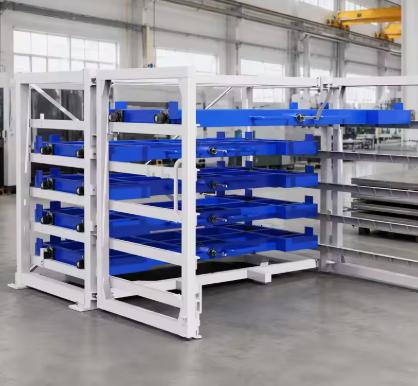
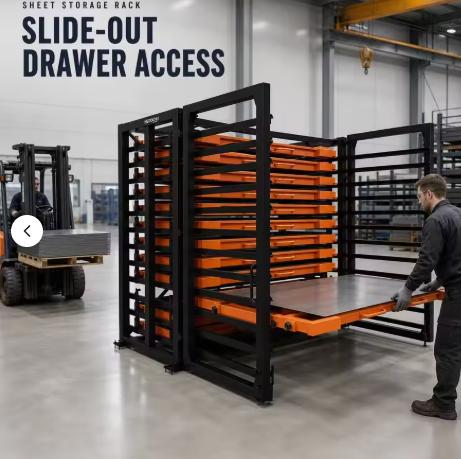
The Herochu motorized drawer rack eliminates the retrieval inefficiency. Each sheet sits on its own drawer, separated from the material above and below. To retrieve a sheet, the operator identifies the drawer by its label, presses the button on the remote control, and the drawer extends to the aisle. The crane or vacuum lifter engages the exposed sheet directly. There is no restacking, no searching, and no moving material that is not needed. What was a two-person operation becomes a one-person task.
Five Tons Per Layer: The Capacity That Changes What Is Possible
The five-ton drawer rating is not an arbitrary number. It represents a threshold below which manual handling is technically possible for some operations and above which powered operation becomes necessary for safety and efficiency. By engineering the drawer to handle 5,000 kg reliably, Herochu makes motorized operation the standard rather than the exception. A shop that stores 20-foot lengths of 12 mm steel plate, or stacks of 6,000 × 2,000 mm sheets, can use a single rack to hold material that would otherwise require multiple pallets and a dedicated floor zone.
The drawer structure that carries this load uses a welded frame with transverse ribs that prevent the tray from bowing under the weight. The roller assemblies are sized for the load, with sealed bearings and hardened races that maintain smooth travel across thousands of cycles. The drive system delivers power through a mechanism rated for the torque required to move a fully loaded drawer from rest, and the control system manages acceleration to avoid shock loading on the frame and the material.
Safety by Design, Not by Procedure
Safety procedures depend on people following them. Safety engineering depends on the equipment making unsafe actions difficult or impossible. The Herochu motorized drawer rack incorporates both approaches. The powered drive removes the operator from the physical effort of moving the drawer, eliminating the strain and slip injuries that occur when a heavy drawer binds or releases unexpectedly. The remote control allows the operator to stand clear of the rack during drawer movement, maintaining distance from the moving load.
The interlock system prevents unsafe states. A drawer cannot extend if another drawer is already open, which prevents the rack from becoming unbalanced. The drawer cannot move while the crane is engaged with the material inside it, which prevents the sheet from being dragged or the drawer from moving under a suspended load. These interlocks are mechanical and electronic, so they function regardless of operator attention or training.
Space Efficiency and Layout Flexibility
The single-side access design is a significant advantage in shops where floor space is constrained. Because the drawers extend to the aisle on one side only, the rack can be placed against a wall or in a corner without wasting the space behind it. A double-sided rack requires aisles on both sides, consuming floor area that the single-side design converts to usable production space.
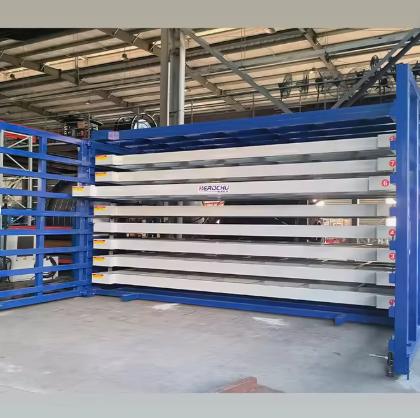
The vertical orientation of the rack uses height that is otherwise empty. A six-layer rack occupies roughly the same floor footprint as a single pallet but stores six times the material. For shops that are running out of floor space but have available height, the drawer rack provides a way to expand storage capacity without expanding the building.
Built for the Long Term
Industrial storage equipment is an investment measured in years, not months. The Herochu Motorized Roll-Out Sheet Storage Rack is built with that timeline in mind. The Q235B steel frame resists corrosion and deformation. The wear components—rollers, guide strips, and drawer pads—are replaceable without dismantling the rack. The motor and control system use industrial-grade components with documented service intervals.
Herochu supports the rack through its service life with spare parts availability, technical documentation, and access to engineering support for modifications or expansions. The modular design allows additional layers or a second unit to be added as storage needs grow, protecting the original investment rather than requiring replacement.
For operations that handle steel, stainless, or aluminum plate in the 3,000 to 5,000 kg per sheet range, the Herochu Motorized Roll-Out Sheet Storage Rack with 5-ton drawer capacity offers a combination that manual systems cannot match: powered retrieval that one person can operate, structural capacity that matches the material, and a footprint that respects the value of floor space in a working shop.