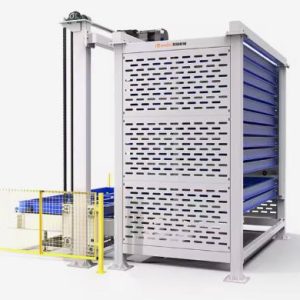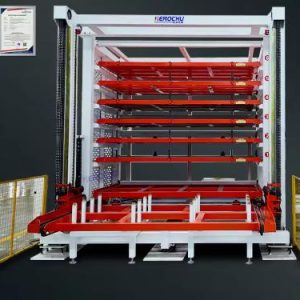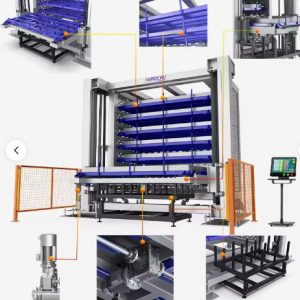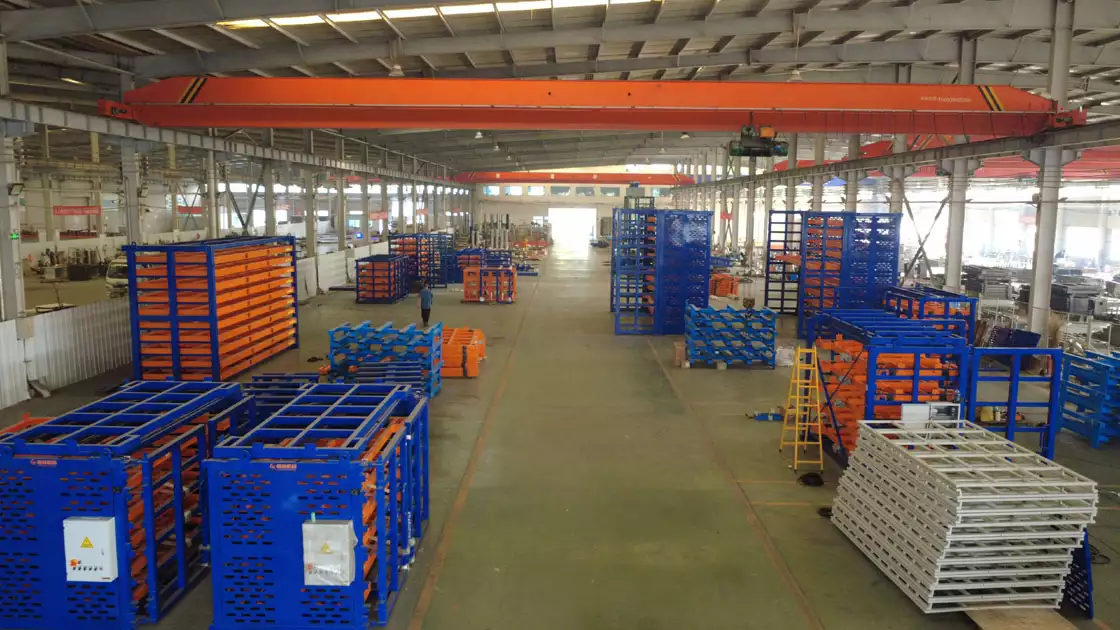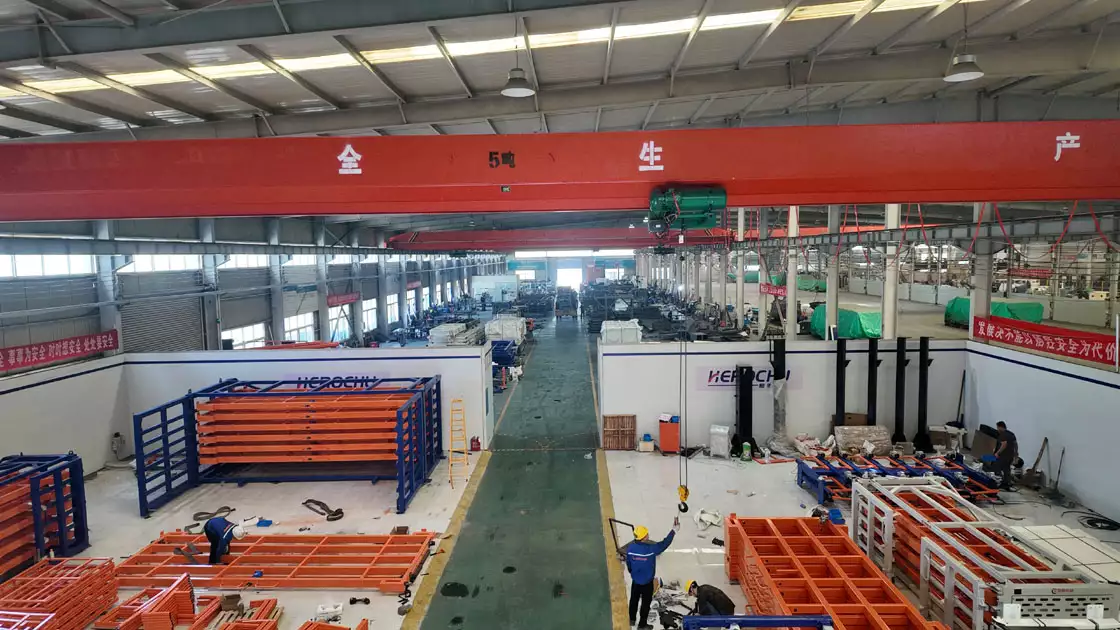
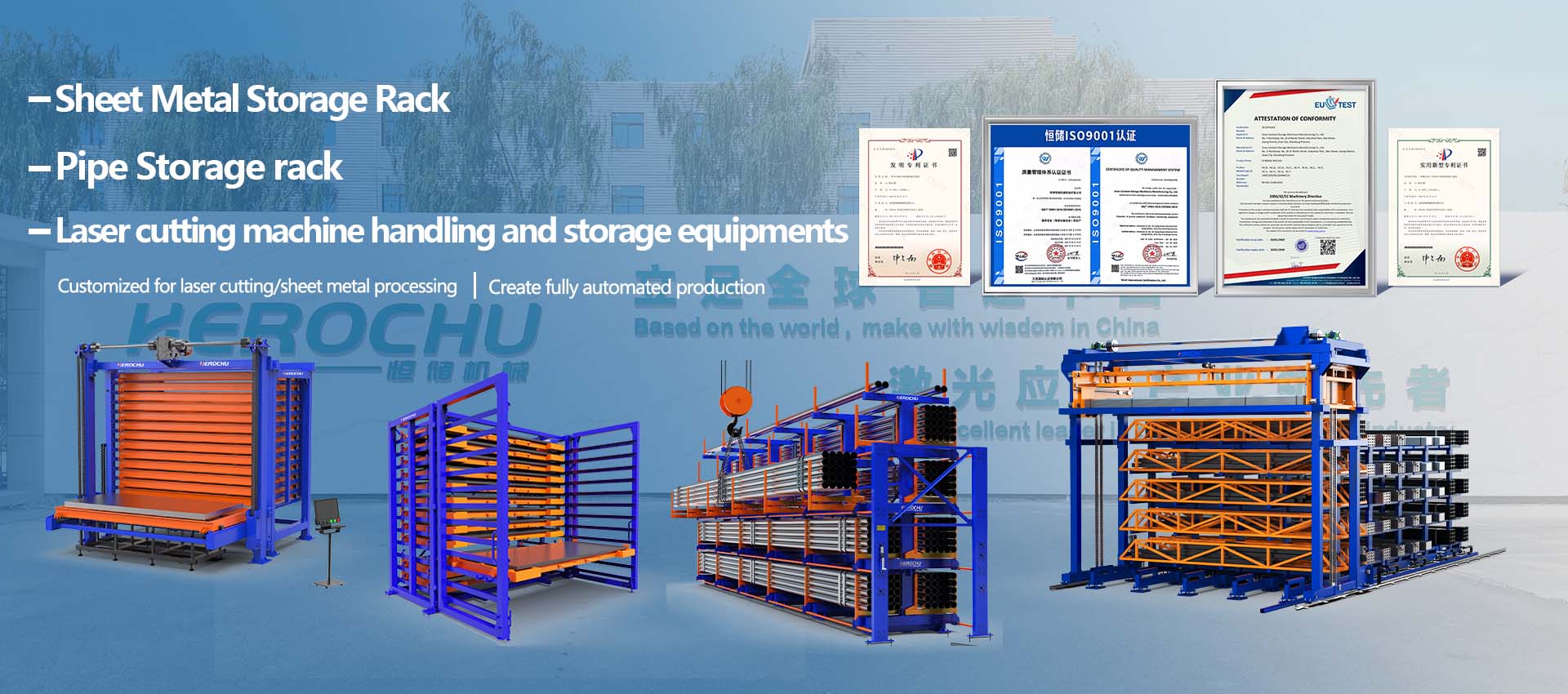
Metal fabrication shops and sheet metal processing lines face a persistent challenge: storing large volumes of sheet materials of varying dimensions, thicknesses, and alloys without sacrificing floor space or retrieval speed. Traditional racking systems require wide aisles for forklifts, rely on manual record-keeping, and often lead to inventory mismatches or damaged material edges. Herochu’s automated tower storage systems provide a direct response to these pain points, merging vertical density with horizontal accessibility to create a storage architecture that operates as both a warehouse and a just-in-time dispatch hub.
Comprehensive Material Compatibility
Herochu’s automated tower storage systems accommodate a broad range of flat materials. Steel, aluminium, stainless steel, copper, composite panels, timber sheets, and plastic are all standard. The systems support sheet dimensions from 3,000×1,500 mm up to 6,000×2,500 mm, with custom tray dimensions available for non-standard stock.
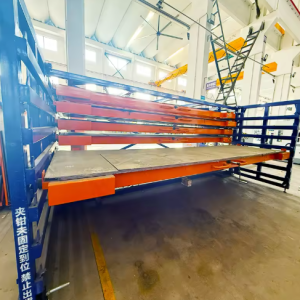
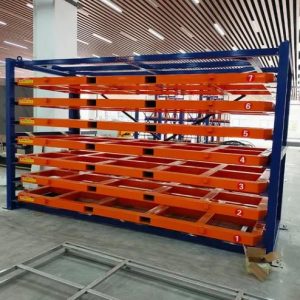
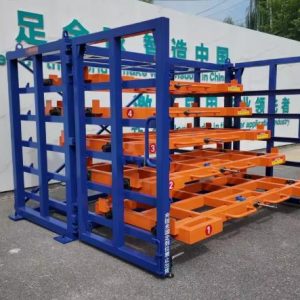
Tray configurations are engineered to match the specific requirements of the materials being stored. Solid sheet-metal bottoms support lighter materials, while reinforced latticed steel bottoms handle heavier loads such as bundled bar stock and thick plate. Per-tier load capacities range from 3,000 kg to 5,000 kg, accommodating everything from thin aluminum panels to heavy steel plates.
This material compatibility ensures that a single tower system can serve as the central storage hub for the entire fabrication operation, eliminating the need for separate storage solutions for different material types or thicknesses.
The Tower Storage Operating Principle
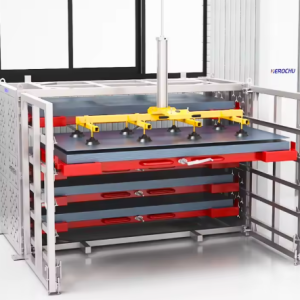
The operating principle of automated tower storage systems is goods-to-person: rather than an operator navigating a warehouse with a forklift, the system brings the required sheet directly to the operator at an ergonomic working height. This fundamental shift in material handling eliminates the time-consuming search and transport that characterize traditional storage methods.
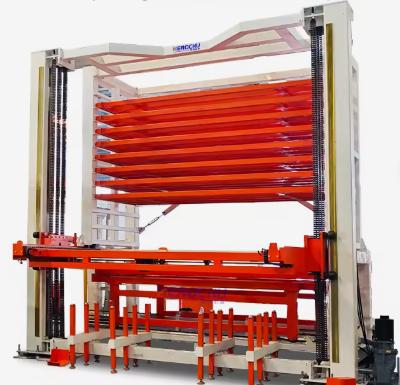
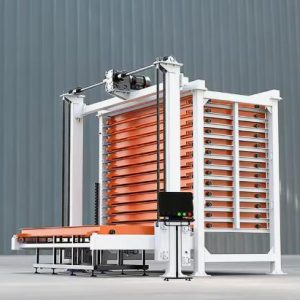
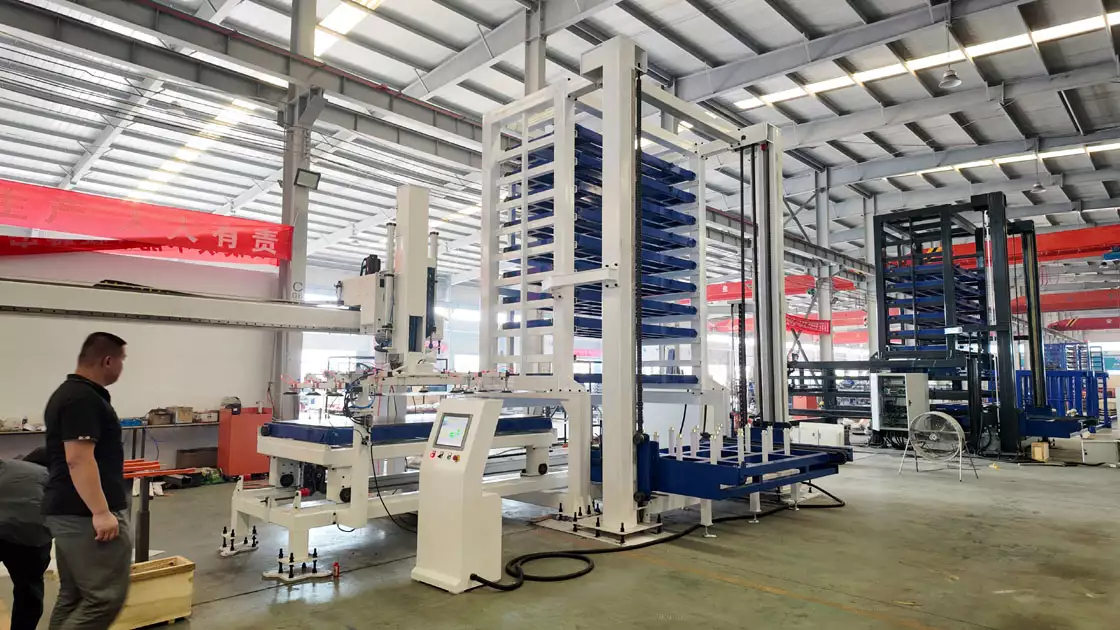
The tower consists of a steel frame housing multiple trays stacked vertically, with a motorized lift that moves trays between storage positions and an access opening. A PLC controller manages tray indexing and retrieval commands, ensuring that the correct tray is delivered to the access bay every time. The entire retrieval cycle typically completes in under 60 seconds.
The system’s vertical lift mechanism is engineered for precision and reliability. Servo-driven systems ensure smooth tray positioning, while industrial-grade steel construction provides the durability required for continuous industrial operation.
Integration with Production Equipment
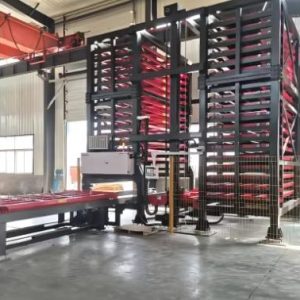
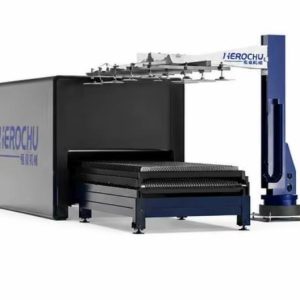
Where automated tower storage systems deliver the greatest production impact is in their connection to downstream processing equipment. Herochu’s systems link the tower’s access bay directly to CNC punch presses, fibre laser cutters, and plasma tables through shuttle systems and conveyors. Sheets move from storage to the machine bed without manual transport, creating a continuous material flow that reduces idle machine time and supports unattended production runs.
For facilities operating multiple laser cutting machines, the integration is particularly powerful. The system synchronizes with multiple machines on a shared production schedule, with the software coordinating retrieval and delivery to match the real-time cutting sequence. When one machine finishes a job, the next sheet is already en route. When two machines request material simultaneously, the system prioritizes and routes accordingly.
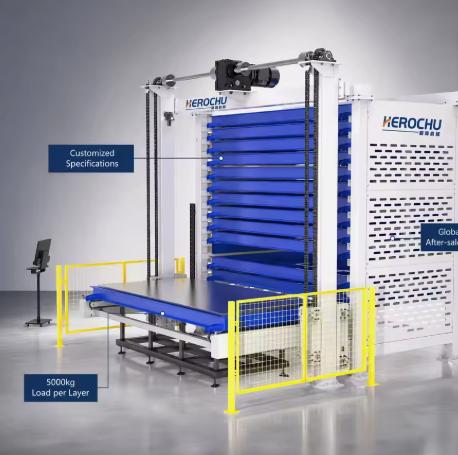
This multi-device synchronization enables mixed-material jobs that once required manual changeovers between machines to run back to back without stopping the line. The tower doubles as a production buffer, with different sheet grades, thicknesses, and sizes sitting in their own tiers, ready to be switched according to the real-time cutting schedule.
Software Integration and Inventory Visibility
Modern automated tower storage systems connect directly with warehouse management systems (WMS), enterprise resource planning (ERP) platforms, and manufacturing execution systems (MES). This integration enables real-time inventory visibility. Every sheet stored, retrieved, or consumed is tracked automatically, eliminating the manual stock counts and spreadsheet-based systems that many fabricators still rely on.
The software layer provides more than just inventory tracking. It enables intelligent scheduling, predictive material positioning, and automated task dispatching. The system knows which sheets are available, where they are located, and when they are scheduled for production. This visibility ensures that material availability never constrains production and that inventory levels are always aligned with production requirements.
Space Efficiency and Layout Optimization
Herochu’s automated tower storage systems are designed to maximize the use of available vertical space. The tower structure occupies a minimal footprint while providing high-density storage capacity. A single tower occupying less than 10 square metres can house more than 60 tonnes of sheet metal, delivering an 85 percent reduction in the floor area previously consumed by horizontal storage methods.
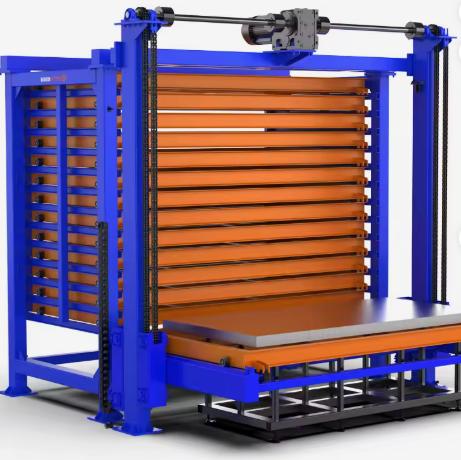
The systems are customized to on-site environmental requirements, with optimized layout design that adapts to existing facility constraints. Whether the requirement is a single-tower configuration for smaller workshops or a double-tower arrangement for high-volume production, the system is engineered to maximize the usable cubic volume of the available space.
Safety and Operational Benefits
Automated tower storage systems deliver significant safety benefits by removing forklifts from material handling workflows. The goods-to-person operating principle means that operators no longer need to navigate forklifts through narrow aisles or lift heavy sheets manually. The system handles all material movement within the tower, reducing the risk of accidents and material damage.
The systems are CE, UE, and ISO 9001 certified, ensuring compliance with rigorous safety and quality standards. This certification provides assurance that the equipment meets international requirements for workplace safety and operational reliability.