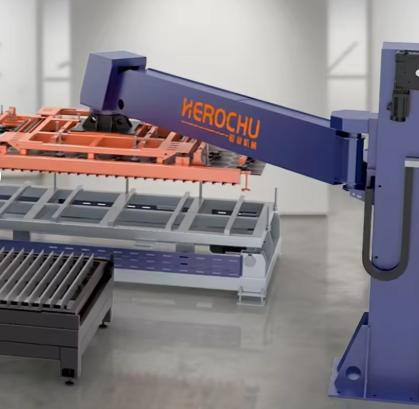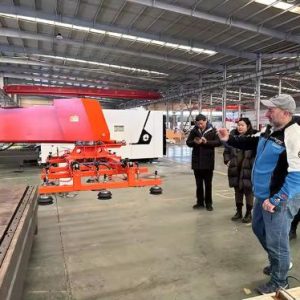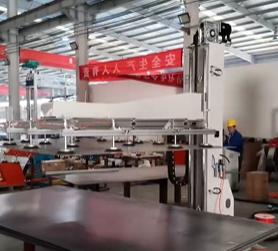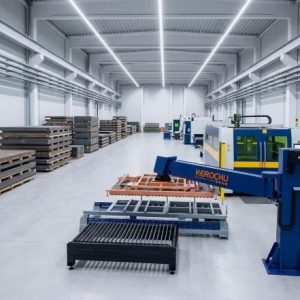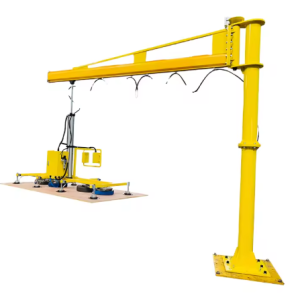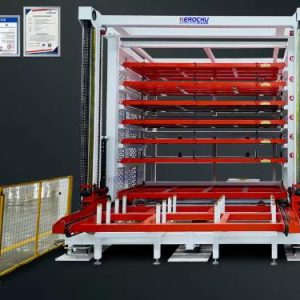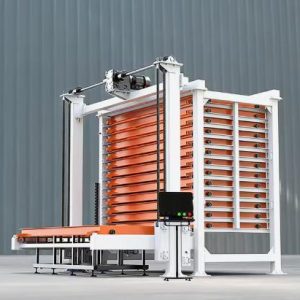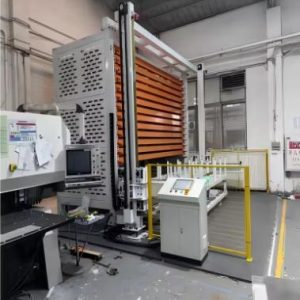
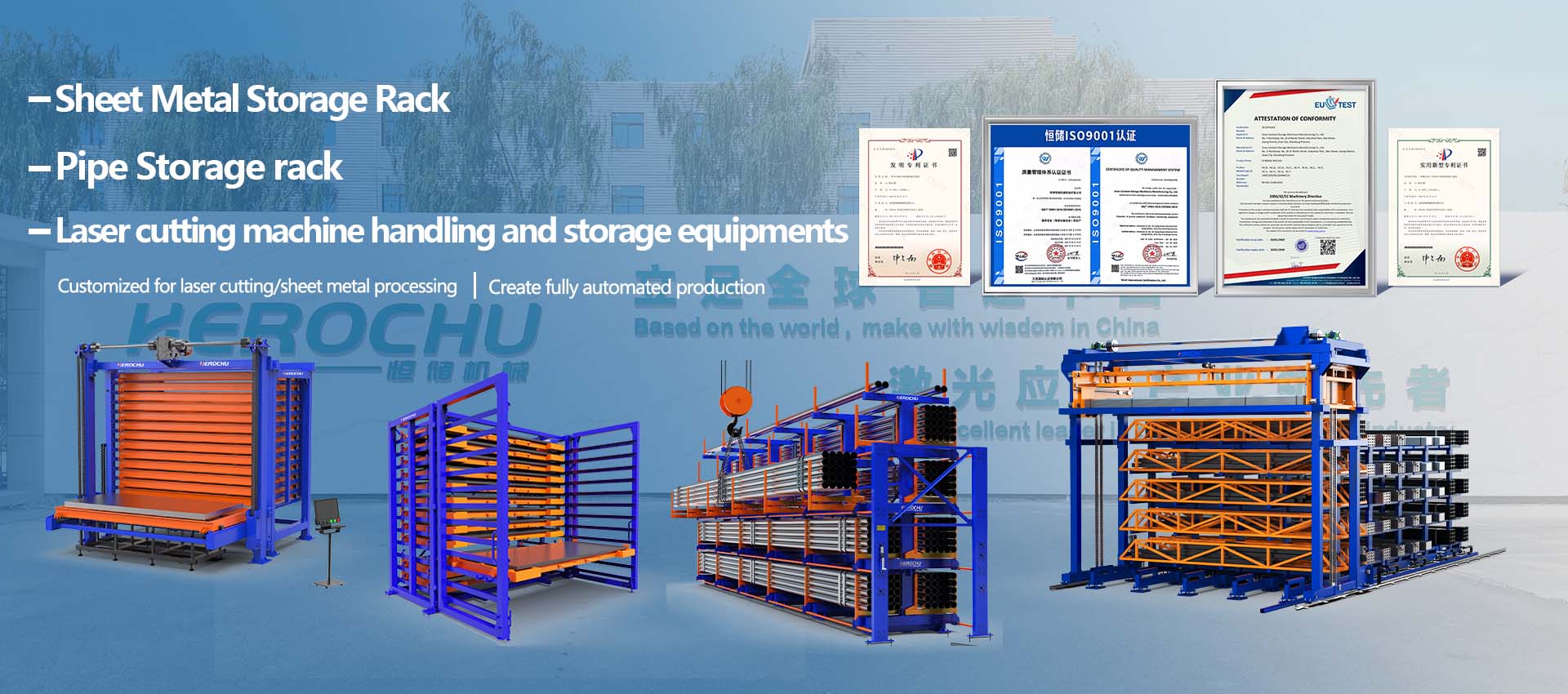
Manufacturing engineers evaluating vacuum lifting devices for their shop floor quickly encounter a distinction that separates purpose-built industrial equipment from the general-purpose suction handlers sold through tooling catalogs. A vacuum lifting device rated for continuous production must solve four engineering problems at once: it must generate and maintain vacuum in a dirty, particulate-laden atmosphere; it must distribute gripping force across sheets with inconsistent surface conditions; it must fail safely during any credible loss-of-utility scenario; and it must integrate with the timing cadence of CNC machine tools running 16 to 24 hours per day. Herochu designs its vacuum lifting devices around these constraints from the first principle, rather than adapting a standard hoist with an add-on suction kit.
The vacuum generation pathway on Herochu industrial lifting devices relies on compressed-air-driven multistage ejectors configured in parallel. Compressed air enters the ejector nozzle at 6 to 8 bar, accelerates through a venturi throat, and entrains ambient air from the suction circuit to create a partial vacuum downstream. A single ejector module consumes roughly 180 to 250 liters per minute of compressed air and reaches 85% vacuum within 1.5 to 2 seconds — fast enough that the sheet is fully secured before the lifting column begins its ascent. For high-flow applications where multiple cups might encounter leakage simultaneously, Herochu gangs three or four ejector modules on a common reservoir, maintaining stable vacuum even when several pads sit over surface irregularities or pre-punched holes that would collapse a single-ejector circuit.
Vacuum cup selection and layout constitute the interface where lifting physics meets production economics. A cup’s effective holding force equals the pressure differential multiplied by the effective sealing area, but that simple formula assumes perfect contact — an assumption that does not survive first contact with a hot-rolled steel plate carrying mill scale, oil residue, or light surface rust. Herochu pads are specified in nitrile rubber (NBR) for general ferrous applications, offering resistance to the cutting oils and coolant residues that coat most shop-handled stock, and in silicone for elevated-temperature use or for aluminum sheet destined for anodizing where any rubber transfer mark would become chemically locked into the surface during subsequent processing. Pad diameter selection follows the shop’s thinnest-gauge material, not its heaviest: a suction pad that flexes a 2 mm aluminum sheet by more than 1.5 mm between attachment points can introduce permanent profile distortion, so Herochu uses a denser cup grid on thin-stock applications with smaller individual pads that reduce the unsupported span.
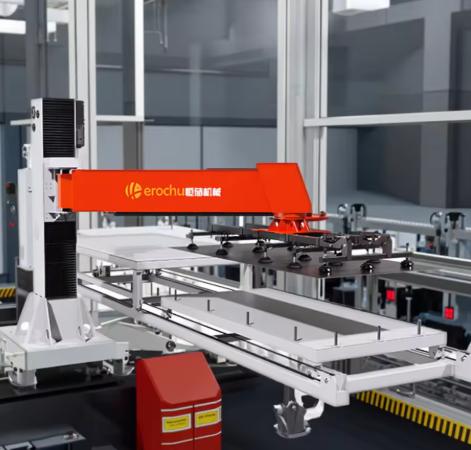
The vacuum reservoir and accumulator system built into Herochu lifting devices functions as a mechanical safety layer independent of electronic controls. A steel receiver tank, typically 10 to 15 liters, sits between the ejector modules and the solenoid-controlled cup valves. During normal cycling, the tank serves as a buffer that smooths pressure fluctuations as individual pads engage and disengage. During a compressed air supply failure — a severed hose, a compressor room trip, a plant-wide power outage — two check valves close automatically, trapping the existing vacuum volume inside the tank and the sealed cup circuits. The stored vacuum decays slowly through the polymer seals rather than through an open ejector port, giving operators a window of 15 to 25 minutes to address the situation. An audible alarm and a flashing beacon activate the instant supply pressure drops below a configurable threshold, typically set at 4 bar for a system whose normal operating pressure is 6 bar.
Beyond the primary vacuum circuit, Herochu vacuum lifting devices incorporate a secondary retention mechanism that functions even if individual cups lose seal. A set of spring-loaded mechanical grippers, positioned at the sheet perimeter, engage passively as the lifting frame descends onto the stock. These grippers carry no load during normal vacuum-suspended transport — they serve purely as a backup catch that prevents the sheet from sliding free if all vacuum is lost simultaneously. In European and North American markets, this dual-retention design satisfies the ISO 12100 risk assessment requirement for a redundant holding system on overhead suspended loads in occupied work zones.
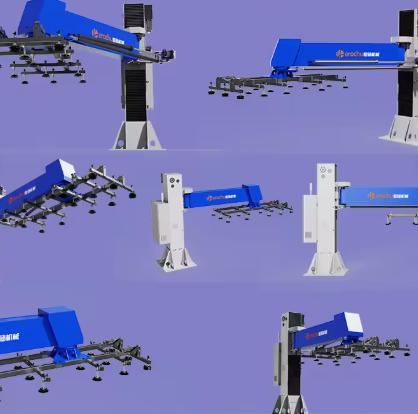
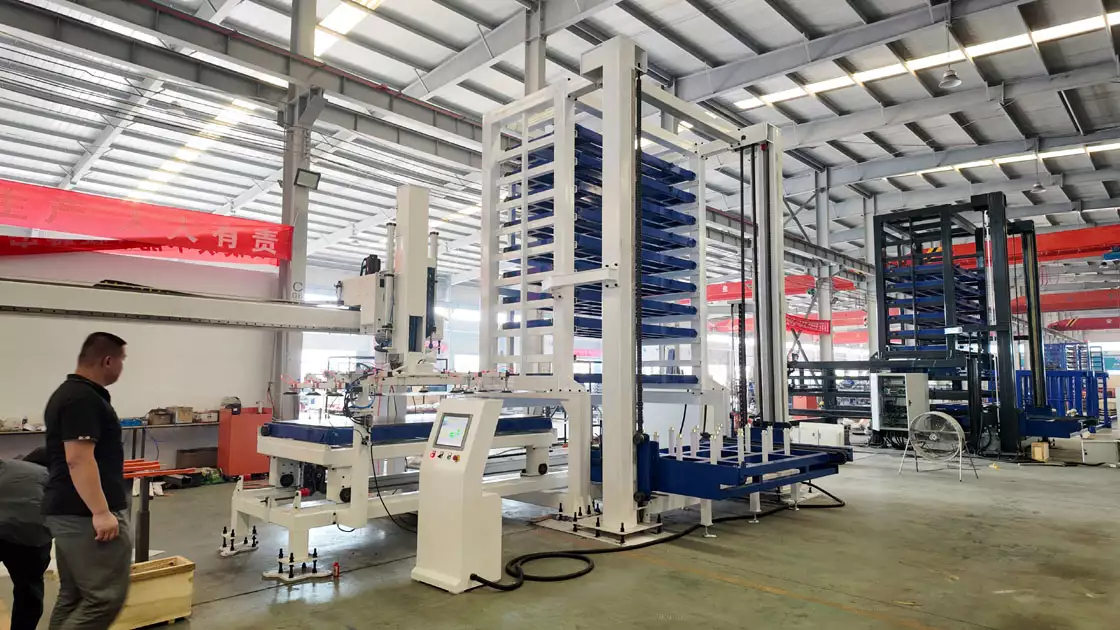
The control architecture of modern Herochu vacuum lifting devices bridges the gap between stand-alone pendant operation and full CNC cell integration. A PLC housed in the control cabinet monitors vacuum level at each zone of the suction frame, compares it against the minimum safe threshold for the detected sheet weight — derived from a load cell in the lifting column or from operator-entered material parameters — and interlocks lift initiation until all zones report adequate vacuum. The same PLC communicates with the upstream and downstream equipment through dry-contact I/O or Profinet/EtherCAT fieldbus, coordinating the lifter’s pick-and-place cycle with the laser cutting machine’s door open signal, the bending cell’s part-present sensor, or the storage retrieval system’s sheet-available flag. This handshaking eliminates the common failure mode where a lifter delivers a sheet to a machine whose previous cycle has not yet completed, creating a collision or a dropped load.
Cost justification for a vacuum lifting device installation typically rests on three measurable metrics rather than safety arguments alone. The first is direct labor reduction: one operator supervising an automated vacuum lifter can manage the material flow for two or three CNC cells that previously required a dedicated material handler per machine. The second is surface-quality scrap reduction: shops that switch from chain slings or magnetic lifters to vacuum handling routinely report a 40 to 60 percent drop in sheets rejected for handling damage, which translates directly to reduced material reorder frequency and fewer rush shipments from the service center. The third is machine utilization improvement: the timing study that shows a 3-minute automated load cycle versus a 17-minute manual load cycle is persuasive to any general manager who has already paid for the laser or punch press and is looking for capacity without buying another machine tool.