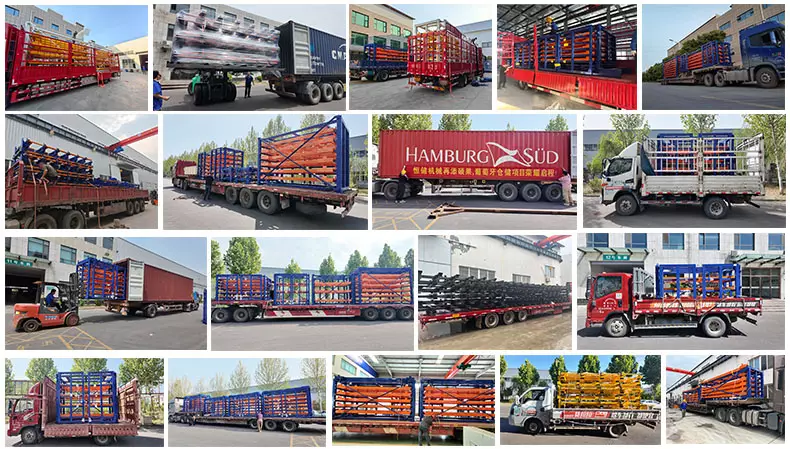
Timber profile bundles present a storage paradox. The material is lighter than steel, but the bundles are bulkier and more prone to shifting during handling. A six-meter timber profile bundle may weigh less than a comparable steel bundle, yet the storage system must accommodate greater bundle depth, protect against moisture damage, and prevent the bundle from settling or spreading under its own weight.
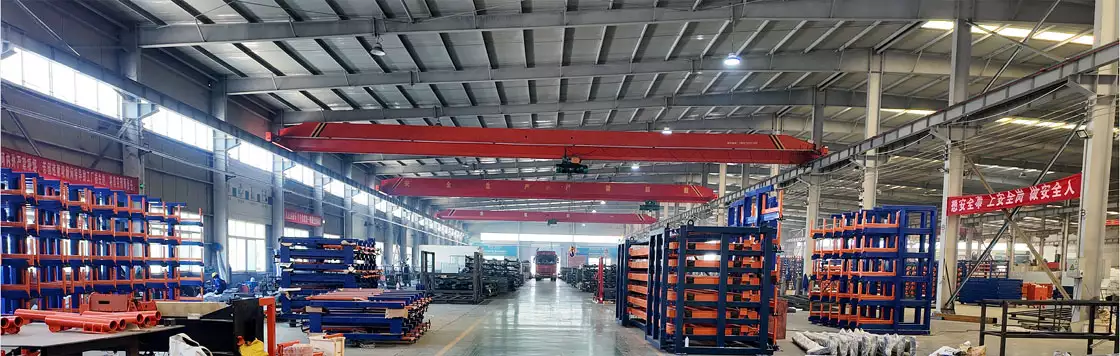
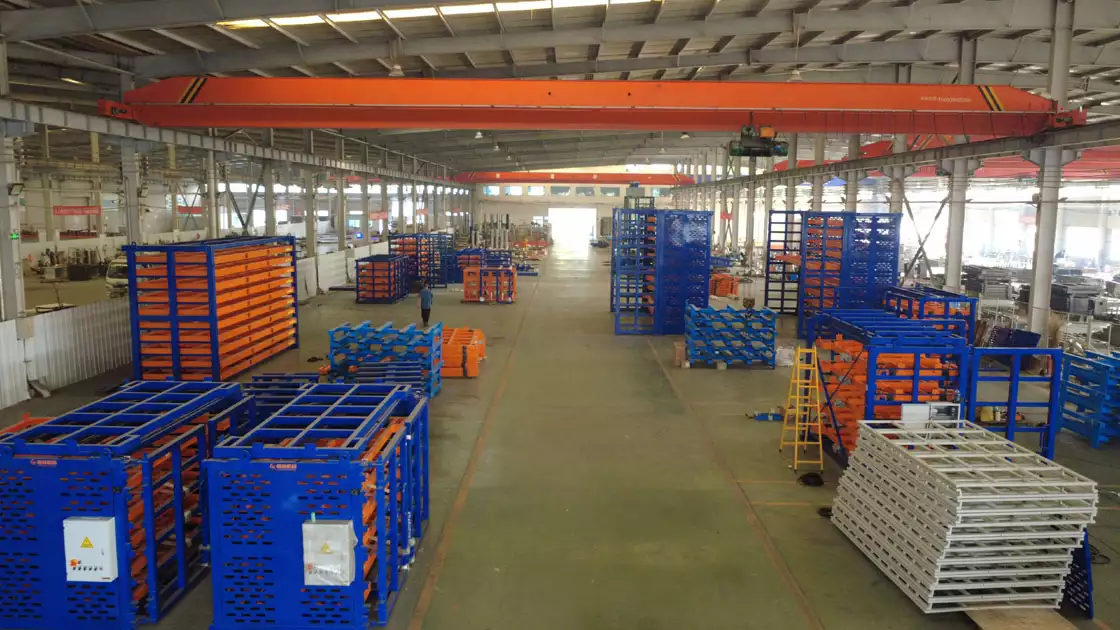
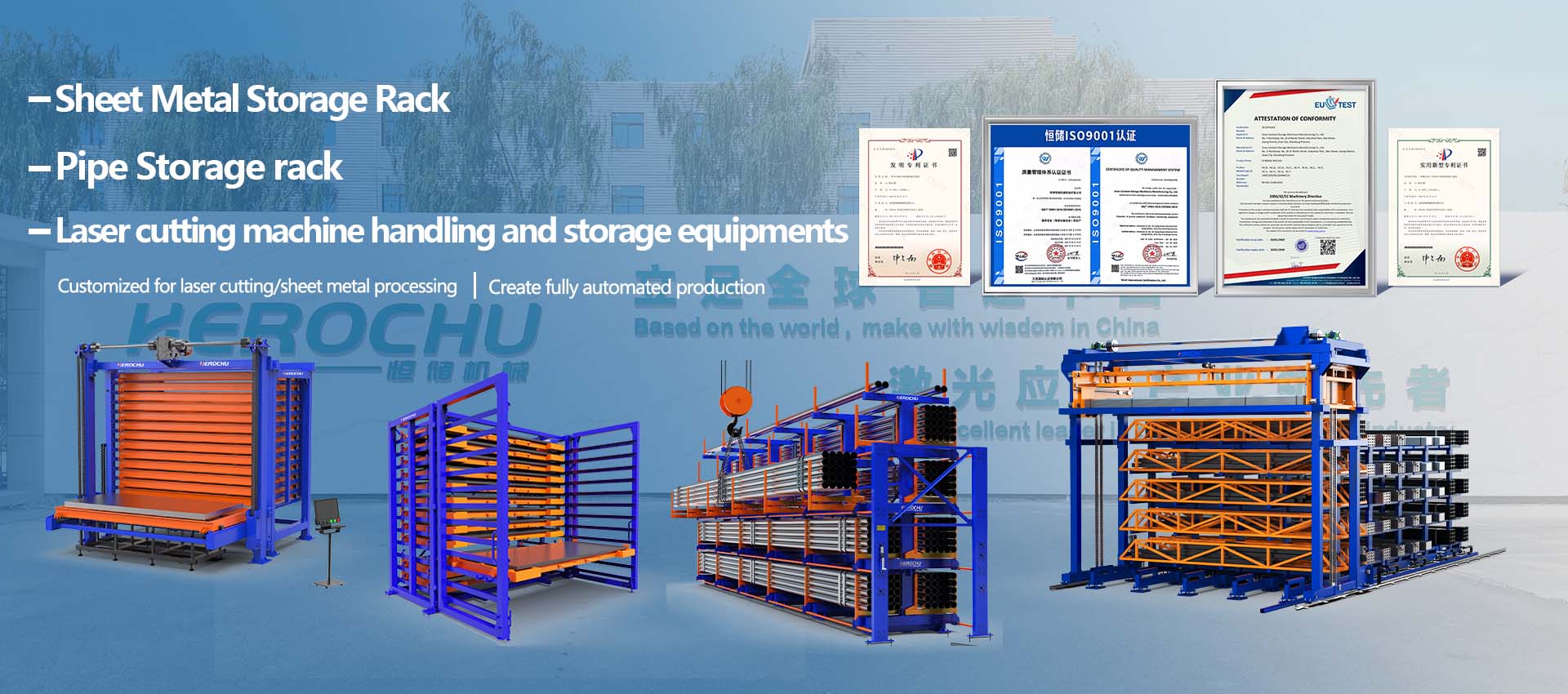
Herochu’s heavy-duty cantilever racking for 6-meter timber profile bundles addresses these specific requirements. The design prioritizes wide arm surfaces for bundle stability, galvanized steel for moisture resistance, and compartmentalized layout to keep different profile runs separate.
Bundle Stability on Cantilever Arms
A timber profile bundle resting on two narrow arms concentrates the load at two points. The bundle sags between the arms, and the ends may droop beyond the arm tips if the spacing is incorrect. Over time, the bundle settles into a curved shape that creates dimensional problems when the profiles are fed into production.
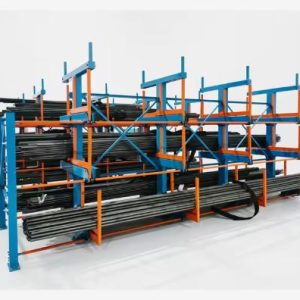
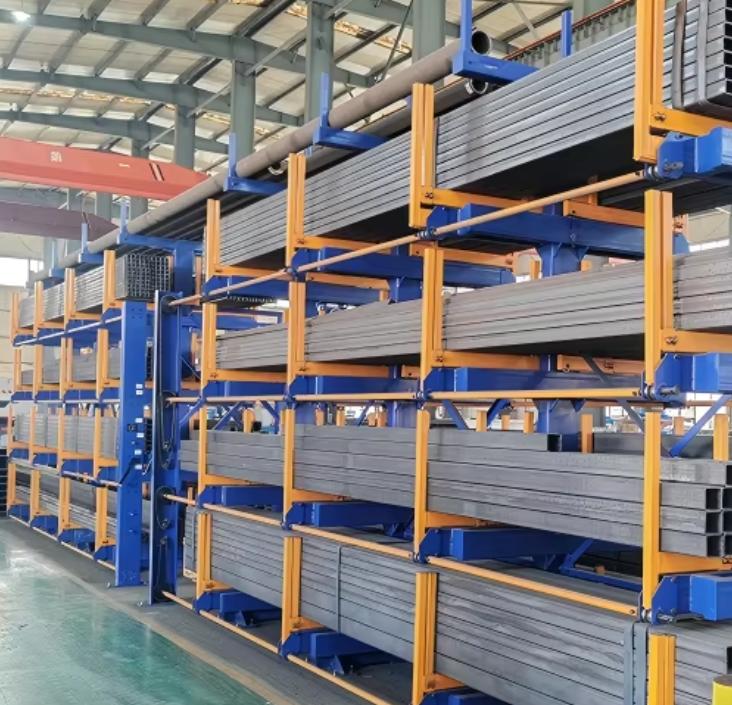
Herochu’s cantilever arms are wider and flatter than standard pipe arms, providing a stable surface that distributes the bundle’s weight across a broader area. The arm spacing is configured so that the bundle rests on at least three arms for six-meter lengths, reducing mid-span sag and keeping the bundle flat.
The arms can be fitted with wood boards or steel gratings, creating a continuous support surface that prevents the bundle from settling between arm positions. For bundled timber profiles, this continuous decking is often the difference between stable storage and progressive bundle deformation.
Moisture Protection
Timber profiles are sensitive to moisture. Wood swells and contracts with humidity changes, and the profiles may be pre-finished with coatings that are vulnerable to water staining. A storage rack that collects water and drips on stored material creates rejects.
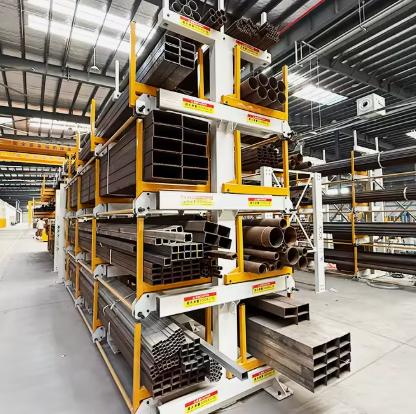
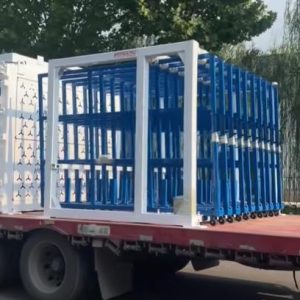
Herochu offers galvanized steel cantilever arms and columns for timber storage. The zinc coating resists the rust that would otherwise stain timber during condensation or rain exposure. For outdoor or open-sided storage, the rack can be configured with a roof structure that protects both the stored material and the rack structure from direct weather.
The base plates are designed to sit above floor level on leveling pads, avoiding the ground contact that accelerates corrosion in damp environments.
Compartmentalization for Mixed Profile Inventory
A timber profile distributor may store window frame profiles, decking profiles, and structural timbers in the same rack row. These products differ in bundle width, height, and weight. Without physical separation, adjacent bundles can lean into each other, and the taller bundle may cause the shorter one to shift during retrieval.
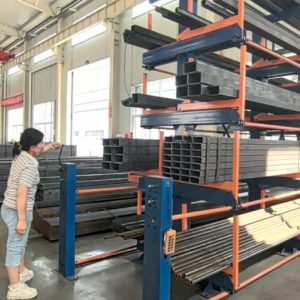
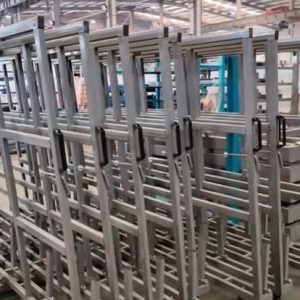
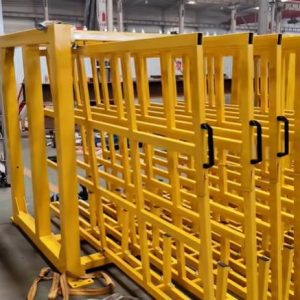
Herochu’s independent compartment design places a divider between each storage cell. Each tier on each side functions as a discrete compartment with its own base surface and side guides. A bundle of one profile type cannot migrate into the space occupied by another.
This is particularly important for timber because the material is often bundled with strapping that can loosen during storage. A loose bundle in a compartmentalized rack stays within its cell; the same bundle in an open bay can spread across the tier and interfere with adjacent bundles.
Dual-Side Mechanical Assistance for Bundle Handling
Six-meter timber bundles are bulky but not necessarily heavy. The challenge is reach and control, not raw weight. A forklift approaching a conventional cantilever rack must turn within the aisle to align with the bundle, and the fork tips may contact the bundle face during insertion.
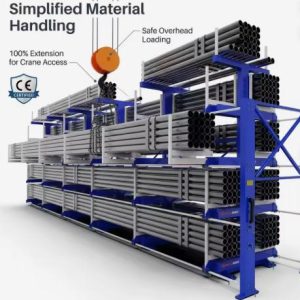
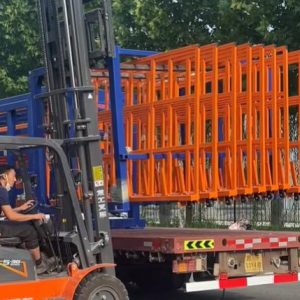
Herochu’s dual-side mechanical assistance changes the loading geometry. The operator cranks the tier outward, presenting the bundle at the aisle edge. The forklift approaches straight on, inserts forks under the bundle with minimal lateral contact, and lifts. The crank mechanism retracts the empty tier.
For timber bundles, this reduces the scuffing and edge damage that occurs when forks push against the bundle face during conventional retrieval.
Structural Specifications
The rack uses Q235B high-strength steel for columns and base plates. The dual-beam crossbar design distributes load across two structural members at each arm connection, reducing the stress concentration that shortens rack life in high-cycle operations.
Load capacity per level ranges from 3,000 kg to 5,000 kg, sufficient for most timber profile bundles. The structure can be engineered for higher capacities if the operation handles dense hardwood bundles or oversized cross-sections.
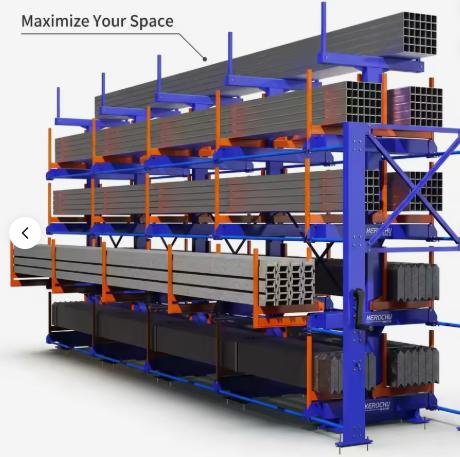
Arm length adjusts from 550 mm to 800 mm, matching the bundle depth. For timber bundles, which often exceed the depth of steel or aluminum bundles, the extended arm range is a practical necessity rather than a convenience.
Customization and Installation
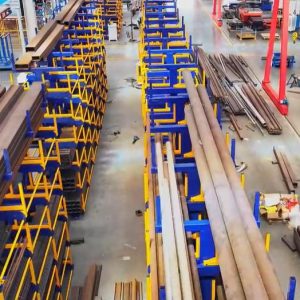
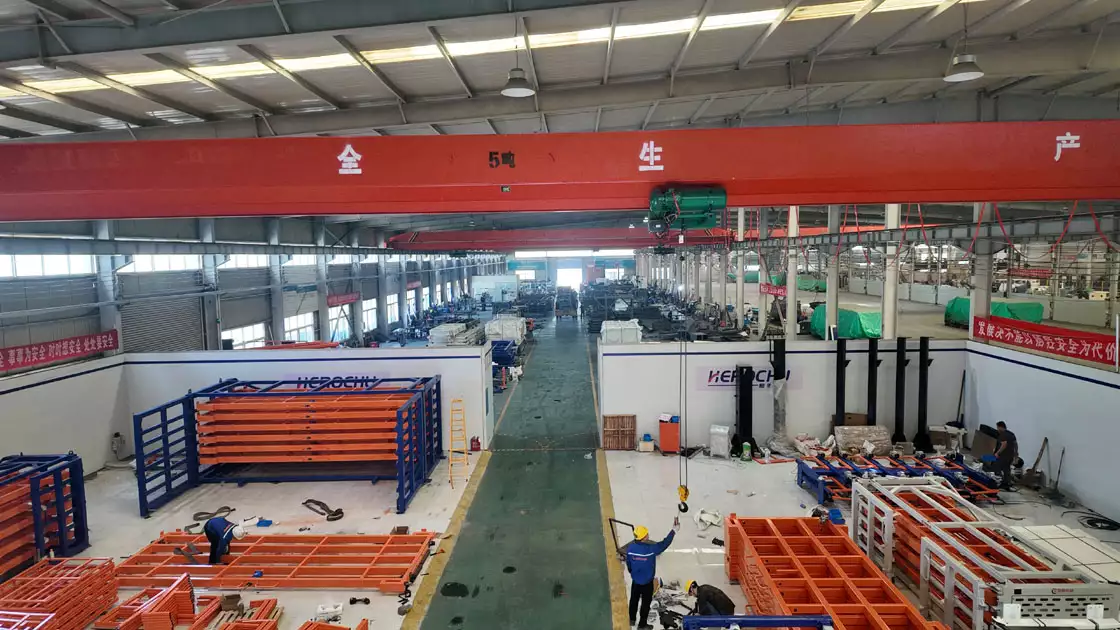
Storage length extends from 3,000 mm to 12,000+ mm. Layer count is customized to the ceiling height and the operator’s handling equipment. The plug-in design allows installation without on-site welding, and the bolted connections permit disassembly and relocation if the storage layout changes.
On-site installation supervision and online guidance are available. Products carry ISO9001 and CE certifications, and all configurations undergo finite element analysis to verify structural capacity.
Summary
Herochu’s heavy-duty cantilever racking for six-meter timber profile bundles combines the bundle stability of wide arms with the moisture protection of galvanized steel and the retrieval efficiency of dual-side mechanical assistance. Independent compartments keep profile runs separate, and the plug-in design allows the rack to adapt as the product mix changes. For any operation storing timber profiles in six-meter lengths, the system provides the density and protection that general-purpose racking cannot match.