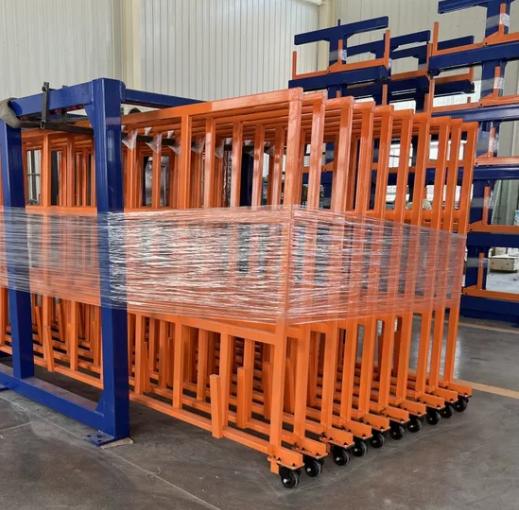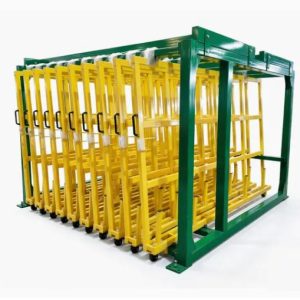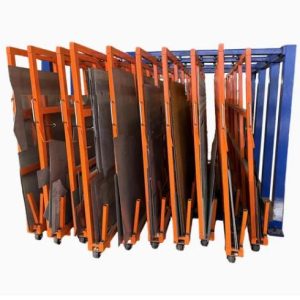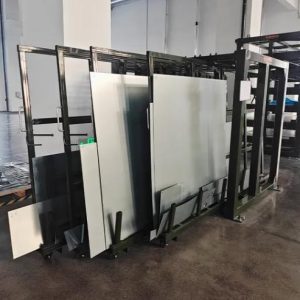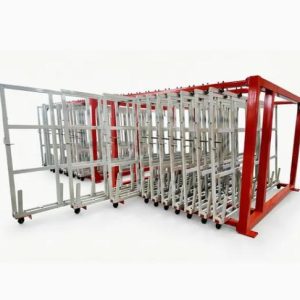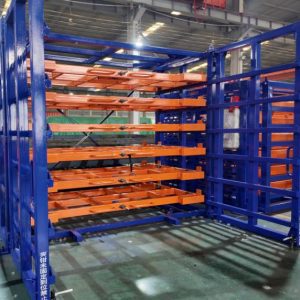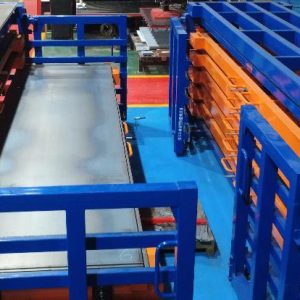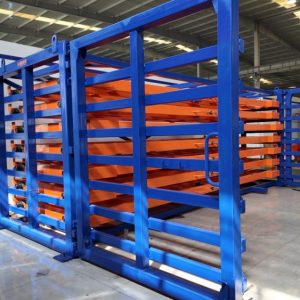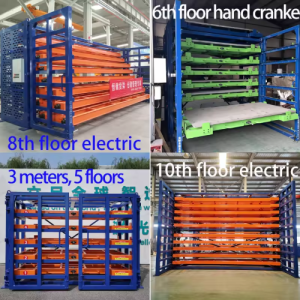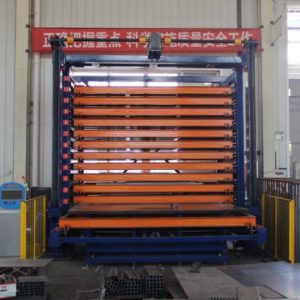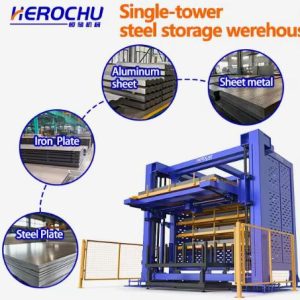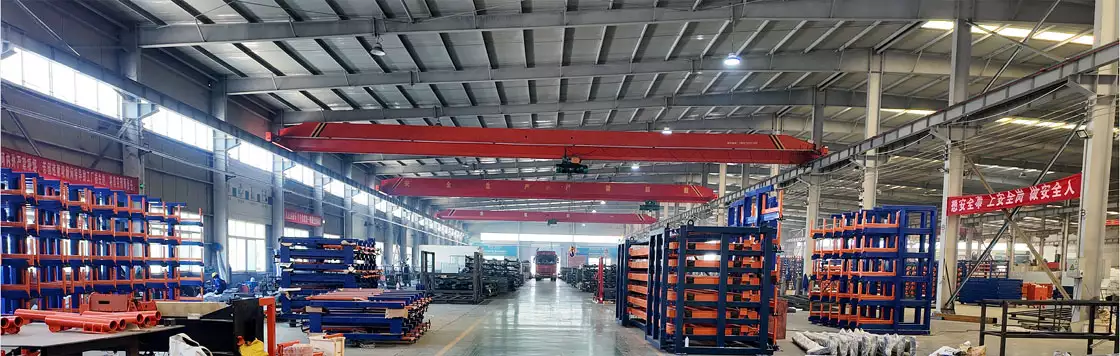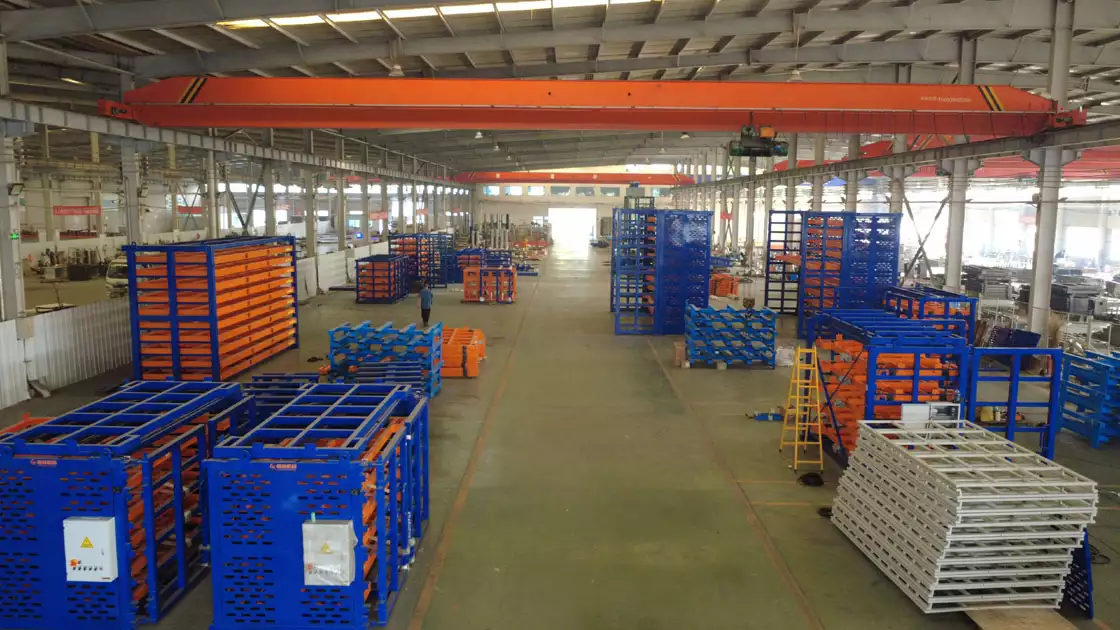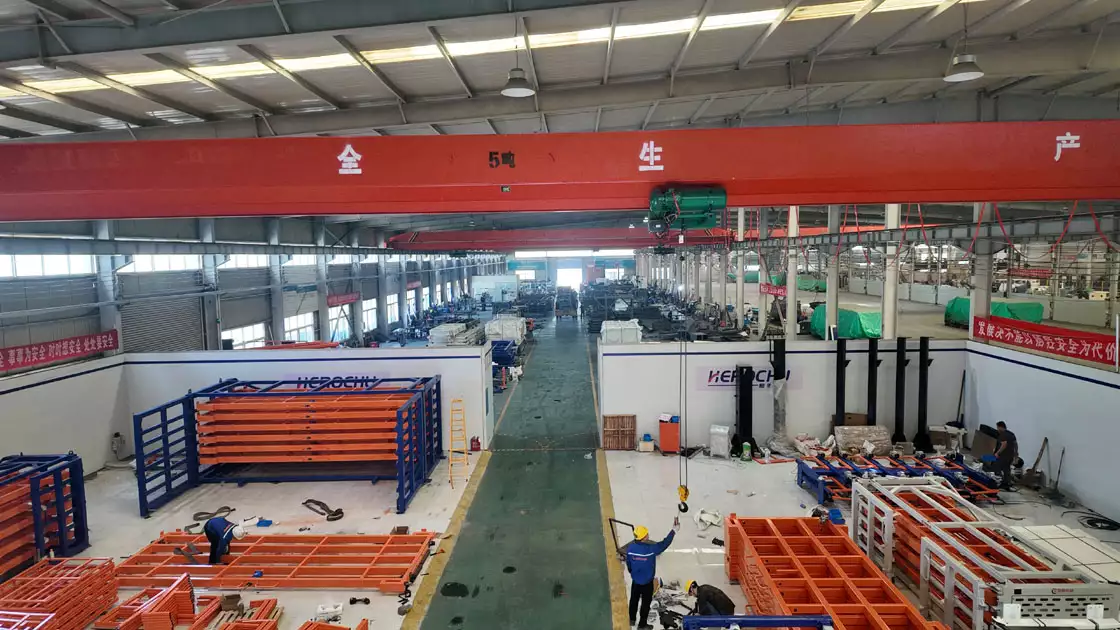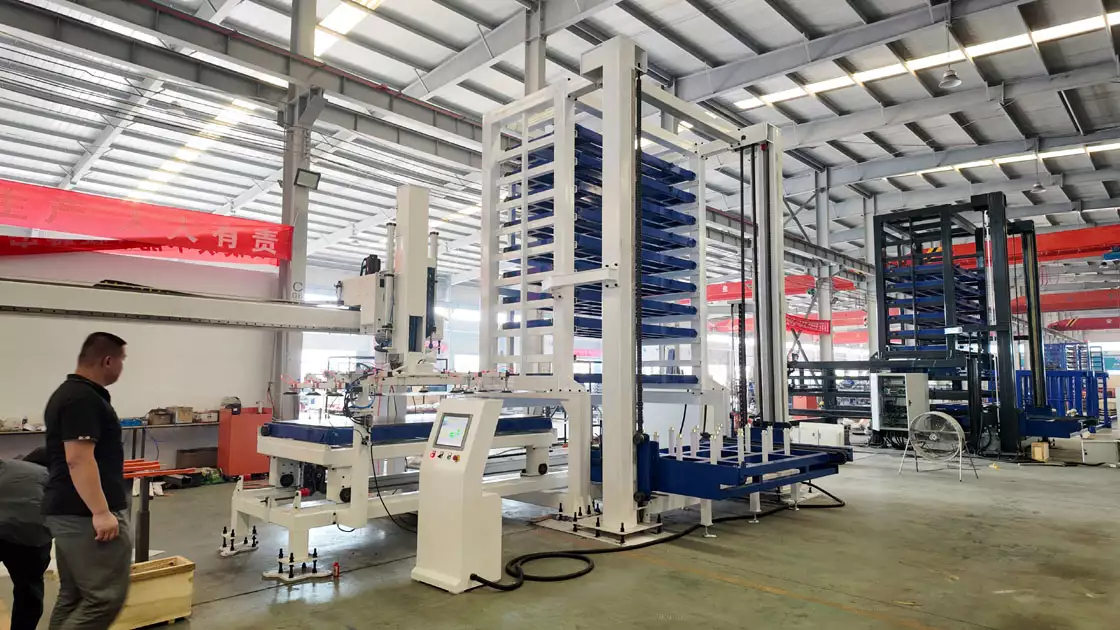
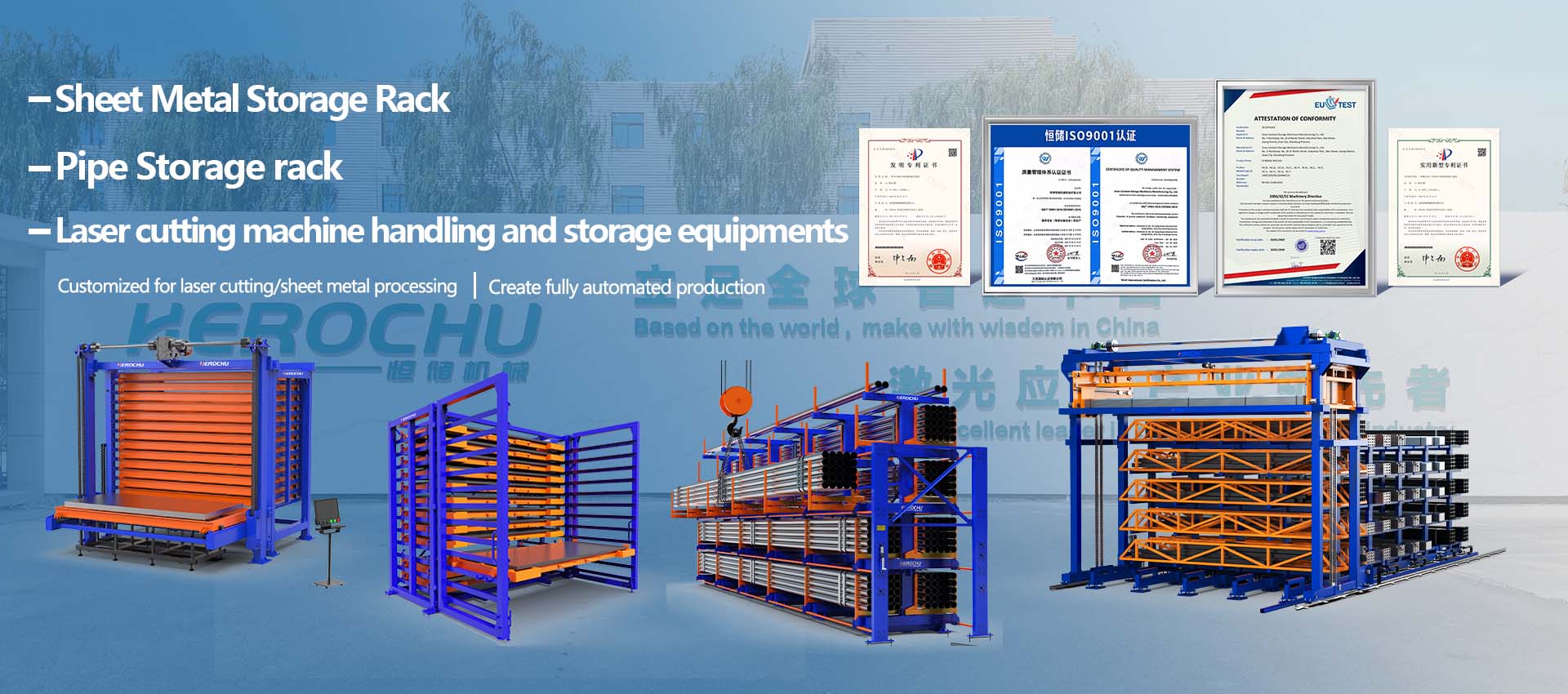
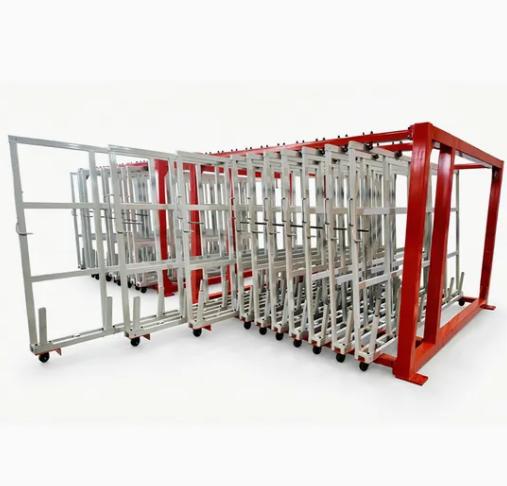
The manual pull-out scrap metal sheet storage rack addresses a workflow bottleneck that most metal fabrication shops accept as unavoidable: the time spent digging through horizontal stacks to locate a specific remnant. When offcuts and partial sheets sit flat on pallets or floor-level racks, the operator must lift or shift the top layers before reaching material underneath. A vertical drawer system with manual pull-out access removes this stacking dependency entirely — every piece in the rack sits in its own dedicated compartment, reachable in a single motion.
Herochu’s approach to the manual pull-out scrap metal sheet storage rack centers on one design principle: pull-out access should be smooth enough for a single operator and structurally stable enough for daily crane loading. The HC-V series achieves both.
How the Manual Pull-out Cycle Works
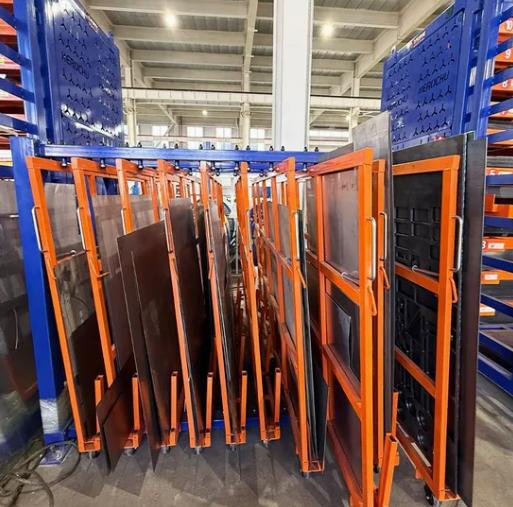
The operator approaches the rack, identifies the target drawer by its external label, and grips the drawer front handle. A light initial pull overcomes the detent that holds the drawer flush against the frame face. Once the detent releases, the drawer glides outward on its linear-bearing guide rails. No motor, no crank, no hydraulic assist — the motion is entirely manual, relying on the low rolling resistance of the ball-bearing carriages.
At full extension, the drawer projects beyond the rack face by 100 percent of its depth. An overhead crane operator can now lower the hook directly into the drawer compartment without navigating around obstructions. For shops using vacuum tube lifters or magnetic grabs, the clear top access allows the lifting device to contact the plate surface and release without scraping adjacent frame members.
The return stroke is equally simple: push the drawer back until the detent re-engages, confirming the drawer is fully seated and the load is centered over the rack footprint. A drawer left partially open shifts the rack’s center of gravity forward, so the detent and return-stop mechanism serve as both a safety feature and an alignment aid.
What Manual Pull-out Means for Daily Operations
In a high-mix fabrication shop running 60 to 120 different part numbers per shift, operators retrieve remnants dozens of times per day. Every retrieval cycle that involves lifting, shifting, or crawling around floor stacks introduces physical strain and time loss. A Herochu manual pull-out scrap metal sheet storage rack compresses each retrieval cycle to roughly 15 seconds: walk to rack, pull drawer, lift sheet, push drawer closed.
Compare this against floor-stack retrieval, which often involves:
- Clearing access to the stack (moving nearby pallets or carts).
- Identifying the target piece by edge profile or painted markings — difficult when plates are stacked face-to-face.
- Unstacking upper layers to reach the target.
- Restacking everything afterward before moving to the next task.
For a shop that performs 50 remnant retrievals per shift, the cumulative time saving from drawer-based access exceeds 40 minutes of direct labor per operator per shift. Over a month, that schedule recovery translates into production capacity — not a marginal improvement.
Safety Considerations
Flat-stacked sheet metal presents a pinch-point hazard whenever an operator grips a plate edge and lifts. The stack configuration is unstable by nature: plates can slide, edges can catch gloves, and the weight distribution shifts unpredictably as layers are removed.
A Herochu manual pull-out scrap metal sheet storage rack isolates each plate in its own drawer. The operator never handles the weight of adjacent material to reach a target piece. The drawer motion is horizontal and linear, not lifting or tilting, so the operator’s spine and shoulders are not loaded during retrieval. Overhead crane access further reduces the need for manual lifting of anything beyond lightweight trim stock.
The mechanical drawer stop at full extension prevents a loaded drawer from rolling free of the frame. The rack anchor points allow bolting to the floor, and the column cross-bracing resists the forward tilt that would occur if a heavily loaded upper drawer were extended while lower drawers remained retracted. The center of gravity stays within the base footprint under all valid operating configurations — a constraint verified during structural design, not an afterthought.
Labeling and Visual Organization
Because each drawer presents a distinct front face when retracted, operators can label drawers by material grade, thickness range, remnant shape category, or job number. Color-coded label holders — available as a Herochu factory option — let shops assign red tags to hot-rolled steel remnants, blue tags to aluminum, yellow to stainless, and so on. A worker walking up to the rack sees at a glance which drawers hold the needed material family, then confirms the specific drawer by reading the tag data.
This labeling system eliminates the guesswork of identifying alloy grades by appearance alone. In a rack storing both 304 and 316 stainless remnants, the visual distinction between the two grades is nearly zero — both are bright, non-magnetic, and similar in surface finish. The drawer label removes the ambiguity, preventing costly material mix-ups that propagate through bending, welding, and finishing operations.
Cleaning and Coolant Management
Laser-cut remnants often carry residual cutting oil or water-jet abrasive slurry that drips onto whatever surface lies beneath them. In a Herochu manual pull-out scrap metal sheet storage rack, each drawer deck acts as a drip tray for the layer above. The slight edge lip around the drawer perimeter contains fluid within the drawer, preventing cross-contamination between layers. During routine cleaning, the operator pulls each drawer, wipes the deck surface, and pushes it closed — a process that takes roughly 20 seconds per drawer.
Shops cutting heavily oiled material may opt for drawer deck inserts made from oil-resistant composite board that can be replaced independently of the steel drawer structure. These inserts absorb less fluid than bare steel and reduce the frequency of full-drawer cleaning.
Suitable for Mixed-Load Environments
Not all remnants are flat plates. A Herochu manual pull-out scrap metal sheet storage rack stores cut-to-length bars, laser-cut blanks with formed flanges, partially machined weldments, and nested shapes from turret punch scrap. The 50 mm standard partition height handles most flat and low-profile pieces. Shops requiring additional clearance for irregular shapes can specify custom layer spacing during order configuration — Herochu adjusts the frame column drill pattern to match the specified inter-deck pitch.
Because the drawer pull-out mechanism is manual, the rack operates without electrical supply, compressed air lines, or control panels. This independence from utilities makes the HC-V series suitable for remote corners of the shop floor, outdoor covered storage zones, and facilities where running additional power conduit would be cost-prohibitive. The only installation requirements are a level concrete floor and anchor bolts.
For fabrication shops aiming to reduce handling time, improve remnant traceability, and give crane operators direct access to stored material, Herochu’s manual pull-out scrap metal sheet storage rack provides a mechanical foundation that requires no training curve beyond a five-minute walkthrough. Operators who have never used a drawer rack before understand the pull-to-open, push-to-close logic instantly — and that intuitive workflow is what keeps the system in daily use rather than becoming another piece of equipment that collects dust in the corner.