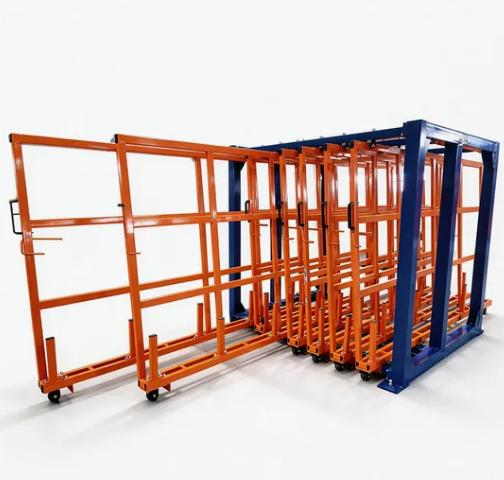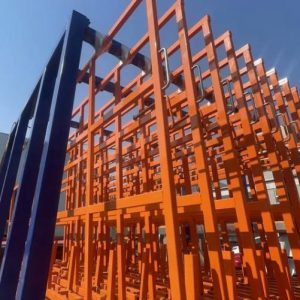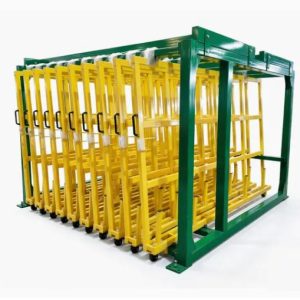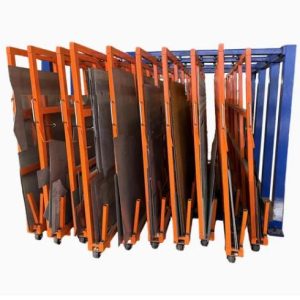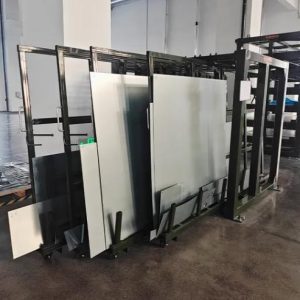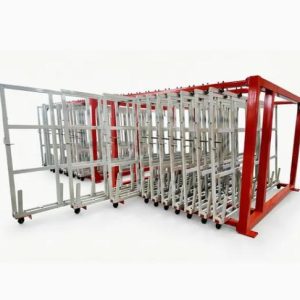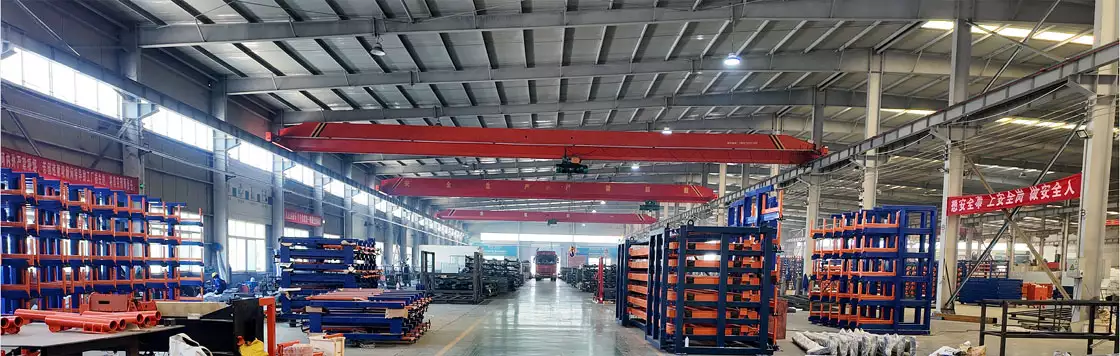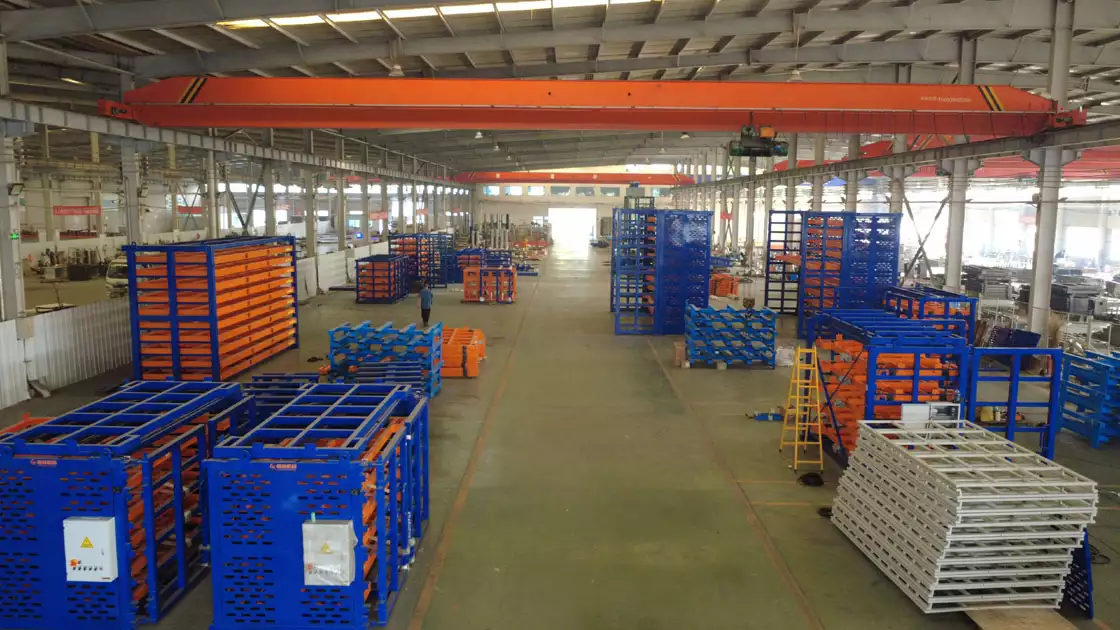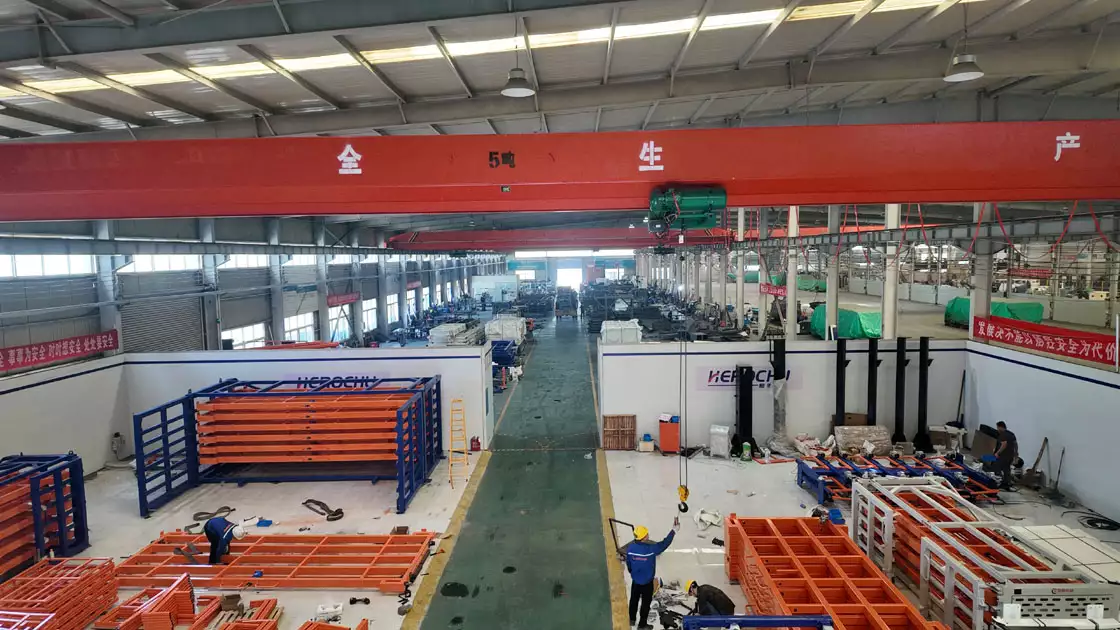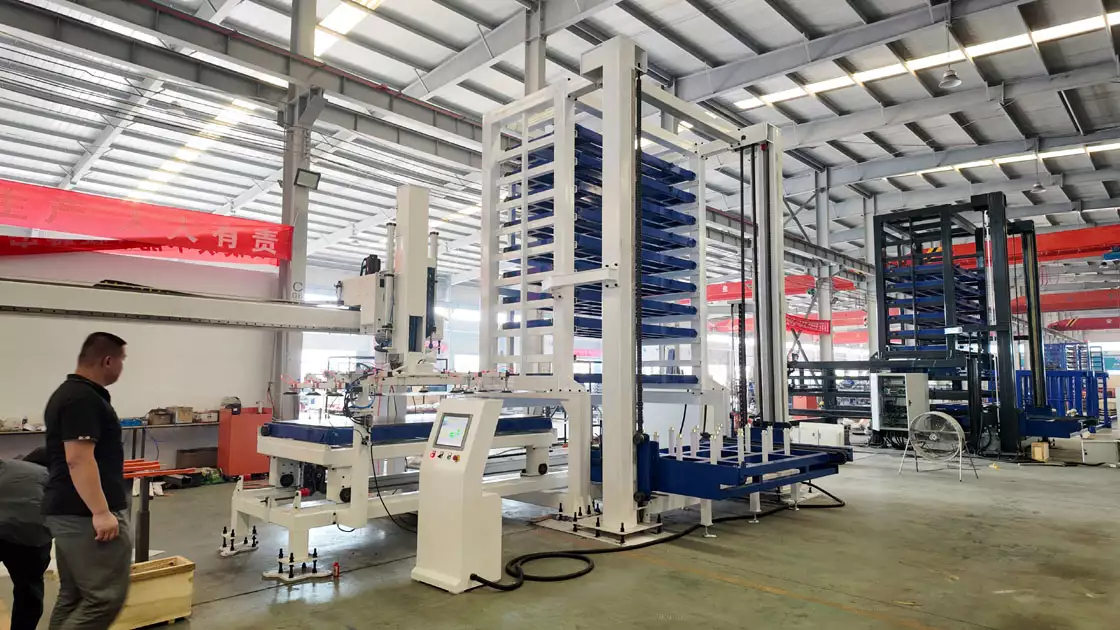
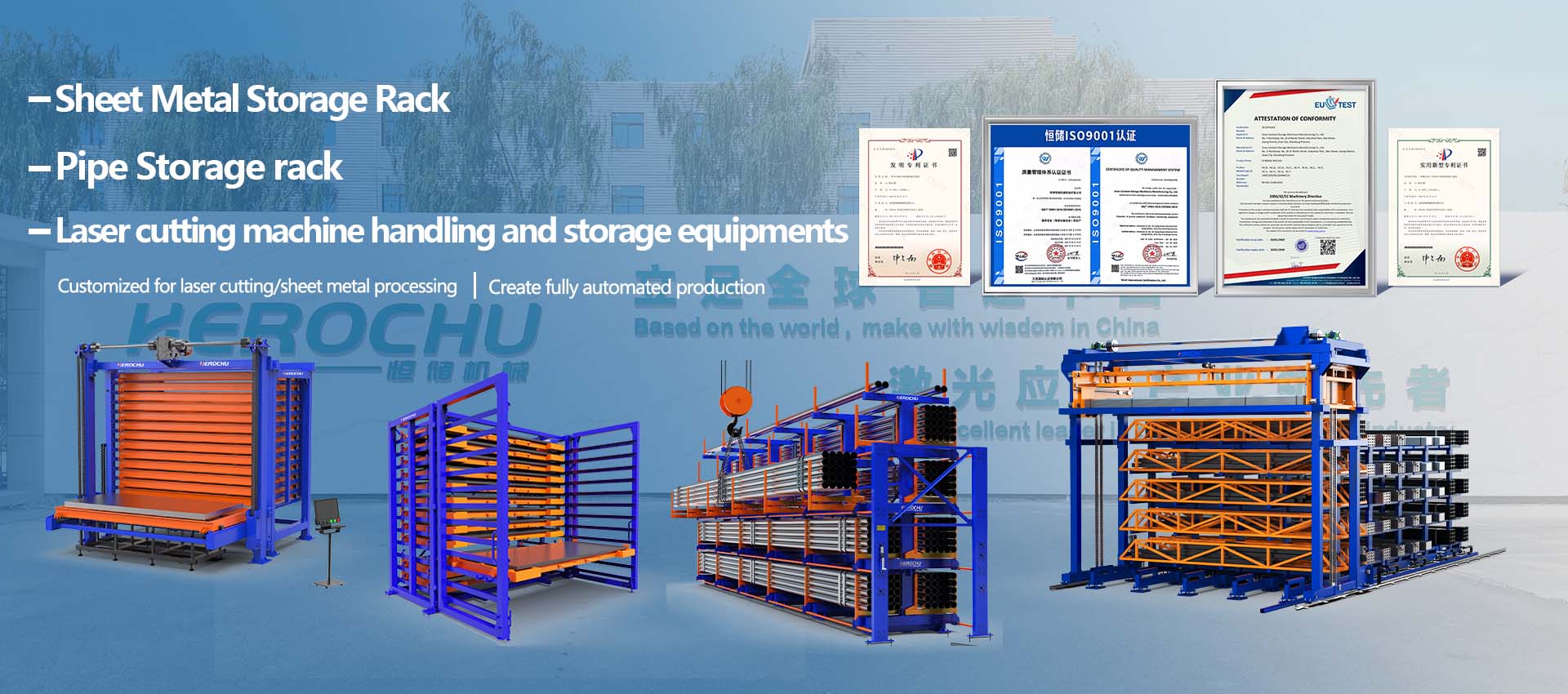
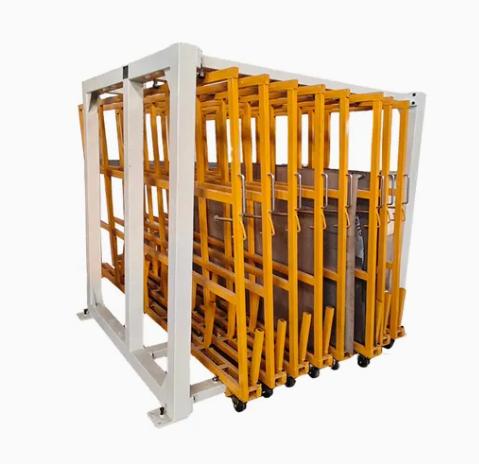
An industrial sheet metal remnant organizer with pull-out system serves different functions depending on the shop that installs it. In a laser job shop cutting 300 part numbers per week, the organizer functions as a rapid-access library of reusable offcuts — material that would otherwise go to scrap after one cutting cycle. In a heavy-plate fabrication facility processing 60 mm to 100 mm carbon steel, the same organizer becomes a safety-critical storage system that prevents multi-ton plates from leaning against walls or resting on uneven floor surfaces where they pose a tip hazard. The HC-V series from Herochu covers both use cases and the range between them through a modular frame design that accepts custom layer counts, drawer spacing, and overall dimensions.
Understanding the Standard HC-V Model Range
Herochu bases the standard HC-V lineup around three sheet size envelopes. The framework remains consistent — 15 layers with 50 mm inter-deck clearance and manually operated full-extension drawers — while the external dimensions scale to the material footprint:
HC-V2010-15 is built for the 2000 mm × 1000 mm sheet format, the unit size most common in general fabrication shops processing standard-dimension stock from steel service centers. External dimensions of 2700 mm (length) × 2455 mm (height) × 1200 mm (width) allow placement along workshop walls or between production cells where larger racks would obstruct aisle clearance. This model handles plate sizes up to roughly 2000 mm × 1000 mm, which covers the majority of laser cutting bed dimensions in small to mid-size shops.
HC-V2513-15 steps up to the 2500 mm × 1500 mm format. At 2700 mm × 2955 mm × 1700 mm externally, this rack suits shops running 1500 mm-wide coil-fed blanking lines, as well as fabricators cutting structural steel base plates and gussets from larger sheet stock. The additional 500 mm of drawer depth compared to the HC-V2010 accommodates the extra plate length without overhang.
HC-V3015-15 is the largest standard configuration, sized for 3000 mm × 1500 mm sheets — the format found in heavy-plate laser and plasma cutting bays. External dimensions of 2700 mm × 4455 mm × 1700 mm reflect the vertical growth needed to house 15 drawers with 50 mm layer spacing at this sheet length. At 4.5 meters tall, this rack requires a minimum ceiling clearance of approximately 5 meters for crane operation. Shops with overhead cranes rated at 5 tons or higher are the typical installation environment for this model.
All three models share a 1,000 kg uniform distributed load rating per drawer, achieved through the same linear-bearing guide rail system and Q235B structural frame. The drawer count stays at 15 in the standard configurations, though the number of active layers can be reduced by leaving upper or lower drawer positions empty if the shop’s offcut volume does not require the full complement.
Custom Configuration Variables
Beyond the standard models, Herochu accepts custom specifications across five primary variables:
Layer count — While 15 layers represent the standard density, shops with high offcut variety but thin individual pieces may benefit from 18 to 22 layers with proportionally closer spacing. Conversely, a heavy-plate shop storing 60 mm stock in a limited number of grades may only need 6 to 8 layers with generous 100 mm to 180 mm inter-deck clearance. Herochu adjusts the frame column height and drill pattern to the specified layer count, so the rack height grows or shrinks in proportion to the drawer total.
Inter-deck spacing — The 50 mm standard spacing fits sheet gauges up to approximately 45 mm. Shops storing formed parts, small weldments, or nested assemblies may require 80 mm to 120 mm per layer to clear flanges and protrusions. The column drill pattern supports spacing increments as fine as 25 mm, allowing precise vertical packing that avoids wasted air space between drawers.
Drawer load rating — While 1,000 kg per drawer covers most remnant storage applications, a shop storing denser materials (thick tool steel, tungsten alloy offcuts) or placing multiple full sheets per drawer may request a 2,000 kg or 3,000 kg per-layer rating. Achieving the higher load capacity involves upgrading the guide rail cross-section, increasing ball-bearing carriage count per rail, and reinforcing the drawer deck with additional longitudinal stiffeners. These changes add frame weight and cost, so Herochu recommends the 1,000 kg standard for shops whose offcut weight does not exceed this figure under worst-case loading.
Drawer depth for non-standard sheet lengths — Shops handling 4000 mm, 5000 mm, or 6000 mm sheet lengths can specify extended drawer depths with proportional increases to the frame length dimension. At these lengths, the rack design adds mid-span support columns to prevent drawer sag under load, and the guide rail arrangement shifts from two-rail to three-rail support per drawer side.
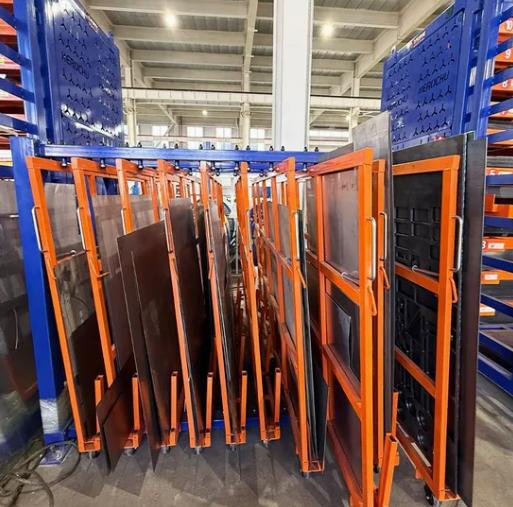
Finish and color coding — The standard powder coat is available in multiple colors, allowing shops to assign rack colors by material family — blue for carbon steel, green for aluminum, gray for stainless — as a shop-wide visual management system. Drawer front label holders are standard; engraved metal tag slots are available as a factory option for shops operating in environments where paper or adhesive labels degrade under oil mist or coolant spray.
Industry-Specific Application Patterns
Laser job shops and contract fabricators typically run the HC-V2010-15 or HC-V2513-15, using the rack as a remnant library that the nesting programmer consults before auto-nesting each job. When the programming software identifies a nest layout that would leave a usable remnant, the programmer checks the rack for an existing offcut of matching grade and thickness. The practice shifts the shop’s material utilization from a typical 70 to 75 percent toward 80 to 85 percent — a gain of 5 to 15 percentage points that represents thousands of dollars in avoided raw material cost per machine per year.
Heavy equipment manufacturers and structural fabricators handling plate thicknesses of 25 mm and above gravitate toward the HC-V3015-15 or custom heavy-load configurations. In these shops, remnant weight — not count — drives the storage requirement. A single 3000 mm × 1500 mm × 60 mm carbon steel plate weighs approximately 2,100 kg, occupying a full drawer at the standard 1,000 kg rating and requiring the upgraded load configuration. The safety aspect of vertical drawer storage is especially relevant here: a stack of three such plates leaning against a wall represents a crush hazard that a properly anchored drawer rack eliminates entirely.
Stamping plants and progressive die operations accumulate skeleton scrap — the latticed frame left after stamping blanks out of a coil-fed strip. While much of this material heads to the scrap bin by weight, usable sections of uncut strip and partial coils can be stored flat in an HC-V rack for use as test material during die setup and tryout. The drawer system keeps these test pieces clean and flat, preventing the edge damage that would occur if they were tossed into a bulk scrap hopper.
Stainless steel and aluminum fabricators benefit from the surface-protection aspect of drawer storage. These materials carry a premium over carbon steel, and surface scratches from floor contact or stacking friction reduce the usable area on each sheet. An industrial sheet metal remnant organizer with pull-out system preserves the full surface quality of stored material, which matters directly when the next job requires a cosmetic-grade finish with no allowable surface defects.
Installation and Operational Footprint
All Herochu HC-V models ship as pre-fabricated frame modules with the drawer guide rails pre-mounted at the factory. On-site assembly consists of bolting the column sections to the base plates, installing the cross-bracing, and sliding the pre-assembled drawers into the guide rails. A two-person crew with a forklift can typically assemble and anchor a standard HC-V unit in under four hours.
The rack requires a flat, level concrete floor with a compressive strength of 25 MPa or higher. For outdoor or semi-outdoor installations under covered canopies, Herochu offers an optional galvanized finish in lieu of the standard powder coat, providing additional corrosion resistance against humidity and temperature cycling.
Return on Investment Framework
The payback period for a Herochu industrial sheet metal remnant organizer with pull-out system comes from three cost streams: recovered floor space (calculated as avoided lease cost per square meter per year), improved material utilization (calculated as the cost of raw material not purchased because offcuts were reused), and reduced handling labor (calculated as operator hours no longer spent searching for and moving material). For a mid-size fabrication shop processing 500 tons of sheet metal annually, the combined annual savings from these three streams typically recovers the rack purchase cost within 12 to 18 months, after which the rack contributes directly to operating margin.
Herochu provides dimensional drawings, load calculations, and installation guidance for every order — standard or custom — so the engineering team can validate the rack specification against the shop’s material handling plan before purchase. The company maintains spare parts inventory for guide rails, drawer carriages, and stop assemblies, with standard components shipping within one week of order receipt.