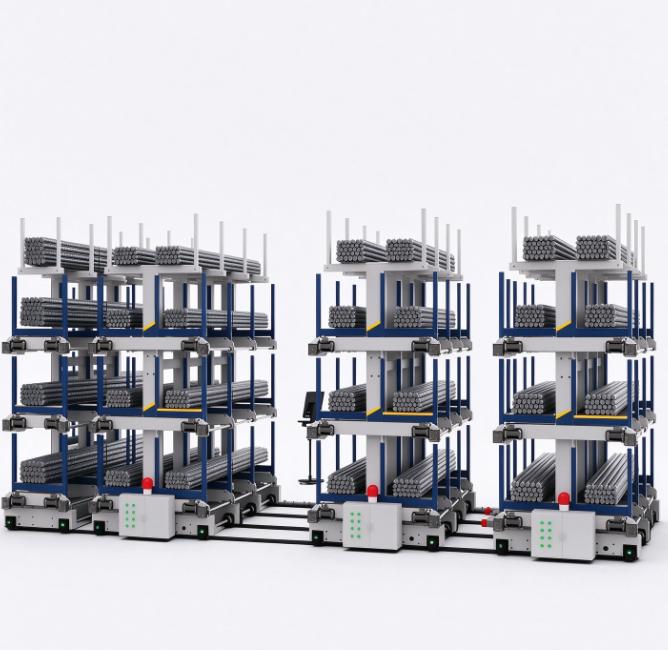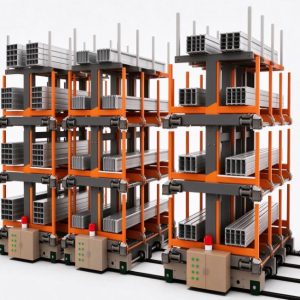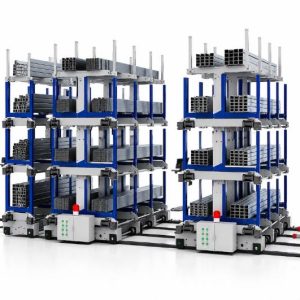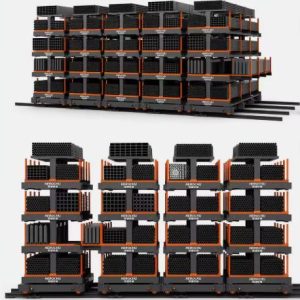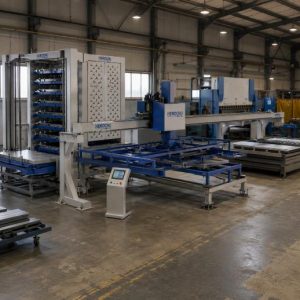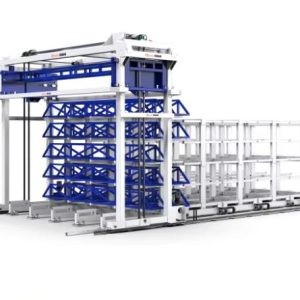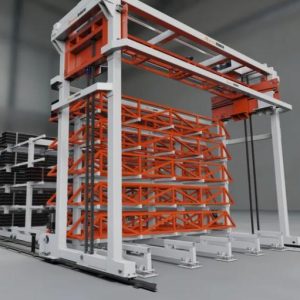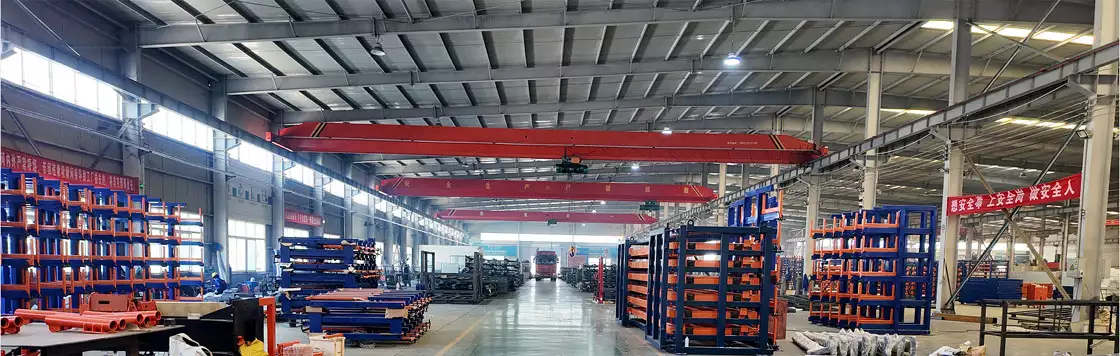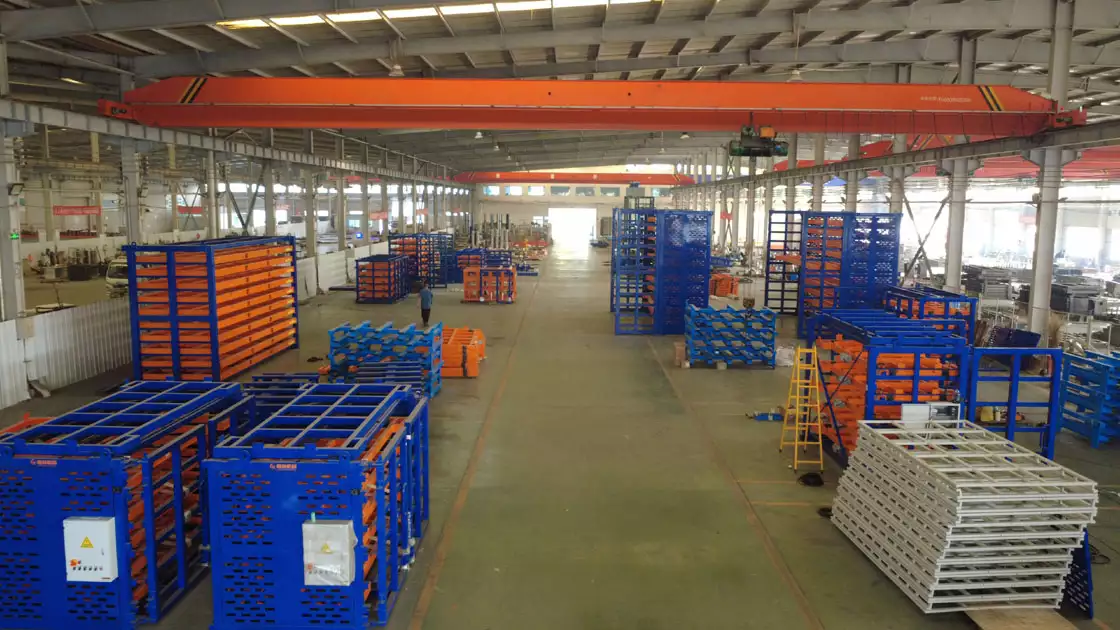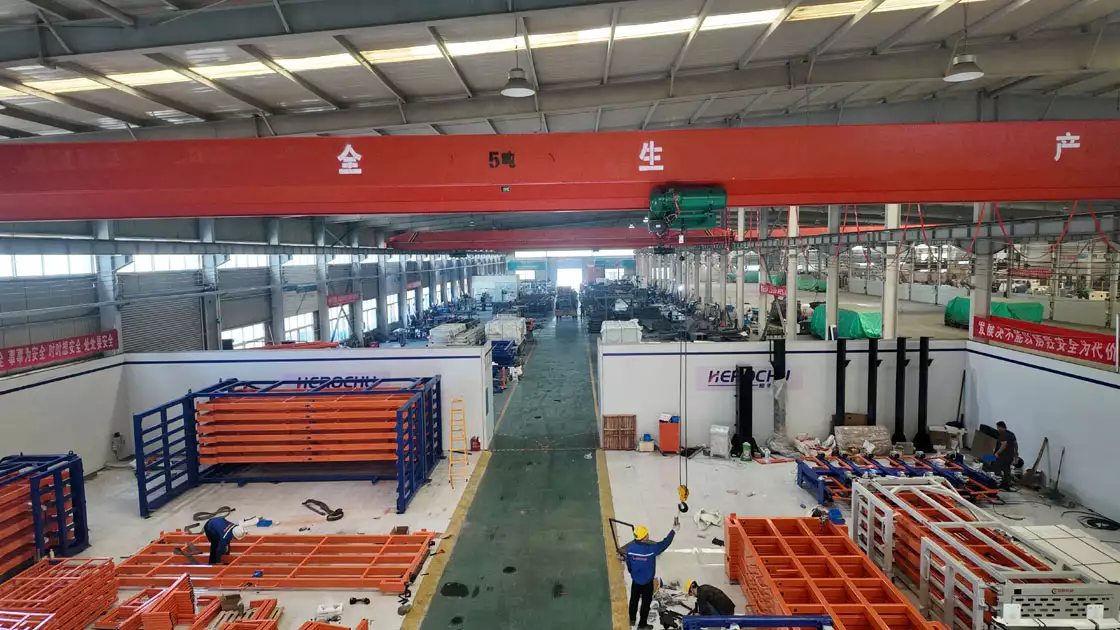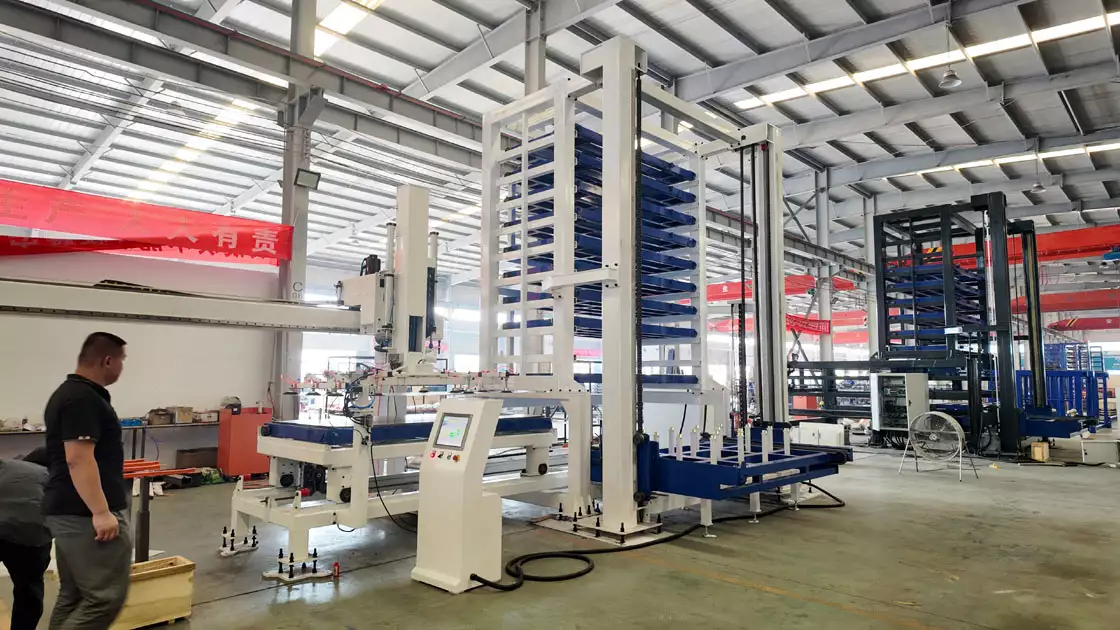
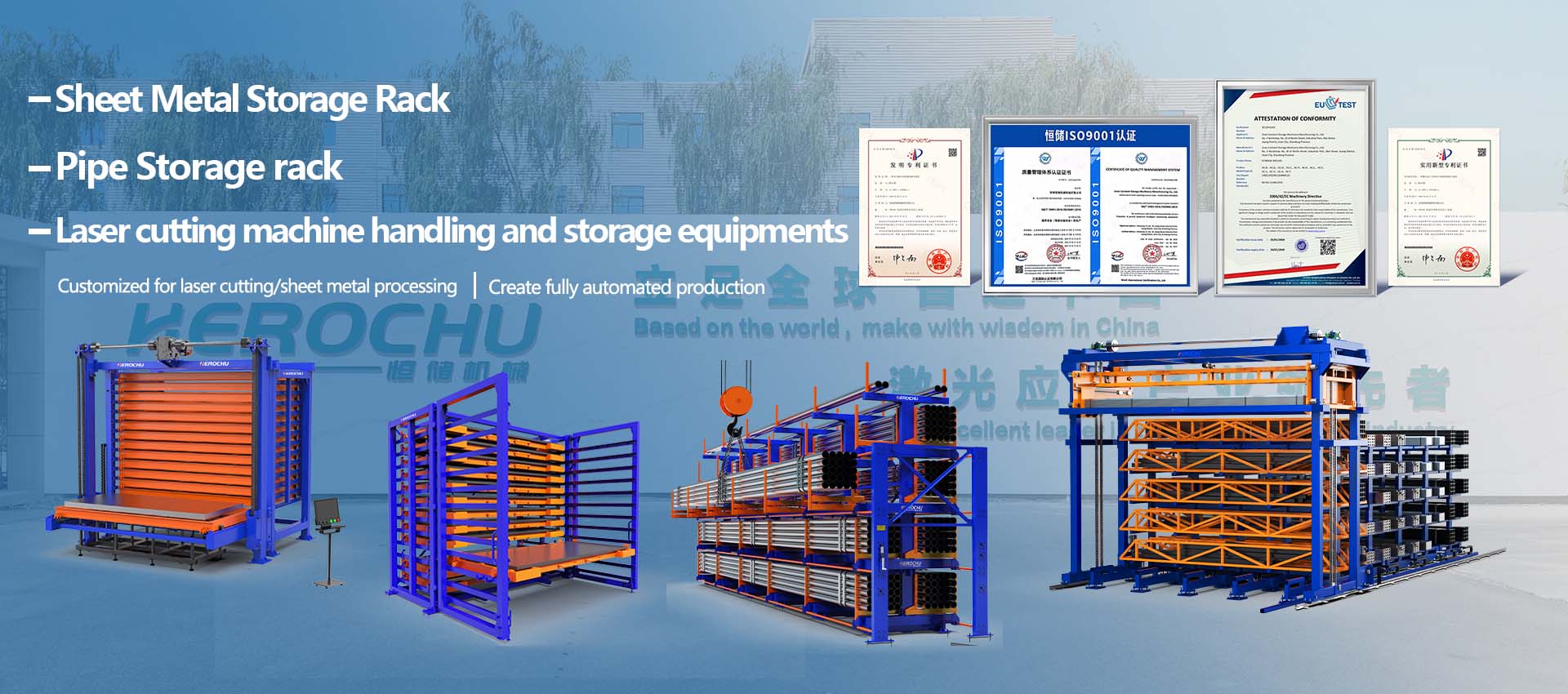
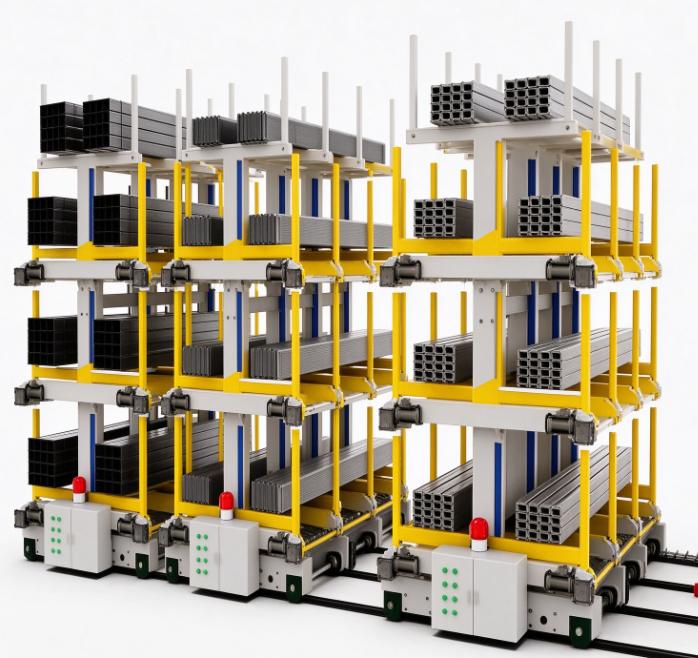
High-capacity mobile cantilever shelving stores long items on steel arm levels that travel on floor rails, sharing one aisle. It suits buildings where height is the limit rather than floor area, and Herochu’s HC-G series carries up to 5,000 kg per level on a single side with five or six working levels.
The building decides the product
Storage equipment is usually sold on capacity per square metre. That is the wrong first question in a plant with a 6-metre truss, a mezzanine over one bay and a roller door at each end. In those buildings, height is fixed and unusable, and the only variable left is floor.
Vertical lift systems and high-bay automated stores solve density by going up. They need 12 metres or more to justify the mast, the shuttles and the civil works. Put the same machine under a low truss and you have paid for steel you cannot use.
Mobile cantilever shelving takes the other route. It keeps the storage height modest, at five or six levels, and removes the aisle instead. A 6 m building with a 5.5 m usable stack and no fixed aisles can hold more long stock than a fixed rack layout that reaches 8 m but gives a third of its floor to circulation.
What “shelving” means here
Language matters when comparing quotes. In this category, shelving does not mean light-duty boltless units. It means fabricated steel columns carrying adjustable arm levels, each level acting as an open shelf for bundles.
Herochu builds three standard footprints in the series:
| Model | Pipe length | Levels | Load per level | Towers |
|---|---|---|---|---|
| HC-G6053EM-5 | 6,000 mm | 5 (customisable) | 3,000 kg | 5 (customisable) |
| HC-G9055EM-7 | 9,000 mm | 5 (customisable) | 5,000 kg | 7 (customisable) |
| HC-G12065EM-7 | 12,000 mm | 6 (customisable) | 5,000 kg | 7 (customisable) |
Level count is the one figure that most often gets cut to save money and is most expensive to change later. A level is a column weld, a set of arm brackets and additional rail capacity. Adding one after installation means re-engineering the tower, not bolting on a shelf.
Steel structure under a moving load
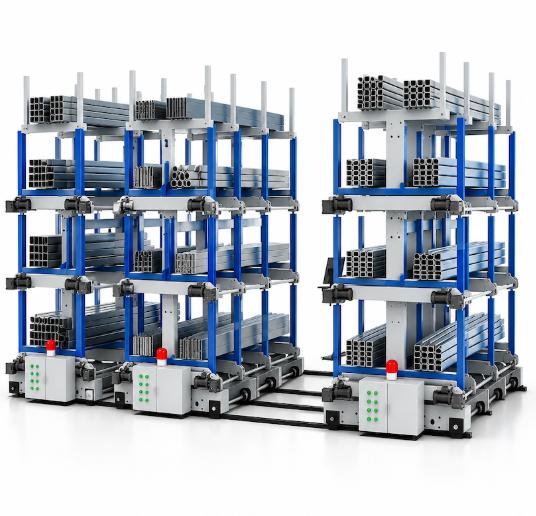
A static rack only sees gravity. A mobile tower sees gravity plus acceleration, braking and rail misalignment, and it sees them for years. Two design consequences follow.
First, the tower frame is a rigid box. Both uprights are tied at the base through the undercarriage so the columns cannot splay when a heavy layer is loaded on one side only. Single-sided loading is normal in practice: a picker takes from the near side and leaves the far side full, and the frame has to tolerate that imbalance without permanent deflection.
Second, the rail becomes a wear part. Floor-mounted rails carry the full travelling load through small contact areas. Alignment is set at commissioning and checked at service intervals, because a rail that drifts out of parallel loads the frame in a way the design never intended.
Density comparison for long items
Three options usually appear on a shortlist for long steel:
| Approach | Typical height need | Aisle cost | Retrieval |
|---|---|---|---|
| Floor stacking with stillages | None | High, informal | Forklift, slow, damage risk |
| Fixed cantilever racking | 4–8 m | One aisle per rack | Forklift or crane |
| High-bay ASRS with shuttles | 12 m+ | Machine aisle only | Automated, high capital |
| Herochu mobile cantilever shelving | 4–7 m | One shared aisle | Electric assist, PLC |
The mobile option sits between fixed racking and full automation. It captures most of the density gain of an ASRS without the building works, and it keeps human eyes on the load, which matters for mixed and irregular sections that scanners handle badly.
Safety and sightlines
Long-goods yards fail on visibility as often as on capacity. Bundles protruding into a walkway, a stack that hides a pedestrian, a forklift reversing blind between racks: these are layout problems with structural causes.
A mobile block improves them in a direct way. Between picks, the towers stand closed and the floor inside the block is not a traffic route at all. There is one aisle, it is defined, and it is empty when no tower is called. Operators walk a known route instead of threading through racking.
Electric assistance on retrieval and a carriage that positions at 27 mm/s remove the two riskiest manual actions in long-goods handling: pulling a bundle off a high arm by hand, and dropping one because it was dragged rather than lifted.
Specification discipline
Before comparing prices across suppliers, fix these inputs and send the same list to each:
- Longest and shortest item, and the length distribution by volume
- Heaviest bundle per level, on one side, with the load position
- Clear height to the lowest obstruction, not to the roof
- Handling method: overhead crane, forklift with long handler, or side loader
- Slab details, including thickness, reinforcement and joints
- Number of SKUs and picks per shift
Herochu sizes tower count, level count and arm pitch from that list. Where a site sits between two models, quoting both is cheaper than discovering the gap after installation.
FAQ
Is mobile cantilever shelving strong enough for 5-tonne bundles? Yes. The 9,000 mm and 12,000 mm Herochu models are rated at 5,000 kg per level on a single side. Rating assumes the load is distributed across the arms rather than concentrated at the tips.
Can it be installed in an existing building without civil works? In most cases the work is limited to a level, load-rated slab and rail anchoring. Ceiling height is the usual constraint, not structure.
How tall does the building need to be? Five and six level configurations are the design intent, which keeps the system viable in bays of roughly 4–7 m clear height.
Does staffing change? No automation of the picking decision is implied. One operator calls a tower and retrieves with electric assistance; the gain is density and safer handling, not headcount reduction.
Can more levels be added later? Mechanically yes, but it is a tower rebuild rather than an add-on. Decide the level count at specification stage.
The practical shortlist
If your constraint is ceiling height, if your long stock is mixed and irregular, and if you want density without a shuttle system and a new building, mobile cantilever shelving is the sensible middle. Herochu’s HC-G series covers 6,000 to 12,000 mm material at 3,000 to 5,000 kg per level, with tower counts set around your SKU mix rather than a fixed catalogue number.