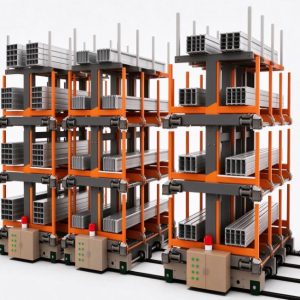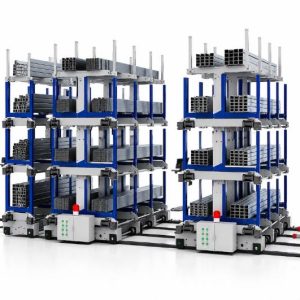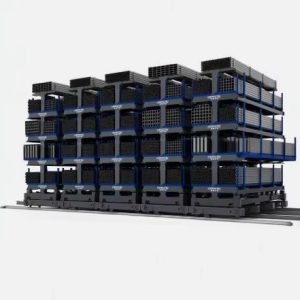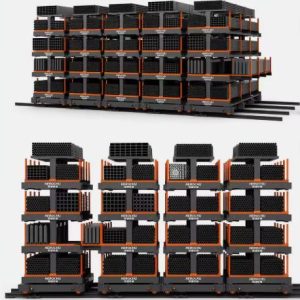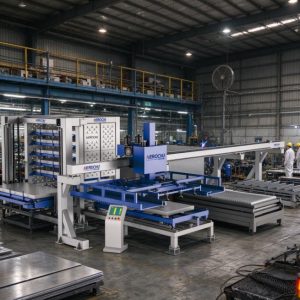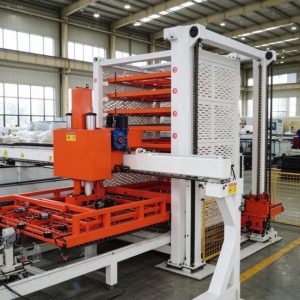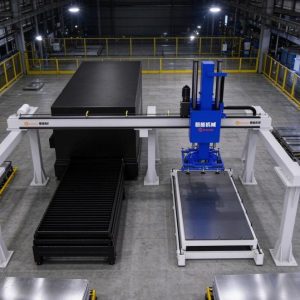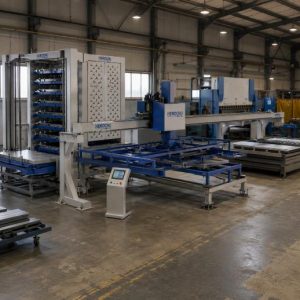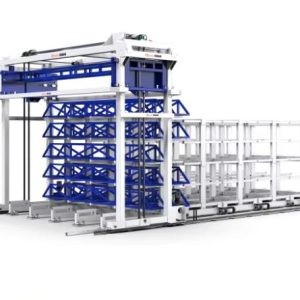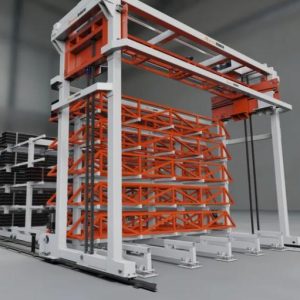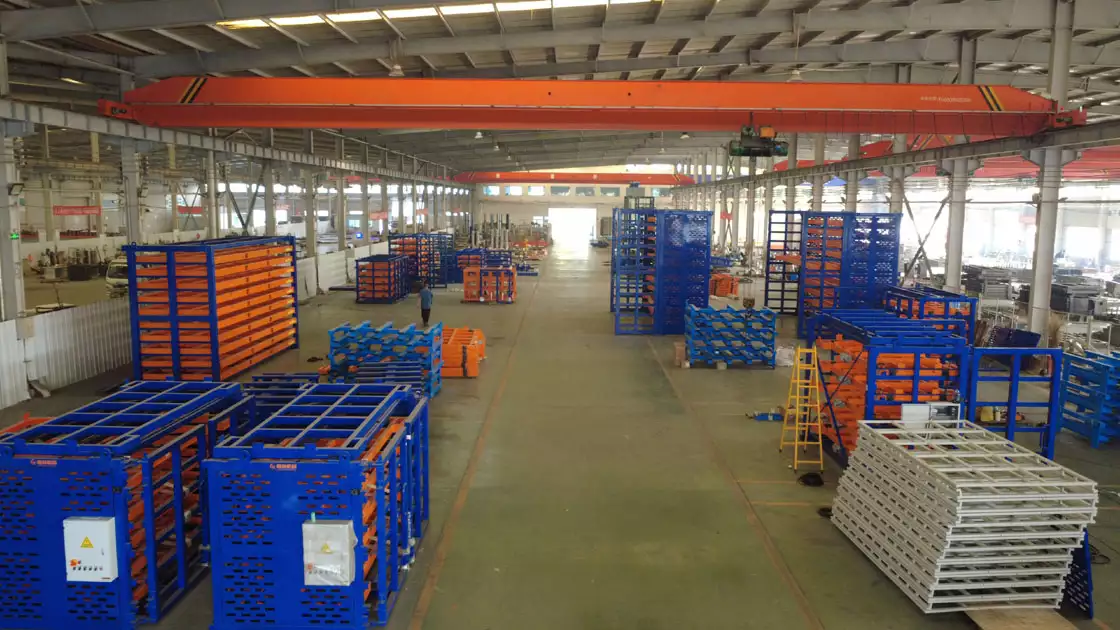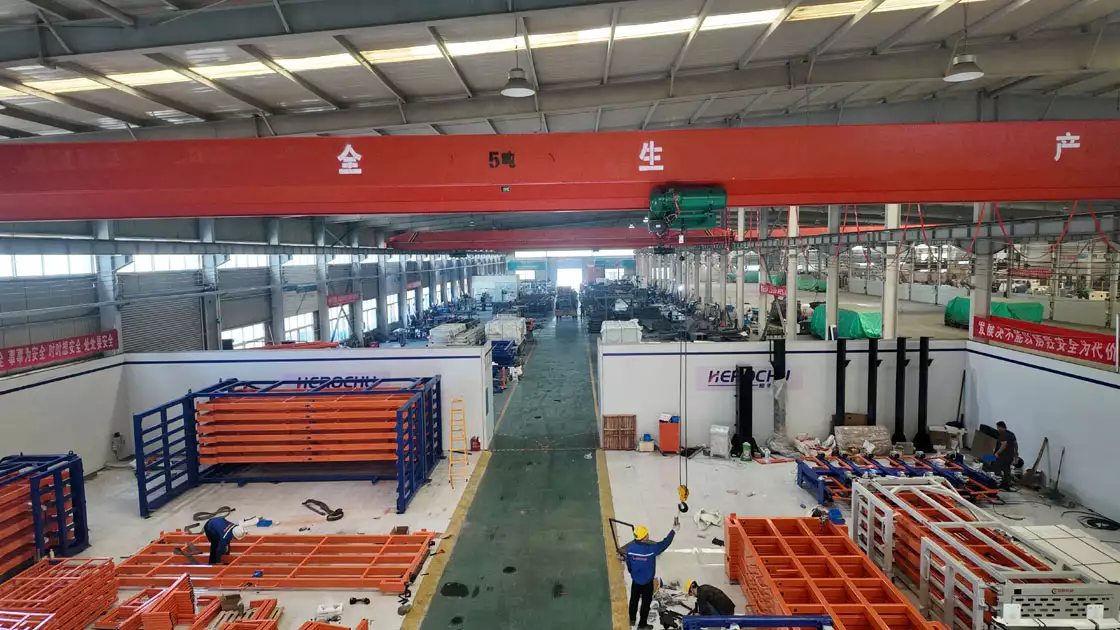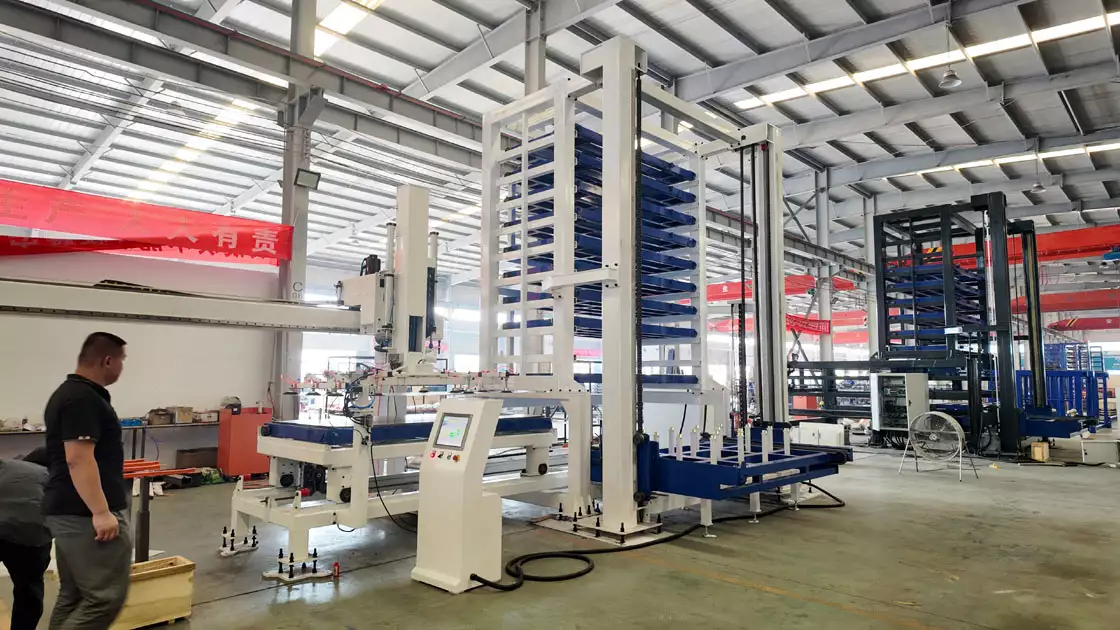
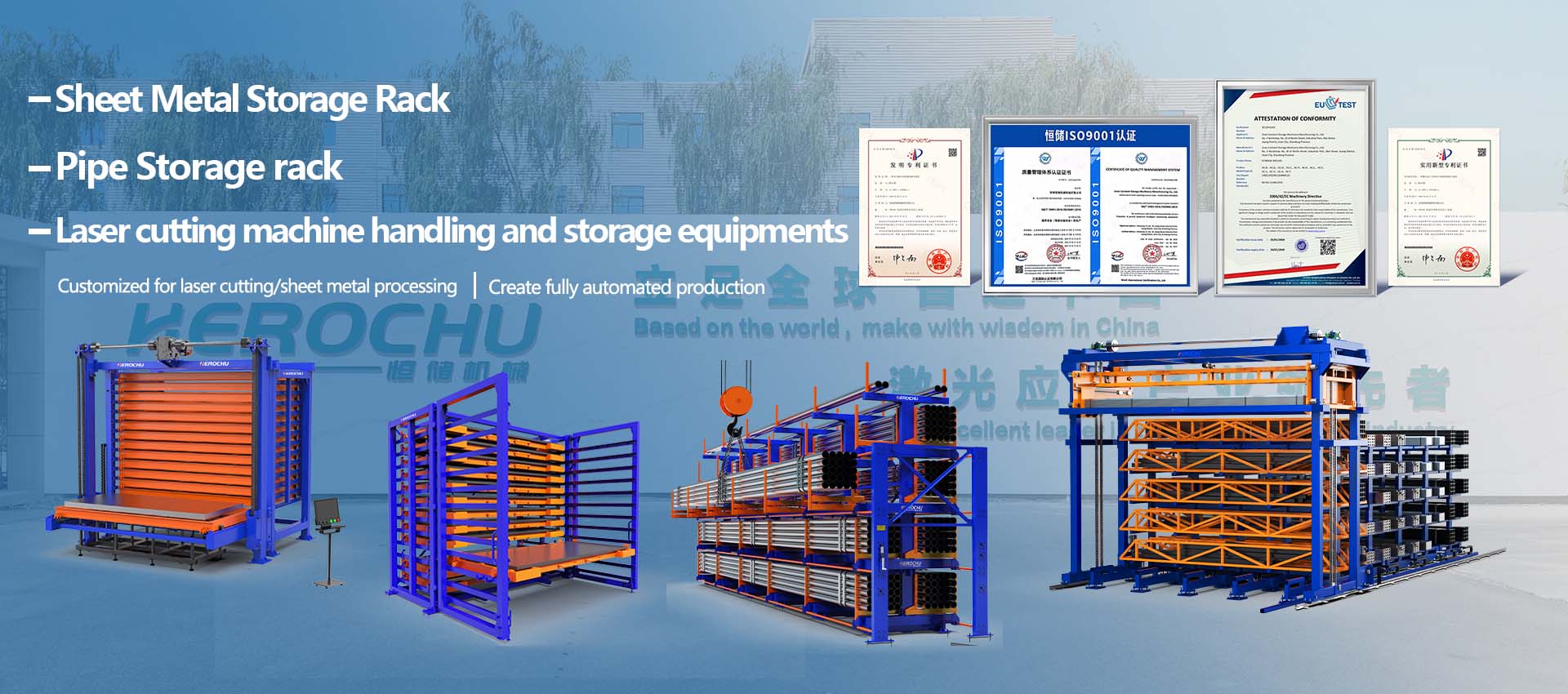
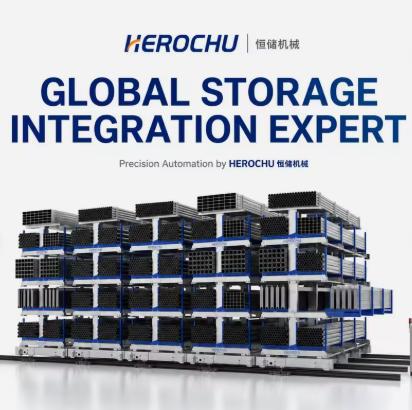
A customizable mobile pipe warehouse rack system is specified from stock data rather than a catalogue. Length range, bundle weight per level, clear height and handling method set the tower count, level count and rail run, and Herochu builds each block to those numbers with Siemens PLC control.
Customisation is a data exercise
Buyers often read “customizable” as a promise of flexibility and then discover it means a longer quote cycle. Done properly, the opposite is true: once four measurements are on the table, most of the layout decides itself.
The four inputs are the length range of your longest and shortest material, the heaviest bundle that will sit on one level of one side, the clear height under the lowest obstruction, and the handling equipment that will do the picking. Everything else, including tower count, rail length, arm pitch and control logic, follows from those.
Step one: profile the stock honestly
Most plants describe their stock from memory and get it wrong in one direction. They quote the standard 6-metre tube and forget the occasional 9-metre bundle, or they size loads from the average and ignore the delivery bundles that arrive at twice the weight.
Pull the actual data instead. For the last six months, list item length, bundle weight, monthly movement and physical form. Then group it:
- High-runners, moved daily, usually one length band
- Slow movers, long or heavy, but stable
- Irregular goods: coils, bundled sections, offcuts, damaged returns
The first group belongs near the aisle opening. The second can live deeper in the block. The third usually needs plate support rather than bare arms, because nothing self-centres on a cantilever arm like a coil.
Step two: fix the footprint
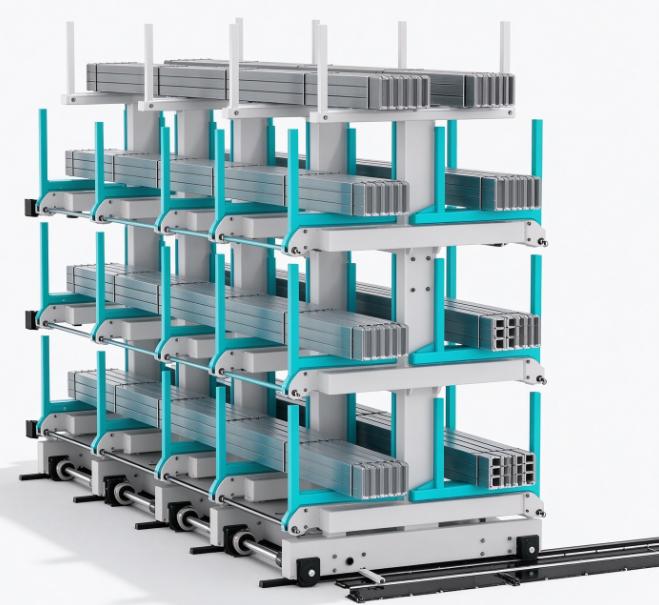
Tower count is the variable that most affects both price and density. A block of five towers with one shared aisle and a block of seven towers with the same aisle are different machines for the same floor.
Herochu standard configurations:
| Model | Pipe length | Levels | Load per level | Towers |
|---|---|---|---|---|
| HC-G6053EM-5 | 6,000 mm | 5 (customisable) | 3,000 kg | 5 (customisable) |
| HC-G9055EM-7 | 9,000 mm | 5 (customisable) | 5,000 kg | 7 (customisable) |
| HC-G12065EM-7 | 12,000 mm | 6 (customisable) | 5,000 kg | 7 (customisable) |
Read the table as a starting point. If your material is 7,500 mm, the 9,000 mm frame with shortened arms is usually the economical answer. If your longest item is 11 m and your volume sits mostly at 6 m, two blocks of different lengths often beat one 12 m block, because the 12 m frame costs capacity you never fill.
Step three: rails, slab and services
The rail is a building element as much as a machine part. Two rails run the full block length, anchored to a load-rated slab, and every tower shares them. Three checks decide whether the site is ready:
- Slab thickness and reinforcement, checked against the point loads of a loaded travelling tower
- Flatness and joint layout, since a step in the slab becomes a shock load at 27 mm/s
- Free run beyond the last tower position for the home position and any future expansion
Services matter too. Control cabinets need a clean, dry wall position, and the aisle needs lighting that reaches the underside of the top level. A picking aisle that is only lit at head height is a handling hazard at 5 m.
Step four: control and interface
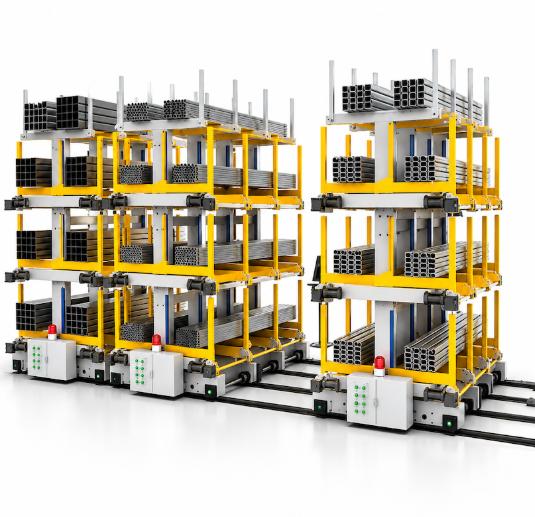
Every unit runs on Siemens PLC control. For most sites that means a local panel with tower selection, position feedback and interlocked travel. For sites already running a WMS, the useful question is not whether the rack can talk to software but what the software needs to know: which tower, which level, which position.
Three integration levels cover most requests:
- Standalone: operator calls a tower by number from the panel
- Supervised: WMS displays location and issues the call, PLC executes and confirms
- Linked: WMS holds slotting logic and books stock in and out as towers cycle
Herochu engineers the control scope at order stage, because retrofitting an interface to an installed block costs more than designing it in.
Step five: commissioning and handover
Commissioning checks that decide long-term reliability: rail parallelism, tower running clearance, position stop accuracy, chain tension and load testing at rated capacity. Then operator training on the two habits that protect the machine — never command a tower while the aisle is occupied, and never load a level beyond the rated figure at the arm tip.
A load test at 5,000 kg per level is not a formality. It confirms the frame, the rail anchoring and the chain drive together, under the load the site will actually apply.
FAQ
What can be customised on a mobile pipe warehouse rack? Material length, number of towers, number of levels, load rating per level, arm pitch, plate support and the control scope. The rail and drive platform stays common across the range.
How long does a typical project take from order to commissioning? It depends on tower count and control scope. The critical path is usually site readiness: slab condition, rail anchoring and power to the control panel. Confirm those early and delivery is predictable.
Can the block be extended later? Yes, if the rail run and slab are planned for it. Adding towers to an existing run is straightforward; extending the rail after the slab is finished is not.
Is a WMS required? No. The system runs standalone from its own panel. WMS integration is optional and specified at order stage.
Which model suits a 6-metre tube shop with mixed bundles? The HC-G6053EM-5 at 3,000 kg per level is the usual fit. If bundles run heavier, the 9,000 mm frame with 5,000 kg levels is the safer choice even where the material is shorter.
Planning the block before the price
A mobile pipe warehouse rack is cheap to design and expensive to redesign. Spend the effort on the stock profile and the site survey, hand both to the supplier, and compare quotes against the same input list. Herochu works from that list to produce a layout with the tower count, level count and control scope that fit the building you already own.