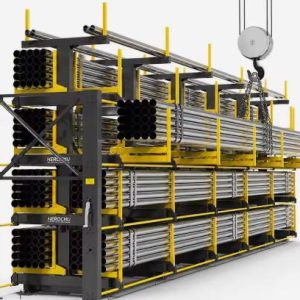
High-Density Roll-Out Mobile Cantilever Racking for Steel Pipe & Long Profile Warehousing
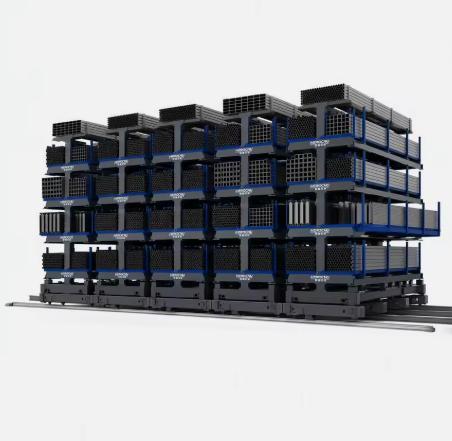
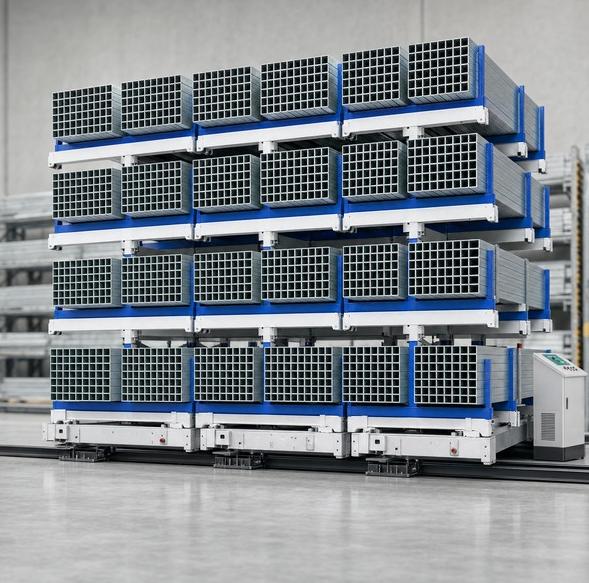
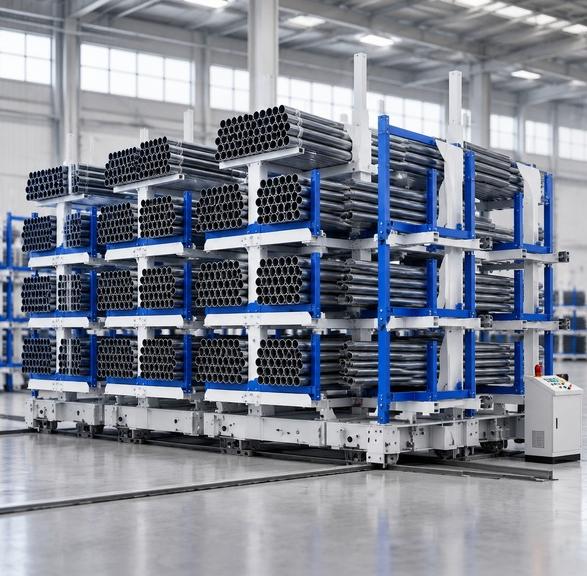
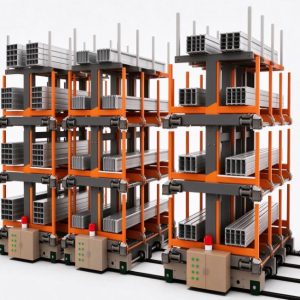
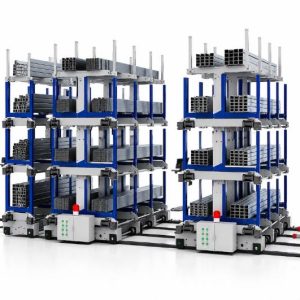
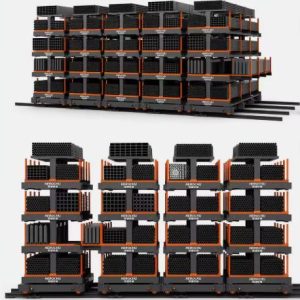
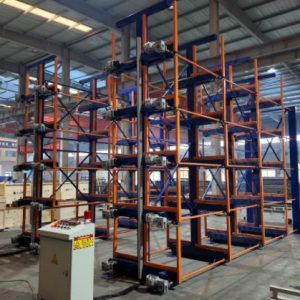
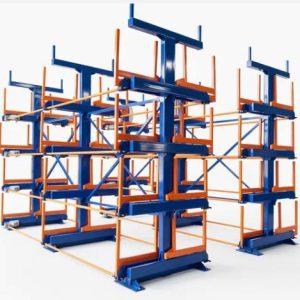
Steel pipe and structural profiles punish storage systems that are designed around pallets. The load is long, the weight is concentrated, and the center of gravity sits far from the column. A high-density roll-out mobile cantilever rack addresses all three conditions at once: the arms carry the load from below, the roll-out mechanism brings the load to the operator, and the mobile base compacts the tower groups so that density does not come at the cost of access.
High-Density Roll-Out Mobile Cantilever Racking for Steel Pipe & Long Profile Warehousing
Steel pipe and structuralprofiles punish storage systems that are designed around pallets. The load is long, the weight is concentrated, and the center of gravity sits far from the column. A high-densityroll-outmobilecantilever rack addresses all three conditions at once: the arms carry the load from below, the roll-out mechanism brings the load to the operator, and the mobile base compacts the tower groups so that density does not come at the cost of access.
Herochu’s HC-G series is built for this duty envelope. The HC-G9055EM-7 and HC-G12065EM-7 are rated at 5,000 kg maximum load per level, with customized layer counts and tower quantities that scale to the material mix. For warehouses storing steelpipe in the 8-meter to 12-meter range, the combination of per-level load rating and roll-out access changes what a given floor area can hold.
Why 5-Ton-Per-Level Changes the Layout Logic
A cantilever system’s usable capacity is not a single number. It is the lowest of three ratings: the arm rating, the upright rating, and the total bay rating. A system marketed as “5-ton capacity” can mean 5 tons per level on a single side, 5 tons per tower, or 5 tons across a bay—and the difference decides whether a bundle of 8-inch steel pipe can be stored three levels high or only one.
Herochu specifies the HC-G9055EM-7 and HC-G12065EM-7 at 5,000 kg per level, with the HC-G6053EM-5 at 3,000 kg per level for shorter 6-meter material. The arms are designed to support concentrated loads of steel pipe, aluminum extrusions, and structural sections without warping or sagging under normal design loads. That rating is the foundation of high-density layout planning: if each level can take 5 tons, the tower can be built taller and the rail line can be shorter, because fewer towers are needed to hold the same tonnage.
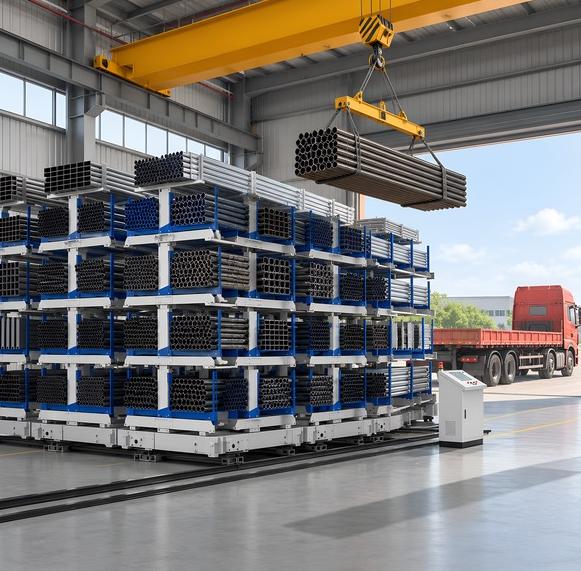
The load per level also determines arm spacing. A 12-meter steel pipe bundle that sags between supports needs arms closer together than a rigid 6-meter section of the same weight. The roll-out mechanism does not change the structural requirement, but it does change how the load is presented: the arms extend, the forklift places the bundle across the full support set, and the arms retract. The operator is not reaching into a deep static bay to position a load that may be 4 meters back from the aisle face.
Roll-Out Access and the Density Trade-Off
The standard critique of high-density storage is that density and access pull in opposite directions. The more material you pack into a footprint, the harder it is to reach a specific bundle without moving something else. Roll-out cantilever racking resolves this by making the storage level itself the access mechanism. The arms or receptacles extend outward, the load is placed or retrieved from the extended position, and the level retracts.
When roll-out is combined with a mobile base, the density gain compounds. The mobile base eliminates the permanent aisle between tower groups, and the roll-out arms eliminate the need to climb into or reach deep into the rack. Average pick times in roll-out cantilever systems have been reported at around five minutes for material that would otherwise require unloading stacked bundles to reach a lower layer. In a steel pipe warehouse where the same diameter may be stored three bundles deep, that time difference determines whether the system is used as designed or bypassed in favor of floor stacking.
Herochu’s roll-out cantilever system is offered with slidingdrawers or arms that extend outward, either manually or via motorized mechanisms, giving operators unobstructed access without navigating around fixed structures or digging through unstable stacks. The electric assistance is particularly relevant at the 5-ton level: a loaded arm at that rating is not a manual-handling task, and the motorized drive removes the physical exertion from the retrieval step.
Matching the System to Steel Pipe and Long Profiles
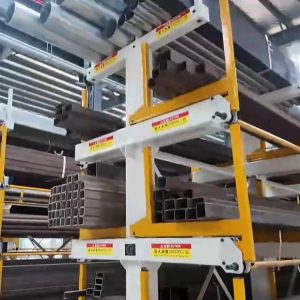
Steel pipe is not a single storage problem. Small-diameter conduit, large-diameter line pipe, and heavy-wall structural tube have different support needs, different roll risks, and different bundle weights. A high-density mobile cantilever layout has to accommodate that variety without committing the entire rail line to one arm configuration.
The HC-G12065EM-7, rated for 12,000 mm material and 5,000 kg per level across 6 customized layers, is dimensioned for facilities that handle long structural profiles alongside pipe. The customized layer count allows the tower height to be matched to the ceiling and to the lifting equipment, and the tower quantity can be scaled to the number of SKUs rather than to a fixed bay count.
Two structural details matter for pipe specifically. First, inclined arms—typically 5 to 10 degrees—help keep round stock from rolling off the storage level. Second, arm end stops or lips are a low-cost addition that prevents forward roll-off during loading and unloading; they are nearly always worth specifying for pipe, tube, and conduit. A high-density system that stores more pipe per square meter also stores more potential energy per square meter if the roll risk is not designed out.
Safety Factors That Density Cannot Ignore
High-density storage increases the consequence of a structural failure because more material is stored in closer proximity. Cantilever rack selection therefore starts with the heaviest expected load, not the average load, and applies a safety factor above the calculated arm load. Industry guidance recommends a minimum 20–25% safety factor for static loads, with a higher factor—often 1.5—where forklifts operate close to the rack.
The three-capacity rule applies here as well. Arm capacity multiplied by the number of arms gives a theoretical column load, but the upright has its own rating, and the bay has a third. The lowest rating governs the usable capacity. A 5-ton-per-level rating is only meaningful when the upright and base are engineered to carry the sum of those level loads at the intended tower height.
Herochu builds the HC-G series with a ground-rail design described as stable and load-bearing, and the company certifies its systems to CE, UE, and ISO 9001 standards. For a high-density pipe warehouse, those certifications are not marketing labels—they are the documentation trail that supports the load ratings used in the layout.
Frequently Asked Questions
What does “5 tons per level” mean on a mobile cantilever rack? It means the storage level on one side is rated to support 5,000 kg under normal design conditions, but the usable load also depends on the arm length, the load’s center of gravity, and the upright rating. The lowest of the arm, upright, and bay ratings governs the actual capacity. Buyers should ask for the arm rating at the specific arm length being quoted, not a generic per-arm figure.
Can roll-out mobile cantilever racking handle 12-meter steel pipe? Yes, provided the arms are spaced to support the pipe without excessive deflection and the tower is dimensioned for the resulting load. Herochu’s HC-G12065EM-7 is built for 12,000 mm material with 5,000 kg per level and a customized layer count. The roll-out mechanism presents the full length to the forklift or crane, so the operator is not reaching into a deep static bay.
How much safety factor should be applied to a 5-ton cantilever level? A minimum 20–25% safety factor above the calculated maximum arm load is a common baseline for static loads. Where forklifts operate close to the rack, a factor of 1.5 is more appropriate. The safety factor is applied to the load calculation, not to the published capacity; the published capacity already includes the manufacturer’s design margin.
Does a mobile base reduce the load capacity of the cantilever tower? No. The mobile carriage is engineered to transmit the tower’s vertical and overturning loads to the floor rail. The load rating of the tower is determined by the arm, upright, and base of the tower itself; the mobile base is a separate structural system with its own rated capacity. Herochu specifies the HC-G series with carriage speed and travel speed parameters that reflect the loaded condition, not an empty-tower condition.
FAQ
Here are some frequently asked questions about our sheet metal racks and pipe storage solutions. We hope you find them helpful!
Q1: Can I request a custom size or color? Absolutely. We offer complimentary design services and deliver efficient, tailored solutions to meet your specific requirements.
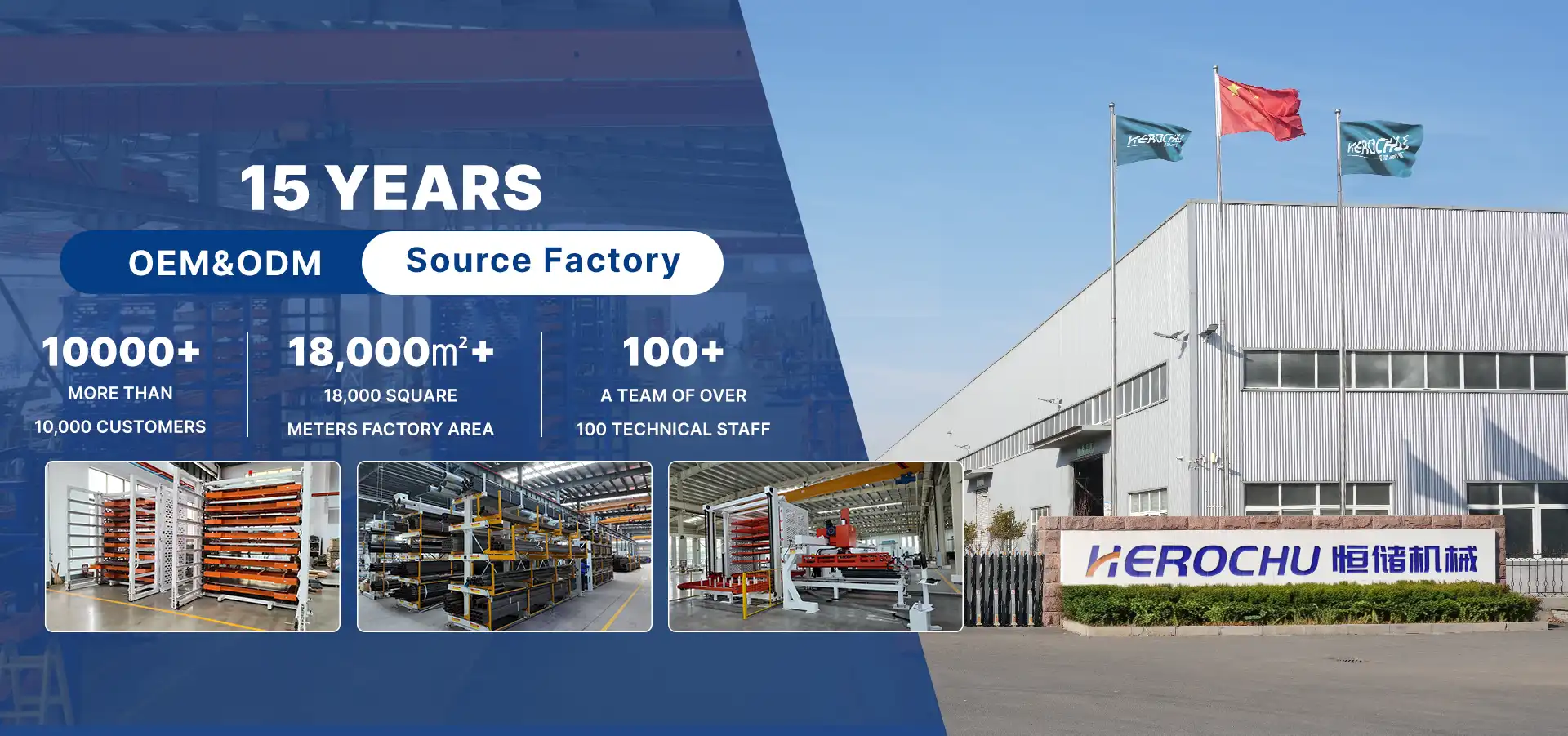
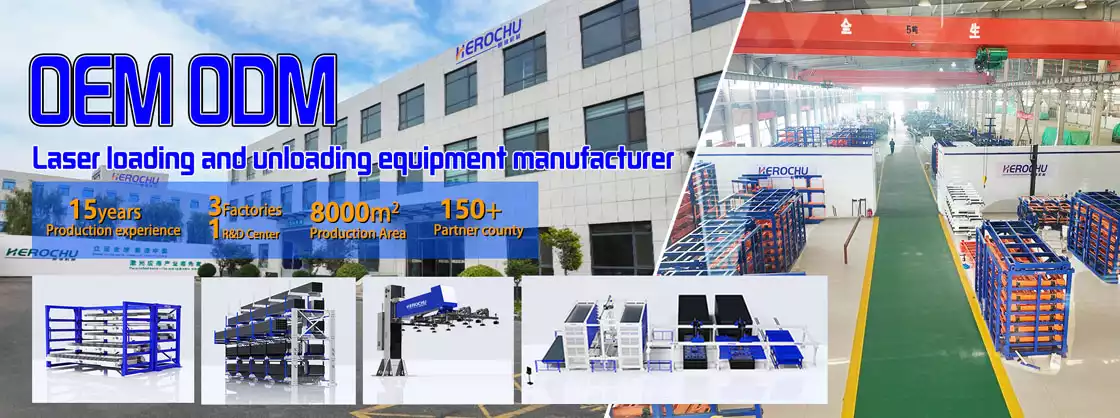
Q2: Are you a manufacturer or a distributor? We are a direct manufacturer with over 15 years of industry experience and expertise.
Q3: Is there a minimum order quantity? No. We welcome orders of any size, starting from a single unit.
Q4: How can I get detailed product information? Click the “Get a Quote” button to receive product images, detailed specifications, and videos. Our team is always ready to assist.
Q5: How do I provide my storage rack requirements? Simply share the type, dimensions, and quantity of materials you plan to store, along with any other specific needs. We will develop a professional storage solution for you. Alternatively, leave your contact details for a personalized consultation.
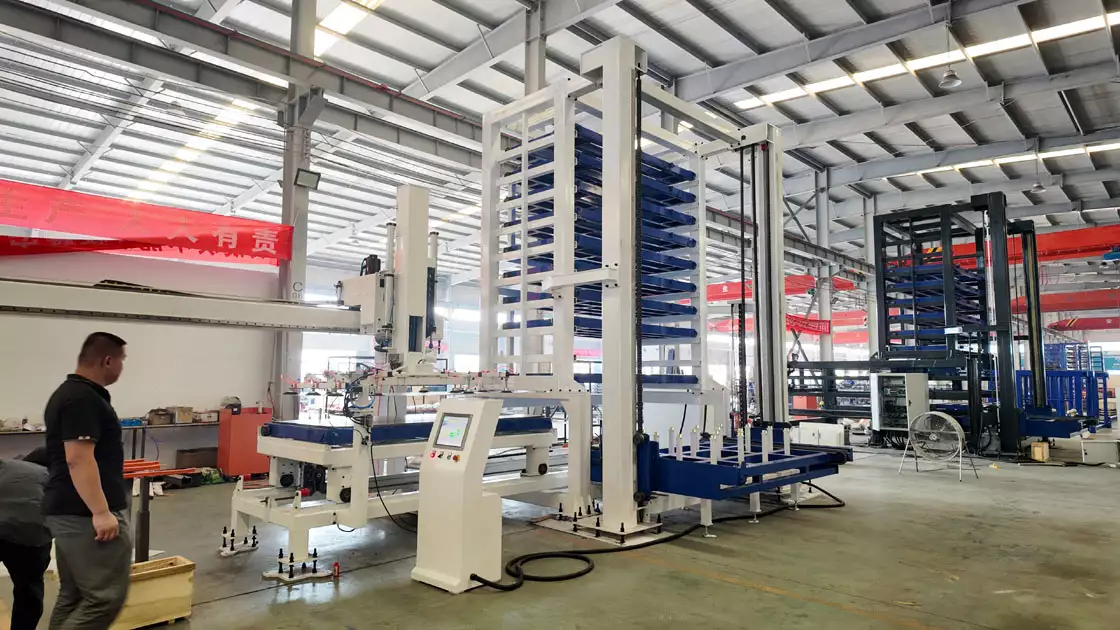
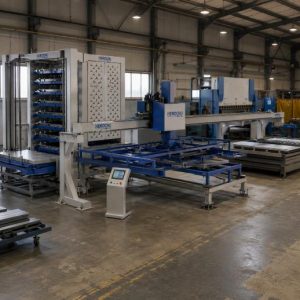
Q6: Do you offer automated loading systems or robotic arms? Yes. We provide loading robotic arms and integrated loading/unloading systems tailored to your laser cutting machine’s table size and material handling method (e.g., board rack, exchange platform, or material warehouse). Contact us with your details for a customized proposal.
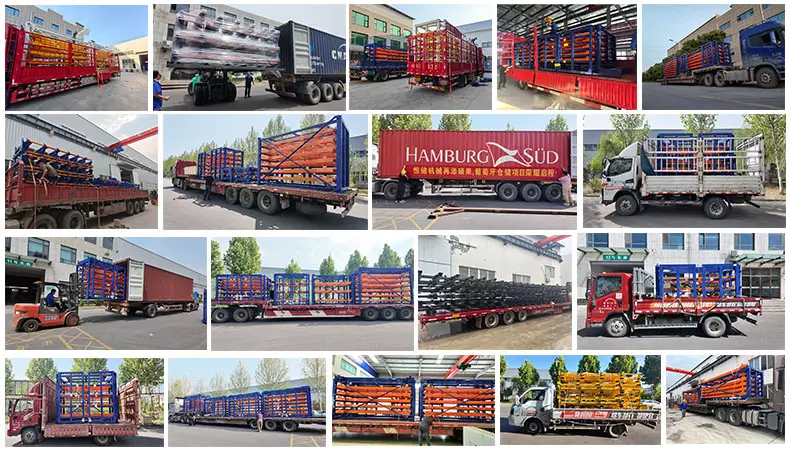
Q7: Do you provide on-site installation and debugging? Yes. Our technicians can travel to your facility for installation and debugging, ensuring successful operation. We have served clients globally, including in the USA, South Korea, Russia, Qatar, Mexico, South Africa, Egypt, and Lebanon.
Q8: How do you ensure product quality? Our quality assurance includes:
A team of over 40 technical engineers for professional debugging and support.
A dedicated quality control department compliant with ISO9001 standards.
CE certification for all exports.
Rigorous load testing before shipment to ensure structural safety and reliability.
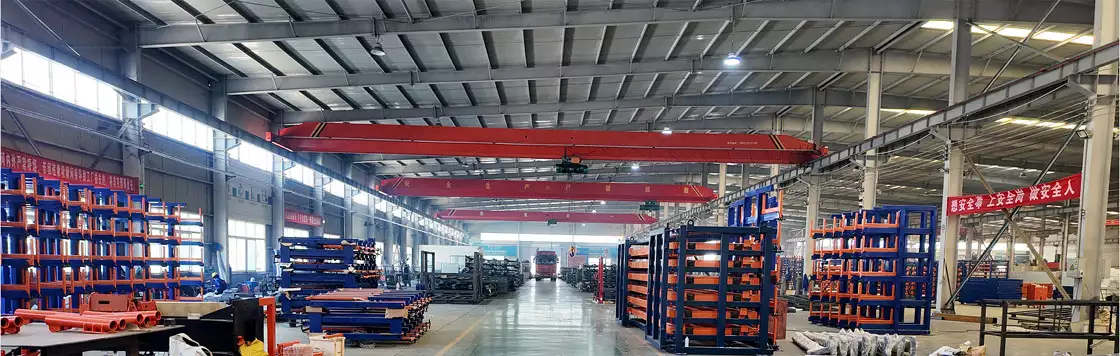
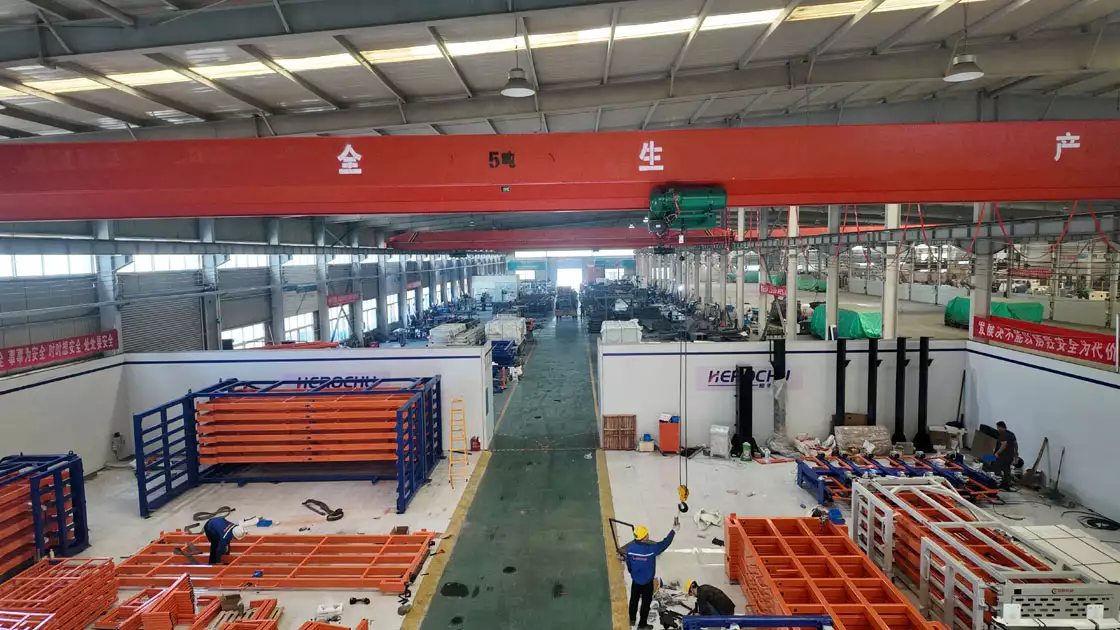
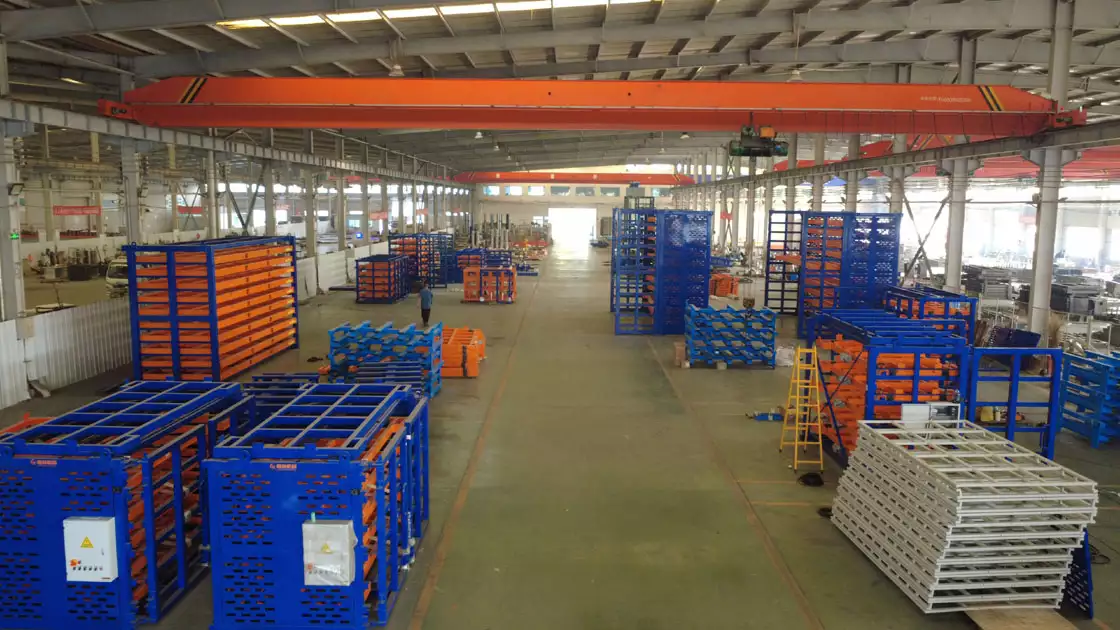
Q9: Where is your factory located? Our modern 10,000-square-meter manufacturing facility is located in Jiyang Industrial Park, Jinan, Shandong, China.
Q10: How can I evaluate your company’s capabilities? We offer virtual video factory tours and warmly welcome on-site visits.
Q11: What does your company specialize in? Jinan Constant Storage Machinery Manufacturing Co., Ltd. is a high-tech enterprise specializing in the R&D, production, sales, installation, and service of intelligent storage solutions. Our product range includes sheet material warehouses, drawer-style shelves, cantilever racks, servo manipulators, gantry loaders, and fully automated handling systems. Supported by a skilled technical team and advanced equipment, we are committed to delivering high-performance storage products and solutions to customers worldwide.
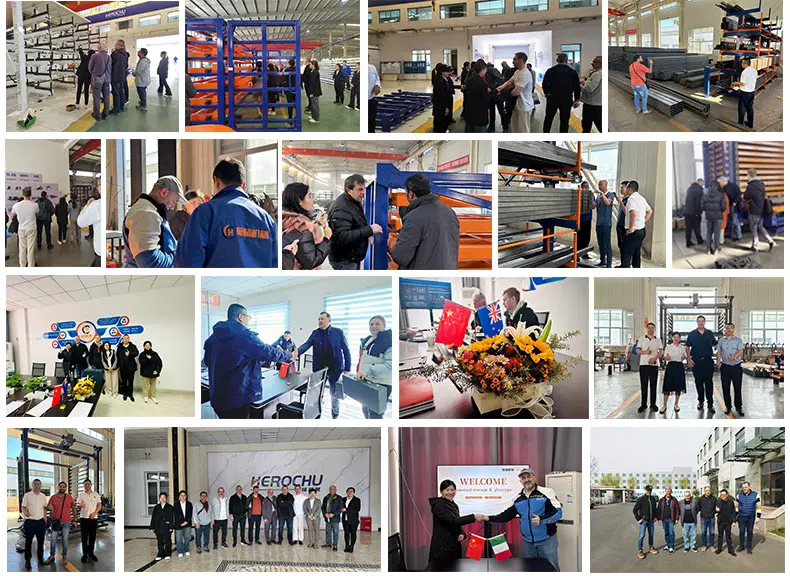
Customer visit
Herochu has always been adhering to the market-centric approach to meet customer requirements to the maximum extent, and the business philosophy of “creating brands with heart and gaining reputation with sincerity”. It provides customers with high-quality products and services with rigorous military quality, professionalism, and excellence, and has won unanimous praise in the Chinese aerospace, Chinese weapons, Chinese railways, automobile manufacturing, engineering machinery, non-ferrous metal titanium alloy and other industries.