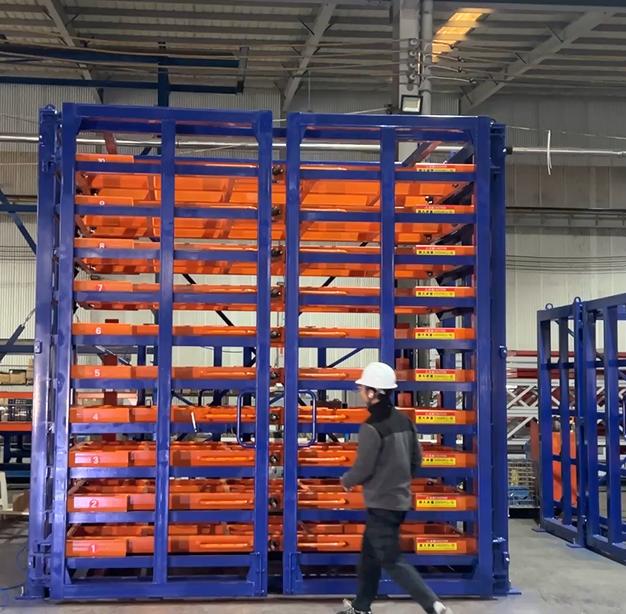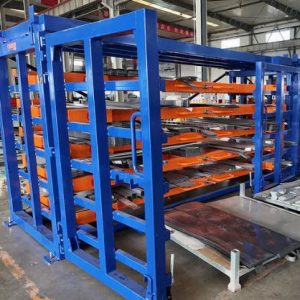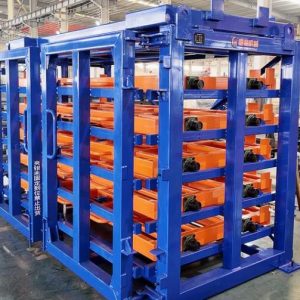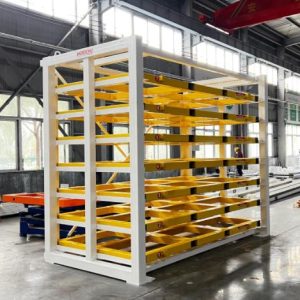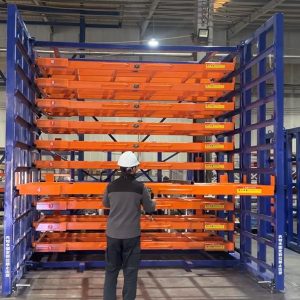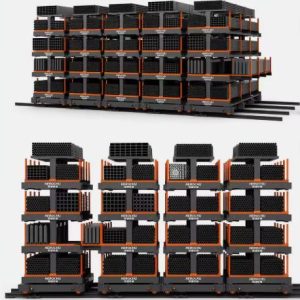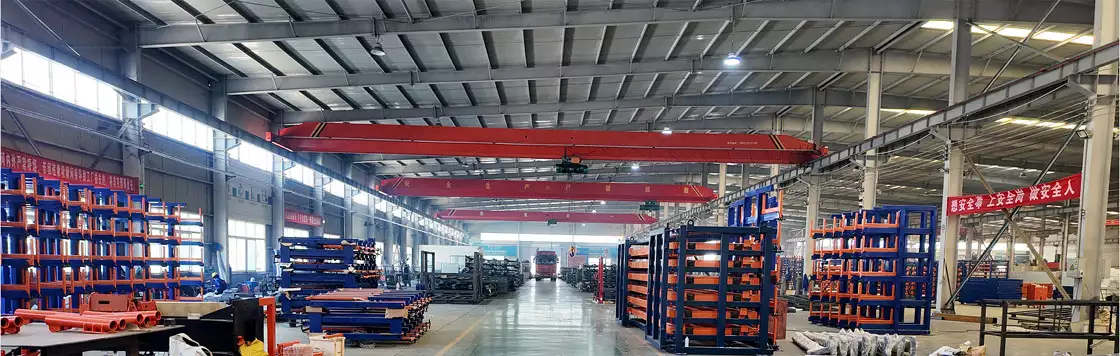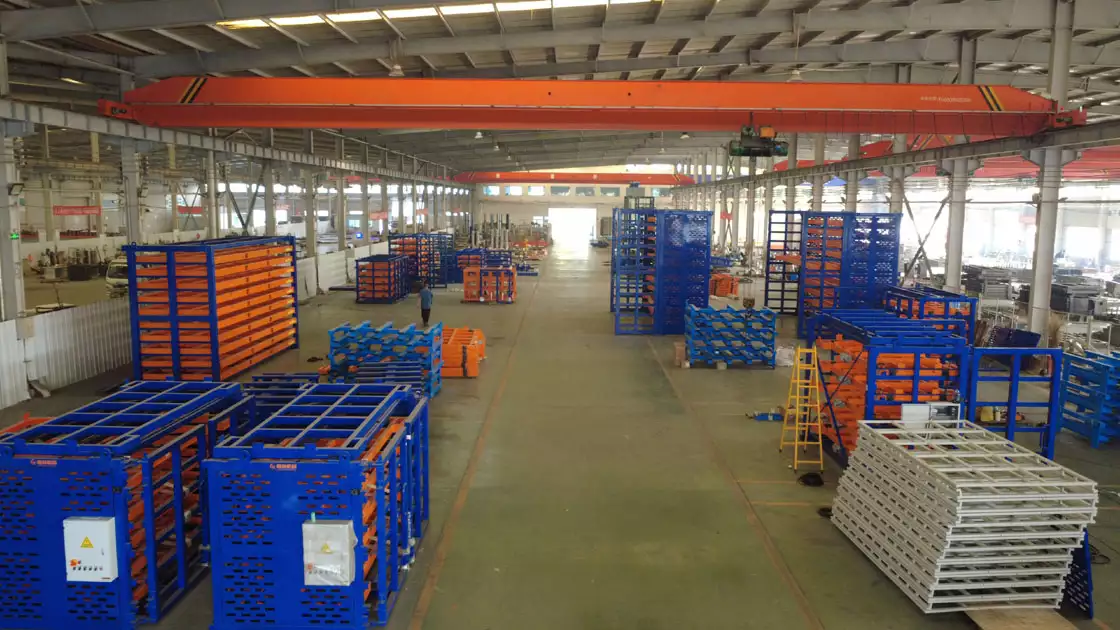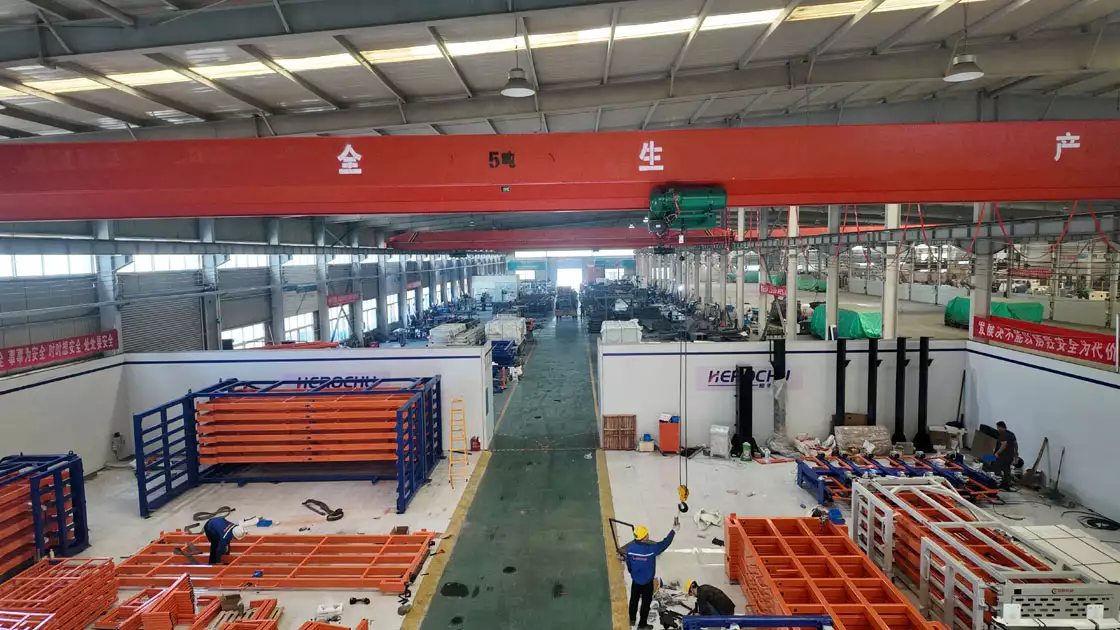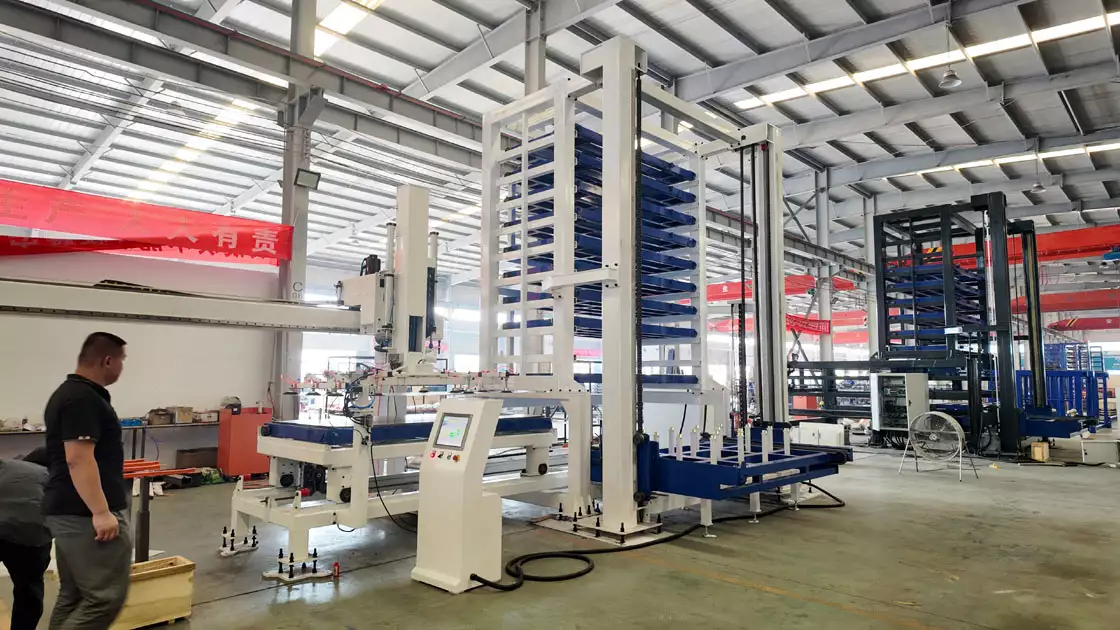
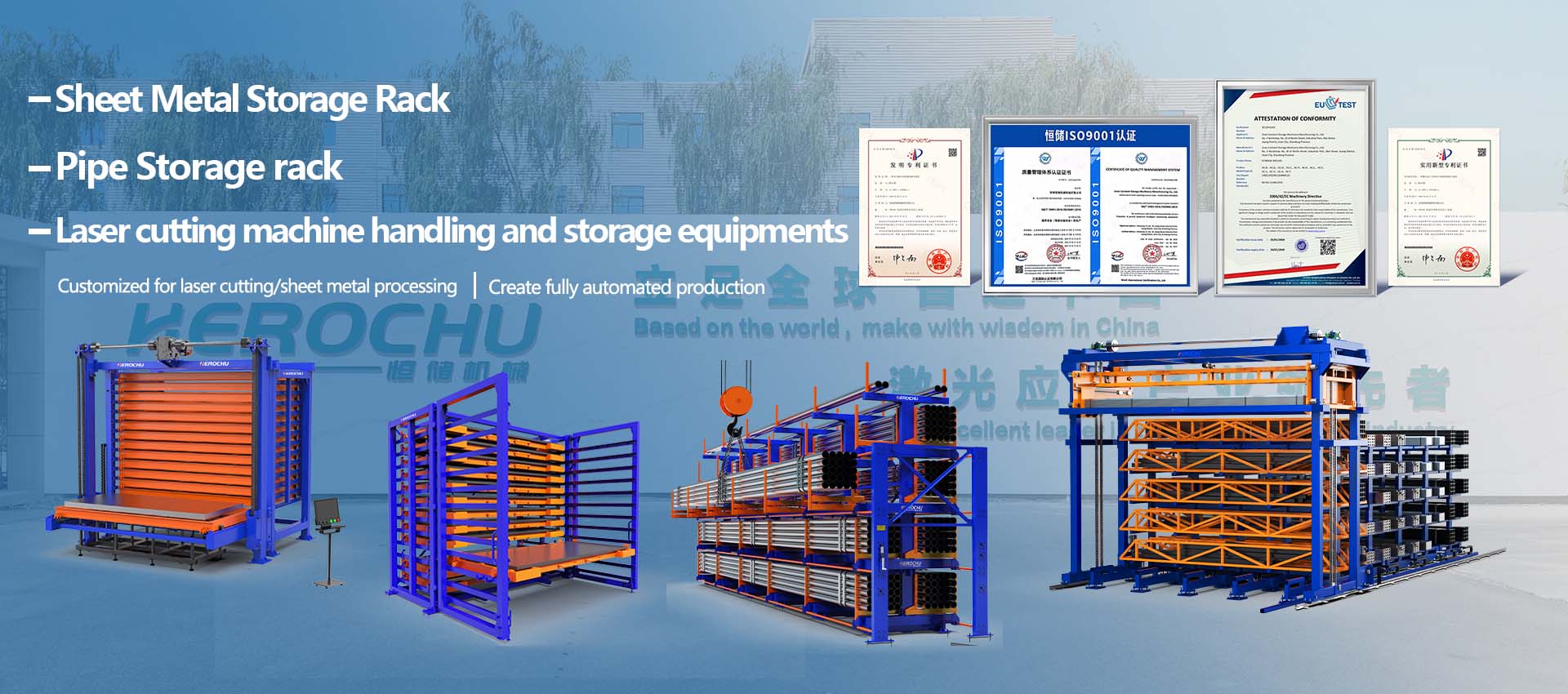
A heavy-duty aluminum plate storage rack with custom OEM drawers is an industrial sheet metal racking system configured around a specific plant’s material mix—drawer count, drawer depth, load rating, and surface protection are all specified at the factory rather than chosen from a catalog. Herochu manufactures these systems for warehouses that handle aluminum alongside steel, copper, and other flat stock, with per-drawer loads up to 3,000 kg and welded carbon steel construction.
The phrase “heavy-duty” gets used loosely in storage equipment. For aluminum plate, heavy-duty means something different than it does for mild steel. Aluminum is roughly one-third the density of steel, so a 6,000 × 2,000 mm aluminum plate that is 10 mm thick weighs about 324 kg—manageable for two people, but awkward enough to damage edges and scratch surfaces during manual handling. A custom OEM drawer system solves the handling problem first and the storage-density problem second.
What “Custom OEM” Actually Changes
An off-the-shelf drawer rack is designed around a median sheet format. A custom OEM rack is designed around the user’s actual inventory. Herochu’s OEM process starts with the material matrix: which alloys, which thicknesses, which sheet dimensions, and which retrieval frequency. From there, the drawer layout is set.
Three parameters drive most OEM decisions. Drawer width and depth must accommodate the largest sheet without overhanging, because an overhanging sheet on a pull-out drawer creates a leverage problem. Per-drawer load rating must reflect the heaviest expected stack—Herochu rates standard drawers at 3,000 kg, but aluminum stacks often require a lower rating per drawer combined with more drawers to preserve selectivity. Surface treatment must match the material: aluminum and polished stainless benefit from non-marring drawer beds, while hot-rolled steel can tolerate a more utilitarian finish.
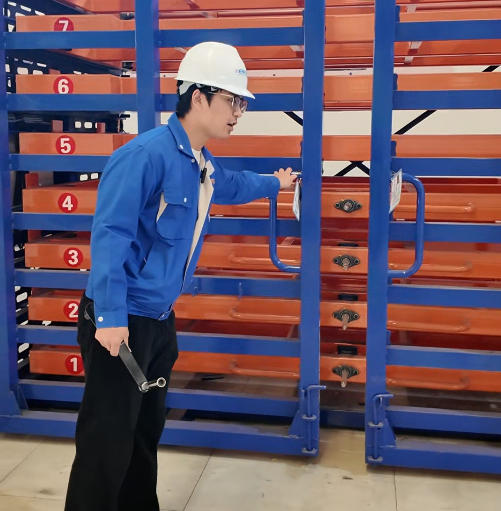
The structural base remains consistent across configurations. Herochu builds the rack from carbon steel with a zinc coating and a light blue frame finish, using welded construction rather than bolted assembly at load-bearing joints. Double anti-corrosion coating protects the frame and drawer components against coolant mist, lubricating oil, and ambient moisture. A built-in lock and limit device keeps each drawer stable at full extension, and the drawer can be locked in the closed position to prevent unauthorized access or accidental opening during forklift traffic.
The Space-Density Case for Drawers Over Floor Stacks
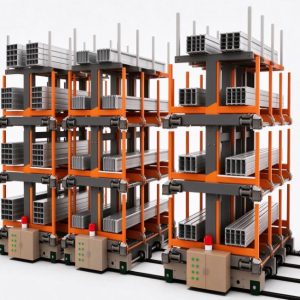
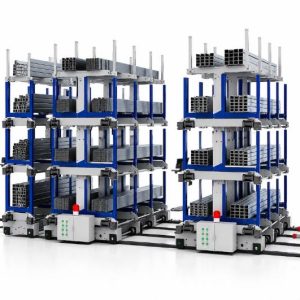
A common objection to rack-based storage is that the rack “wastes” the floor area it occupies. In practice, the opposite is true once the rack reaches three or more levels. Herochu positions its multi-drawer systems as a direct replacement for floor stacking in narrow production bays, where aisle width is limited and crane access is intermittent. By moving storage upward and keeping retrieval at ground level, the system increases storage density without requiring a new building or a taller crane runway.
The density gain is not just theoretical. In sheet metal warehouses that shift from floor stacks to multi-tier drawer storage, the usable storage volume per square metre of floor rises sharply because the air above the stack is no longer empty. The drawer format captures that vertical space while keeping every sheet independently retrievable—a combination that static cantilever racks cannot match for mixed-format inventories.
Design Support and Service Coverage
Herochu includes graphic design and 3D model design support with OEM orders. That matters for plant engineers who need to show a rack layout to a safety committee or integrate the rack into an existing CAD floor plan. The company also provides online technical support, return and replacement service, free spare parts, and a 5-year warranty on qualifying configurations.
For warehouses in food manufacturing, the drawer system’s oil- and moisture-resistant coating is relevant beyond sheet metal: the same pull-out architecture is sometimes specified for molds, tooling plates, and heavy flat components that need organized, protected storage. Herochu’s standard systems are built around sheet material, but the drawer platform is adaptable to any flat, heavy item that benefits from independent access.
Frequently Asked Questions
Q: What does “custom OEM drawers” include in a Herochu order?
A: Drawer count, drawer width and depth, load rating per drawer, surface finish, locking arrangement, and frame color are all specified to the order. 3D model design and graphic design support are included to verify fit against the buyer’s layout.
Q: Can the rack store aluminum and steel plates on the same unit?
A: Yes. The welded steel frame supports mixed loads as long as each drawer’s rated capacity is respected. A common configuration separates aluminum on upper drawers and steel on lower drawers to keep the center of gravity low.
Q: Is the light blue frame finish purely cosmetic?
A: No. The finish is part of a double anti-corrosion coating system that includes zinc coating on the carbon steel substrate. The color is a visibility aid in busy workshops, but the protective layers are the functional element.
Q: What safety devices are included as standard?
A: Each drawer includes a built-in limit device to prevent over-extension, and the drawer can be locked in the closed position. A per-tier interlock—only one drawer open at a time—is available as a configuration option.
Q: Does Herochu provide installation support for OEM racks?
A: Online technical support is included, along with free spare parts and return-and-replacement coverage. For complex layouts, the 3D design package can be used by the buyer’s own installation team or a local contractor.