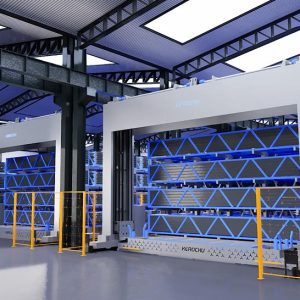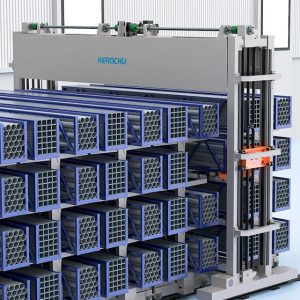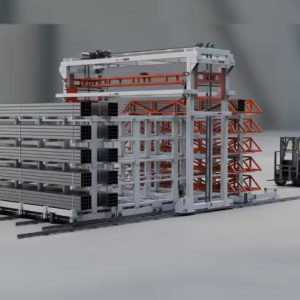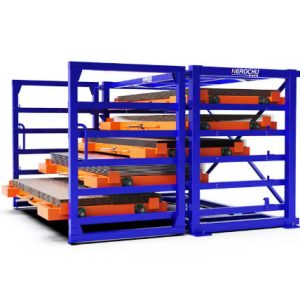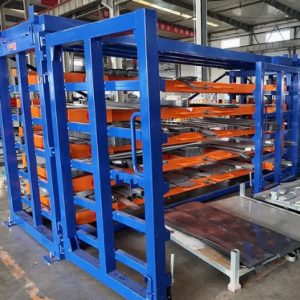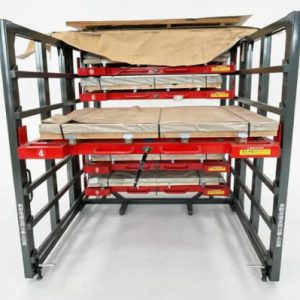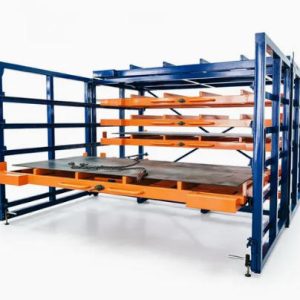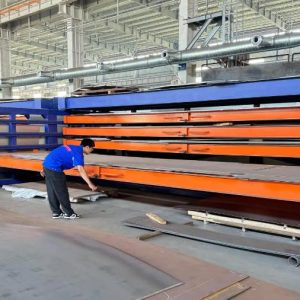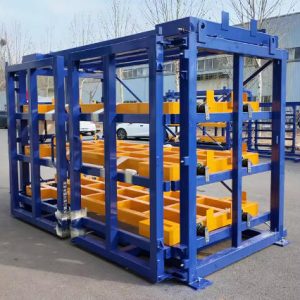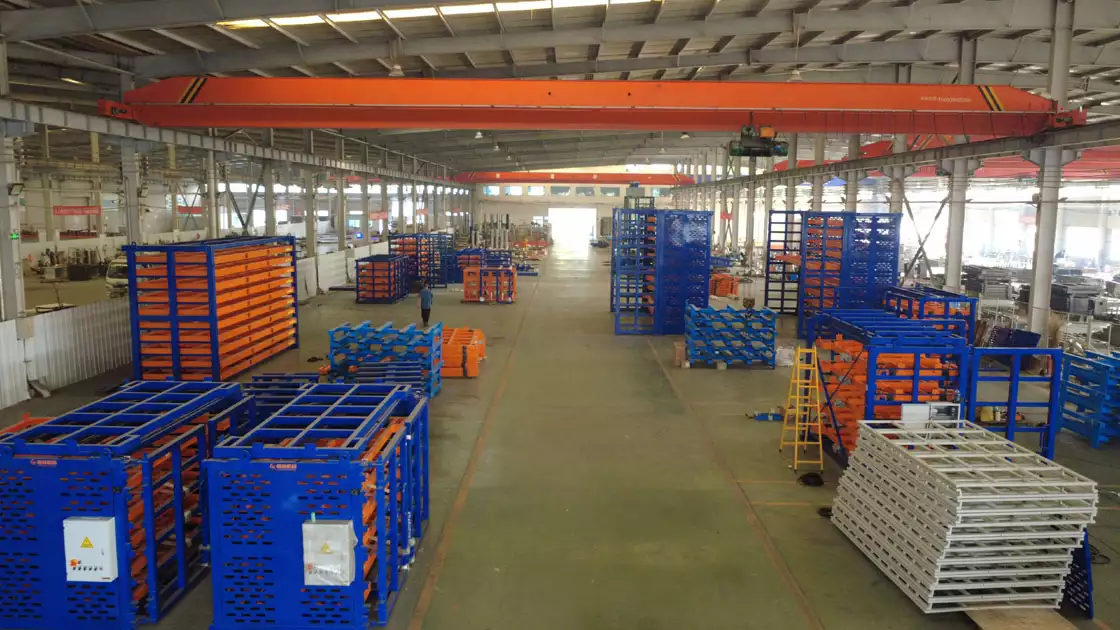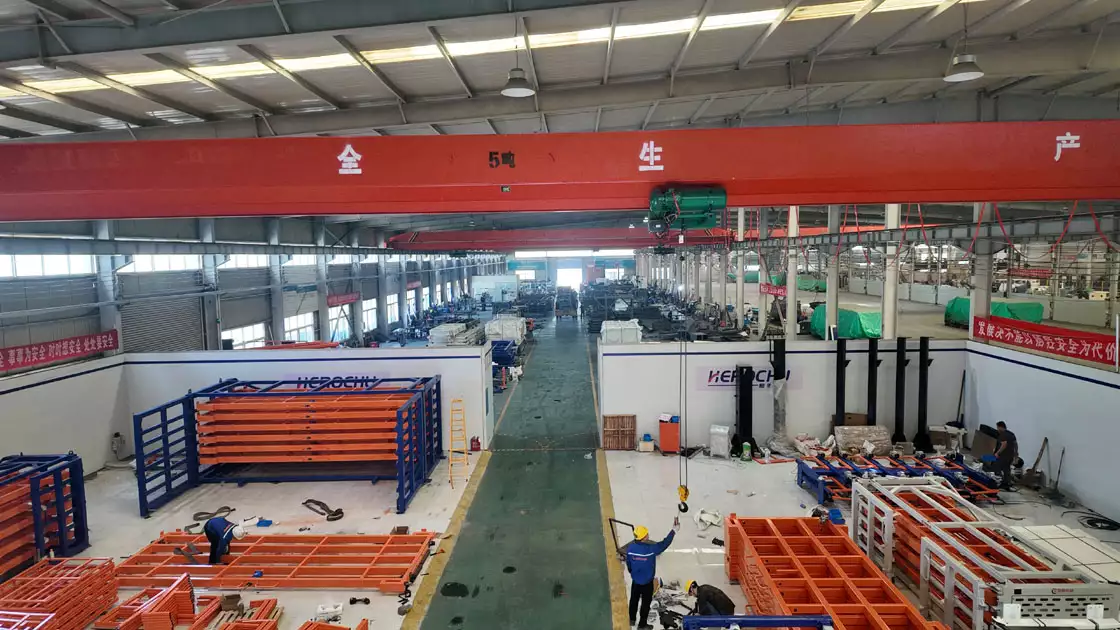
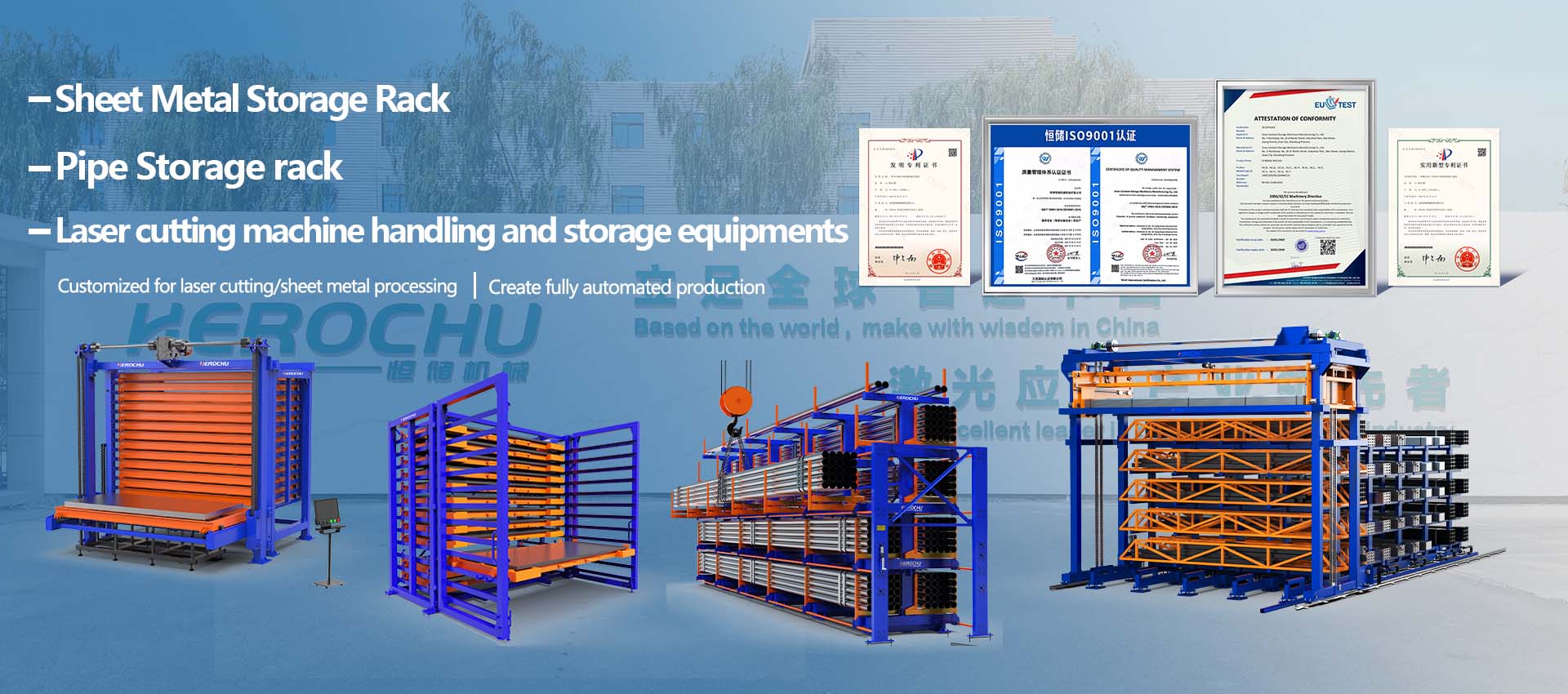
The Herochu double-tower sheet metal storage and retrieval system is an engineering solution designed to strike a deliberate balance between capital expenditure and operational throughput. In the competitive landscape of metal fabrication, investing in two independent automated towers can be prohibitively expensive and space-consuming. The Dual-Tower series addresses this by utilizing a single hoist mechanism that services both towers sequentially. This configuration effectively cuts the equipment investment by roughly one-third compared to twin independent systems, while preserving most of the retrieval speed advantages. As part of Herochu’s broader automated vertical storage system family, the Dual-Tower series shares the robust steel construction, powder coating, and screw assembly standards, but introduces a unique architectural layout optimized for high-frequency operations.
The Architecture of Efficiency
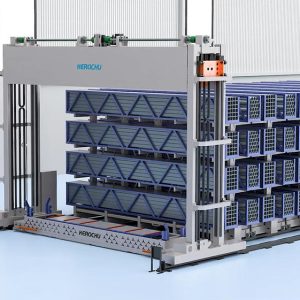
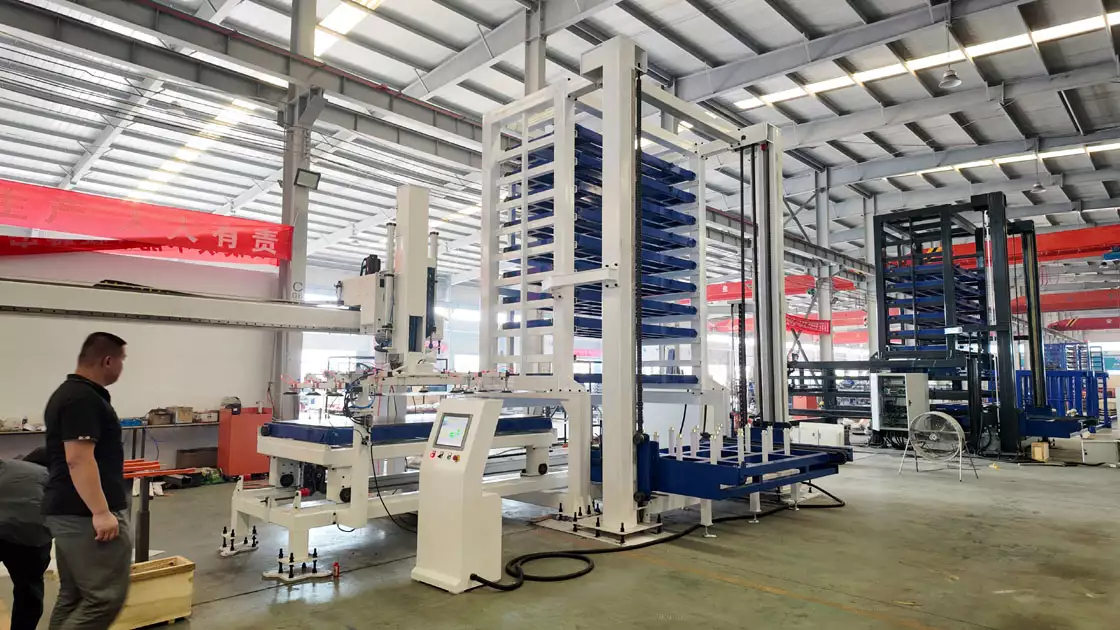
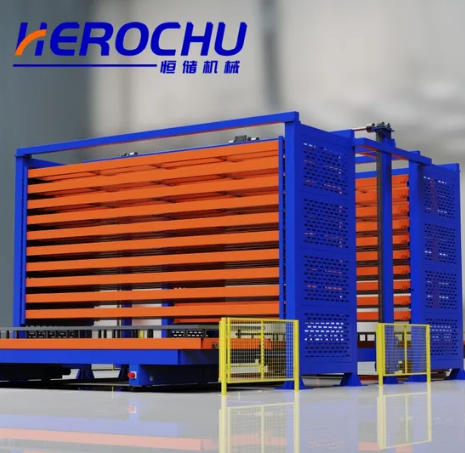
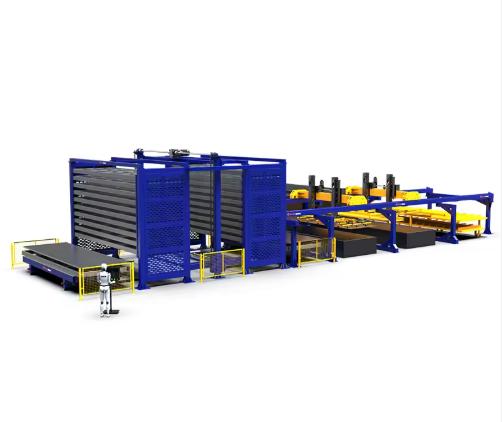
The physical layout of the Dual-Tower system is defined by two sheet metal storage towers standing side by side, connected by a shared central column that houses the lifting mechanism. This design is distinct from two separate towers placed next to each other. The front tower (positioned closer to the operator or AGV) has its lower levels dedicated to a loading station and a lifting mechanism, forming a buffer storage zone for material pallets. The rear tower contains standard storage shelves. The operational logic of this layout is what sets it apart. In a typical cycle, the hoist picks a pallet from the rear tower and transfers it to an empty buffer slot in the front tower. Simultaneously, it retrieves the next requested pallet from the front tower’s buffer. This overlapping movement, known as “shuttling,” significantly reduces the wait time associated with traditional single-tower systems where the hoist must return to the ground level after every retrieval.
The dual-tower design also facilitates a “pallet exchange” protocol. A full pallet of incoming material can be loaded into the front tower’s buffer while the hoist is busy retrieving from the rear tower. This allows for continuous operation without interrupting the production flow. The loading station is equipped with a conveyor system, which can be customized with roller or belt drives to accommodate manual forklift delivery or integration with automated guided vehicles (AGVs). The lifting mechanism within the buffer zone is typically a scissor lift or a vertical chain lift, engineered to handle the specified weight class of 3-ton or 5-ton per layer.
Key Differentiators and Performance Metrics
When comparing the Herochu double-tower sheet metal storage series to two independent single-tower systems, three primary advantages emerge. First is cost efficiency: by sharing one hoist, one control cabinet, and one safety system, the dual-tower configuration costs approximately 65% of what two separate towers would cost. Second is space utilization: the shared column design reduces the total footprint width by 400mm compared to two independent towers that require a service aisle between them. Third is energy consumption: a single hoist motor draws a peak power of 4.5 kW, whereas two separate towers would draw 9 kW during simultaneous operation, resulting in significant long-term energy savings.
While a single hoist can theoretically become a bottleneck under extreme load, Herochu mitigates this through intelligent buffer management. With three dedicated buffer slots in the front tower, the system can queue the next three most requested sheet types. In high-frequency retrieval patterns, this reduces the hoist’s travel to the rear tower by up to 60%, effectively smoothing out the workflow and maintaining high throughput.
Material Handling Intelligence
The dual-tower system inherits the sophisticated material handling intelligence of the RRW series. At the loading station, sheet separation is achieved using compressed air nozzles directed at the edge of the stack. For ultra-thin materials (less than 1mm), a magnetic separator lifts the top sheet slightly before the air knife inserts, ensuring a clean separation. The double-sheet detection system is critical for preventing damage to downstream equipment. It employs ultrasonic sensors to measure the gap between the lifted sheet and the stack. If the gap indicates a double sheet, the system automatically releases and retries. After three failed attempts, an operator is notified. This level of precision is vital for automated wareshops feeding laser cutting machines, as a double-sheet event can cause nozzle collisions or lens contamination. Herochu’s detection accuracy exceeds 99.5% for steel sheets ranging from 0.5mm to 12mm.
Durability and Integration
Durability is ensured through a rigorous powder coating process that meets ASTM D7803 standards. The process includes abrasive blasting, a zinc-rich primer, and a polyester topcoat, providing over 1000 hours of salt spray resistance. This is essential for environments with high humidity or coastal exposure. The screw assembly design allows for easy modification of shelf heights and complete relocation if necessary. Integration with production equipment is seamless, with standard interfaces including Digital I/O, RS-232, and Ethernet TCP/IP. Pre-built drivers are available for major laser cutting brands, allowing the storage system to communicate directly with the cutting software to retrieve the correct material for each job.
Conclusion
Herochu’s double-tower sheet metal storage and retrieval system offers a practical and economical entry point into automated vertical storage. By utilizing a single hoist with a buffer zone and advanced detection systems, it delivers high density and moderate to high throughput without the exorbitant cost of a dual-hoist system. It is the ideal solution for fabricators seeking to automate their material handling without overspending.