The Machine Is Ready. The Material Is Not.
On a processing line, the machine that cuts steel is rarely the bottleneck. The bottleneck is the material feeding it. Operators hunt for the right bundle, wait on a forklift, and stand by while the saw idles. An automatic rebar and steel pipe processing and storage system removes that friction by connecting storage directly to the cutting process – a CNC and robotics ready architecture that delivers the right material to the right station in under 90 seconds.
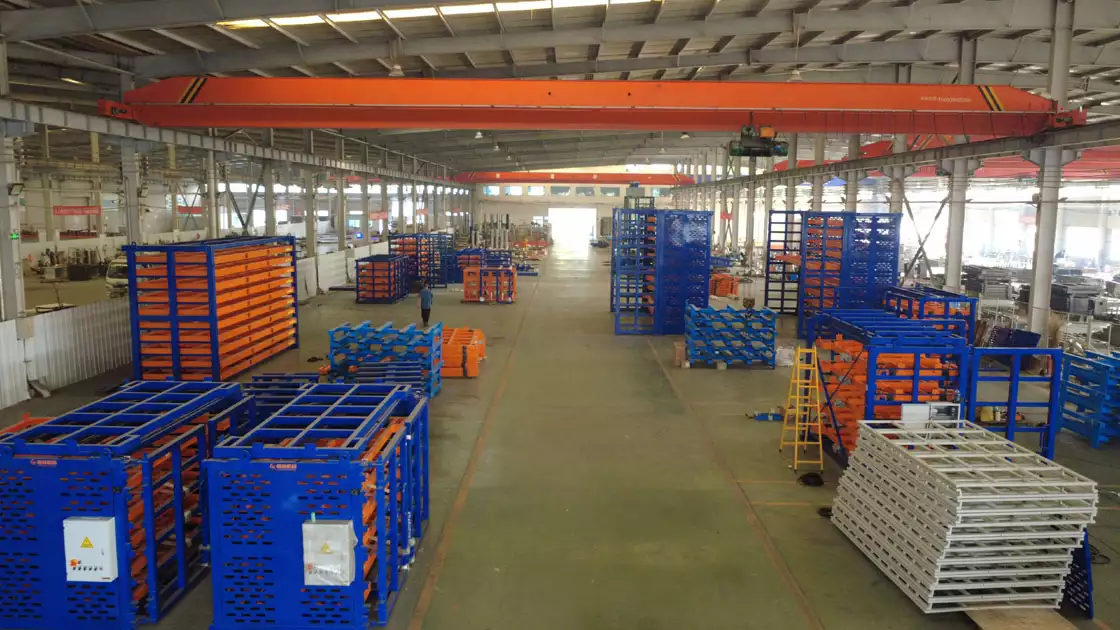
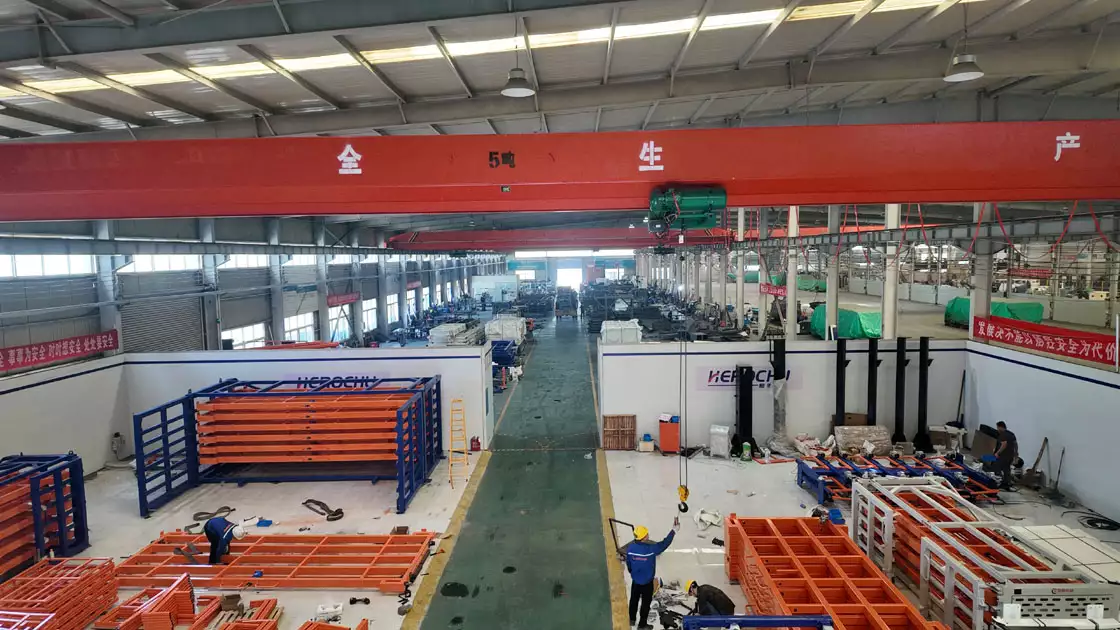
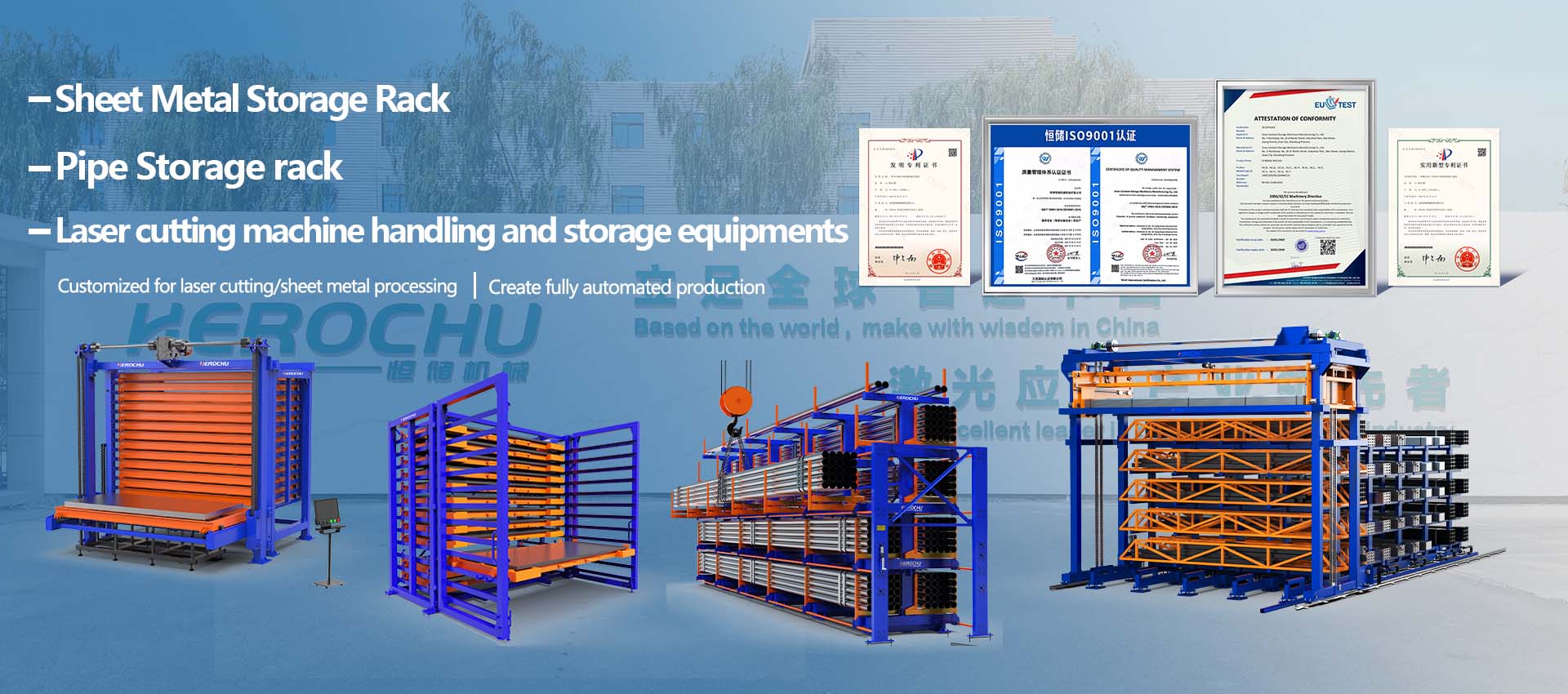
Herochu builds these systems for rebar processing plants, tube laser shops and structural fabrication lines, where long material must move from receiving to saw or laser without manual hunting.
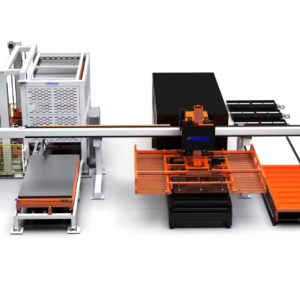
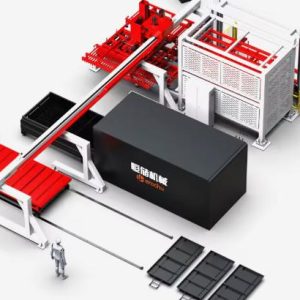
Where the System Sits in the Process
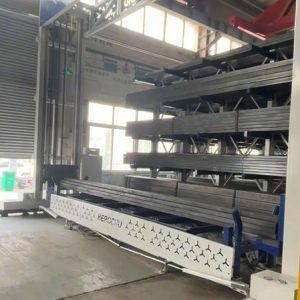
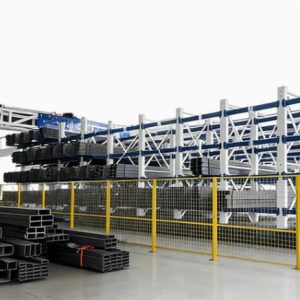
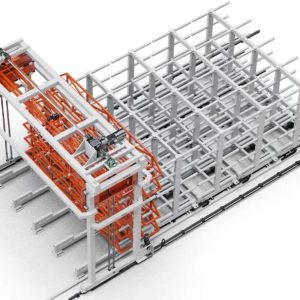
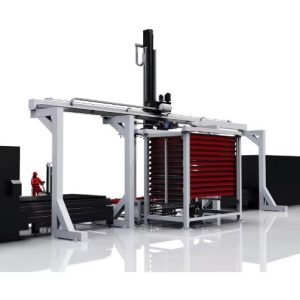
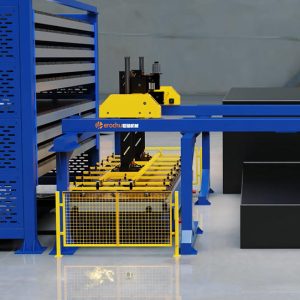
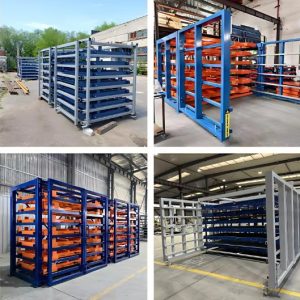
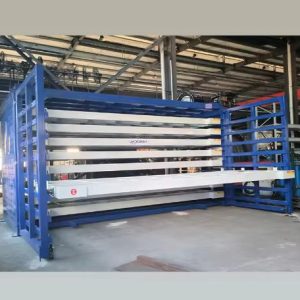
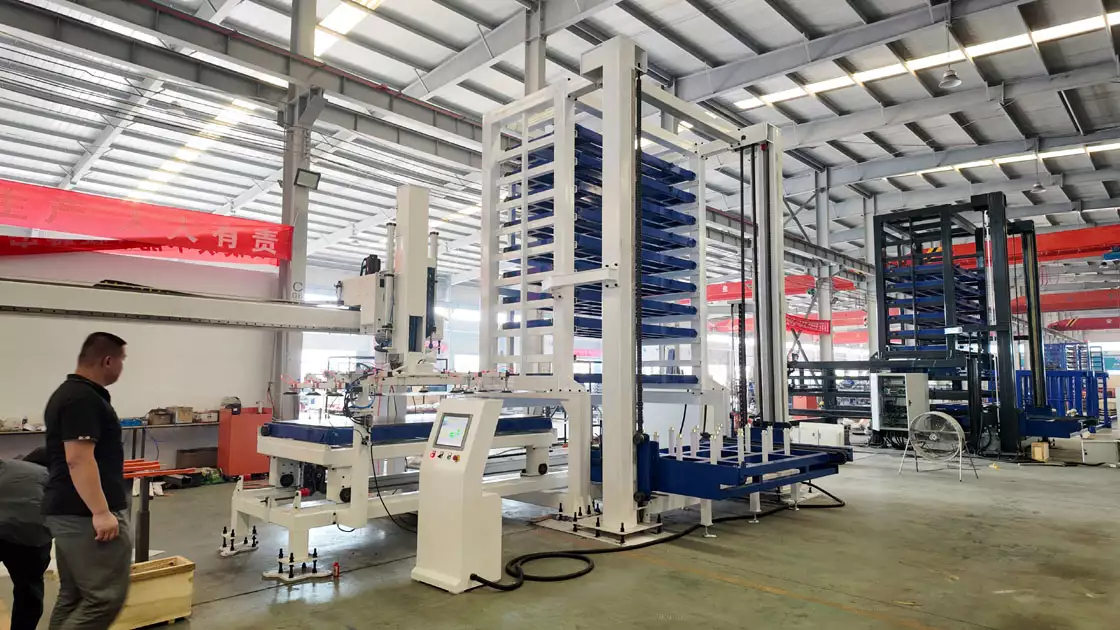
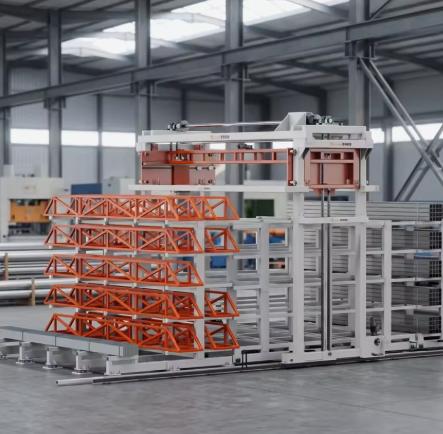
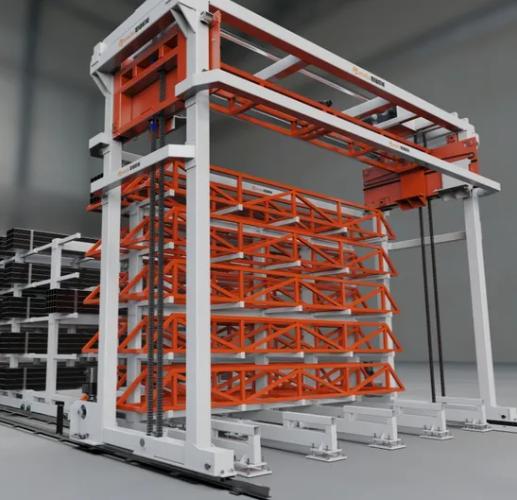
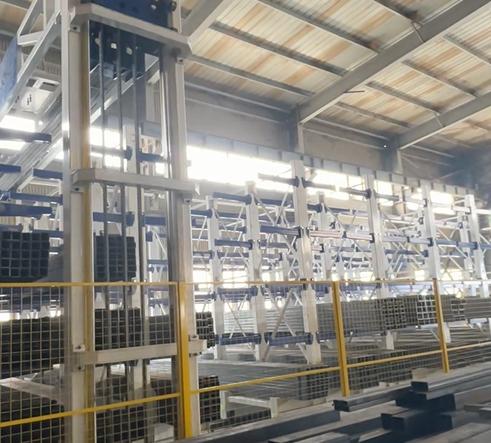
The system is positioned upstream of the cutting machines and downstream of receiving. Material is stored vertically in tower racks with independently moving shelves; a gantry unit handles storage and retrieval; PLC control links the storage system to the saws and lasers that consume the material.
Receiving – bundles are logged into the system with barcode or QR scanning.
Storage – material is placed in the vertical rack tower, with weight tracked per drawer by load cells.
Retrieval – the system receives a signal from the downstream CNC machine and delivers the required drawer.
Cutting – the operator takes the bundle at a waist-height pick point and feeds the saw or laser.
Designed Around the Cutting Schedule
The system is not an island bolted onto the line; it is laid out around the cutting schedule. Drawers holding the most frequently consumed sizes sit closest to the pick point, while slower-moving stock is stored higher in the tower. Because retrieval is automated, higher no longer means less accessible – the gantry reaches every position in the same cycle time. That lets the planner organize the tower by demand without penalizing retrieval speed.
CNC and Robotics Ready by Design
The control platform is built for integration. PLC signals from downstream CNC band saws or laser cutters trigger the shuttle, which identifies the required drawer and delivers it to the ergonomic pick point in under 90 seconds. Gantry travel speeds of 5-30 m/min, lifting speeds of 5-15 m/min and ±2 mm repeatability keep the cycle tight and the placement exact, cycle after cycle. Herochu engineers the interface around the machines already on the floor, so commissioning does not require rewriting existing CNC controls.
Because the link is signal-based, the storage system does not replace existing controls – it feeds them. That is what CNC and robotics ready means in practice: the saw keeps its own control, the storage system supplies the material, and the two communicate automatically.
Measured Gains on the Cutting Floor
Retrieval time cut from 15-20 minutes to 90 seconds per bundle.
Mispicks reduced by over 92% – the system always brings the referenced drawer.
Fewer idle machine cycles: saws and lasers run on material, not on waiting.
Live stock data: ERP/WMS sync and low-stock alerts keep purchasing ahead of consumption.
The gains compound across shifts. A single 90-second retrieval against a 20-minute manual hunt returns hours of operator time per day, and those hours go back into machine loading and program setup instead of walking. On a line that processes several dozen bundles per shift, the difference shows up in the production report on the first day the system runs.
Lights-Out Manufacturing
The same automation that removes hunting from the day shift enables unattended operation at night. With automated storage and retrieval, material feeding continues after the last operator leaves: the shuttle delivers bundles, cutting cycles run continuously, and drawers are refilled at the start of the next shift. For rebar and pipe processing, lights-out feeding is the most direct route to higher machine utilization without adding labor.
A typical overnight run shows the economics. The day shift sets the cutting program, the system verifies each drawer against the schedule, and the shuttle feeds the saw through the night. By first light, the machine has consumed the programmed stock, the inventory display has reconciled every bundle, and the floor is ready for the next program. No night crew, no forklift driver standing by, no one watching a saw run.
Safety Without Climbing or Crane Signals
Routine stock picking in traditional racking means ladders, overhead crane operations and heavy manual handling. The automatic system removes all three from everyday retrieval: material arrives at waist height, round stock is secured by retention pins during transport, and drawer load cells flag overweight or unbalanced picks before they happen.
Load cells also protect the machine and the saw. The system refuses to deliver an overweight drawer or one whose bundle is unbalanced, so the pick point never presents an unstable load. Retention pins hold round stock during travel, keeping a 6-meter bundle from shifting mid-cycle – the kind of incident that is dangerous in manual handling and simply does not occur with automated retrieval.
Models for Rebar and Pipe Processing Lines
Three standard configurations cover most processing lines. The HC-X6053-8 handles 6,000 mm bundles with five layers and eight racks; the HC-X7065-10 steps up to 7,000 mm, six layers and ten racks; the HC-X8085-10 stores 8,000 mm material in eight layers. Per-level loads run from 3,000 to 5,000 kg. Layer counts, rack counts and pipe lengths are customized to the site, and Herochu lays out the system around the actual material mix and cutting schedule.
Why Herochu
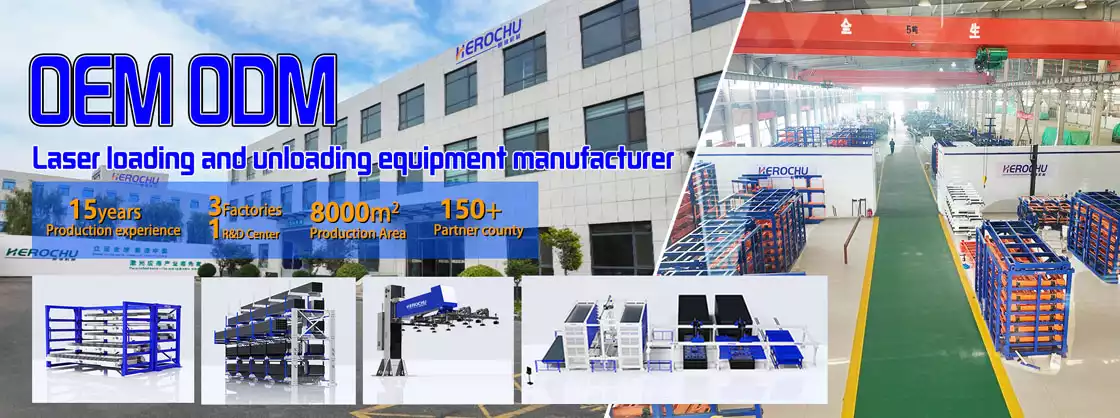
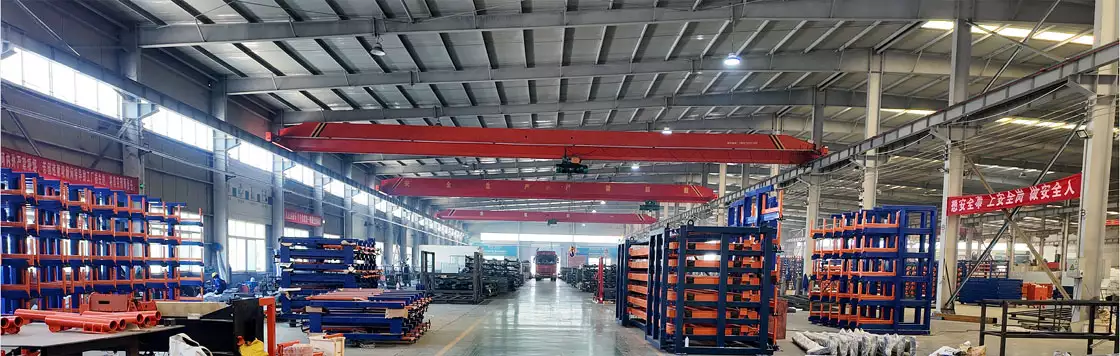
Herochu (Jinan Constant Storage Machinery Manufacturing Co., Ltd.) is a direct manufacturer with more than 15 years in storage engineering, ISO9001 certification, CE compliance and mandatory pre-shipment structural load testing. Custom design, zero MOQ and worldwide installation, commissioning and operator training come standard.
An automatic rebar and steel pipe processing and storage system is the difference between a cutting machine that waits and a cutting machine that runs. Contact Herochu with your pipe lengths, bundle weights and cutting schedule for a system layout and integration proposal.