The Pneumatic Lifting Manipulator represents a critical evolution in industrial ergonomics. While cranes and forklifts are essential for moving massive loads, they often lack the finesse required for delicate assembly tasks or the agility needed for high-speed packaging lines. The pneumatic lifting manipulator fills this void, offering a “human-centric” approach to automation that prioritizes operator health and operational fluidity.
The “Floating” Load Concept
The defining characteristic of a Pneumatic Lifting Manipulator is its ability to balance the weight of a load, effectively making it weightless to the operator. This is achieved through a system of pneumatic cylinders and pressure regulators that counterbalance the gravitational force of the object being lifted.
When an operator applies a slight upward force, the system detects the change and assists in the lift. Conversely, a slight downward force initiates a descent. This intuitive control scheme eliminates the “jarring” effect often associated with electric chain hoists, where the load can swing or jerk unexpectedly. The result is a smooth, continuous motion that allows for the precise positioning of parts, even by unskilled operators.
Design Flexibility: Pillar, Wall, and Mobile
The Pneumatic Lifting Manipulator is not a monolithic machine but a modular system that can be configured to fit the specific layout of a facility.
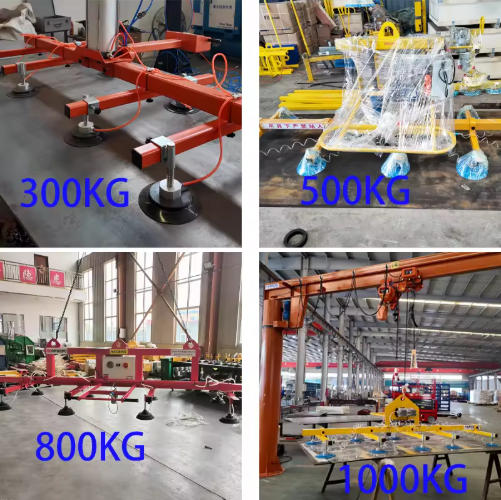
Pillar Mounted:
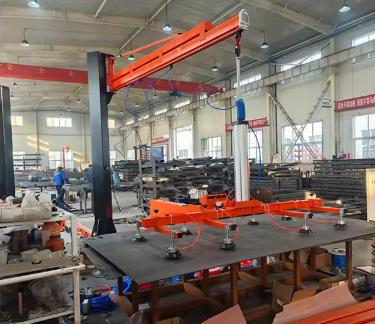
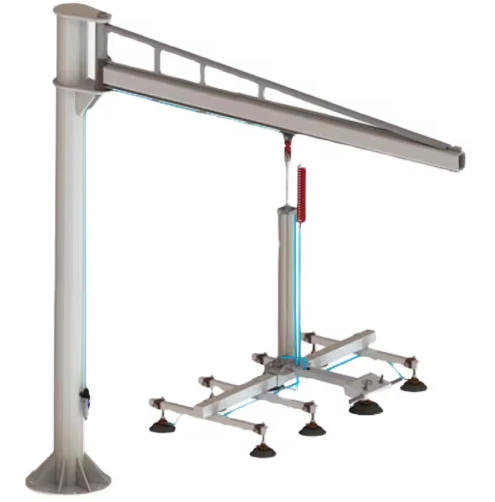
This is the most common configuration, where the manipulator is fixed to a concrete foundation. It offers the highest stability and load capacity, making it ideal for heavy-duty applications like handling engine blocks or large molds. The pillar can be equipped with a rotation stop to limit the working area if necessary.
Wall Mounted:
For facilities with limited floor space, wall-mounted manipulators provide an excellent solution. They free up valuable floor real estate while still providing a large working radius.
Mobile Platform:
Perhaps the most versatile configuration is the mobile manipulator. Mounted on a heavy-duty base with forklift pockets, these units can be moved from one workstation to another. This is particularly useful in job shops or assembly lines where the lifting requirement changes daily. A single mobile Pneumatic Lifting Manipulator can service multiple machines, offering a high return on investment.
Integration with Custom Grippers
The true power of the Pneumatic Lifting Manipulator lies in its end-of-arm tooling. The manipulator arm itself is simply a carrier; the gripper is what interacts with the product. Because these systems are designed for versatility, they can be equipped with a vast array of custom tools.
Vacuum Grippers:
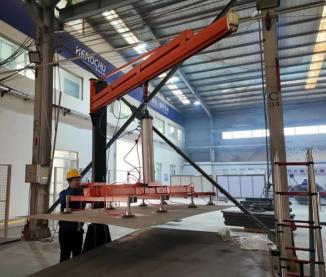
For handling glass, plastic sheets, or cardboard boxes, vacuum cups are the standard. They provide a non-marking hold and can be arranged in various patterns to accommodate different load sizes.
Mechanical Clamps:
For irregular shapes, such as castings or forgings, mechanical clamps can be used. These can be actuated pneumatically to squeeze the part securely.
Forks and Hooks:
For palletized goods or items with lifting eyes, standard fork or hook attachments can be utilized.
Specialized Tools:
In the paper industry, manipulators are used with shaft grippers to handle rolls of paper. In the automotive industry, they might use suction cups specifically shaped for windshields. The Pneumatic Lifting Manipulator is designed to interface seamlessly with these bespoke tools, providing the necessary torque absorption and balance.
Safety and Reliability
Safety is paramount in the design of the Pneumatic Lifting Manipulator. These machines are often CE-certified, meaning they meet rigorous European safety standards.
Fail-Safe Braking:
In addition to air cut-off protection, these systems often feature mechanical brakes that engage if the lifting speed exceeds a safe limit.
Ergonomic Handles:
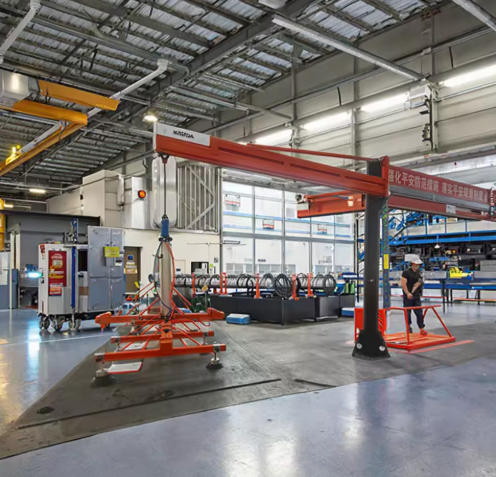
The control handles are designed to reduce fatigue. They are often adjustable and equipped with “dead man” switches, ensuring that the machine only operates when the operator is actively holding the controls.
Visual Indicators:
Pressure gauges and warning lights provide immediate feedback to the operator regarding the system’s status. If the vacuum is low or the air pressure is insufficient, the system will not allow the lift to proceed.
Conclusion
The Pneumatic Lifting Manipulator is a testament to the power of ergonomic engineering. By reducing the physical strain on workers and increasing the speed and precision of material handling, it delivers tangible benefits to any industrial operation. Whether mounted on a pillar or a mobile base, this machine is an essential tool for modern, efficient manufacturing.