In the rapidly evolving landscape of industrial automation, the need for efficient, safe, and ergonomic material handling solutions has never been greater. As manufacturing sectors strive for higher productivity and lower operational costs, the reliance on manual labor for heavy lifting is becoming obsolete. Enter the Pneumatic Manipulator, a sophisticated piece of machinery designed to bridge the gap between manual handling and full-scale automation. Originating from a philosophy that prioritizes quality, service, and operational excellence, these machines represent the pinnacle of Dutch engineering and industrial design.
The Pneumatic Manipulator is not merely a lifting device; it is a comprehensive solution for complex handling challenges. Characterized by a lightweight yet robust structure, these systems are engineered for easy disassembly and assembly, allowing for versatile deployment across various factory floors. Whether in automotive assembly, food processing, or heavy machinery manufacturing, the pneumatic manipulator stands out for its high efficiency and short handling cycles. It offers operators the unique ability to stop the load at any position within the work envelope, making the handling process easy, fast, and continuous.
The Mechanics of Pneumatic Efficiency
At the heart of every Pneumatic Manipulator lies a sophisticated balance of physics and engineering. Unlike traditional cranes that require significant force to operate, pneumatic manipulators utilize air pressure to create a “floating” effect. This design ensures that the operator only needs to exert a minimal amount of force—often between 5 to 50 Newtons—to move loads that can weigh hundreds of kilograms. This “zero gravity” sensation is achieved through precise pressure regulation and moment-absorbing technologies.
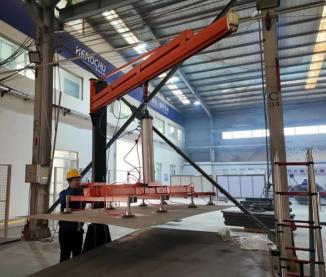
The structural integrity of these machines is paramount. Models such as the Pneumatic Cantilever Loading Manipulator often feature columns made from anodized aluminum profiles. This material choice is not arbitrary; anodized aluminum offers superior resistance to corrosion and wear, ensuring that the telescopic sections remain smooth and maintenance-free over years of rigorous use. The lightweight nature of the structure does not compromise its load-bearing capacity. On the contrary, it enhances the system’s responsiveness, allowing for rapid acceleration and deceleration without inducing dangerous sway in the load.
Furthermore, the pneumatic system is designed with redundancy and safety in mind. A critical feature is the air cut-off protection. In the event of a sudden loss of air pressure, the system is engineered to prevent the load from dropping. Instead, safety valves engage instantly, locking the system in place to protect both the operator and the workpiece. This high safety performance is complemented by anti-collision devices, which prevent the arm from over-extending or striking surrounding infrastructure.
Ergonomics and Operator Safety
The primary function of a Pneumatic Manipulator extends beyond simple logistics; it is a tool for human preservation. Repetitive strain injuries, back problems, and fatigue are common ailments in industries that rely on manual material handling. By integrating a pneumatic manipulator into the workflow, companies can virtually eliminate these risks.
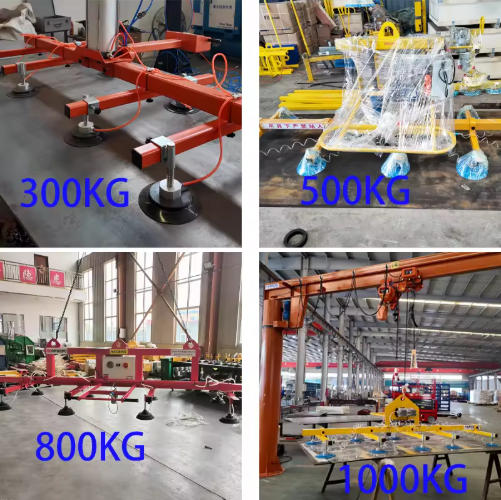
The ergonomic design allows the operator to guide the load with a single hand. This level of control is crucial when dealing with fragile or high-value items. For instance, in the assembly of automotive components or the handling of delicate electronic assemblies, the “feel” provided by the pneumatic system allows for precise positioning that electric hoists often lack. The operator becomes an extension of the machine, capable of intuitive movements that mimic natural human motion but with superhuman strength.
Moreover, the versatility of the control interface—ranging from simple handles to complex joystick configurations—ensures that the machine can be adapted to the specific dexterity requirements of the task. Whether the application requires a vertical lift, a horizontal traverse, or a complex rotation, the Pneumatic Lifting Manipulator responds instantly to the operator’s input.
Versatility in Application
One of the defining characteristics of the Pneumatic Manipulator is its wide application range. It is not a “one size fits all” solution but rather a modular platform that can be customized to fit specific industrial needs.
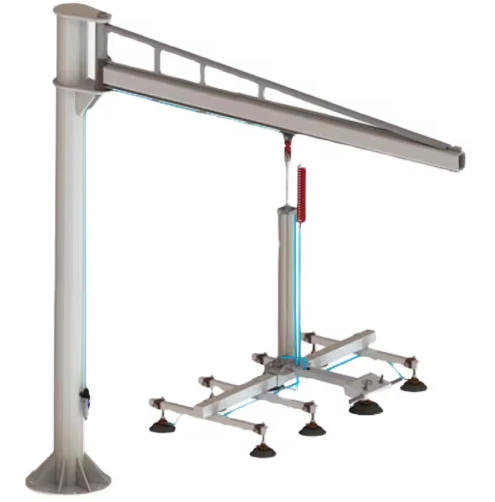
In the automotive industry, these manipulators are used to lift engines, transmissions, and body panels. The ability to rotate the load allows workers to easily access different sides of a component for assembly or inspection.
In the food and beverage sector, where hygiene is paramount, manipulators can be equipped with stainless steel components and specialized grippers that are easy to clean and resistant to harsh cleaning agents.
In warehousing and logistics, the Pneumatic Cantilever Loading Manipulator excels in loading and unloading tasks. Its ability to reach into containers or onto high shelves makes it an invaluable asset for optimizing storage density and retrieval times.
A Legacy of Quality and Service
Originating from the Netherlands, the philosophy behind these manipulators is rooted in a family business culture that prioritizes quality and service above all else. This heritage ensures that every new product is comprehensively tested in the factory before it reaches the customer. The commitment to quality is not just a marketing slogan but a rigorous operational standard.
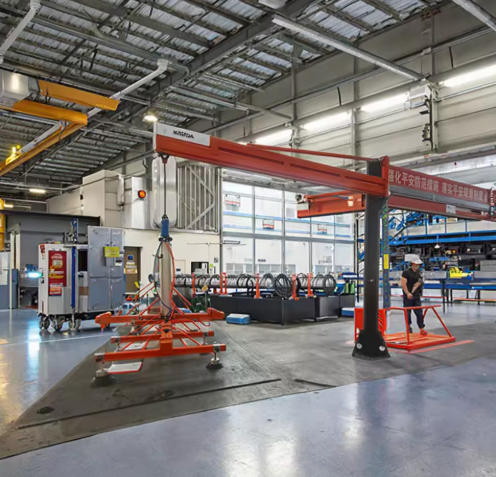
Every unit undergoes a series of stress tests to ensure it meets the highest quality standards. From the weld quality of the steel base to the responsiveness of the pneumatic valves, every component is scrutinized. Additionally, the company backs its hardware with a professional service team that is always ready to provide prompt and efficient support. This ensures that clients can always rely on their storage and handling systems to perform at their best, minimizing downtime and maximizing throughput.
Conclusion
The Pneumatic Manipulator represents a significant investment in the future of a manufacturing facility. By combining the power of pneumatics with intelligent design, it offers a solution that is efficient, safe, and incredibly versatile. Whether you are looking to increase storage space, simplify sheet handling, or store leftover materials more efficiently, the pneumatic manipulator provides a robust foundation for industrial optimization.