Meta Description: Comparing an Industrial Sheet Metal Handling Robot to a Flexible Pneumatic Lifting Manipulator for Manufacturing. Understand the ROI, application fit, and cost benefits of each to make the best choice for your fab shop.
The automation of sheet metal handling is no longer a luxury; it is a necessity for staying competitive. However, fabricators are often faced with a pivotal question: Should we invest in a full-scale Industrial Sheet Metal Handling Robot, or is a Flexible Pneumatic Lifting Manipulator for Manufacturing the smarter choice? The answer lies not in which technology is “better,” but which is “better suited” to your specific production environment.
Defining the Contenders
First, let’s clarify what we mean by these two categories.
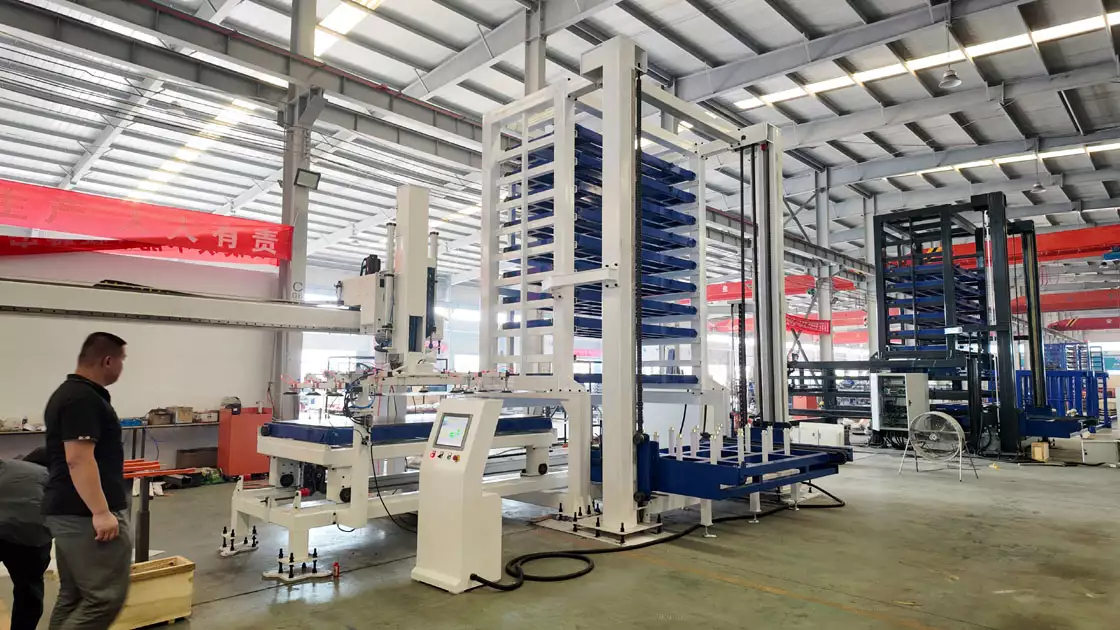
- Industrial Sheet Metal Handling Robot: Typically refers to a multi-axis servo-driven arm (often 4-axis or 6-axis) that is programmed to perform automated loading and unloading cycles. These systems are precise, fast, and ideal for high-volume, repeatable tasks. They are the cornerstone of the “lights-out” factory.
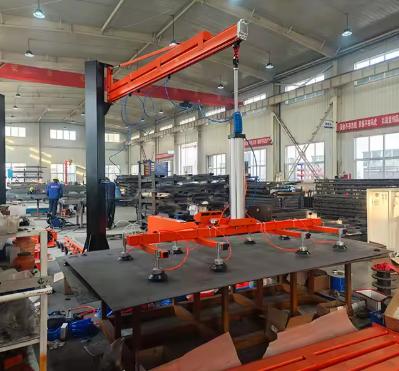
- Flexible Pneumatic Lifting Manipulator: This is an operator-assisted device that uses air power to neutralize the weight of a load. While it can have sophisticated controls and vacuum systems, it relies on a human for guidance and decision-making. It is flexible, intuitive, and ideal for job shops with high-mix, low-volume runs .
Cost Analysis and ROI
The most immediate differentiator between these two solutions is the upfront investment.
A full Industrial Sheet Metal Handling Robot with a 20kg capacity and a specific reach can represent a significant capital expenditure . When you factor in the cost of safety guarding, programming, and potential downtime during integration, the total cost can be prohibitive for small to medium enterprises (SMEs).
In contrast, a Pneumatic Manipulator offers a much lower barrier to entry. With pricing for robust, CE-certified models starting in the range of $3,698, the return on investment is often realized in 12 to 18 months . This faster ROI is achieved by immediately reducing the 2-3 man teams previously needed for manual handling down to a single operator, with no lengthy programming delays.
Application Fit: High Mix vs. High Volume
The Case for the Robot
If your operation involves running the same parts repeatedly, 24/7, the Industrial Sheet Metal Handling Robot is unmatched. It can work tirelessly, integrating with your CNC or laser cutter to load and unload with precision. As seen in high-volume stamping operations, these robots can achieve cycle times of up to 10 times per minute, with positioning accuracy of ±0.2mm . They are the ultimate tool for optimizing cycle time in a dedicated production line.
The Case for the Pneumatic Manipulator
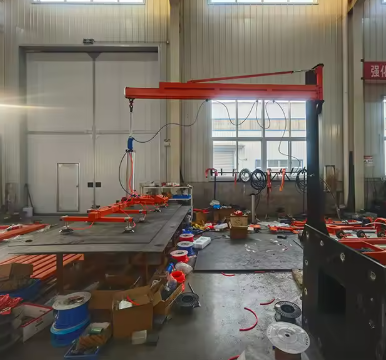
However, if your job shop handles a variety of materials—stainless steel today, aluminum tomorrow, and polycarbonate next week—a Flexible Pneumatic Lifting Manipulator for Manufacturing is more practical. There is no programming required. The operator simply changes the suction cup configuration or adjusts the vacuum pressure to suit the new material. This flexibility allows for “changeover on the fly,” which is impossible with a hard-programmed robot.
For tasks like feeding a bending machine or positioning a plate for tack welding, the human eye and intuition are still superior. The manipulator amplifies the worker’s strength, allowing them to precisely fit a part into a brake press without worrying about the weight .
Floor Space and Infrastructure
Robots, especially those with large controllers and safety fences, require significant floor space. A Pneumatic Cantilever Loading Manipulator, on the other hand, has a compact footprint. Column-mounted or wall-mounted options allow it to work in aisles and areas where a robot could never fit.
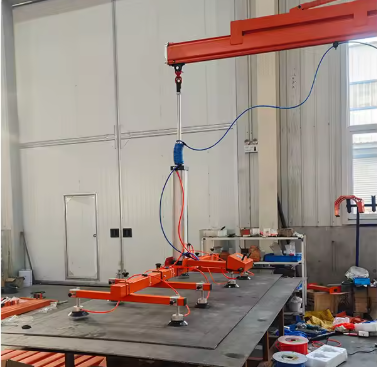
Furthermore, robots are sensitive to their environment. Dust, debris, and vibrations—common in cutting and grinding operations—can affect servo motor performance and encoder accuracy. Pneumatic systems are inherently rugged. They tolerate harsh shop floor conditions with fewer electronic components to fail, making them easier to maintain .
A Synergistic Approach: The Hybrid Factory
The most forward-thinking manufacturers are realizing they do not have to choose. They are creating hybrid systems where both technologies coexist.
In this model, the Flexible Pneumatic Lifting Manipulator acts as the “roughing” stage. It unloads raw material bundles from trucks or storage racks—a task with high variability. It then presents the material to a staging area where an Industrial Sheet Metal Handling Robot takes over for the high-speed, precise feeding of a laser cutter .
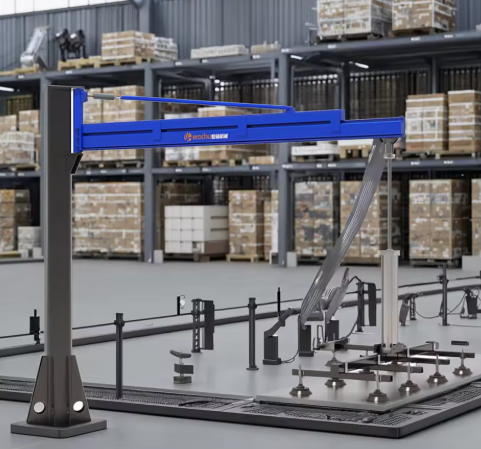
This hybrid approach maximizes the strengths of both systems: the flexibility and ruggedness of the pneumatic lifter, combined with the speed and precision of the robot. It prevents “over-automating” simple tasks and under-automating complex ones.
In conclusion, for the vast majority of general fabrication shops, the Flexible Pneumatic Lifting Manipulator offers the quickest path to improved ergonomics and efficiency. As volumes grow and processes standardize, integrating a dedicated Industrial Sheet Metal Handling Robot becomes the natural next step in the automation journey.