
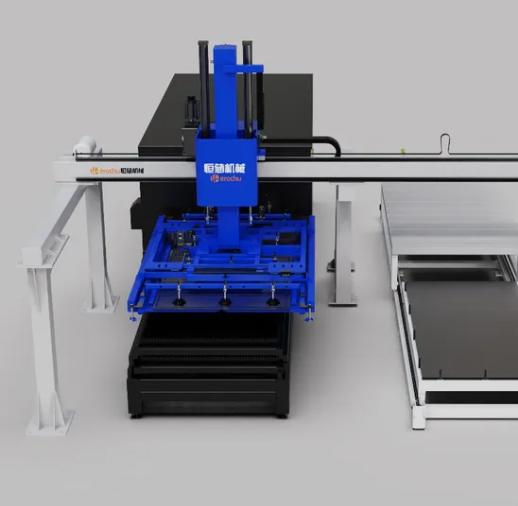
Laser Cutting Loading and Unloading System
Capital equipment purchases in metal fabrication live or die on return on investment. The Laser Cutting Loading and Unloading System from Herochu carries a price tag that gives shop owners pause—until they calculate what manual loading actually costs. This article examines the specific mechanisms through which automated loading and unloading generates financial return, beyond the generalized promise of “efficiency.”
Mechanism One: Beam-On Time Recovery
A fiber laser cutting machine represents a fixed capital cost. Whether it cuts for six hours or sixteen hours per day, the depreciation and financing charges remain the same. Manual loading consumes a significant fraction of every shift: fetching plates, aligning them, clearing skeletons, and managing the physical separation between cutting cycles. Industry observations consistently place manual exchange overhead at fifteen to twenty minutes per cycle in typical job shop conditions. Herochu’s system reduces this to under a minute for the mechanical exchange, with the raw sheet staged and ready before the cut completes. The recovered hours translate directly into additional parts shipped against the same fixed cost base.
Mechanism Two: Labor Reallocation, Not Elimination
Automation advocates sometimes promise “zero labor,” which oversimplifies reality. The Herochu system reduces the number of operators required to tend a laser cell, but more importantly, it changes what those operators do. Instead of lifting heavy plates and walking between storage racks, a single operator can supervise multiple cutting stations through the HMI, monitor material inventory, and address exceptions. The labor cost per part declines not because workers are removed, but because their time is applied to higher-value activities: programming, quality inspection, and downstream preparation.
Mechanism Three: Scrap and Rework Reduction
Manual sheet handling introduces variability. A plate misaligned by five millimeters can produce a nest of parts that fail dimensional inspection or, worse, cause a head crash that damages the nozzle and consumes hours of recovery time. Herochu’s loading system achieves ±2 mm repeatability, verified by sensors before the cutting program initiates. Double-sheet detection—through mechanical separation, air injection, and thickness verification—prevents the most common cause of catastrophic loading errors. For shops cutting expensive alloys or thick plate, the scrap avoidance alone can justify a meaningful portion of the investment.
Mechanism Four: Unattended Shift Economics
The most significant ROI lever is often the least discussed: the ability to run without an operator present. A job shop that runs two manual shifts can add a third “lights-out” shift without adding payroll. The Herochu system, integrated with adequate storage capacity, can sequence multiple jobs overnight, loading and unloading without intervention. The morning shift arrives to finished parts and a machine that has been productive since the last operator left. For shops in competitive markets where lead time wins orders, this capability changes the sales conversation.
A Realistic Payback Framework
Herochu does not publish universal payback claims, because payback depends on shift patterns, labor rates, material mix, and existing utilization. The variables that matter most:
-
Current laser utilization (if already above 80%, the beam-on time gain is smaller)
-
Manual exchange time specific to the shop’s workflow
-
Fully burdened labor cost per operator hour
-
Scrap rate attributable to handling errors
-
Value of additional capacity without building expansion
A fabricator running two shifts with utilization below 60% and three operators dedicated to laser tending will see a different payback profile than a single-shift shop with one operator and already-high utilization. Herochu provides layout planning and cycle-time analysis to ground the calculation in the customer’s actual conditions rather than generalized assumptions.
What the System Includes
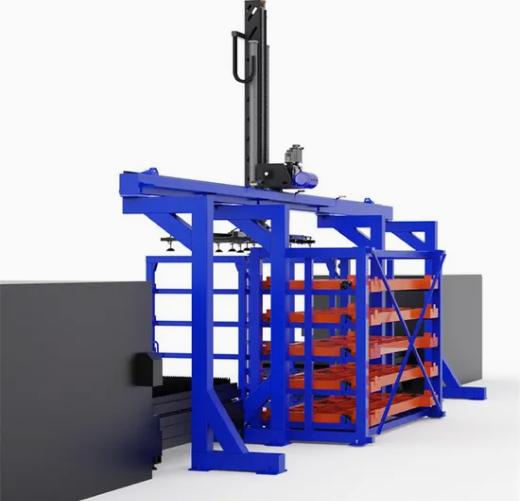
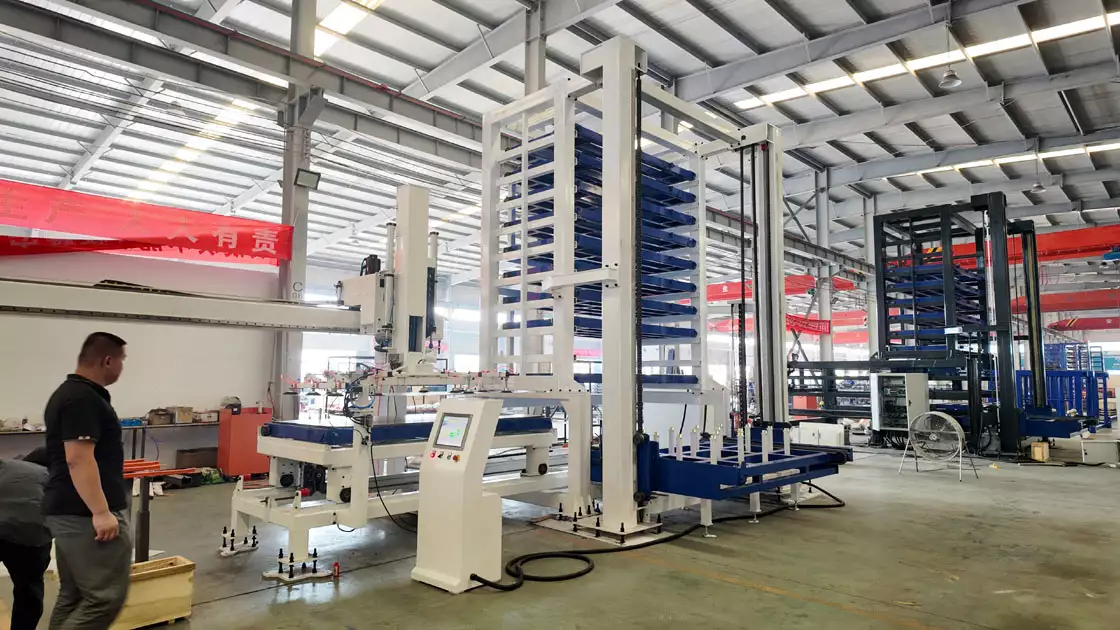
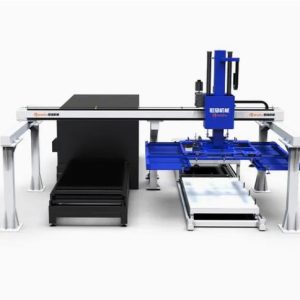
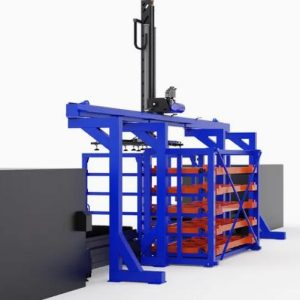
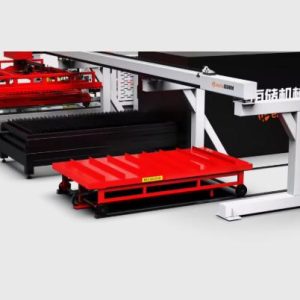
The base configuration pairs the storage tower, gantry loading arm, and discharge cart under a single PLC. Options include multi-tower configurations for higher throughput, remnant return systems, and integration with MES/ERP for automated job sequencing. The technical envelope spans sheet sizes from 3000×1500 mm to 6000×2000 mm, with load capacities up to 5,000 kg and storage depths of eight to ten layers.
Conclusion
The financial case for a Laser Cutting Loading and Unloading System rests on four pillars: recovered beam-on time, reallocated labor, reduced handling scrap, and unattended shift capacity. Herochu’s contribution is not a generic automation package but a configured system engineered against the specific constraints of the customer’s floor. For fabricators prepared to examine their actual cost structure rather than industry averages, the payback analysis typically produces a clear answer.
- Automatic Laser Material Handling & Storage Warehouse
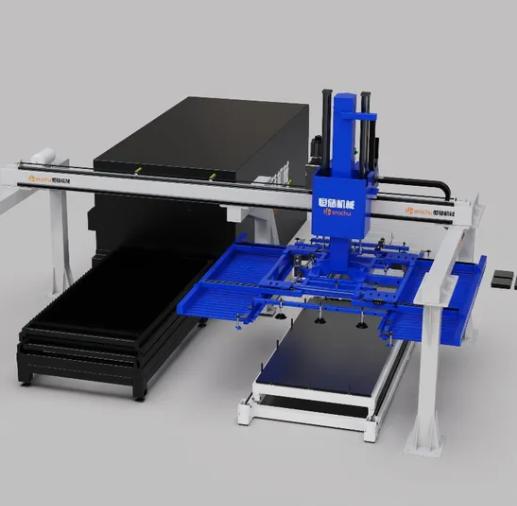
- 1-to-2 Multi-Machine Architecture: A single gantry unit can serve two vertical storage towers and two separate laser cutting beds, drastically increasing output per square meter of shop floor.
- PLC & HMI Automation: The system logs every movement, alerts operators when to replenish raw stock, and automatically selects the exact palette required for upcoming jobs.
- Precision Placement: Achieves a positioning repeatability of ±2 mm across a gantry traverse speed of 10–30 m/min, ensuring sheets land precisely where the cutting head expects them.
- Continuous Flow: Raw plate retrieval occurs in parallel while the laser completes its current cut cycle.
- Multi-Machine Synchronization: Coordinates material flow across multiple laser stations simultaneously without cross-aisle traffic or safety hazards.
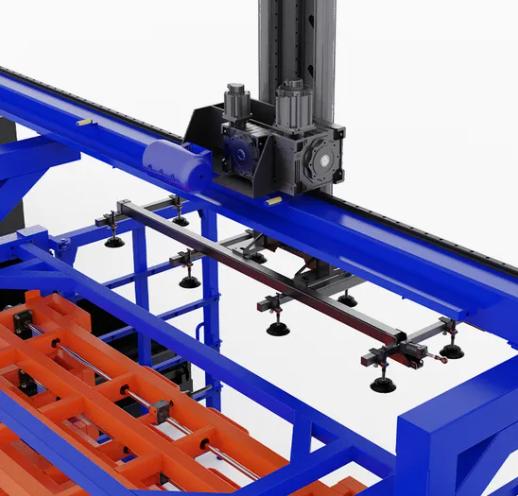
- Surface Protection: Incorporates soft-touch vacuum arrays that prevent scratches, gouges, or edge deformations on sensitive alloy surfaces.
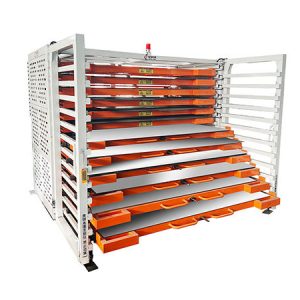
- Footprint Optimization: Reclaims up to 70% of floor space by stacking raw materials vertically in multi-tier racks (8 to 13 levels high) rather than spreading pallets horizontally across the factory floor.
- Integrated Customization: Easily retrofits into existing workshop layouts with 3-D layout planning, custom rail lengths, and tailored weight capacities.
- Z-Axis Micro-Flexing: The Z-axis manipulator applies a controlled micro-bending force to the sheet edge to break vacuum seal/oil adhesion between stacked plates.
- Compressed Air Injection: Precision nozzles inject air at 0.6–0.7 MPa between plates to separate stuck sheets.
- Thickness Sensor Verification: Mechanical and electronic thickness sensors verify single-sheet isolation before the gantry moves toward the laser bed.
- Independent Vacuum Zone Control: Each vacuum cup operates on an independent control switch. For nested sheets or plates with cutouts, inactive zones automatically shut off to maintain vacuum integrity without pressure bleed.
- Dual End-Effector Mechanism:
- Vacuum Suction Matrix: Uses gentle, distributed force with soft-compound vacuum cups for loading raw sheets without marring aluminum surfaces or tearing protective films.
- Mechanical Gripper System: Uses positive mechanical engagement to grab, drag, and unload cut skeletons and finished parts from the cutting bed without disturbing small nested parts.
- Material-Specific Recipes: Operators switch between presets on the HMI touchscreen. The PLC automatically adjusts vacuum pressure levels, Z-axis acceleration curves, and air injection parameters based on the material selected:
- For Aluminum: Lower vacuum pressure, softer contact, gentle acceleration.
- For Heavy Carbon Steel: High vacuum suction, aggressive air-blast separation, high torque lifting.
- Composite Truss Construction: Built on a dual-girder composite truss gantry structure mounted on guidance rails, delivering rigid travel over long strokes (up to 50 meters).
- Manufacturer: Herochu (Jinan Constant Storage Machinery Co., Ltd.)
- Primary Applications: Automated sheet metal handling, fiber laser cutter loading/unloading, vertical sheet storage, automated warehouse integration.
- Target Industries: Aerospace, automotive manufacturing, sheet metal fabrication shops, electrical enclosure manufacturing, logistics, heavy equipment.
- Key Operational Modes: Fully Automatic (PLC scheduled), Manual/Touchscreen Override (for custom single-sheet setups).
FAQ
Here are some frequently asked questions about our sheet metal racks and pipe storage solutions. We hope you find them helpful!
Q1: Can I request a custom size or color?
Absolutely. We offer complimentary design services and deliver efficient, tailored solutions to meet your specific requirements.
Q2: Are you a manufacturer or a distributor?
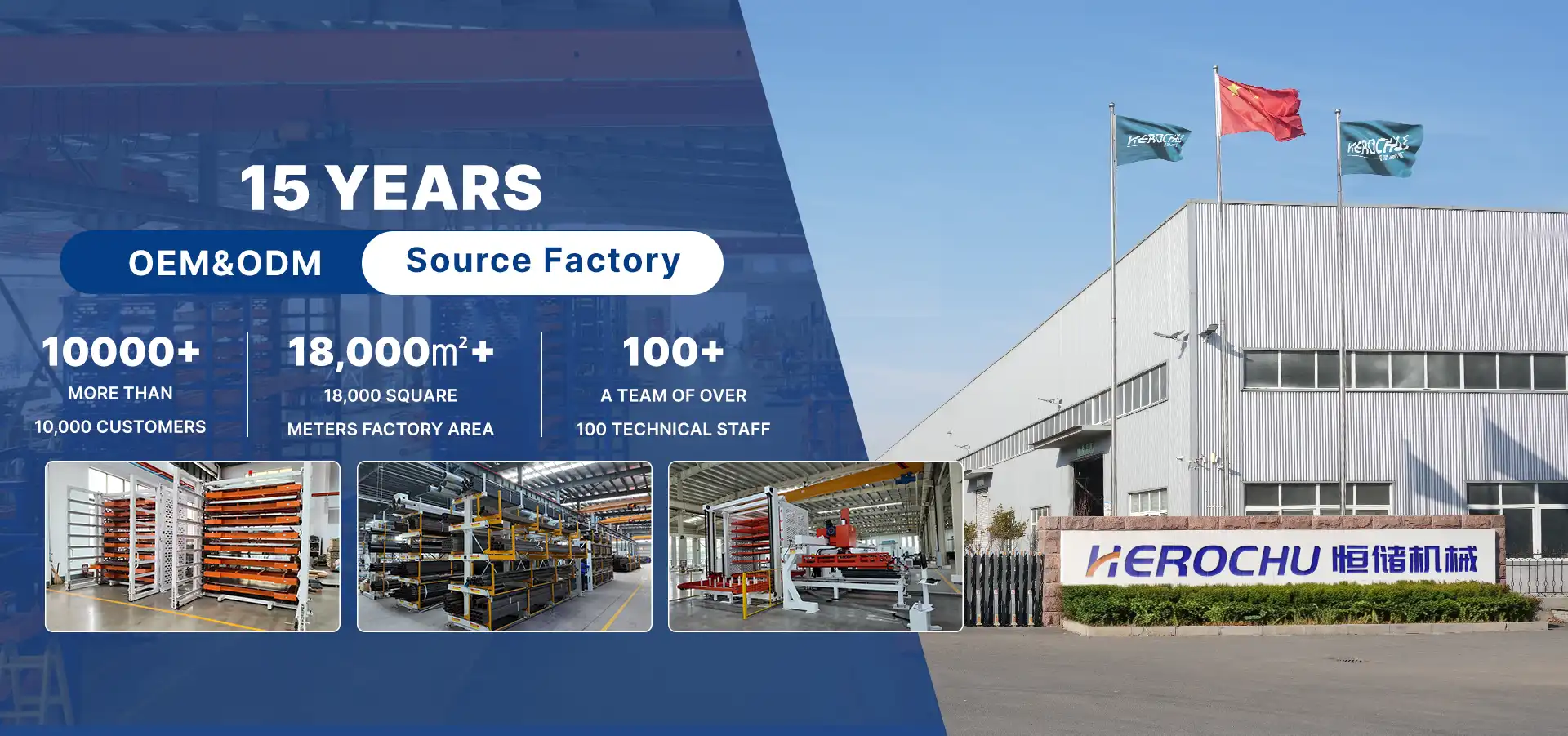
We are a direct manufacturer with over 15 years of industry experience and expertise.
Q3: Is there a minimum order quantity?
No. We welcome orders of any size, starting from a single unit.
Q4: How can I get detailed product information?
Click the “Get a Quote” button to receive product images, detailed specifications, and videos. Our team is always ready to assist.
Q5: How do I provide my storage rack requirements?
Simply share the type, dimensions, and quantity of materials you plan to store, along with any other specific needs. We will develop a professional storage solution for you. Alternatively, leave your contact details for a personalized consultation.
Q6: Do you offer automated loading systems or robotic arms?
Yes. We provide loading robotic arms and integrated loading/unloading systems tailored to your laser cutting machine’s table size and material handling method (e.g., board rack, exchange platform, or material warehouse). Contact us with your details for a customized proposal.
Q7: Do you provide on-site installation and debugging?
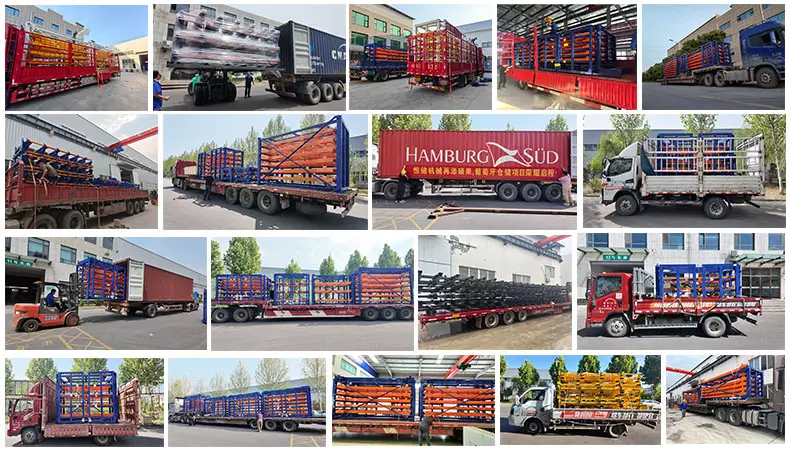
Yes. Our technicians can travel to your facility for installation and debugging, ensuring successful operation. We have served clients globally, including in the USA, South Korea, Russia, Qatar, Mexico, South Africa, Egypt, and Lebanon.
Q8: How do you ensure product quality?
Our quality assurance includes:
A team of over 40 technical engineers for professional debugging and support.
A dedicated quality control department compliant with ISO9001 standards.
CE certification for all exports.
Rigorous load testing before shipment to ensure structural safety and reliability.
Q9: Where is your factory located?
Our modern 10,000-square-meter manufacturing facility is located in Jiyang Industrial Park, Jinan, Shandong, China.
Q10: How can I evaluate your company’s capabilities?
We offer virtual video factory tours and warmly welcome on-site visits.
Q11: What does your company specialize in?
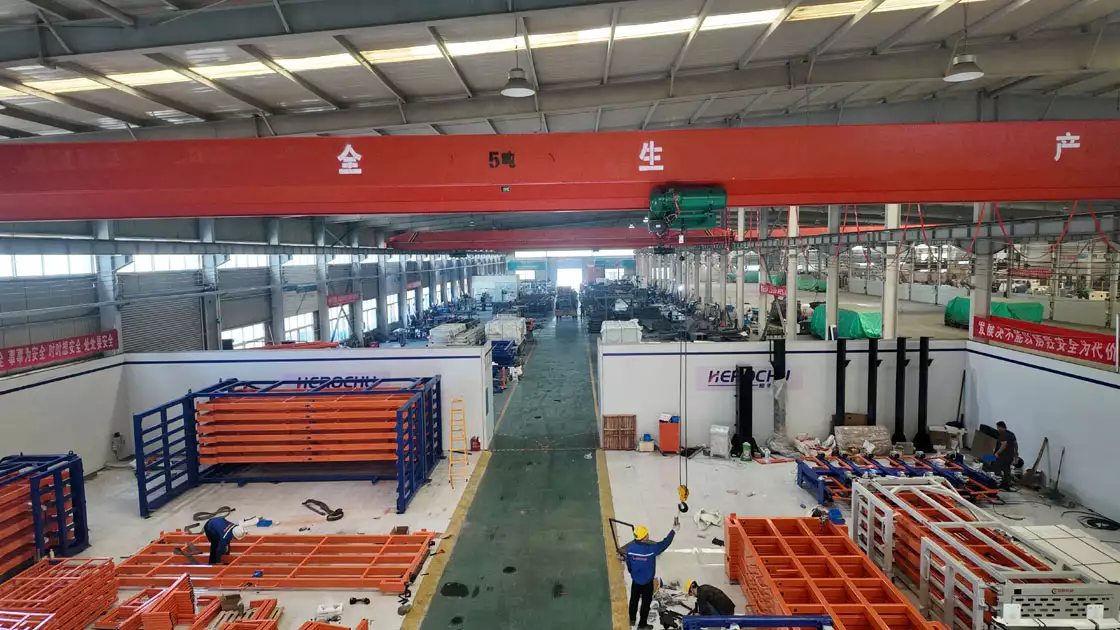
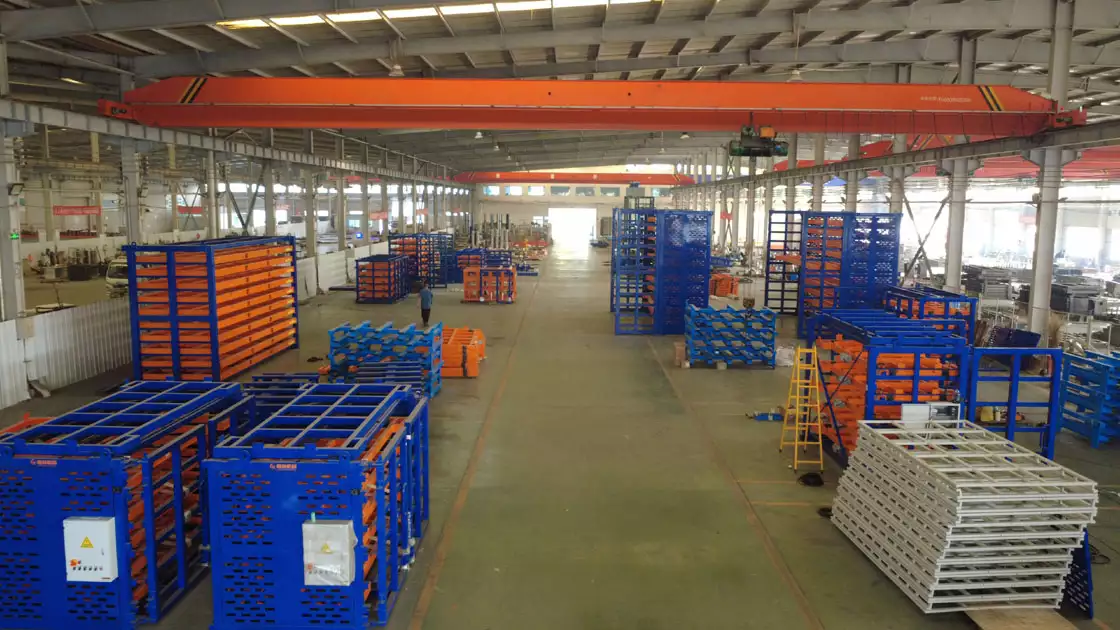
Jinan Constant Storage Machinery Manufacturing Co., Ltd. is a high-tech enterprise specializing in the R&D, production, sales, installation, and service of intelligent storage solutions. Our product range includes sheet material warehouses, drawer-style shelves, cantilever racks, servo manipulators, gantry loaders, and fully automated handling systems. Supported by a skilled technical team and advanced equipment, we are committed to delivering high-performance storage products and solutions to customers worldwide.
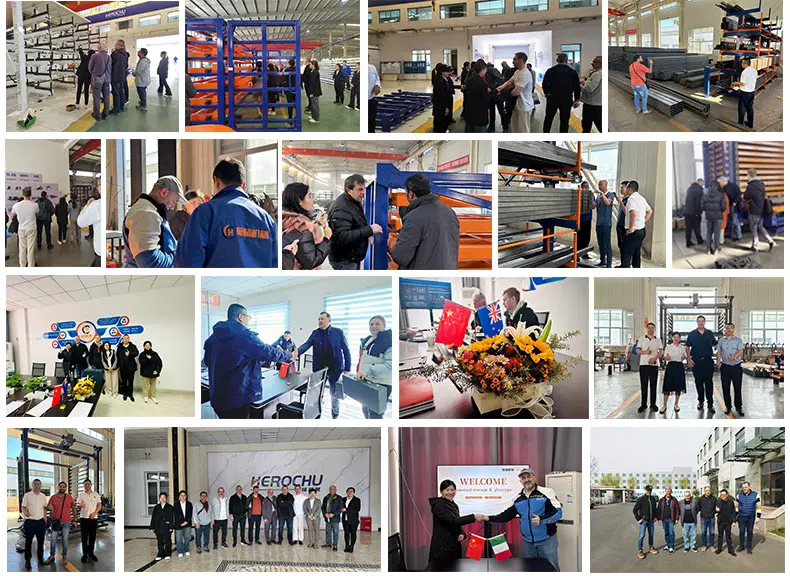
Customer visit
Herochu has always been adhering to the market-centric approach to meet customer requirements to the maximum extent, and the business philosophy of “creating brands with heart and gaining reputation with sincerity”. It provides customers with high-quality products and services with rigorous military quality, professionalism, and excellence, and has won unanimous praise in the Chinese aerospace, Chinese weapons, Chinese railways, automobile manufacturing, engineering machinery, non-ferrous metal titanium alloy and other industries.
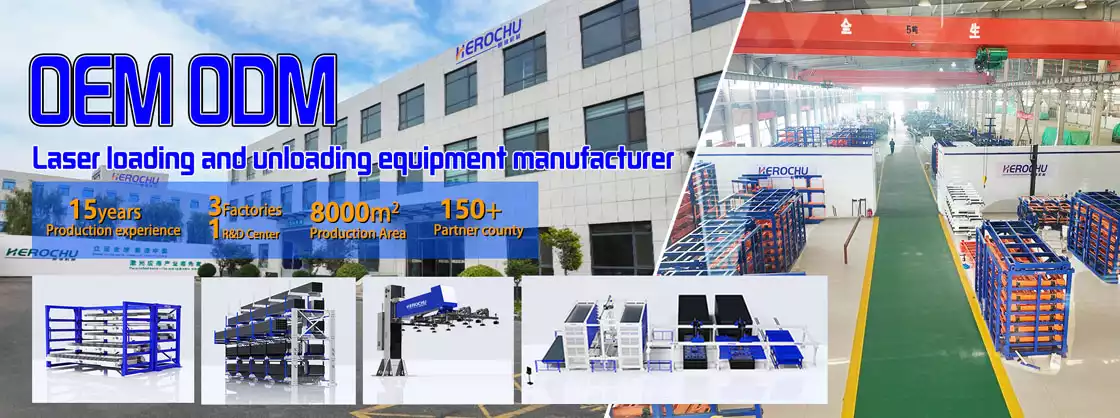
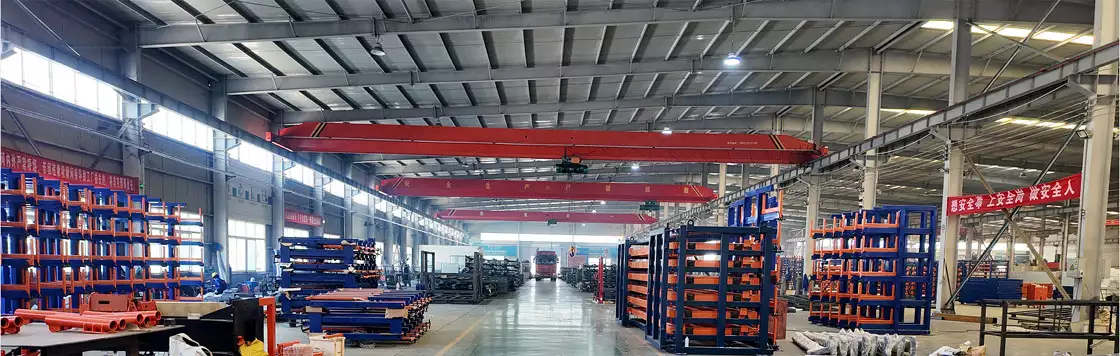
Factory

Hot Selling Machines
-
Laser Cutting Loading and Unloading System
Sheet Metal Loading System for Laser Cutting
Read moreRated 0 out of 5 -
Laser Cutting Loading and Unloading System
Laser Cutting Loading and Unloading System
Read moreRated 0 out of 5 -
Laser Cutting Loading and Unloading System
Automated Laser Cutting Loading System
Read moreRated 0 out of 5 -
Telescopic Steel Profile Storage Rack
Heavy Duty Aluminium Extrusion Profiles Rack from 4m to 7m
Read moreRated 0 out of 5 -
Pipe Storage Rack
Industrial Pipe Storage Warehouse Rack for Aluminium Tube up to 8m
Read moreRated 0 out of 5 -
Telescopic Cantilever Racking Systems
Customized Telescopic Pipe Rack for 4m Carbon Steel, Stainless Steel, Copper Bar
Read moreRated 0 out of 5 -
Heavy Duty Cantilever Racking Systems
Heavy Duty Cantilever Racking for 6M Long Pipes
Read moreRated 0 out of 5
Related products
-
Sheet Storage Rack
Customized Steel Vertical Roll Out Sheet Rack Forklift Drawer Type Warehouse Storage Racks
Read moreRated 0 out of 5

Product Categories