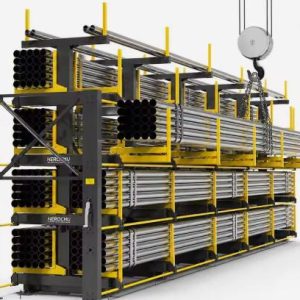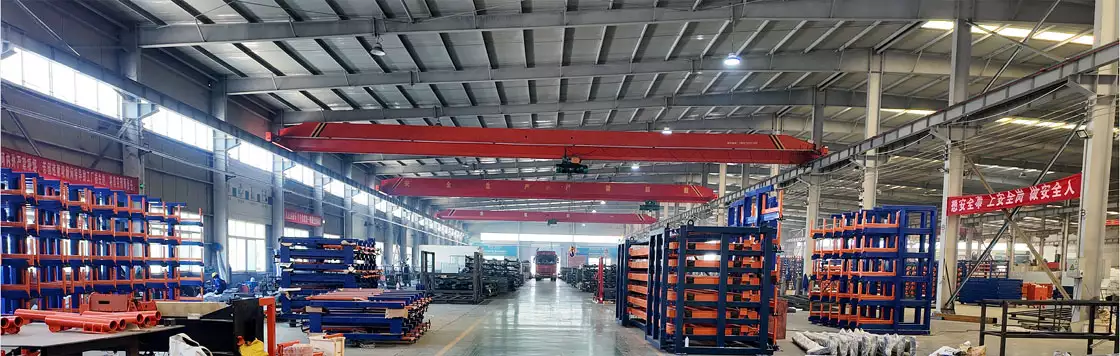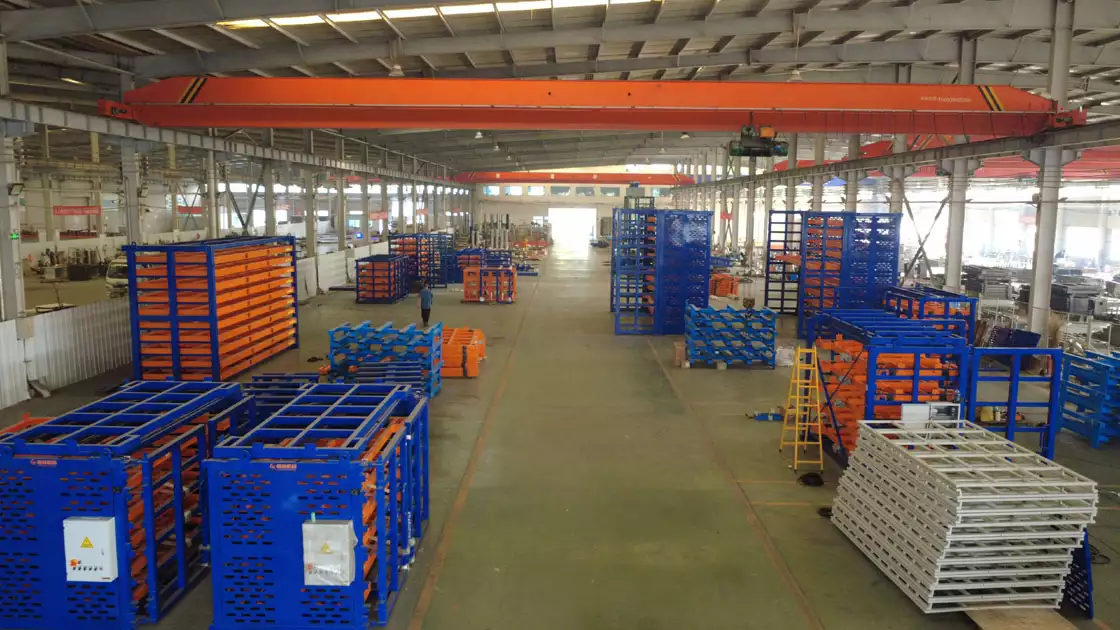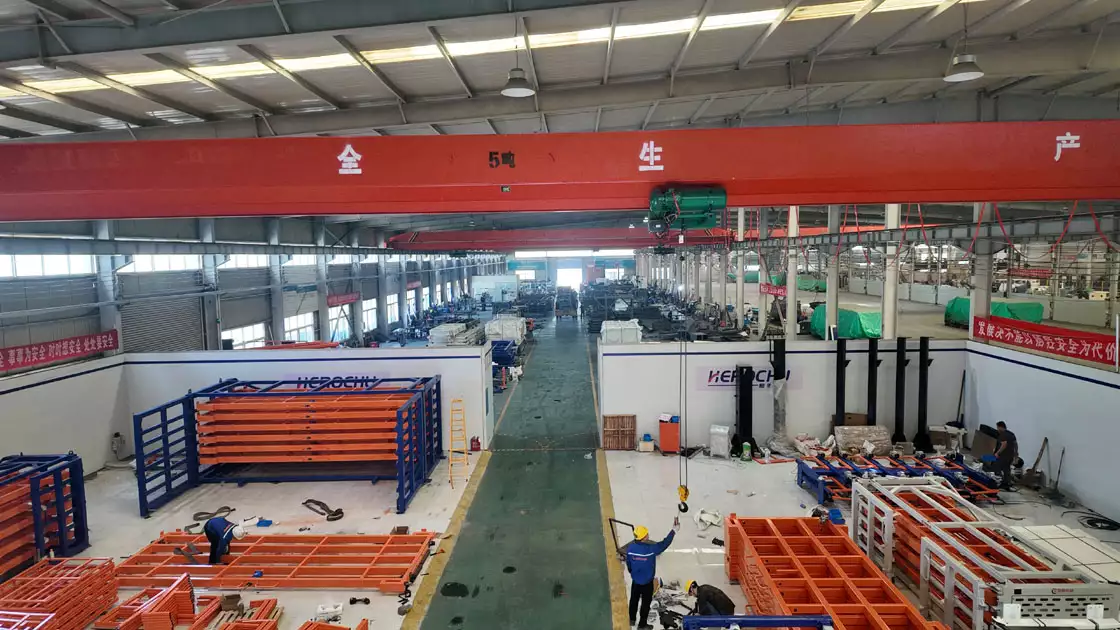
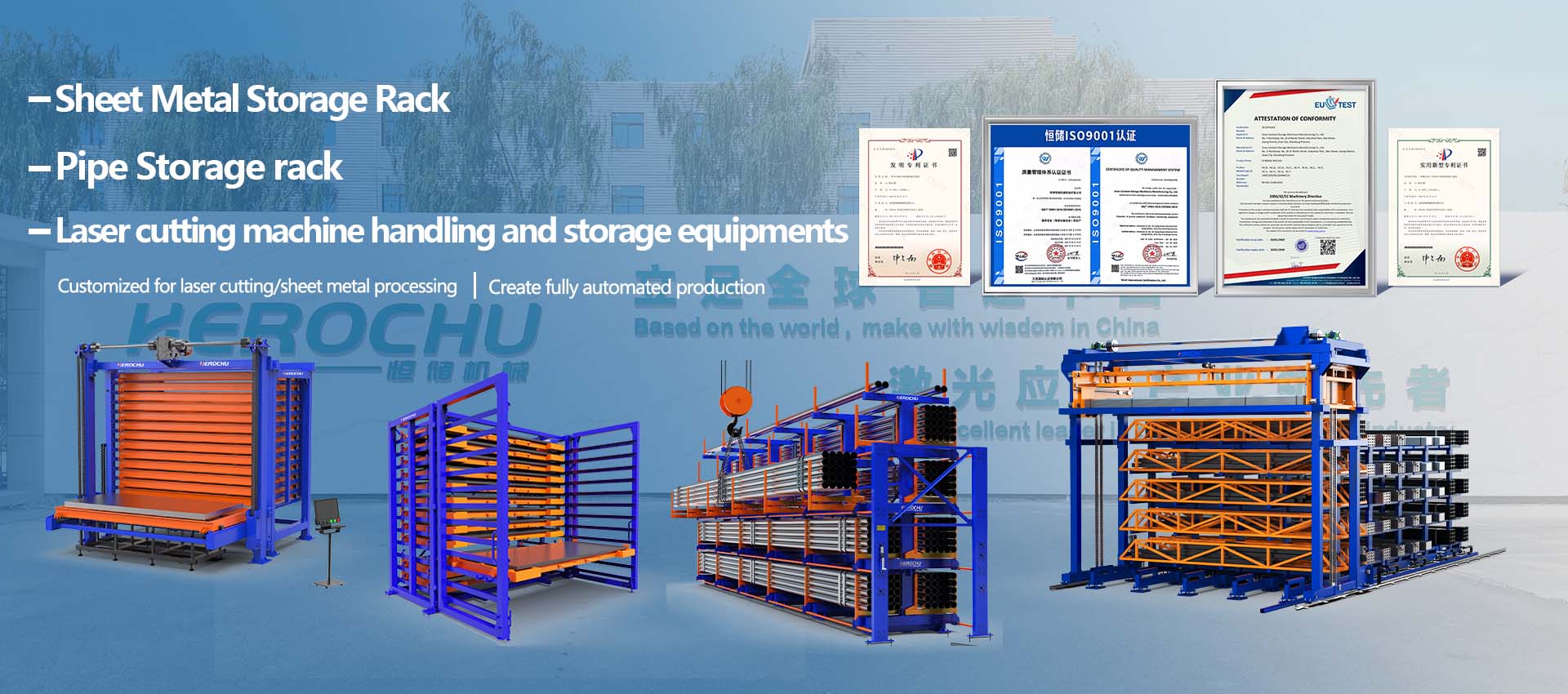
There is a fundamental difference between a shelf and an industrial storage system. A shelf holds things. An industrial storage system holds things, supports the weight of real production material day after day, survives a harsh workshop environment for a decade or more, and presents that material for retrieval without failing, sticking, or collapsing under load. Sheet metal fabrication workshops that handle heavy plate — structural steel, thick carbon steel, stainless sheets, and large-format drops from plasma and laser cutting — need the second category. A light-duty shelf loaded with a ton of steel plate is a failure waiting for a shift to happen. Herochu heavy-duty vertical roll-out scrap racks are engineered for the load profiles, duty cycles, and environmental conditions that real plate fabrication demands.
Defining Heavy-Duty in the Context of Scrap Storage
The term “heavy-duty” gets applied loosely across storage equipment marketing, so it is worth defining what it means for vertical roll-out scrap racks specifically. In the Herochu product line, heavy-duty refers to drawer layers rated for 1,000 to 2,000 kilograms of material per level — one to two tons per drawer. This is the load range that covers thick plate drops, large-format partial sheets, and structural steel remnants generated by high-power laser cutting, plasma cutting, and heavy plate processing. Below this range, the light-line series handles up to 400 kilograms per drawer, suitable for thin-gauge offcuts and small trim pieces. The heavy-duty series exists because a significant portion of sheet metal fabrication involves plate thicknesses from 10 mm to 30 mm and sheet sizes that generate individual drops weighing hundreds of kilograms each.
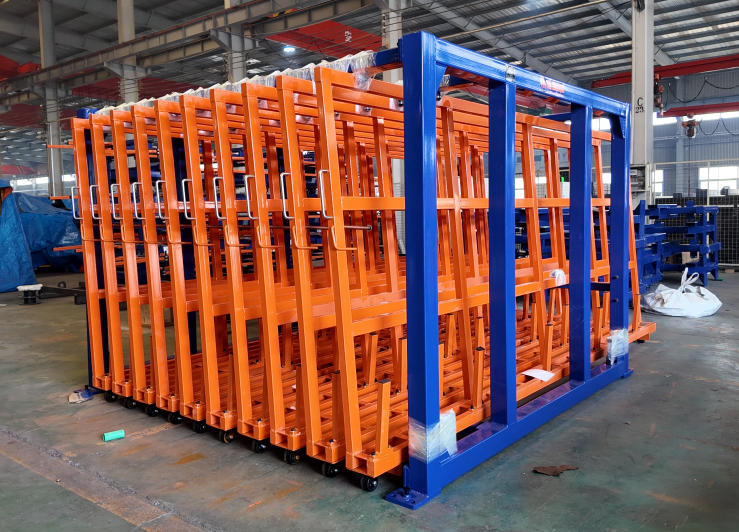
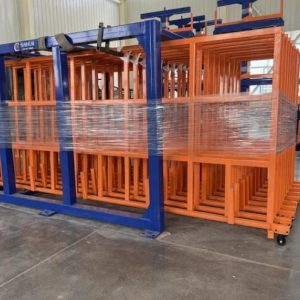
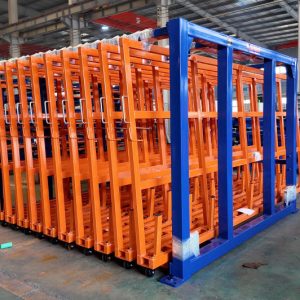
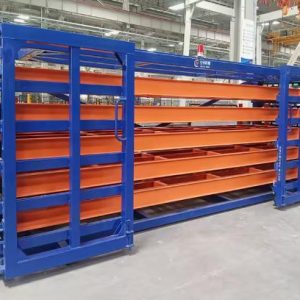
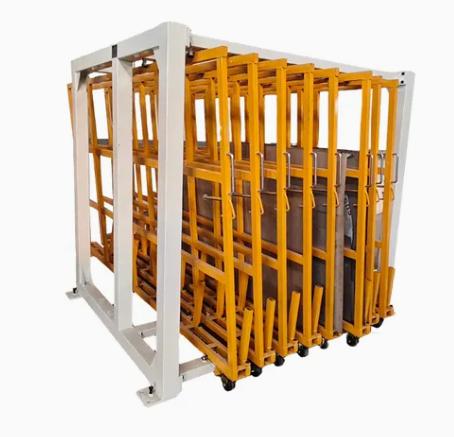
Heavy-duty also extends to the structural frame. The rack body uses heavy-gauge structural steel section, welded and bolted to maintain rigidity under repeated dynamic loading — the forces generated when a fully loaded drawer rolls out and the load center shifts beyond the frame footprint. The frame’s base structure must resist tipping forces, the guide rails must resist deflection under asymmetrical loads, and the bearing assemblies must carry the rolling friction of a ton-plus drawer without degradation. Corrosion-resistant coating protects the frame in environments where cutting dust, coolant mist, thermal cycling, and ambient humidity are constant. The frame carries a 10-year warranty; the rail system carries a 5-year warranty. These are not promotional terms — they reflect the structural margins calculated into the engineering.
The Roll-Out Mechanism Under Heavy Load
The roll-out drawer is the functional core of the system, and under heavy loads its engineering becomes critical. A drawer holding 2,000 kilograms of steel plate places substantial demands on every component in the sliding path: the rails, the bearings, the drawer body, the stops, and the frame attachment points. Herochu uses precision steel rails with heavy-duty sealed bearings tested to 30,000 open-close cycles. Sealed bearings matter because workshop environments contaminate open bearings rapidly — cutting dust, metal fines, and coolant residue ingress destroy unsealed rolling elements within months. The sealed assemblies retain lubrication and exclude contaminants, extending functional life to over a decade in typical two-shift operations.
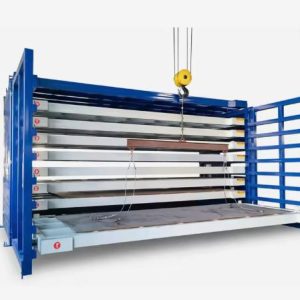
Full drawer extension is a deliberate design choice with a specific operational purpose. When a drawer extends completely, the load center moves outside the rack frame. This allows overhead lifting equipment — vacuum lifters, bridge cranes, monorail hoists, or lifting slings — to access the material from directly above without the frame obstructing the lift path. For heavy plate, this is the only safe retrieval method. A 1,500 kilogram plate cannot be manhandled out of a partially extended drawer. It must be lifted vertically, with the lifting device centered over the load. Full extension makes this possible without the operator reaching into the rack or repositioning the material within the drawer. Soft non-skid rubber floor liners inside each drawer prevent the plate from shifting during extension, and 50 mm partition heights keep individual sheets separated and stable.
Model Configuration and Capacity Planning
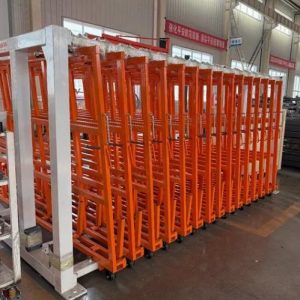
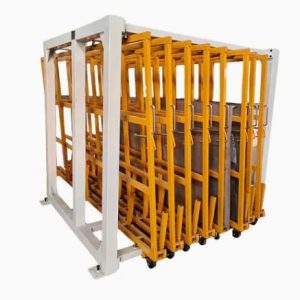
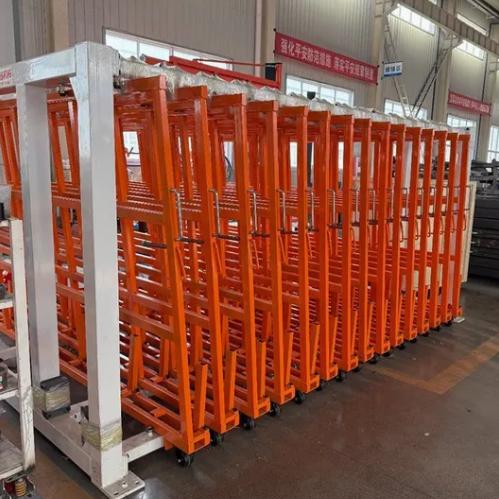
The Herochu heavy-duty vertical roll-out scrap rack line is configured around the model HC-V2010-15, which provides 15 to 20 independent pull-out levels. This level count allows the rack to function as a complete remnant library within a single footprint. A workshop can assign upper levels to lighter offcuts and smaller trims — material from 250 × 250 mm upward — and dedicate the lower, structurally stronger levels to heavy plate drops and large-format remnants up to six meters in length. Target material thickness ranges from 4 mm to 30 mm across the full drawer range.
For capacity planning, a single rack in heavy-duty configuration holds approximately 20 tons of plate material within a footprint of roughly 6 square meters. Rack dimensions typically measure 2700 × 2455 × 1200 mm. This density — over 3 tons per square meter of floor space — is what makes the system viable for workshops where floor area around the cutting machine is at a premium. Multiple racks can be placed side by side along a wall or in a row between machines, creating a high-capacity remnant storage wall that scales with workshop output without consuming additional aisle width.
Single-Operator Handling of Heavy Material
One of the most significant operational benefits of the heavy-duty roll-out design is that it allows a single worker to manage heavy plate remnants without assistance. In a horizontal stacking setup, retrieving a heavy plate from the middle of a stack requires at least two people — one to lift the plates above the target, another to extract it — plus a crane or forklift for the actual lift. The labor cost is high, the injury risk is higher, and the time consumption is measured in tens of minutes per retrieval.
The Herochu roll-out drawer changes this. The operator pulls the drawer out — the bearings carry the rolling load, so even a fully loaded 2,000 kg drawer moves smoothly on the rails. The material is presented at the drawer opening, visible and accessible. The operator attaches a vacuum lifter or sling to the target plate and lifts it out using the overhead crane. The entire sequence is a one-person operation. Retrieval time drops from 30-plus minutes to roughly 30 seconds per layer. Across a daily shift, this saves an operator approximately 75 minutes — roughly 300 hours annually per operator. For a workshop running multiple cutting machines across multiple shifts, deploying heavy-duty roll-out racks at each cutting cell creates a distributed remnant retrieval system where every operator can access sorted heavy plate independently.
Application Profile: Heavy Plate Fabrication Environments
Heavy-duty vertical roll-out scrap racks serve the fabrication sectors where plate weight and thickness make conventional storage impractical or dangerous. Structural steel manufacturing generates thick plate offcuts from beam cutting, base plate fabrication, and connection plate processing — remnants that carry high material value but are too heavy for shelving. Aerospace component fabrication handles expensive alloy offcuts — titanium, Inconel, high-grade aluminum — where every kilogram of recovered material has significant unit value and surface protection is critical. Automotive parts manufacturing processes mixed-gauge steel plates, generating drops that need sorted storage for reuse in stamping and forming. Electronics enclosure fabrication accumulates thinner-gauge sheet offcuts in high volume. For each of these applications, the heavy-duty roll-out rack provides the same combination of structural capacity, footprint efficiency, and individual piece accessibility.
The racks are also designed for the physical environment of these workshops. Laser and plasma cutting bays generate heat, dust, and vibration. Loading docks see forklift traffic and material impact. The heavy-gauge steel frame and corrosion-resistant finish tolerate these conditions without the degradation that affects lighter storage equipment. Cycle-tested bearings maintain smooth operation through years of daily drawer movement. This durability is not incidental — it is the reason the rack carries a 10-year frame warranty and why fabrication shops that deploy Herochu racks treat them as permanent production infrastructure rather than consumable storage equipment.
The Economic Case for Heavy-Duty Over Light-Duty
A common procurement mistake is selecting storage equipment based on current average load rather than maximum possible load. A workshop that occasionally processes a 20 mm plate drop weighing 1,200 kilograms cannot use a 400 kilogram-rated drawer for that material — it must either store the heavy remnant elsewhere, leave it on the floor, or cut it down to fit lighter storage. Each of these compromises defeats the purpose of organized remnant storage. The heavy-duty roll-out rack eliminates the compromise. Every remnant, regardless of weight, goes into the same system, gets the same drawer-level accessibility, and stays in the same organized inventory. For workshops serious about remnant recovery as a material cost reduction strategy, specifying heavy-duty capacity from the outset is the correct engineering decision. Herochu builds these racks for fabricators who have decided that their scrap storage should be as rugged as their production equipment.