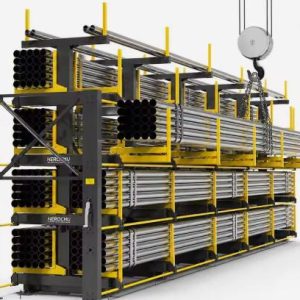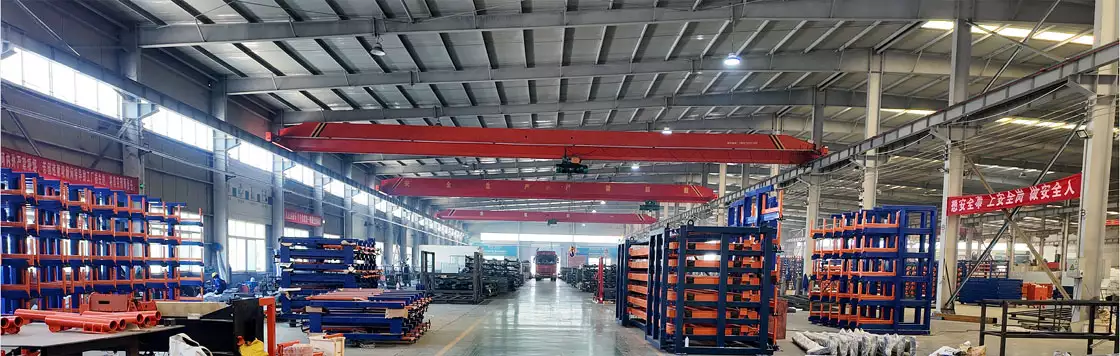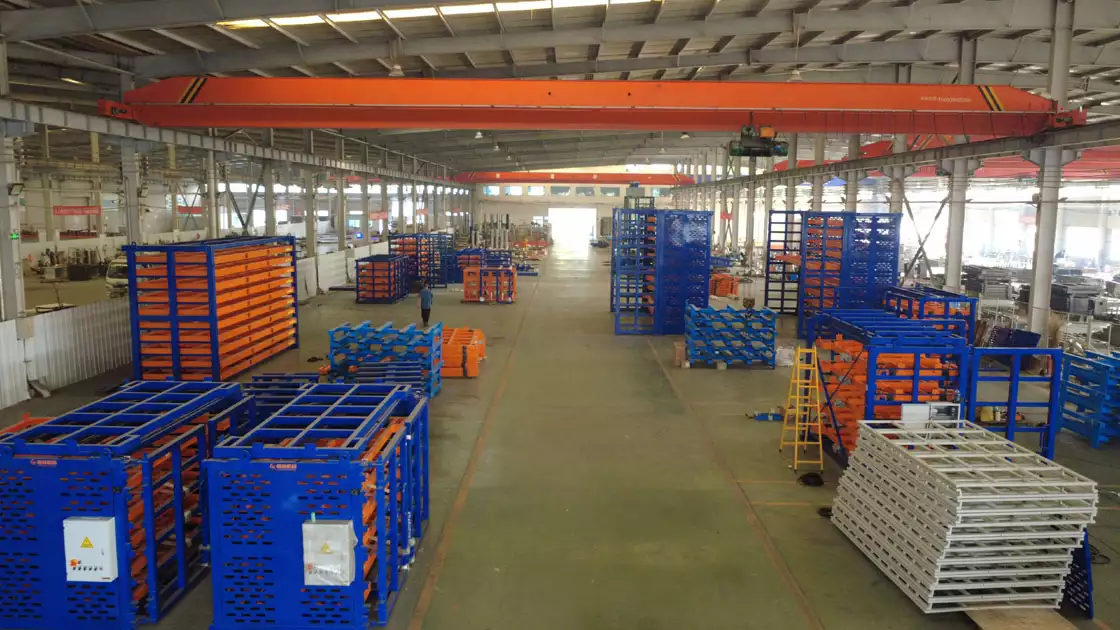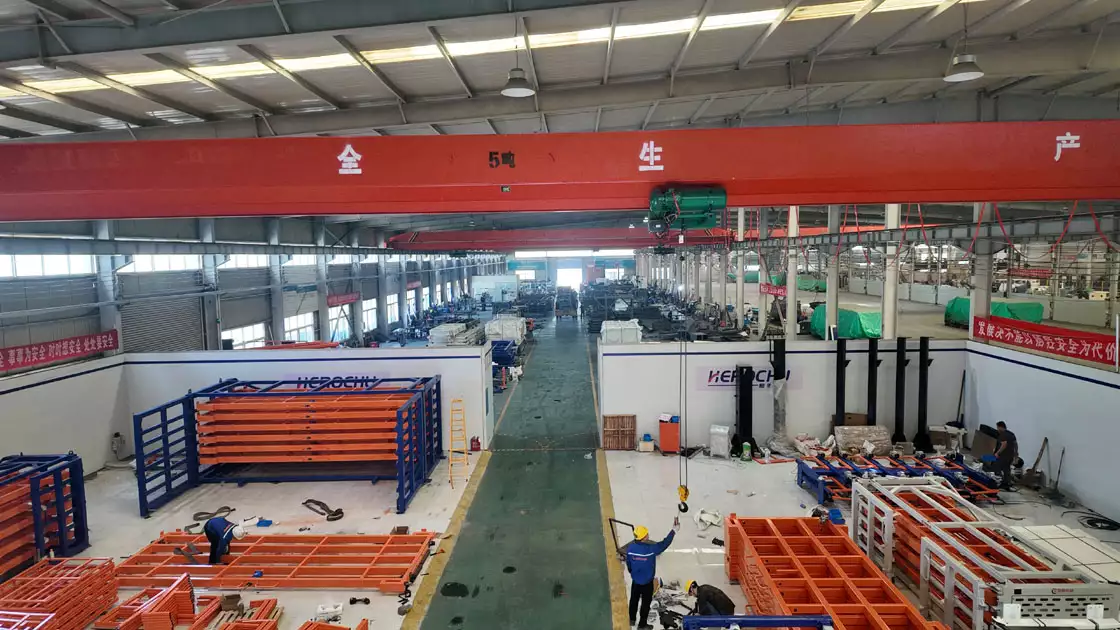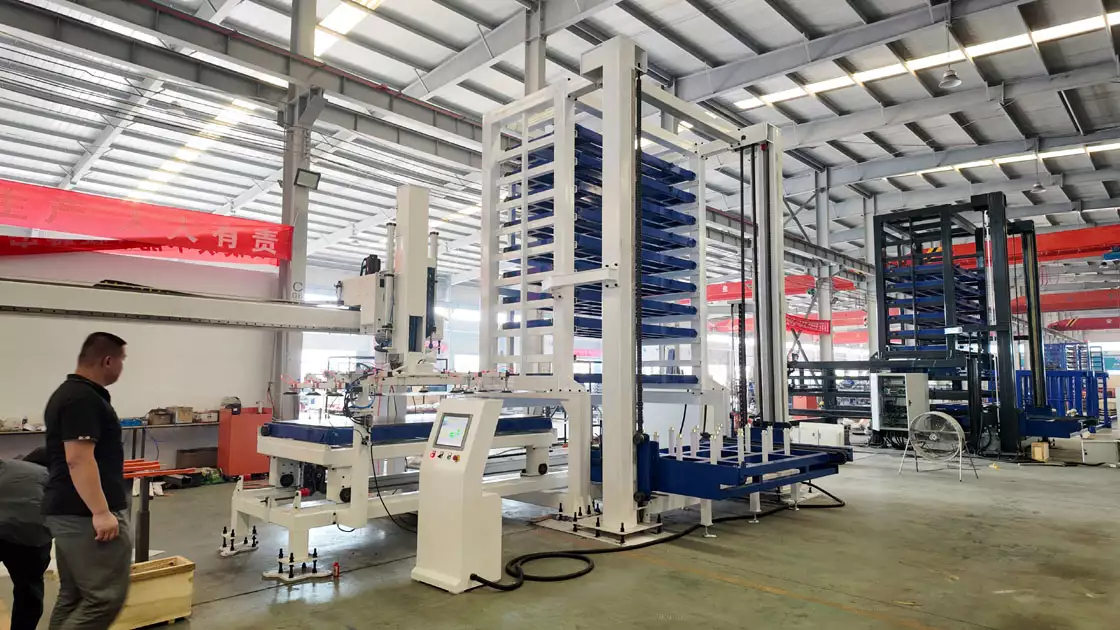
Walk into any sheet metal fabrication shop and you will find two inventories. The first is the managed one — full sheets stacked on a rack near the cutting machine, logged in the ERP system, with a known grade, thickness, and cost. The second is the invisible one: remnants. Offcuts, drop pieces, partial sheets, and trim sections scattered across pallets, carts, and floor corners. In many shops, the second inventory actually holds more cumulative material value than the first, yet it receives zero systematic management. Operators know it exists, estimators know it could be reused, but nobody can locate a specific piece without spending half an hour digging. Herochu vertical sheet metal remnants material storage racks were engineered to convert that invisible inventory into a visible, addressable asset.
Why Remnant Management Determines Fabrication Profitability
Material cost is the single largest line item on any sheet metal fabrication job. For a typical laser or plasma cutting operation, raw plate and sheet consumption can account for 50 to 65 percent of direct job cost. Any percentage of that material that gets buried and discarded represents a direct write-off. The economics are straightforward: if a workshop generates 500 kilograms of usable offcuts per week and fails to reuse them because they are inaccessible, that is half a ton of paid-for metal going to scrap value — typically a fraction of its purchase price — instead of going into jobs.
The obstacle has never been willingness. Every estimator and programmer would prefer to nest a small part onto an existing remnant rather than pull a fresh full sheet. The obstacle has always been physical access. Remnants stored flat, stacked on pallets or racks, cannot be browsed. You cannot see what is three layers down without unstacking everything above it. The labor cost of retrieval exceeds the material value of the offcut, so operators default to fresh sheet. Herochu vertical remnants storage racks solve this by making every piece individually accessible — no unstacking required, no guessing, no labor penalty for choosing a remnant over new material.
The Vertical Drawer Principle Applied to Remnant Storage
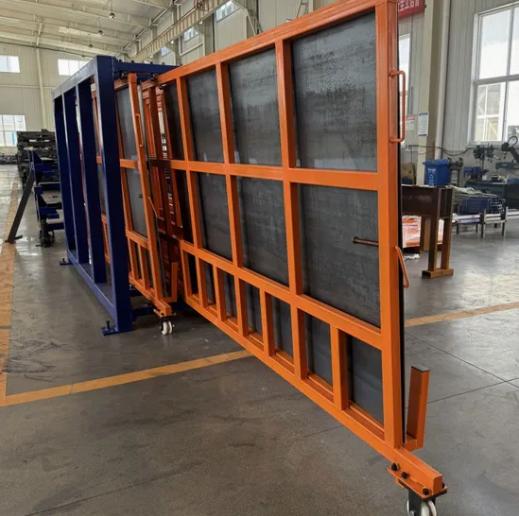
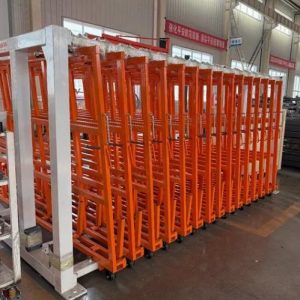
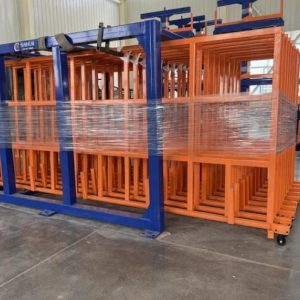
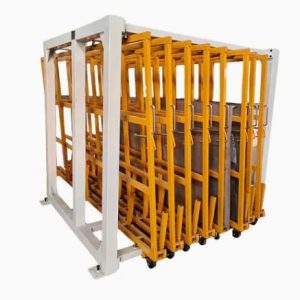
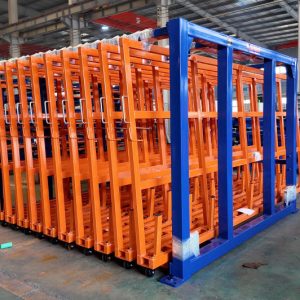
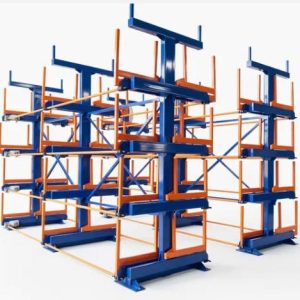
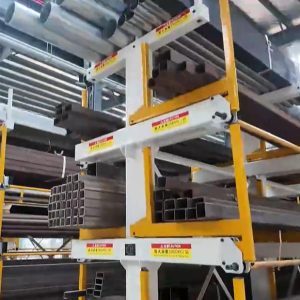
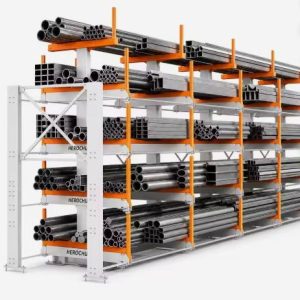
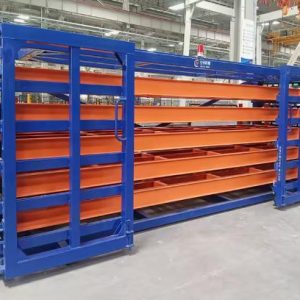
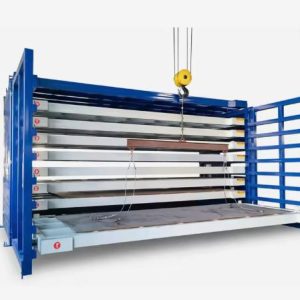
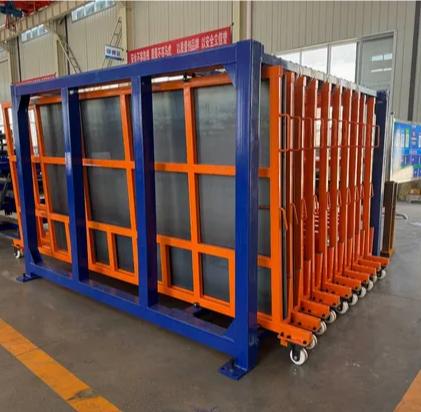
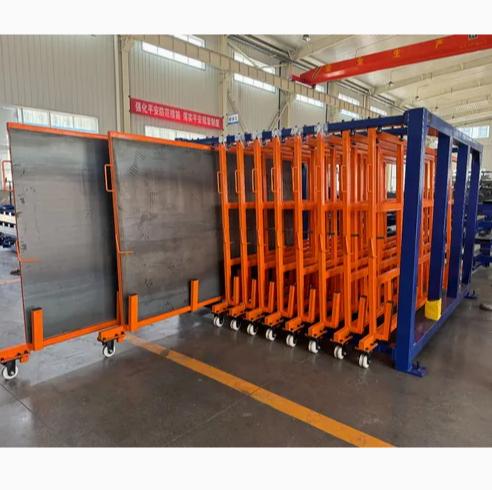
A Herochu vertical remnants rack stores sheet metal offcuts on their edge, inside independent pull-out drawers arranged in a vertical column. Each drawer becomes a dedicated location for a specific remnant category — by thickness, by grade, by size range, or by job origin. When an operator needs a particular offcut, they pull the relevant drawer. The drawer extends fully on precision rails, presenting the stored material at ergonomic height with clear visibility of every piece inside. Soft rubber floor liners protect surface finish, and 50 mm partition walls keep thin sheets from bending or sliding. The operator identifies the correct remnant, lifts it out with a vacuum lifter or by hand for lighter pieces, and returns the drawer. The entire interaction takes seconds.
This architecture turns remnant storage from an excavation problem into a filing problem. The rack is a filing cabinet for metal. Each drawer is a folder. Each remnant is a document that can be retrieved on demand without disturbing the others. For a workshop managing hundreds of offcuts across multiple material grades and thicknesses, this structural shift changes how nesting decisions get made — because the cost of choosing a remnant drops to near zero.
Load Capacity and Structural Design for Real Workshop Loads
Remnants are not lightweight. A partial sheet of 10 mm carbon steel measuring 1500 × 800 mm weighs over 90 kilograms. A thick plate drop from a 20 mm sheet can weigh several hundred kilograms. A remnants storage rack that cannot handle these loads is worse than useless — it creates a false sense of organization while failing structurally under real workshop conditions. Herochu builds two capacity tiers to match actual material profiles.
The light-line series handles up to 400 kilograms per drawer, covering thin-gauge offcuts, small trim pieces, and lighter alloy remnants. The industrial heavy-duty series handles 1,000 to 2,000 kilograms per layer, designed for thick plate drops, large-format partial sheets, and heavy structural steel remnants. The model HC-V2010-15 provides 15 to 20 independent pull-out levels, allowing a single rack to hold a full spectrum of remnant sizes and weights — small trims at 250 × 250 mm in upper drawers, large drops up to six meters in the lower heavy-gauge levels. The bearing assemblies carry sealed lubrication and are cycle-tested to 30,000 operations. The frame uses heavy-gauge structural steel with corrosion-resistant coating, rated for 24/7 industrial environments where cutting dust, thermal cycling, and humidity are constant. A 10-year frame warranty and 5-year rail warranty back the structural design.
Footprint Efficiency and Workshop Layout Strategy
Space is the constraint that shapes every fabrication shop layout. The area around the cutting machine — the loading bay, the offload table, the raw sheet storage — determines how efficiently material flows through the cell. Remnant storage competes with all of these for the same premium floor space. Horizontal storage loses this competition decisively. A pallet of flat-stacked remnants holding two tons might occupy five square meters. A Herochu vertical remnants rack holding 20 tons occupies roughly six square meters. The density advantage is ten to one, and the accessibility advantage is infinite — every piece in the vertical rack is retrievable; most pieces in the horizontal stack are not.
Typical rack dimensions — 2700 × 2455 × 1200 mm — allow deployment in locations that horizontal storage cannot use: narrow aisles between machines, corner spaces at the end of cutting bays, the dead zone between a laser cutter and the shop wall. By placing a Herochu rack directly beside the cutting machine offload station, the workflow absorbs remnant sorting into the unloading routine. The operator places each offcut into a drawer as it comes off the table, sorted by grade and thickness, and the remnant is immediately cataloged by location without any separate handling step. This eliminates the secondary transport and delayed sorting that cause most remnant management breakdowns.
Material Protection and Surface Quality Preservation
Surface damage is one of the most common reasons that otherwise usable remnants get downgraded to scrap. When flat sheets are stacked directly on each other, several failure modes occur. Abrasion during stacking and unstacking scratches the top surface. Trapped moisture between plates causes oxidation staining, particularly on carbon steel. Pressure from heavy plates stacked above thinner sheets causes bending and warp, especially in gauges below 6 mm. Edge-to-edge contact dents corners and sheared edges. Each of these defects reduces the remnant’s usability for visible or precision parts, forcing it into lower-value applications or outright scrap.
The Herochu vertical drawer system addresses each failure mode. Soft non-skid rubber liners on each drawer floor cushion the sheet and prevent sliding. The 50 mm partition walls keep sheets from making direct contact with adjacent pieces, eliminating edge-to-edge denting. Vertical orientation means no sheet bears the weight of plates stacked above it — each remnant sits independently in its own drawer, load-path isolated from every other piece. The drawer’s sealed operation protects contents from ambient cutting dust and coolant mist when closed. For workshops processing stainless steel, aluminum, and coated sheets where surface quality directly determines part value, this level of protection is not optional — it is the difference between a reusable remnant and a damaged one.
From Remnant Chaos to Controlled Inventory
The transition from disorganized remnants to controlled inventory happens when two conditions are met: every piece has a known location, and every piece is accessible without a labor penalty. Herochu vertical sheet metal remnants material storage racks satisfy both conditions by design. The result is a fabrication shop where estimators can confidently nest small jobs onto existing offcuts, where operators retrieve specific remnants in under a minute, where material recovery rates climb and raw sheet procurement drops, and where the production floor stays clear, safe, and navigable. For workshops that have accepted remnant chaos as an unavoidable cost of doing business, the Herochu vertical rack is the equipment that proves it was never unavoidable — just unaddressed.