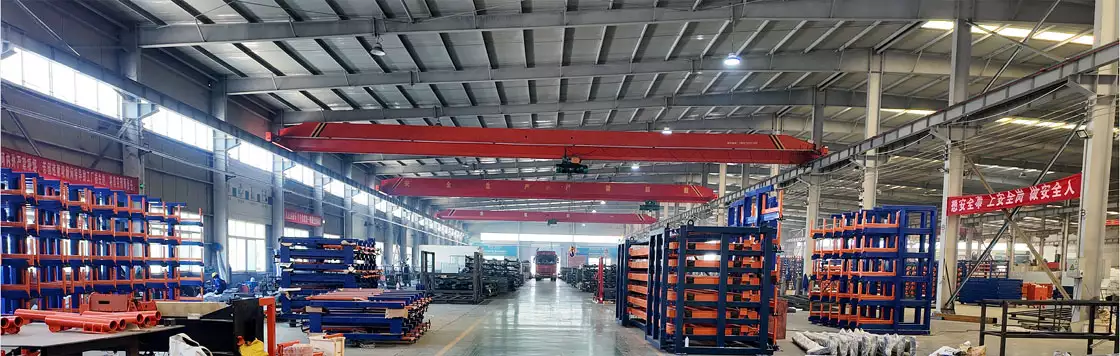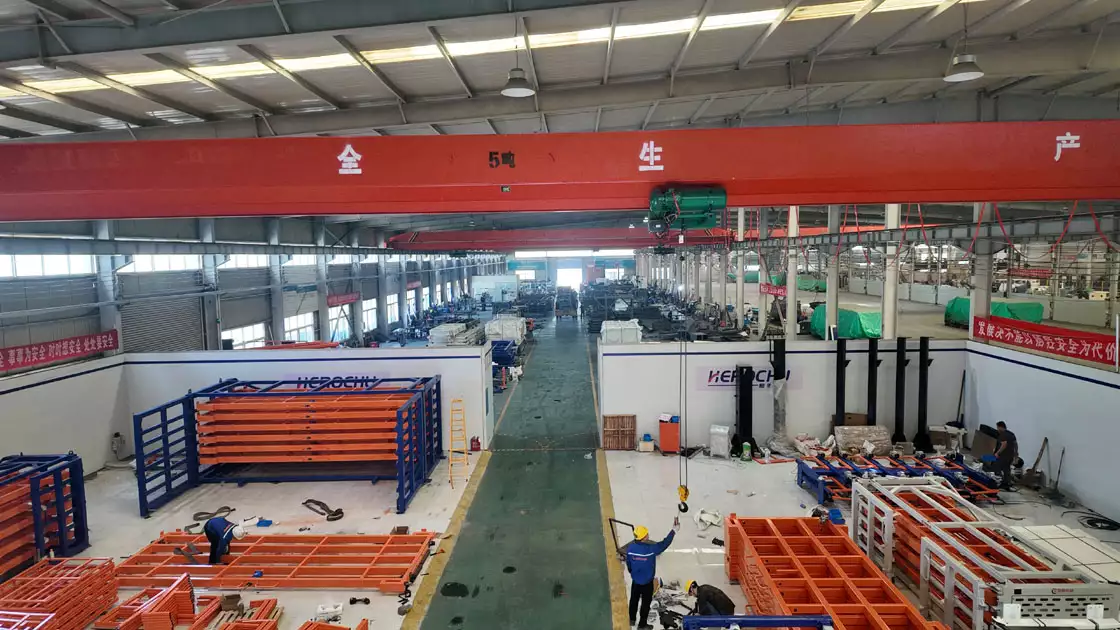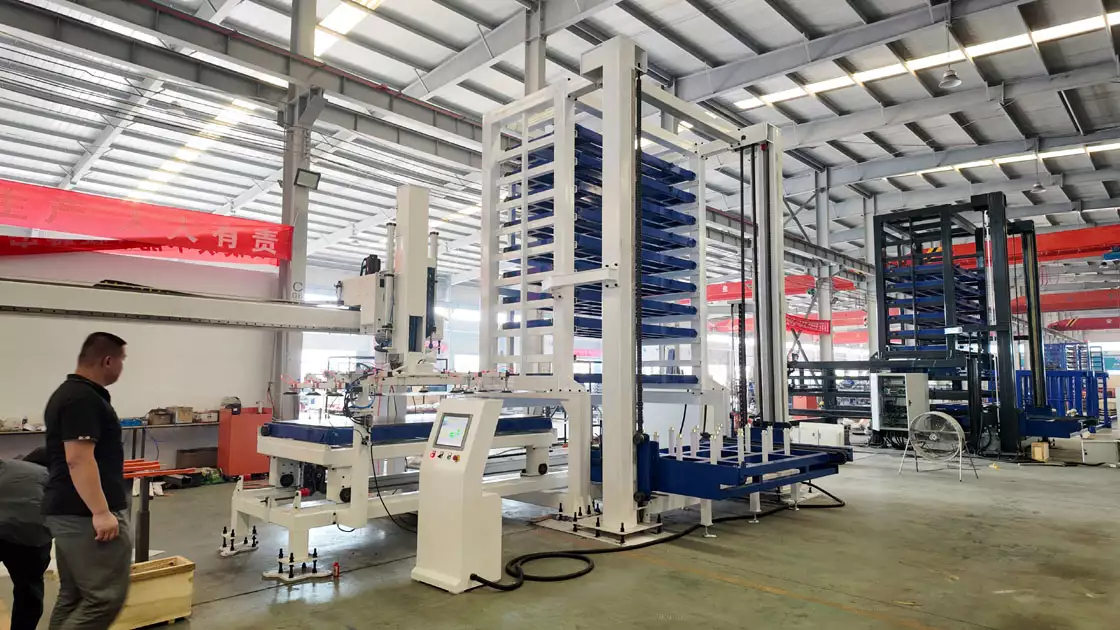
Every laser cutting operator knows the routine. You finish nesting a batch of plates, and what remains is a pile of usable offcuts — half sheets, trim pieces, and drop sections that still carry real material value. The problem is not the scrap itself. The problem is what happens to it next. In the majority of sheet metal workshops, those remnants get pushed to the side of the cutting bay, stacked flat on pallets, or dumped against a wall. Within a few days, the pile grows. Within a few weeks, nobody remembers what is inside it. Usable plate gets buried under heavier pieces, edges get scratched, thin sheets warp under load, and corrosion sets in wherever moisture collects between stacked plates. When an estimator eventually needs a specific offcut for a small job, the retrieval process turns into a thirty-minute excavation — if the piece is even still in usable condition. Herochu built the vertical scrap storage rack to eliminate exactly this cycle.
The Real Cost of Horizontal Stacking on the Shop Floor
Horizontal scrap storage is the default method in most fabrication facilities, and it is also the most expensive. A single pallet of mixed remnants can occupy four to six square meters of floor space while holding perhaps one or two tons of material. Multiply that across a busy laser cutting center running multiple fiber or CO2 machines, and the footprint loss becomes serious. Floor space adjacent to the cutting machine is the most valuable real estate in any workshop — it determines how close raw material sits to the loader, how far operators must travel to retrieve sheets, and how efficiently the entire nesting workflow flows. When that space gets consumed by disorganized scrap heaps, the entire production cell slows down.
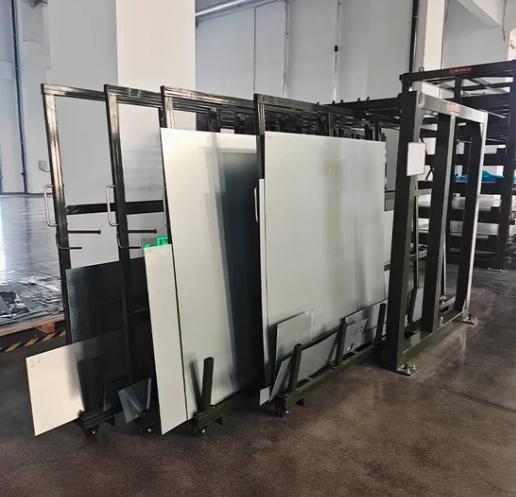
There is also a safety dimension. Pallets stacked with irregular offcuts are inherently unstable. When an operator pulls a plate from the middle of a stack, the remaining pieces shift. Heavy plates sliding off a pallet cause foot injuries, hand pinches, and equipment damage. Insurance audits and ISO 45001 compliance reviews increasingly flag unmanaged scrap piles as a controllable hazard. A Herochu vertical scrap storage rack addresses this by giving every remnant a designated, structurally supported position inside a steel-framed drawer system — no shifting, no guessing, no excavation.
How the Herochu Vertical Roll-Out Architecture Works
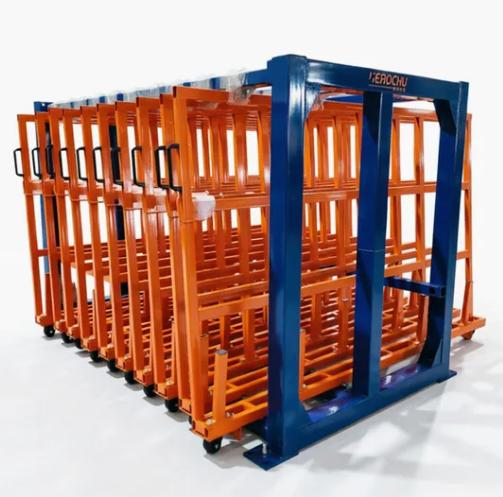
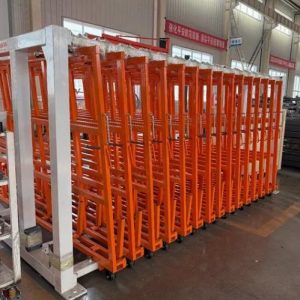
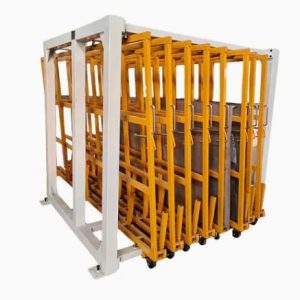
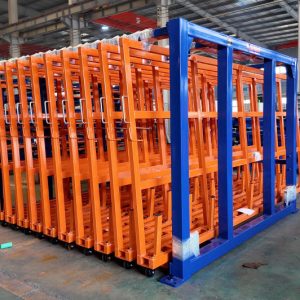
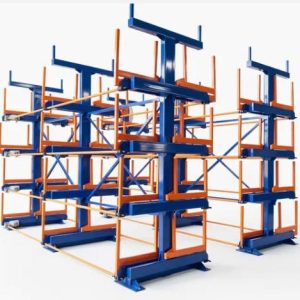
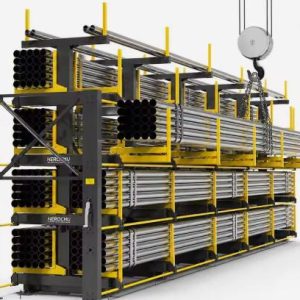
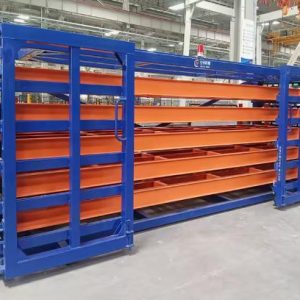
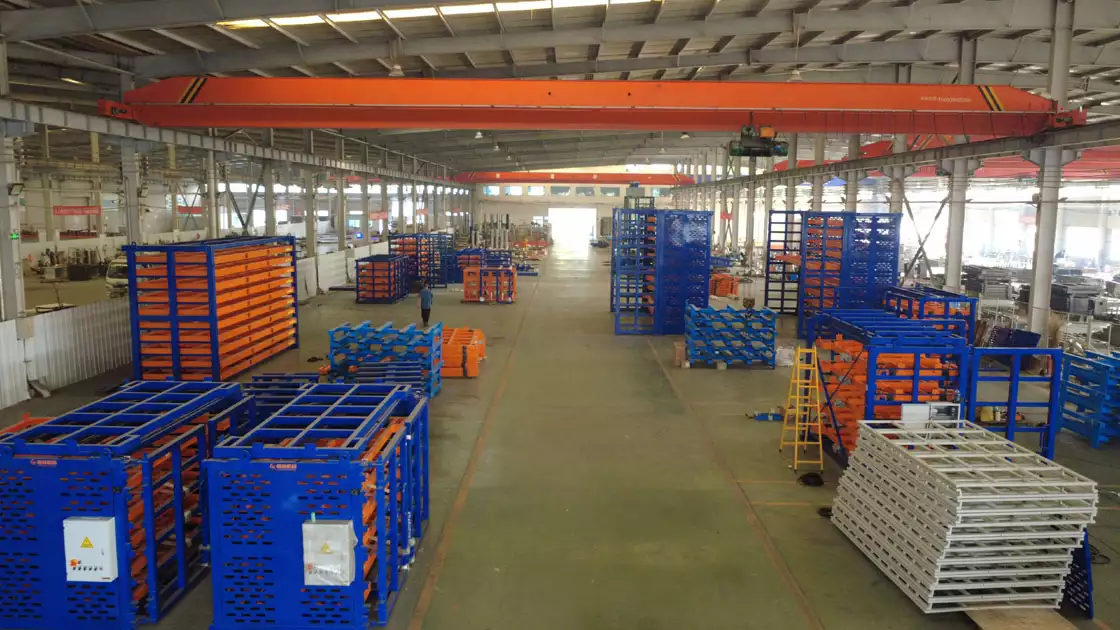
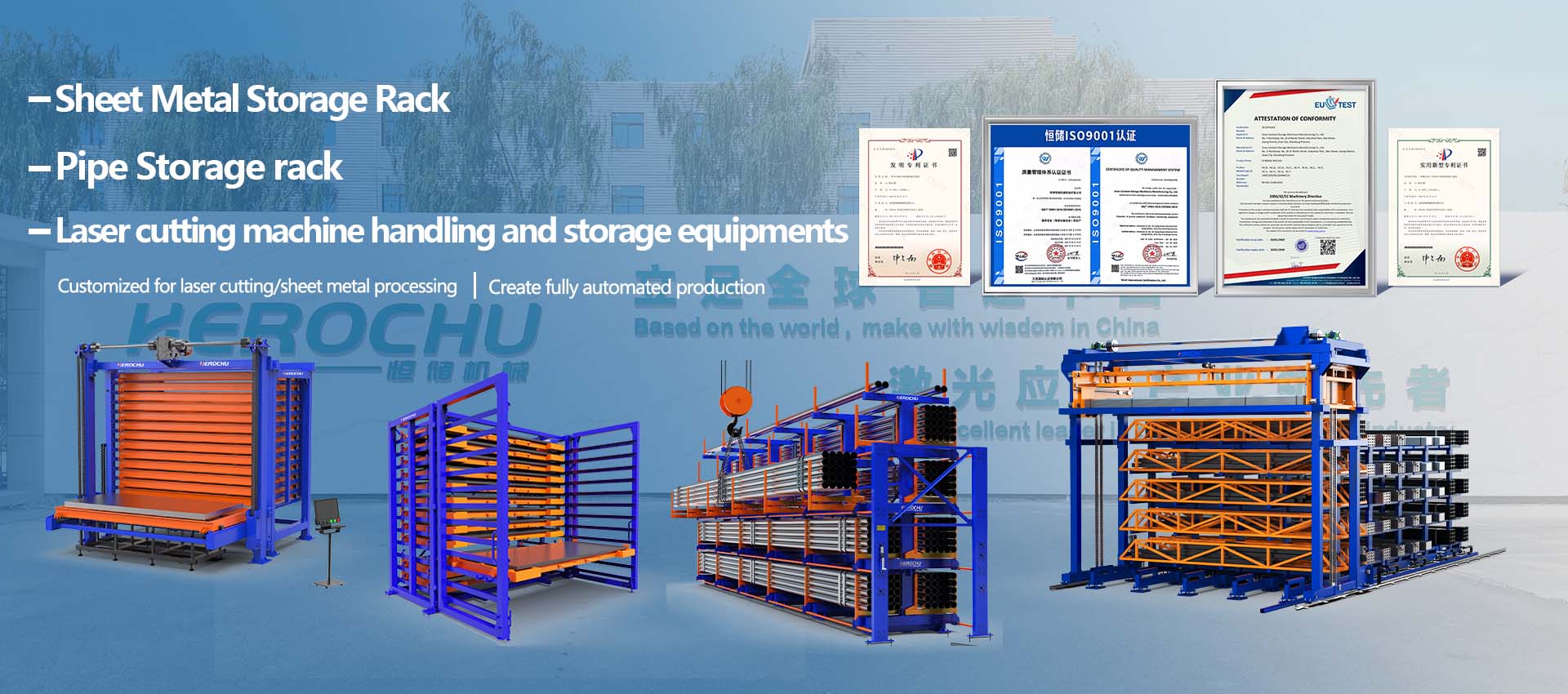
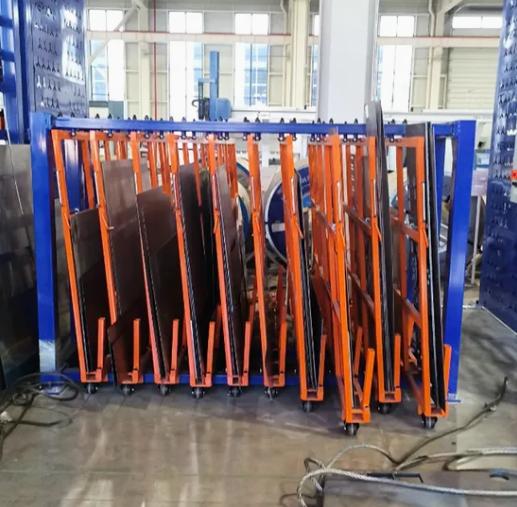
The core principle behind the Herochu vertical scrap storage rack is simple: stand the material up instead of laying it flat. By orienting sheets vertically in independent pull-out drawers, the system achieves two things simultaneously. First, it compresses the storage footprint dramatically — a rack holding 20 tons of plate occupies roughly 6 square meters. Second, it gives every individual remnant its own addressable location, visible and accessible without moving anything else.
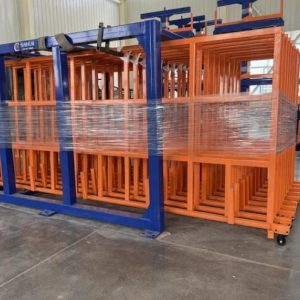
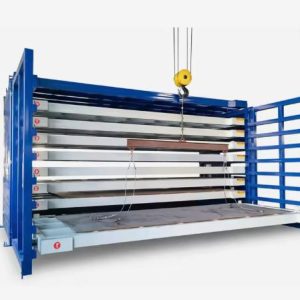
The drawer mechanism runs on precision steel rails with heavy-duty sealed bearings. Each drawer slides out completely, positioning the load center outside the rack frame so that overhead lifting equipment — vacuum lifters, bridge cranes, or slings — can pick the plate straight up without obstruction. The model HC-V2010-15, for instance, provides 15 to 20 independent levels, allowing an operator to sort remnants by thickness, grade, or size with total granularity. Soft non-skid rubber floor liners inside each drawer protect sheet surfaces from scratching, while 50 mm partition heights prevent thin plates from bending or sliding during drawer movement. The bearing assemblies are tested to 30,000 open-close cycles, which translates to over a decade of daily use in a typical two-shift operation.
Technical Specifications That Matter to Production Managers
Specification details determine whether a storage rack survives in a real cutting shop or fails within the first year. Herochu offers two structural tiers. The light-line series handles up to 400 kilograms per drawer — suitable for thin sheet offcuts and small trim pieces. The industrial heavy-duty series handles 1,000 to 2,000 kilograms per layer, designed for thick plate drops and large-format remnants up to six meters in length. Target material thickness ranges from 4 mm to 30 mm, and individual compartments accommodate trims as small as 250 × 250 mm alongside full-size drops.
The frame is constructed from heavy-gauge structural steel with a corrosion-resistant finish, engineered for continuous 24/7 operation in environments where cutting dust, coolant mist, and thermal cycling are constant factors. Dimensions are compact by design — a typical configuration measures 2700 × 2455 × 1200 mm — allowing the rack to slot into narrow aisles, corner spaces, or the dead zone between a laser cutter and the loading bay. Herochu backs the frame with a 10-year warranty and the rail system with a 5-year warranty, reflecting the structural margins built into every unit.
Retrieval Speed and Single-Worker Operation
The operational impact of switching from horizontal pallet storage to a Herochu vertical scrap storage rack is measurable in minutes per day. In a conventional setup, locating and extracting a specific offcut from a stacked pile takes 30 minutes or more — longer if the pile has grown unmanageable. With the roll-out drawer system, the same retrieval takes roughly 30 seconds. The operator opens the designated drawer, identifies the remnant, and lifts it out. One technician can browse, load, and retrieve heavy plates alone, because the smooth-gliding bearings and front-loading ergonomic design remove the need for a second person to help wrestle material free from a stack.
Across a single shift, this saves an operator approximately 75 minutes per day. Over a 250-day production year, that is around 300 hours of recovered labor — time that goes back into the cutting machine rather than into scrap pile excavation. For shops running multiple laser cutting cells, deploying several Herochu racks near each machine creates a distributed remnant library where every operator has local access to sorted offcuts without leaving their workstation.
Integration With Laser Cutting and Nesting Workflows
The strategic value of organized remnant storage extends beyond retrieval speed. When remnants are visible and cataloged — even informally, by drawer position — estimators and programmers can account for available offcuts during nesting. Instead of always pulling fresh full sheets for small jobs, the nesting software or the operator can direct the cut to a remnant that already exists. This directly reduces raw material procurement, which is the single largest cost line in any sheet metal fabrication operation. In practical terms, a workshop that reuses even 15 percent more of its offcuts can delay or reduce plate orders by a meaningful margin each quarter.
Herochu vertical scrap storage racks fit into the workflow at the point where remnants are generated. Positioned beside the laser cutting machine’s offload station, the rack receives offcuts immediately after they come off the table. The operator sorts them into drawers by thickness or grade as part of the unloading routine — no separate handling step, no secondary transport across the shop. This keeps the cutting cell clean, keeps remnants traceable, and keeps the material close to where it will be needed next.
Industry Applications Beyond Laser Cutting
While laser cutting centers are the primary application, the same storage logic applies across sheet metal fabrication sectors. Aerospace component manufacturers use vertical remnant racks to preserve expensive alloy offcuts — titanium, Inconel, and aluminum grades where every kilogram of salvageable material carries high unit value. Automotive parts fabricators handle mixed-gauge steel offcuts from stamping and cutting lines. Electronics enclosure manufacturers accumulate thin-gauge sheet trims that are easily damaged in horizontal storage. Structural steel fabricators deal with thick plate drops that are too heavy for shelving but too valuable to scrap. Furniture fabrication workshops need organized access to decorative metal offcuts for mixed-material designs. In each case, the Herochu vertical roll-out rack provides the same combination of footprint compression, material protection, and single-worker retrieval.
Building a Profitable Remnant Strategy
The underlying philosophy of the Herochu vertical scrap storage rack is that remnants are inventory, not waste. Once a workshop treats offcuts as addressable stock — sorted, protected, and retrievable — the material recovery rate rises, raw material spend drops, and the production floor becomes safer and more navigable. For laser cutting and sheet metal workshops operating on thin margins, the difference between buried scrap and organized scrap shows up directly on the quarterly material cost report. A rack that holds 20 tons in 6 square meters, returns 300 labor hours per operator per year, and carries a 10-year frame warranty is not an accessory — it is a production asset. Herochu designs these systems for fabricators who have decided to stop losing money to the scrap pile.