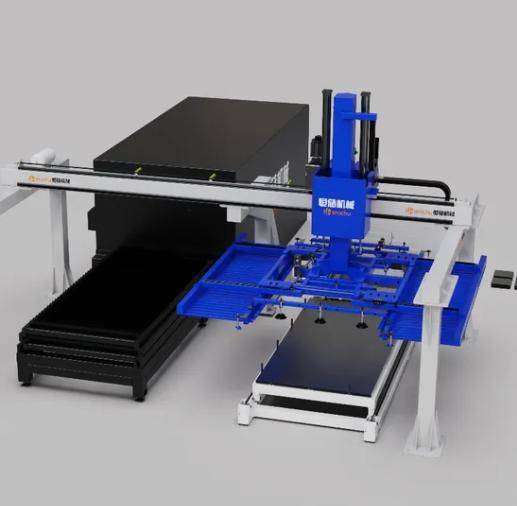
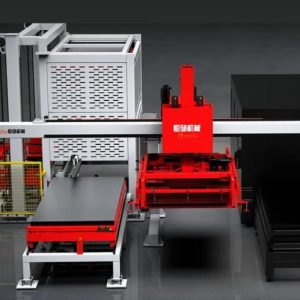
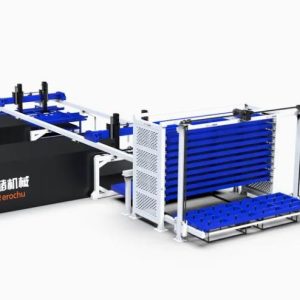
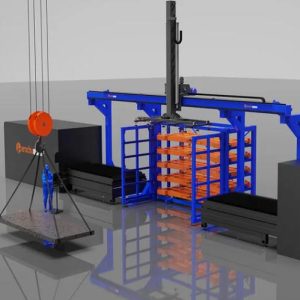
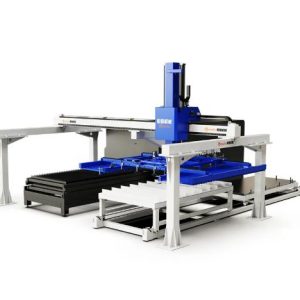
Double-Sided Gantry Truss Loading Manipulator for Sheet Metal
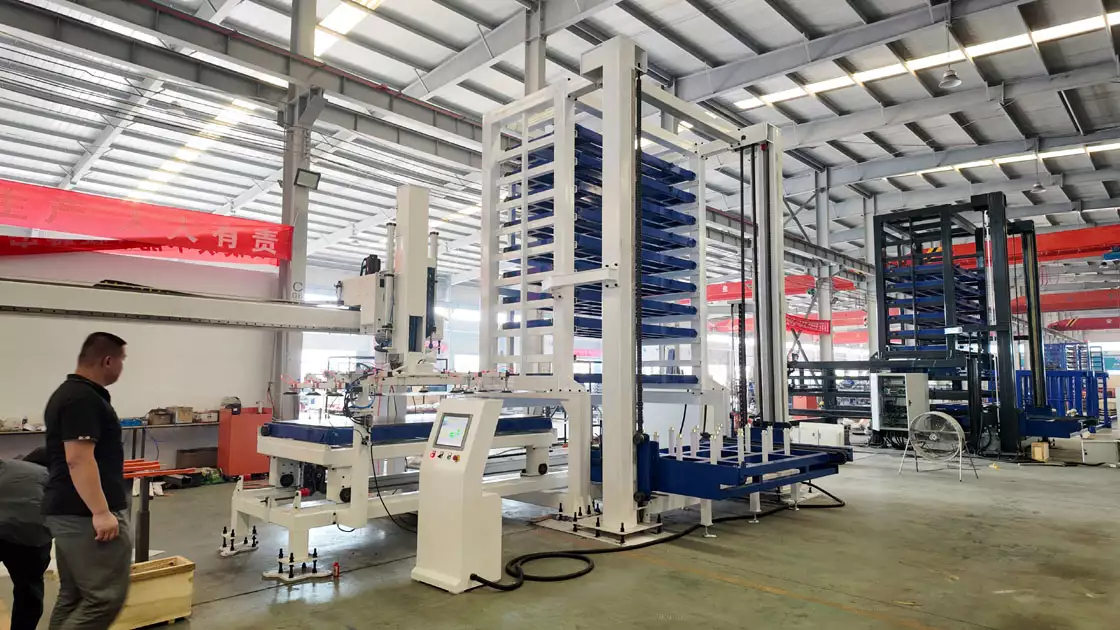
Single-sided gantry loaders share a structural limitation: the tool head must serve both loading and unloading, which means it retracts, reconfigures, and re-approaches the laser bed between functions. That reconfiguration eats seconds per cycle, and seconds per cycle compound into hours per shift. Herochu’s double-sided gantry truss loading manipulator eliminates the reconfiguration penalty by assigning loading and unloading to opposite sides of the truss — vacuum suction on one face, mechanical grippers on the other.
Double-Sided Gantry Truss Loading Manipulator for Sheet Metal
Single-sidedgantry loaders share a structural limitation: the tool head must serve both loading and unloading, which means it retracts, reconfigures, and re-approaches the laser bed between functions. That reconfiguration eats seconds per cycle, and seconds per cycle compound into hours per shift. Herochu’s double-sided gantry truss loading manipulator eliminates the reconfiguration penalty by assigning loading and unloading to opposite sides of the truss — vacuum suction on one face, mechanical grippers on the other.
The double-sided architecture is the reason the system sustains a 30–50% increase in overall factory throughput. When the loading arm places a fresh raw sheet on the exchange platform, the unloading arm simultaneously grips the finished cut sheet from the previous cycle. Both motions load the truss at the same instant, and the composite dual-girder frame absorbs the combined moment without the midspan deflection that would degrade the ±2 mm repeatability.
Cycle Sequence and Timing Overlap
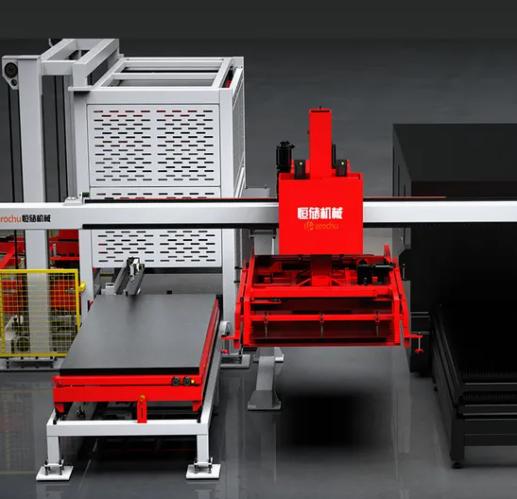
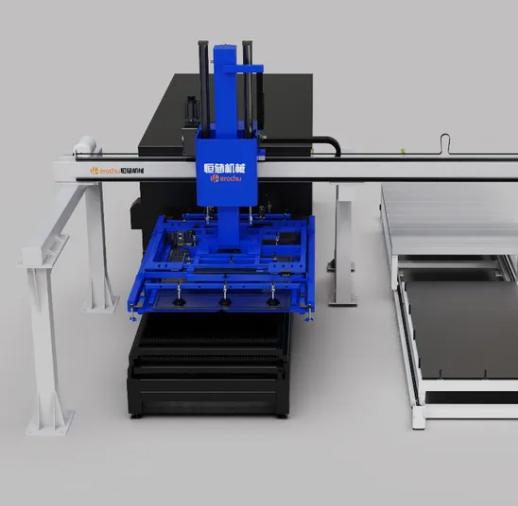
A standard cycle on the Herochu double-sided gantry truss loading manipulator runs like this: the loading-side vacuum cups pick a raw sheet from the exchange material car or vertical storage rack, traverse to the laser bed, and release the sheet onto positioning stops. The laser then executes the cutting program. When the program completes, the CNC signals the gantry. The unloading-side grippers close on the cut sheet, lift it clear of the bed, and traverse to the downstream sorting conveyor. In the same motion window, the loading side returns to storage for the next raw plate.
The timing overlap is the engineering point. On a single-sided system, these two motions happen in sequence — load, then unload, then load again — with the tool head traveling empty between each function. The double-sided truss collapses that sequence into parallel operations. The gantry traverse of 10–30 m/min and vertical lift of 5–10 m/min are constant, but the double-sided layout effectively halves the non-cutting motion time per cycle. Over a shift producing 60–80 cut sheets, the saved seconds add up to additional cutting cycles.
Structural Design of the Dual Truss
The truss itself is a composite configuration — two main girders joined by triangulated web members. This geometry serves the double-sided loading condition directly. When both tool heads carry payload simultaneously, the bending moment on the cross-member comes from two offset points rather than one. The triangulated web transfers force from both heads into the shared end carriages, distributing stress along the full depth of the truss section rather than concentrating it at the tool-head mounting points.
The skip load rating of 3 tons covers the worst-case dual-load condition. If both sides encounter overload — the loading side picks a double sheet and the unloading side grips an unexpectedly heavy skeleton — the truss must survive the combined transient without permanent deformation. Herochu engineers the frame to that threshold because the double-sided architecture mathematically doubles the probability of simultaneous fault conditions compared to a single-head system.
Double-Layer Exchange Material Car
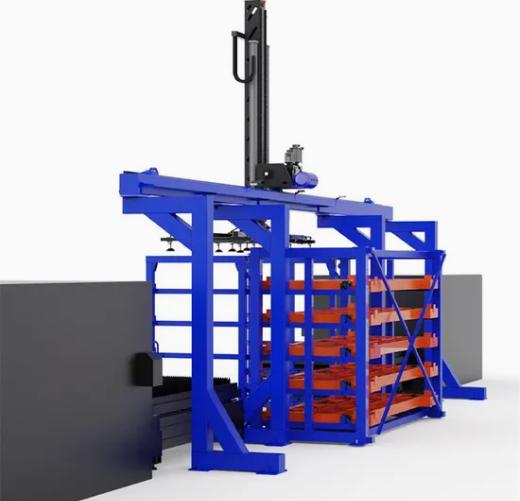
The exchange material car is the component that feeds the double-sided cycle. It is a double-layer electric shuttle: two platform levels, each carrying a sheet, that index vertically and traverse horizontally on floor rails. The car stages the next raw sheet on one layer while the current sheet is being cut. When the gantry unloads the finished part, the car positions the next raw plate at pick height on the second layer.
The car’s vertical indexing aligns the sheet to the gantry’s tool-head height, and its horizontal travel positions the sheet within the vacuum-cup reach envelope. The CNC control system orchestrates the car’s movement with the gantry’s cycle — the car does not move while the gantry is traversing over it, and the gantry does not initiate a pick until the car confirms sheet-in-position. This interlock prevents collisions between the moving car and the tool head, a failure mode that would damage both the sheet and the manipulator.
Vacuum Loading Technology
The loading side of the double-sided truss uses a vacuum suction cup array. The cups activate selectively — the CNC controls which cups draw vacuum based on the sheet dimensions read from the WMS or measured at the pick station. A 2500×1300 mm sheet engages fewer cups than a 6000×1500 mm sheet, and cups that would hang past the sheet edge stay dormant to prevent false-vacuum faults.
The vacuum system addresses the sheet-separation problem directly. Heavy-gaugesteelplates, particularly those with residual cutting oil or recently sheared edges, cling together. The Herochu separation mechanism breaks the bond before the full lift — either mechanically, with a edge-breaker finger, or pneumatically, with a timed air blast between plates. A sensor confirms single-sheet pickup before the traverse command executes. If two sheets stick, the system aborts the pick and re-attempts separation rather than carrying an overload to the laser bed.
Gripper Unloading and Sorting Flow
The unloading side uses mechanical grippers rather than vacuum cups. This choice reflects the nature of the load: a finished cut sheet is a skeleton frame holding cut parts, often with large voids where the parts were removed. Vacuum cups need a sealed surface to draw against; grippers close on the skeleton edges and lift the assembly regardless of internal geometry.
After the grippers lift the cut sheet from the laser bed, they traverse to a downstream conveyor or sorting station. The CNC can signal the sorting system to receive the sheet, and the grippers release onto a set of support rollers. The skeleton and parts then move to manual or automated sorting. Because the unloading motion happens on the opposite side of the gantry from the loading motion, the sorting conveyor does not interfere with the raw-sheet supply path — material flows in from one side and out from the other in a straight-through configuration.
Model Range and Application Fit
The Herochu double-sided gantry truss loading manipulator comes in five configurations matched to sheet format and payload:
All models share 10–30 m/min traverse, 5–10 m/min lift, 5–20 m/min fork adjustment, ±2 mm repeatability, 0.6–0.7 MPa air supply, and the 3-ton skip load rating. The specification uniformity means a plant running multiple laser cutters of different bed sizes can standardize on the same gantry platform — operators trained on one model transfer directly to another, and maintenance procedures apply across the fleet.
Continuous Operation and Plant Economics
The double-sided architecture exists to sustain continuous cutting cycles. When the laser finishes a program, the unload-load exchange happens in the minimum possible motion window, and the next cutting program starts with near-zero idle gap. Over a 24-hour period, that tight cycle translates to additional cutting time — the same metric that drives the 30–50% throughput figure.
Material handling cost drops up to 30% because the manipulator replaces the manual labor of loading raw sheets and unloading cut parts, and it does so without the positioning errors, sheet-damage incidents, and fatigue-induced slowdowns that human operators introduce across a long shift. Operational errors decline by approximately 50% because the CNC-orchestrated cycle follows the same path and timing on every repetition. Herochu targets 12–18 months for ROI payback, after which the system continues producing at the same cycle rate with standard maintenance — lubrication, cup and gripper-pad replacement, chain tension checks — as its only ongoing cost.
Where the Double-Sided Truss Fits
The double-sided gantry truss loading manipulator fits any fabrication environment where the laser cutting cell sets the production pace and where sheet format runs within the 2500×1300 to 6000×1500 mm range at 300–500 kg payload. Metal fabrication shops, automotive component production, aerospace parts manufacturing, heavy machinery fabrication, and structural steelprocessing are the primary application sectors. In each, the double-sided architecture’s cycle-overlap advantage compounds across the high-volume, repetitive cutting schedules that define those industries — and the composite truss frame is what makes that overlap structurally possible cycle after cycle.
FAQ
Here are some frequently asked questions about our sheet metal racks and pipe storage solutions. We hope you find them helpful!
Q1: Can I request a custom size or color? Absolutely. We offer complimentary design services and deliver efficient, tailored solutions to meet your specific requirements.
Q2: Are you a manufacturer or a distributor? We are a direct manufacturer with over 15 years of industry experience and expertise.
Q3: Is there a minimum order quantity? No. We welcome orders of any size, starting from a single unit.
Q4: How can I get detailed product information? Click the “Get a Quote” button to receive product images, detailed specifications, and videos. Our team is always ready to assist.
Q5: How do I provide my storage rack requirements? Simply share the type, dimensions, and quantity of materials you plan to store, along with any other specific needs. We will develop a professional storage solution for you. Alternatively, leave your contact details for a personalized consultation.
Q6: Do you offer automated loading systems or robotic arms? Yes. We provide loading robotic arms and integrated loading/unloading systems tailored to your laser cutting machine’s table size and material handling method (e.g., board rack, exchange platform, or material warehouse). Contact us with your details for a customized proposal.
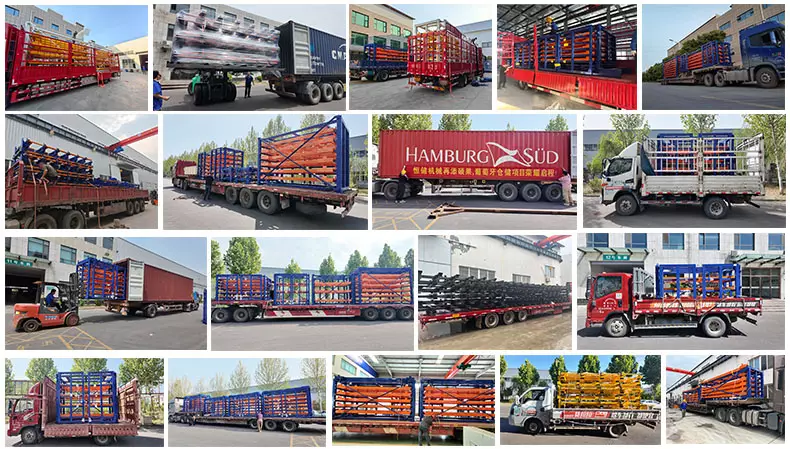
Q7: Do you provide on-site installation and debugging? Yes. Our technicians can travel to your facility for installation and debugging, ensuring successful operation. We have served clients globally, including in the USA, South Korea, Russia, Qatar, Mexico, South Africa, Egypt, and Lebanon.
Q8: How do you ensure product quality? Our quality assurance includes:
A team of over 40 technical engineers for professional debugging and support.
A dedicated quality control department compliant with ISO9001 standards.
CE certification for all exports.
Rigorous load testing before shipment to ensure structural safety and reliability.
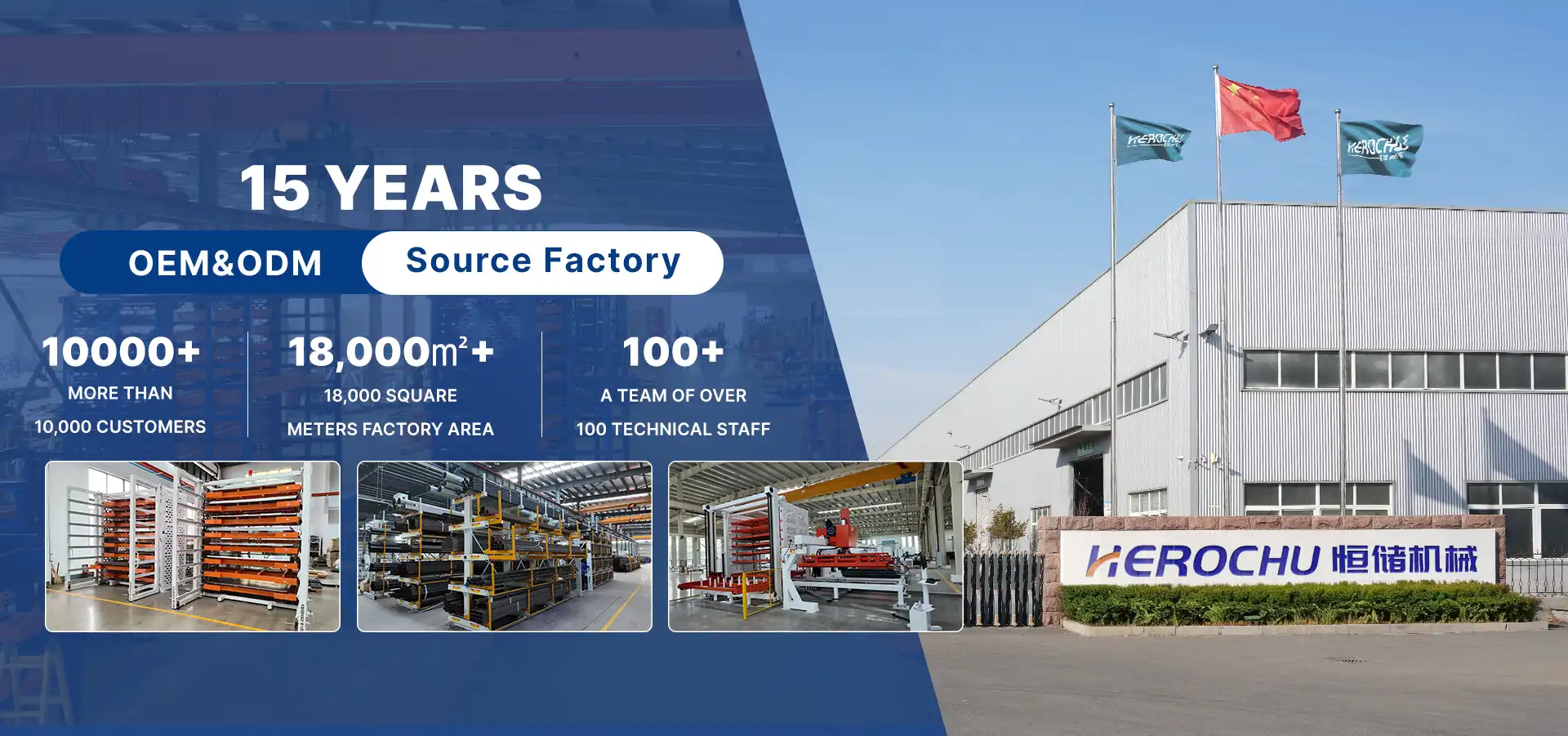
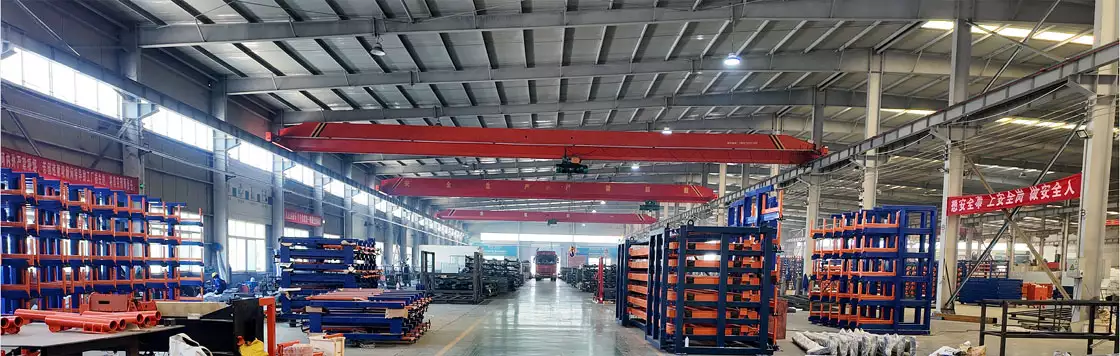
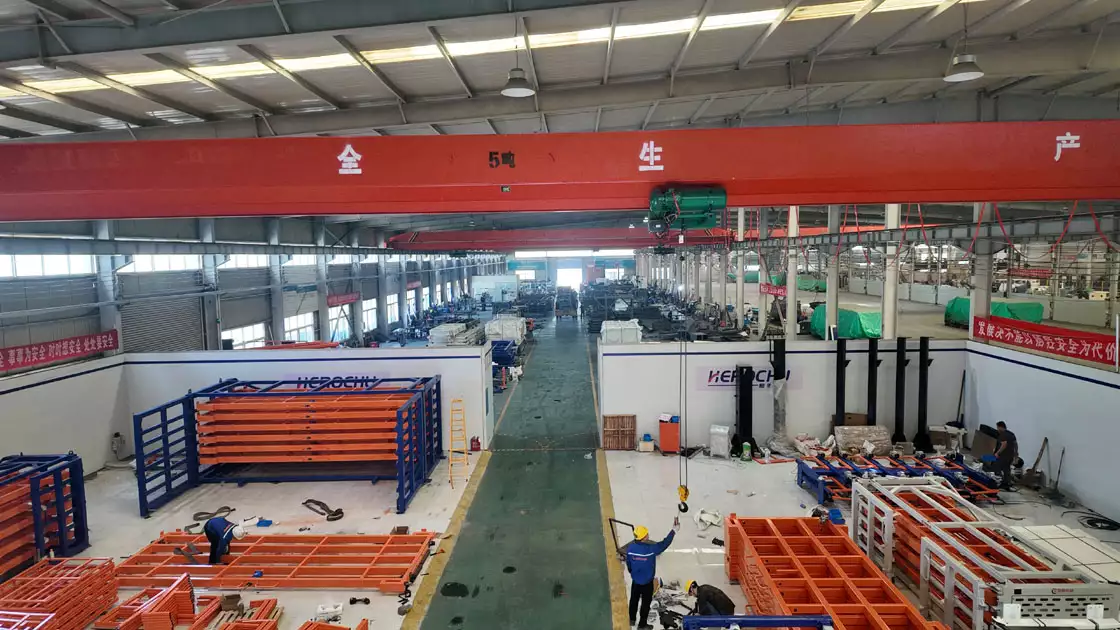
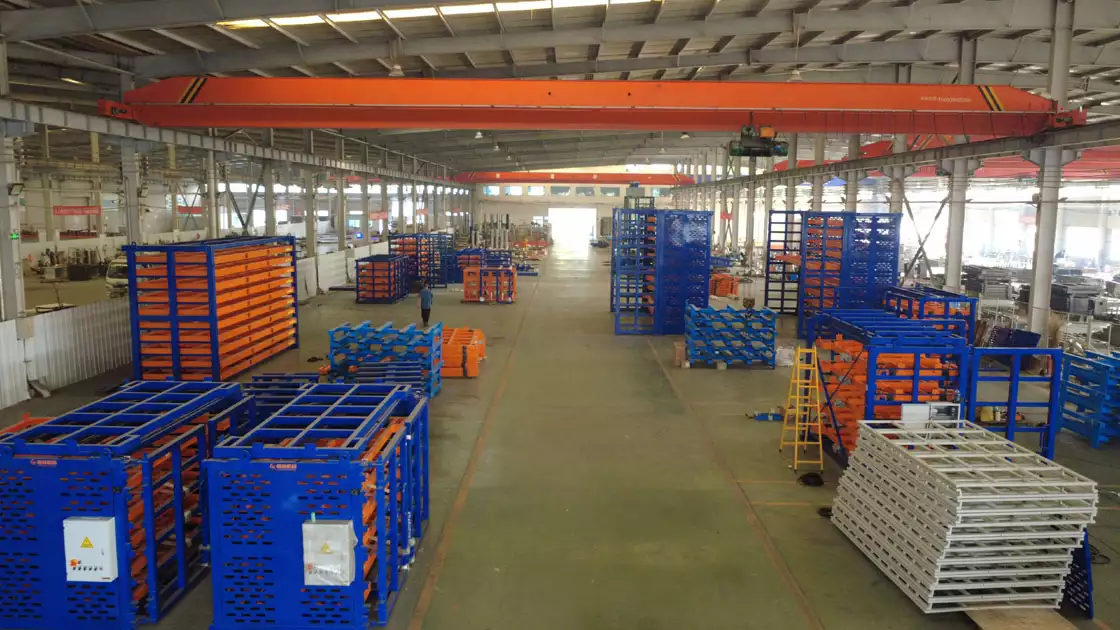
Q9: Where is your factory located? Our modern 10,000-square-meter manufacturing facility is located in Jiyang Industrial Park, Jinan, Shandong, China.
Q10: How can I evaluate your company’s capabilities? We offer virtual video factory tours and warmly welcome on-site visits.
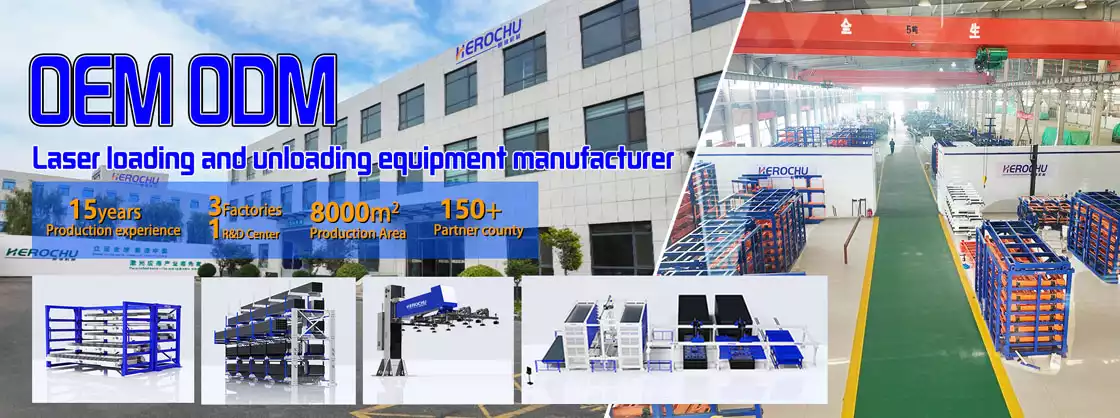
Q11: What does your company specialize in? Jinan Constant Storage Machinery Manufacturing Co., Ltd. is a high-tech enterprise specializing in the R&D, production, sales, installation, and service of intelligent storage solutions. Our product range includes sheet material warehouses, drawer-style shelves, cantilever racks, servo manipulators, gantry loaders, and fully automated handling systems. Supported by a skilled technical team and advanced equipment, we are committed to delivering high-performance storage products and solutions to customers worldwide.
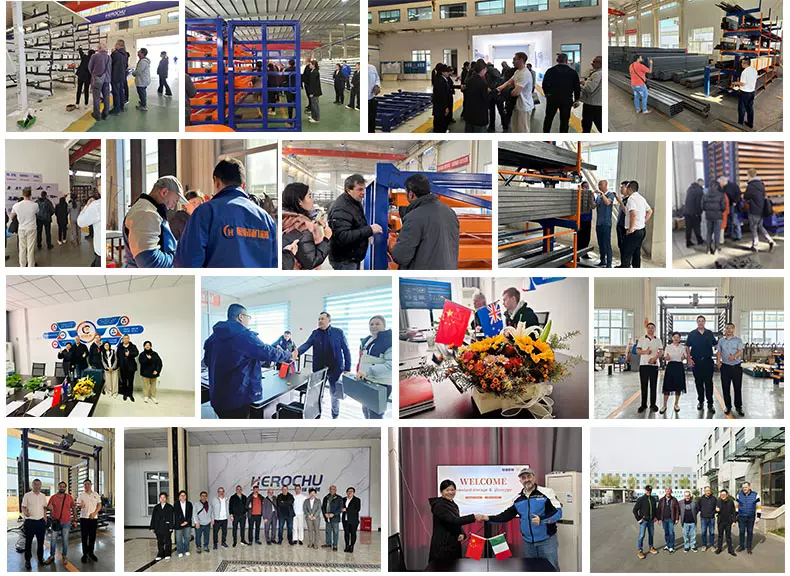
Customer visit
Herochu has always been adhering to the market-centric approach to meet customer requirements to the maximum extent, and the business philosophy of “creating brands with heart and gaining reputation with sincerity”. It provides customers with high-quality products and services with rigorous military quality, professionalism, and excellence, and has won unanimous praise in the Chinese aerospace, Chinese weapons, Chinese railways, automobile manufacturing, engineering machinery, non-ferrous metal titanium alloy and other industries.