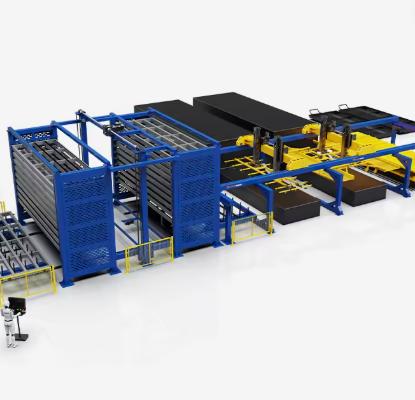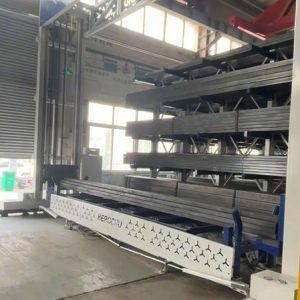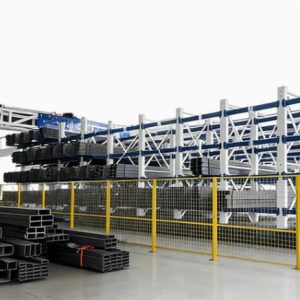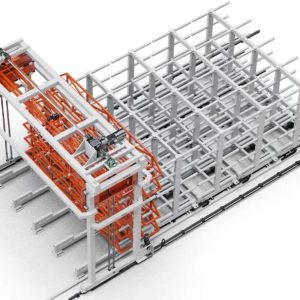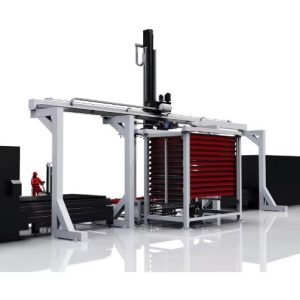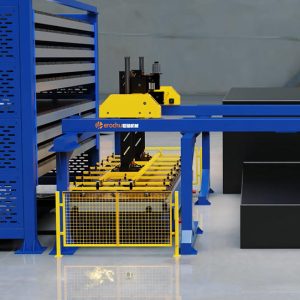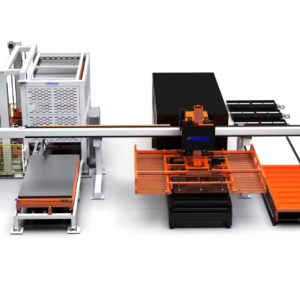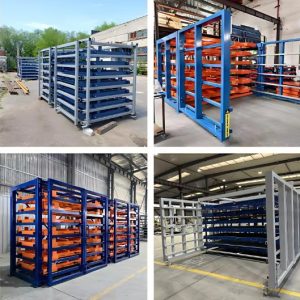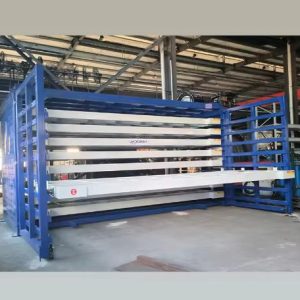
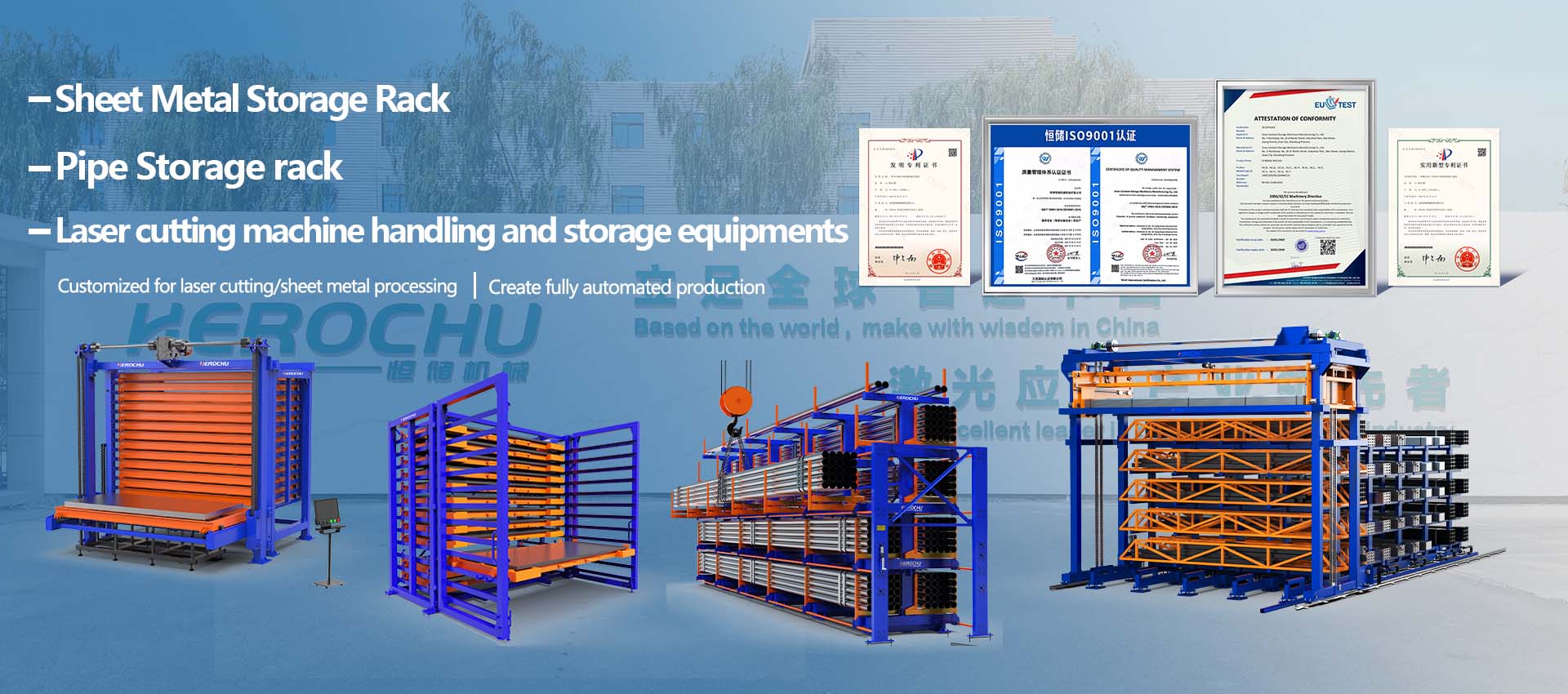
A laser cutter is a depreciating asset that only makes money while the beam is on. The automatic loading and unloading robotic arm for laser cutting is the equipment that keeps the beam busy: it takes raw sheets from a stack, feeds them into the machine, removes finished parts, and moves them to the next station without a person in the loop. Herochu builds this arm as the center of a complete automated sheet metal production unit, and the economics work out differently from a standalone machine.
The Complete Production Unit
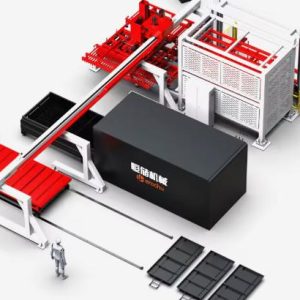
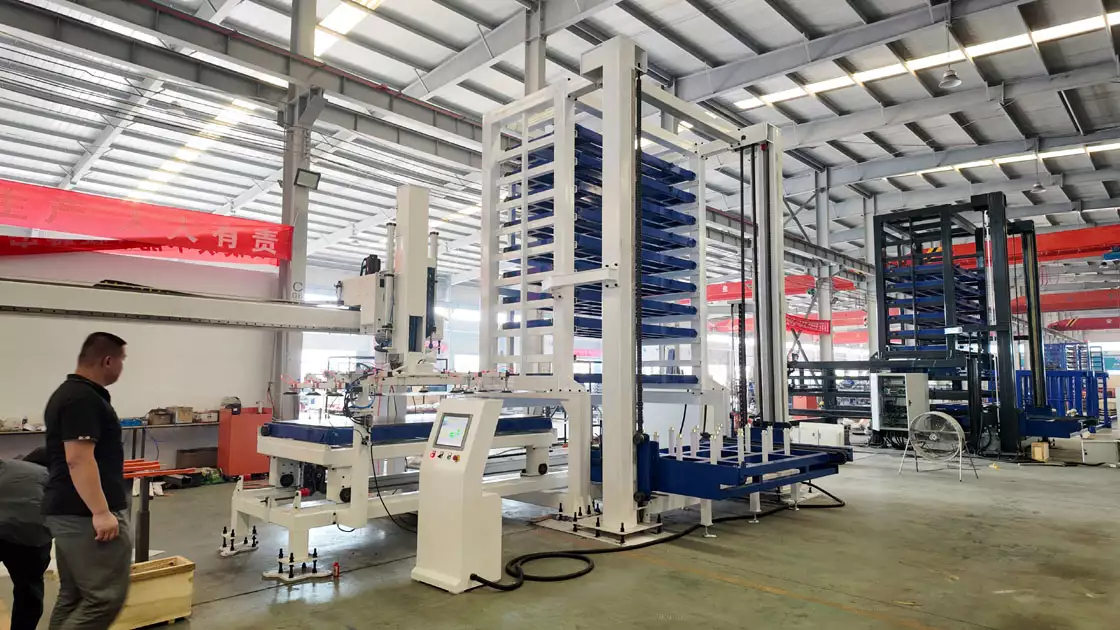
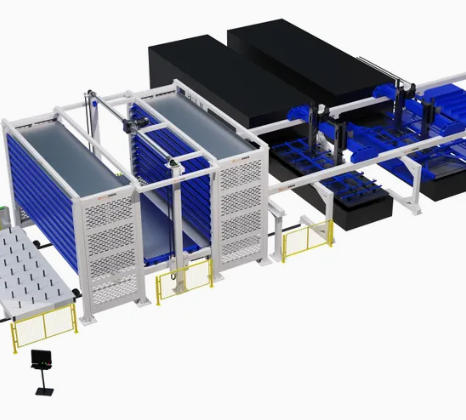
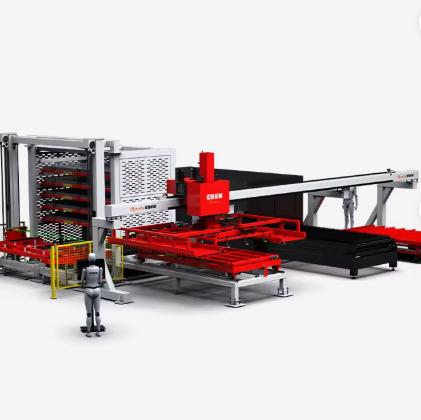
The unit combines a laser cutting machine, a composite truss manipulator for loading and unloading, a double-layer electric exchange car, a CNC control system, and a vacuum control system. Together they automate the entire material handling task around the laser. The practical result is a simple trade: production efficiency goes up because the machine never waits for a human, and production costs go down because the handling labor that used to accompany every job disappears. Shops that measure the cell against a manual line typically find the difference in the first month’s utilization report.
From Raw Stack to Finished Parts
The workflow is fixed and repeatable. The operator places a stack of raw sheets on the exchange car. The arm’s vacuum matrix picks the top sheet, separates it from the stack, and verifies the pickup with double-sheet detection. The sheet is positioned on the cutting bed to ±2 mm repeatability, and the laser runs its program. When cutting finishes, the grippers remove the finished parts and skeleton, and the car cycles the next sheet into position. The same control system that sequences the arm also coordinates with the laser, so every handoff happens without operator input.
Two details separate this workflow from a manually operated line. First, the double-layer exchange car stages the next stack while the current job runs, so feeding never waits on a forklift. Second, the CNC program that positions the arm also records every pickup and placement, which gives production managers a log of cycle times, sheet sizes, and machine utilization without installing a separate monitoring system.
The Gantry Palletizer Workstation
At the end of the line, a gantry palletizer workstation completes the automation. It sorts finished laser-cut components, transports them off the machine, and stacks them on pallets in a defined order. Manual sorting and stacking, traditionally the most tedious part of a cutting job, is replaced by a programmed sequence, and overall handling time drops by up to 85%. For shops running large part counts, the palletizer is often the difference between one operator managing two machines and two operators managing one.
Product Attributes
| Attribute | Value |
| Model | HC-RT3015-500 |
| Control system | PLC control |
| Automatic grade | Semi-automatic to fully automatic |
| Payload capacity | 200 kg standard; maximum load 100–500 kg |
| Reach | 2000 mm |
| Skip load | 3 T |
| Air source | 0.6–0.7 MPa |
| Maximum feeding width | 3 × 1.25 m |
| Minimum feeding size | 1.25 × 1.25 m |
| Number of suction cups | 15 |
| Trademark | Herochu |
| Customization | Available |
| Transport package | Standard export packaging |
24/7 Lights-Out Manufacturing
The design goal of the system is unattended operation. Multi-point vacuum cup configurations protect surface finishes on stainless steel, aluminum, and carbon steel, so the cell can run overnight without a first-article inspection after every cycle. Real-time diagnostics and audible and visual alarms alert the single supervising operator only when something actually needs attention. In practice this means a Herochu automatic loading and unloading robotic arm for laser cutting can run through the night shift and into the morning with the lights out, producing parts the entire time.
Primary Applications
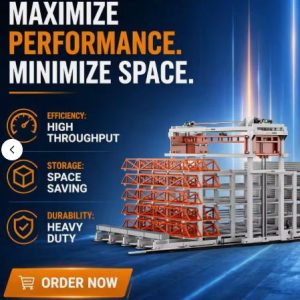
The system suits any shop where flat sheet meets a fiber laser. A Herochu automatic loading and unloading robotic arm for laser cutting feeds high-power machines continuously in sheet metal fabrication plants. Automotive component manufacturers rely on it for the repeatability that stamped and cut parts require in volume. HVAC ducting shops benefit from the mixed-gauge handling, since duct work rarely runs one material thickness for long. Structural steel processors use the high-payload versions for heavy plate. Job shops, where batch sizes change constantly, get the most direct benefit: the arm’s zone control and programmable forks switch between sheet sizes without tooling changes, so short runs stay profitable.
Payback Considerations
The payback calculation for this arm is straightforward because the savings are operational, not speculative. Recovered cutting time is worth the machine’s hourly rate. Eliminated handling labor is worth the wage bill. Reduced scrap from consistent placement is worth the material cost. Reduced rework from scratch-free handling is worth the quality department’s time. Shops running two shifts or more typically see the strongest case, because the same equipment produces for more hours per day. For a shop evaluating its first automation step, Herochu recommends starting with the single-gantry feeding unit and expanding to the palletizer and storage tower as volumes grow.
FAQ
Does the arm work with any fiber laser machine?
Herochu supplies the arm matched to the customer’s laser model and bed format, from 3015 to 6015 mm, with custom spans available.
How much handling time does the palletizer save?
Automated sorting, transport, and stacking cuts overall handling time by up to 85% compared with manual end-of-line work.
Is overnight unattended operation realistic?
Yes. Double-sheet detection, thickness verification, real-time diagnostics, and surface-safe vacuum handling allow multi-shift and overnight running with a single supervising operator.
andling time does the palletizer save?**
Automated sorting, transport, and stacking cuts overall handling time by up to 85% compared with manual end-of-line work.
Is overnight unattended operation realistic?
Yes. Double-sheet detection, thickness verification, real-time diagnostics, and surface-safe vacuum handling allow multi-shift and overnight running with a single supervising operator.
ication, real-time diagnostics, and surface-safe vacuum handling allow multi-shift and overnight running with a single supervising operator.
by up to 85% compared with manual end-of-line work.
Is overnight unattended operation realistic?
Yes. Double-sheet detection, thickness verification, real-time diagnostics, and surface-safe vacuum handling allow multi-shift and overnight running with a single supervising operator.
andling time does the palletizer save?**
Automated sorting, transport, and stacking cuts overall handling time by up to 85% compared with manual end-of-line work.
Is overnight unattended operation realistic?
Yes. Double-sheet detection, thickness verification, real-time diagnostics, and surface-safe vacuum handling allow multi-shift and overnight running with a single supervising operator.