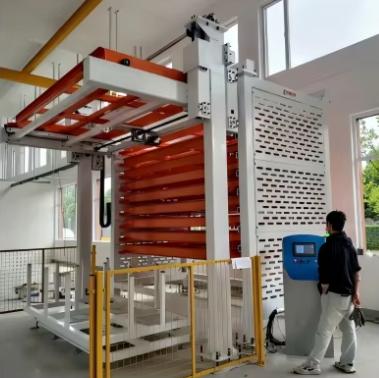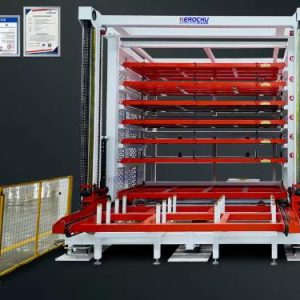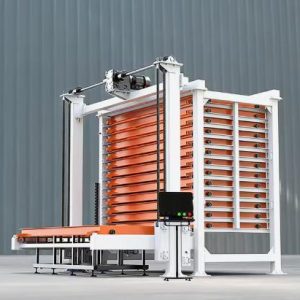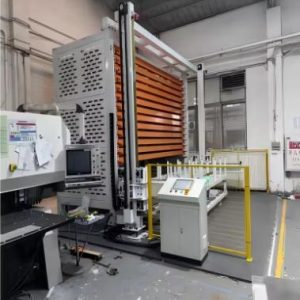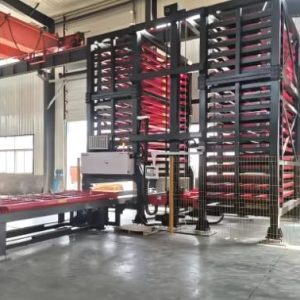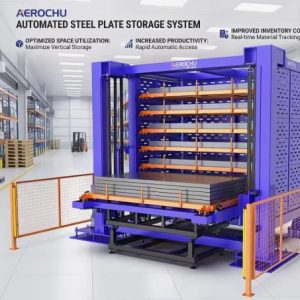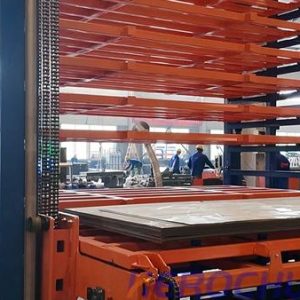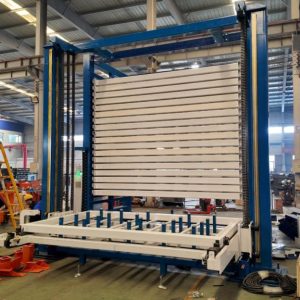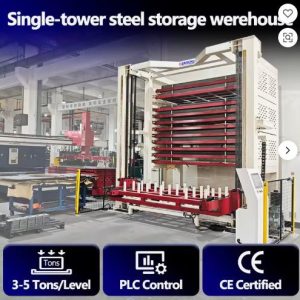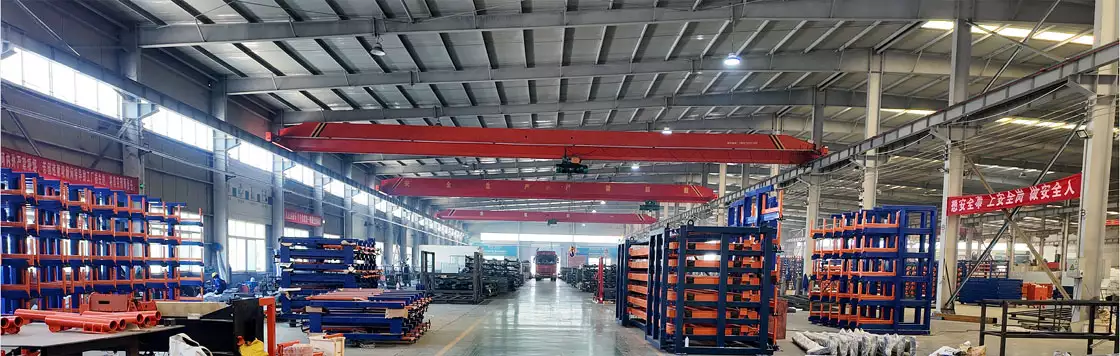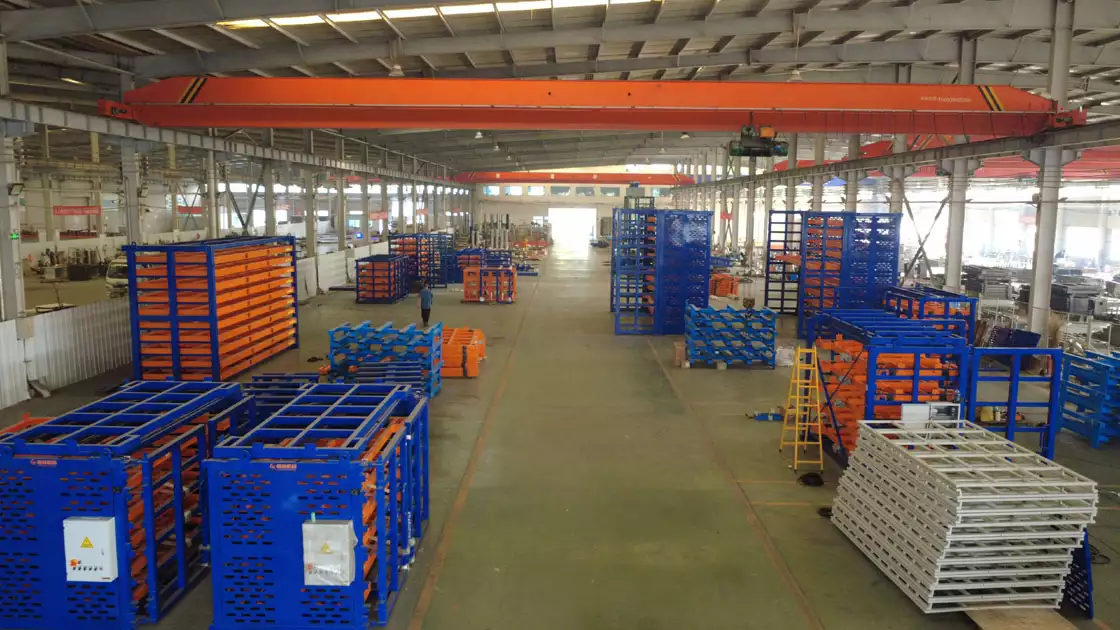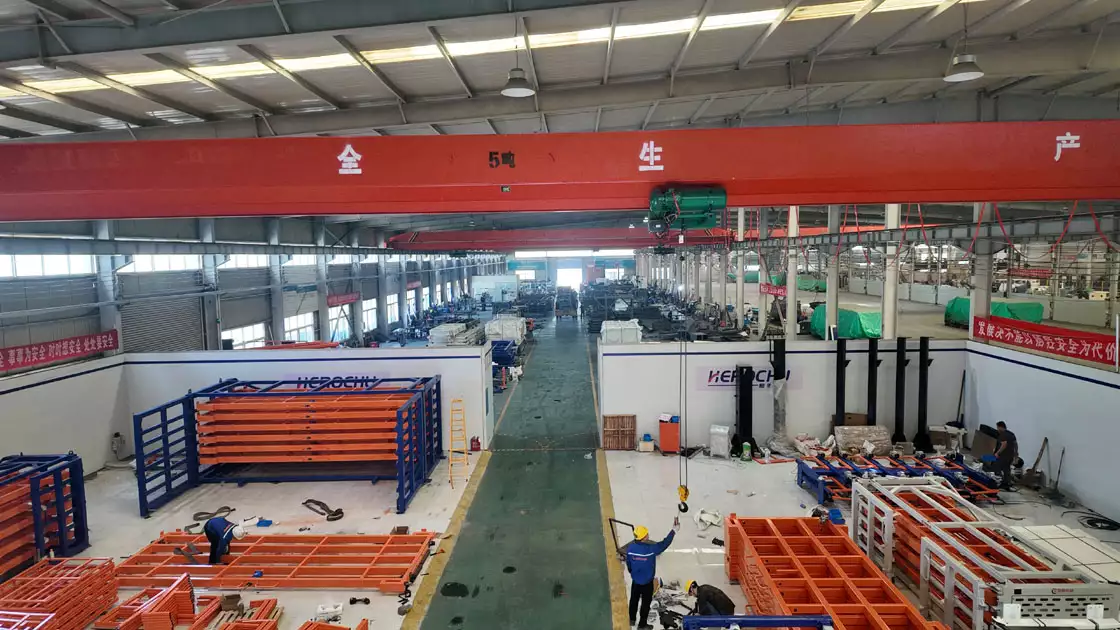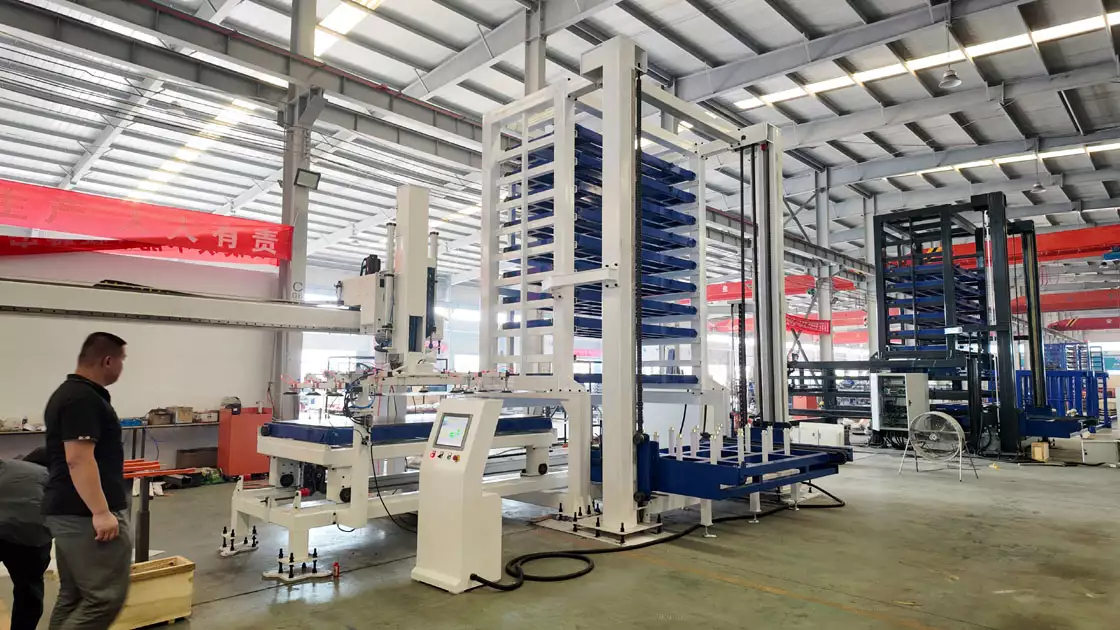
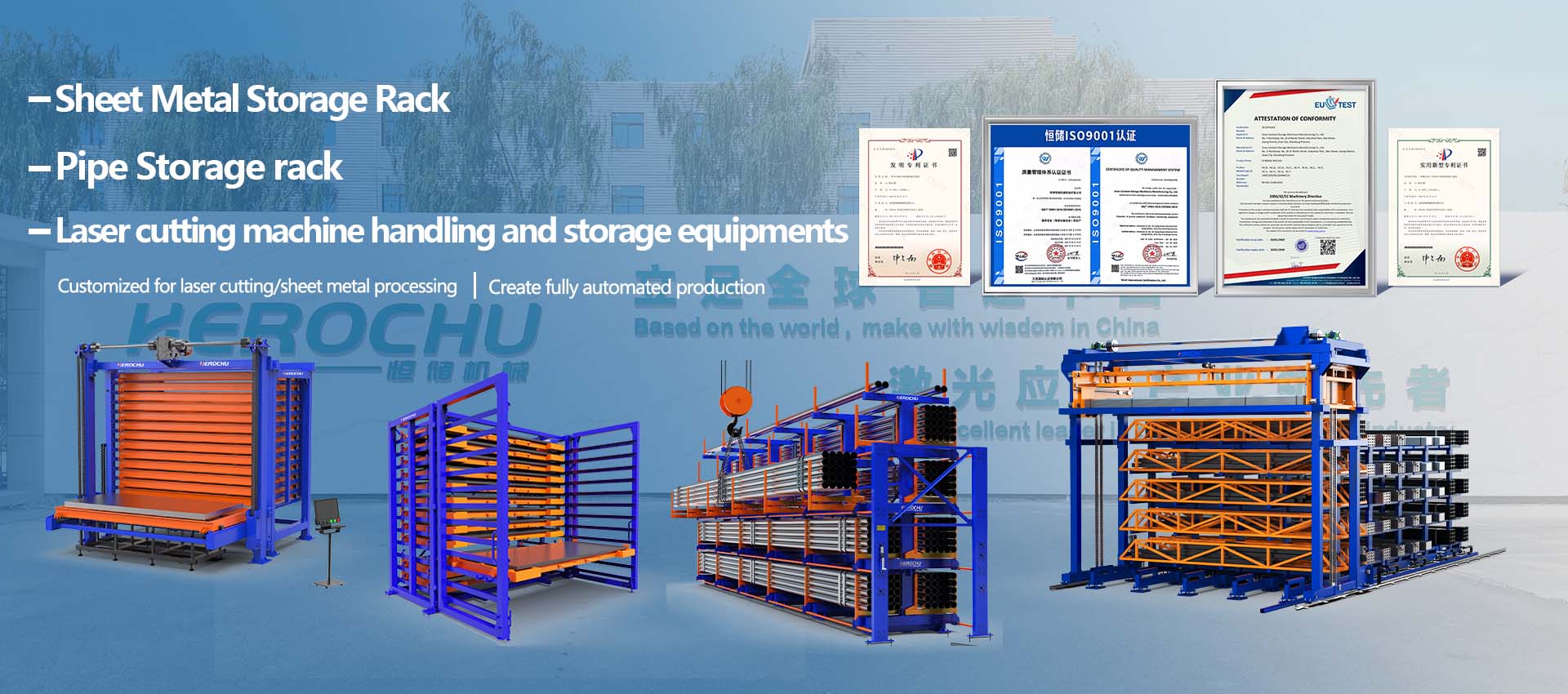
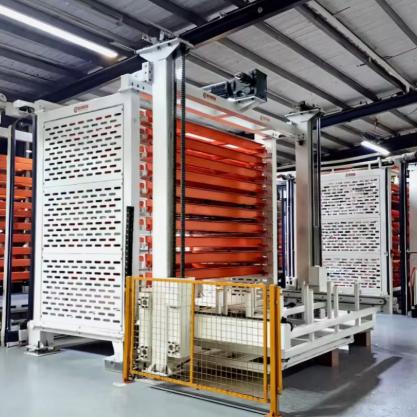
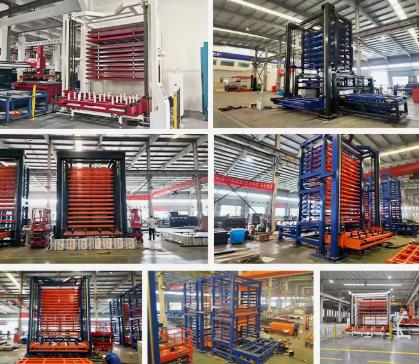
Aluminum presents a particular storage challenge in production environments: its soft surface mars easily, its value per kilogram warrants careful inventory control, and the range of alloys, tempers, and thicknesses carried by a typical fabricator can easily number in the dozens. A Fully Automated Vertical Storage System designed specifically for aluminum plates and sheets by Herochu addresses these concerns through a combination of flat-drawer storage geometry, enclosed bay protection, and PLC-driven retrieval that eliminates manual handling errors.
Why Aluminum Demands Specialized Handling
Aluminum sheet stock differs from steel in ways that directly influence storage methodology. The material’s lower modulus of elasticity means that a sheet supported at only two points will deflect visibly under its own weight at thinner gauges—a 1.5-millimeter 5052 sheet spanning 1500 millimeters between supports develops measurable sag. Over weeks of storage, that sag can set into the material as a permanent curvature that requires straightening before processing or, in severe cases, relegates the affected area to scrap.
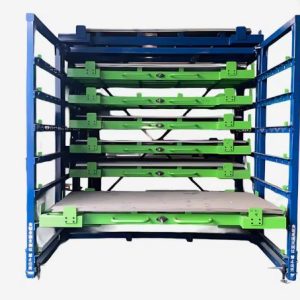
The Herochu drawer system counters this by providing continuous flat support across the full 3000-by-1500-millimeter area of each tray. The tray surface is machined flat to within 2 millimeters across its span, and the deck thickness is rated to carry up to 5 metric tons without deflection that would transmit curvature to the supported sheets. For thinner-gauge aluminum, optional plywood or HDPE overlay sheets can be placed on the tray surface to provide an even softer bearing surface that eliminates point-contact marks from the tray construction.
Surface Preservation During Automated Handling
The retrieval cycle in a Herochu tower is engineered to minimize the vibration and impact forces that can produce cosmetic defects in aluminum sheet. The carriage acceleration ramp is tuned to a gentle curve—roughly 0.3 meters per second squared—rather than an abrupt start that would cause sheets to shift within the drawer. The linear guide rails employ recirculating ball bearing blocks that maintain smooth motion even under full load, eliminating the stick-slip phenomenon that cheaper sliding-contact guides can exhibit.
At the drawer extension phase, the 12-meter-per-minute outlet speed is achieved through a separate chain drive with its own soft-start profile. The drawer basket glides on secondary guide rails that continue the load path from the main carriage into the extended position, so the full weight of the drawer and its contents is supported at every point in the extension stroke. There is no cantilever moment where the drawer might tip or bind—a failure mode that some competitor designs manage with stops and latches rather than continuous rail support.
Alloy Segregation and Inventory Accuracy
A sheet metal shop processing aluminum typically stocks multiple alloys for different customer requirements. Marine fabricators need 5083 and 5086 for corrosion resistance. Structural shops draw from 6061-T6. Sign and display manufacturers prefer 5052-H32 for formability. Aerospace-tier shops add 2024 and 7075 to the mix, often in multiple thicknesses per alloy.
When these materials share floor space on A-frame racks or pallet stacks, the visual similarity between alloy sheets—all silver-gray, all flat, distinguished only by mill stencil markings that fade or become obscured—creates a persistent risk of picking errors. A 5052 sheet inadvertently fed into a 6061 job may not be caught until post-weld inspection or, worse, after the finished assembly enters service.
Herochu’s approach uses the WMS-integrated PLC to enforce material identity at the point of retrieval. Each drawer position is assigned a material code, alloy, temper, and thickness in the control database. The operator selects the job-required material at the HMI, and only the drawer containing that specific stock is presented. The system does not rely on the operator to visually confirm that the retrieved sheet matches the work order; the mechanical constraint of drawer-to-material mapping provides the verification. Additional safeguards such as barcode scanning at the load/unload station can be added to cross-reference retrieved stock against job travelers.
Oxidation and Contamination Prevention
Aluminum naturally forms a thin oxide layer on exposure to air. Under clean, dry conditions, this passive layer is stable and protective. In a workshop environment, however, airborne contaminants—particularly chlorides from cutting fluids, sulfur compounds from welding, and ferrous dust from steel grinding—can accelerate localized corrosion that manifests as pitting or white rust on stored sheet surfaces.
Each Herochu drawer bay forms an effectively sealed compartment when in the retracted position. The drawer face closes against the tower frame with a narrow gap that, while not hermetic, blocks the direct airborne path that carries contaminants from nearby operations to exposed sheet surfaces. For facilities with particularly aggressive atmospheric conditions—coastal locations with salt spray, shops adjacent to chemical processing—Herochu can specify drawer seals and desiccant breather ports that further isolate the storage environment.
This protection is not merely cosmetic. Pitting corrosion on aluminum sheet can penetrate several thousandths of an inch into the surface, creating stress concentration points that affect forming behavior and fatigue life. For applications where surface finish is critical—architectural panels, anodized components, food-grade equipment—the elimination of storage-induced surface defects reduces downstream rework and rejection rates.
Production Line Integration
The tower’s placement within a production flow can take several forms, each affecting retrieval workflow differently. In a cell-based layout, the tower sits adjacent to a CNC router or waterjet cutter, with the load/unload station oriented toward the machine infeed. An operator calls up the next sheet, positions a vacuum lift or fork set, and transfers the sheet directly to the machine bed. The retrieval cycle overlaps with the previous part’s machining time, so the next sheet is waiting at the station when the machine completes its cycle.
In a centralized storage model, the tower serves as the single point of aluminum inventory for an entire facility. Integration with the factory’s WMS routes material requests from multiple production cells to the tower controller, which queues retrievals and presents drawers in order of requested priority. The 55-second maximum travel time is well within the lead time for most production changeovers, so material availability does not constrain cell throughput.
For lights-out or minimally staffed shifts, the tower can be programmed to pre-stage specific material combinations for upcoming production runs. The controller executes retrieval sequences according to a schedule loaded from the production planning system, positioning each required drawer at the station ahead of the shift start. Operators arrive to find material staged and ready, eliminating the first-hour productivity loss that often accompanies shift transitions.
Capacity Planning for Aluminum Inventories
The 8-to-13-layer configuration range allows the tower’s capacity to be sized to the specific aluminum inventory profile of each facility. A job shop carrying 30 distinct aluminum items—say, five alloys in three thicknesses each, with two sheet sizes—might require 8 to 10 drawers, with multiple items consolidated per drawer where bundle heights permit. A service center stocking full bundles of each grade and gauge might dedicate one drawer per item, pushing the configuration toward the 13-layer maximum.
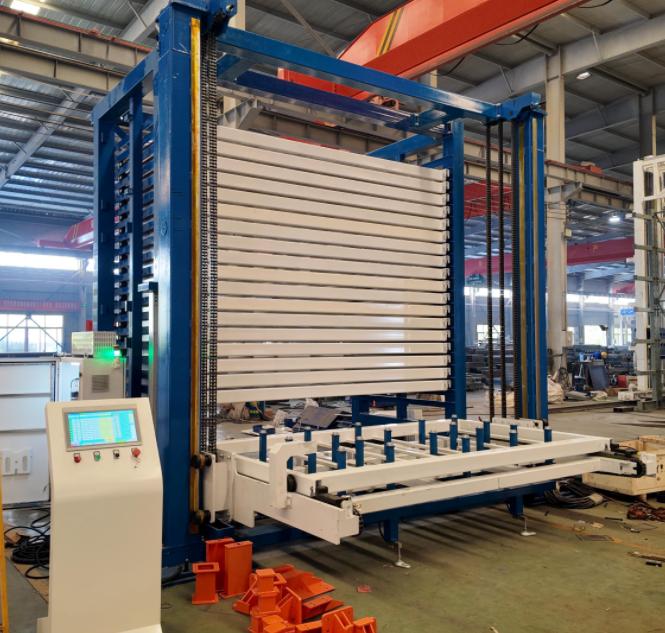
The 3-ton and 5-ton load ratings provide further granularity. For operations processing thin-gauge aluminum exclusively—0.5 to 3.0 millimeters—the 3-ton rating is generally sufficient, as a full drawer of thin sheet approaches the weight limit before the volume limit. For shops handling aluminum plate in the 6-to-25-millimeter range, the 5-ton rating accommodates the higher density of thick stock within the same drawer footprint.
Herochu’s application engineers can model the inventory profile against tower configurations to identify the arrangement that maximizes accessible items while staying within the system’s physical constraints. This modeling accounts for bundle dimensions, unit weights, retrieval frequency (fast-moving items positioned nearer the load/unload station), and any special handling requirements such as interleaved paper or plastic film between sheets.
Maintenance and Serviceability
The drive chain, guide rails, and bearings that constitute the motion system require periodic inspection and lubrication according to a schedule correlated with cycle count rather than calendar time. The PLC tracks cumulative cycles and can trigger maintenance reminders through the HMI at preset intervals—typically every 5,000 cycles for chain tension verification and every 20,000 cycles for rail bearing inspection.
Chain tension adjustment is a manual procedure performed at the drive sprocket assembly, accessible through a service panel at the tower base. The counterweight chains run in parallel guides that prevent entanglement in the event of a tension loss, and limit switches at the carriage extremities provide overtravel protection independent of the encoder position feedback.
The modular drawer tray construction allows individual trays to be removed for repair or replacement without disassembling the tower frame. In the event of fork impact damage to a drawer face—the most common mechanical incident in busy warehouse environments—the affected drawer can be extracted, the face plate replaced, and the drawer reinstalled within a single maintenance shift. Herochu maintains an inventory of replacement tray components at its distribution centers for expedited shipment to minimize equipment downtime.