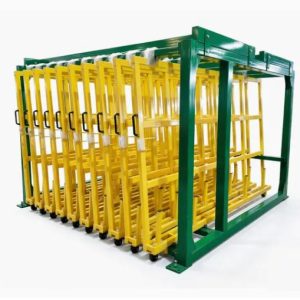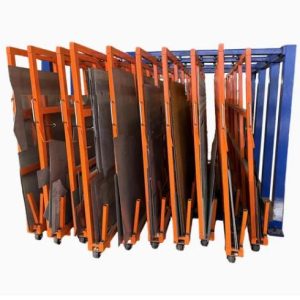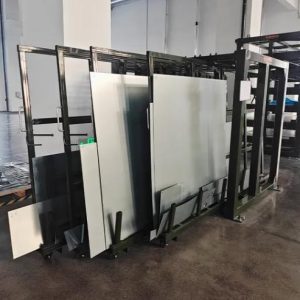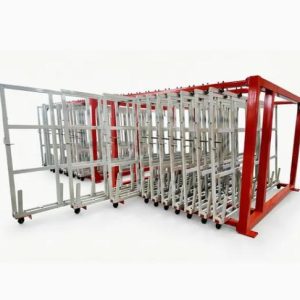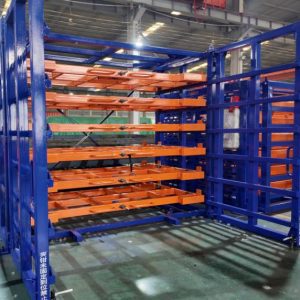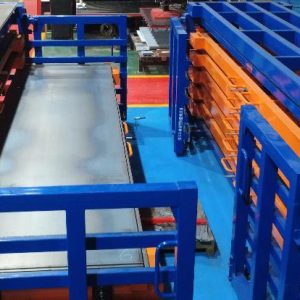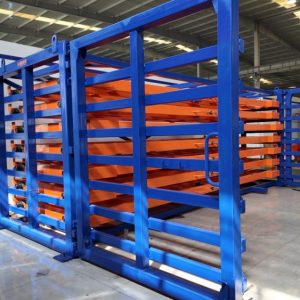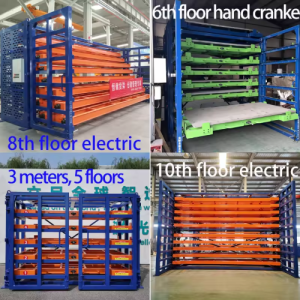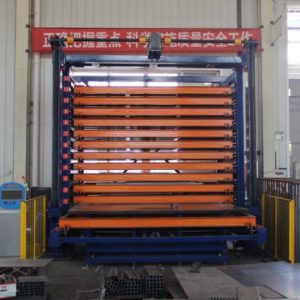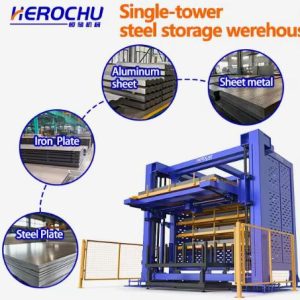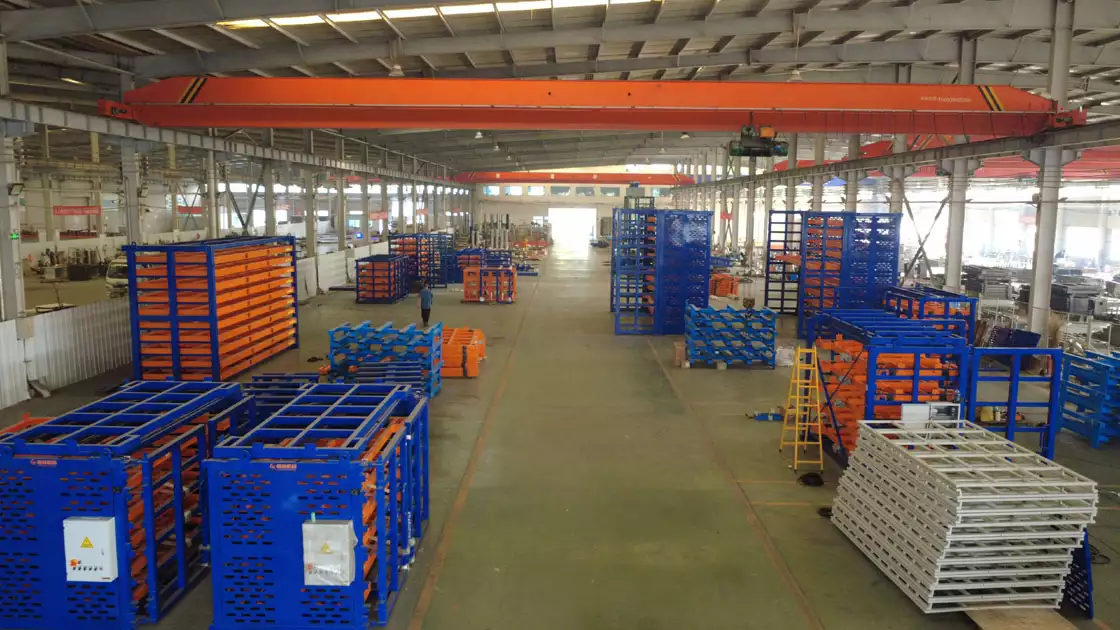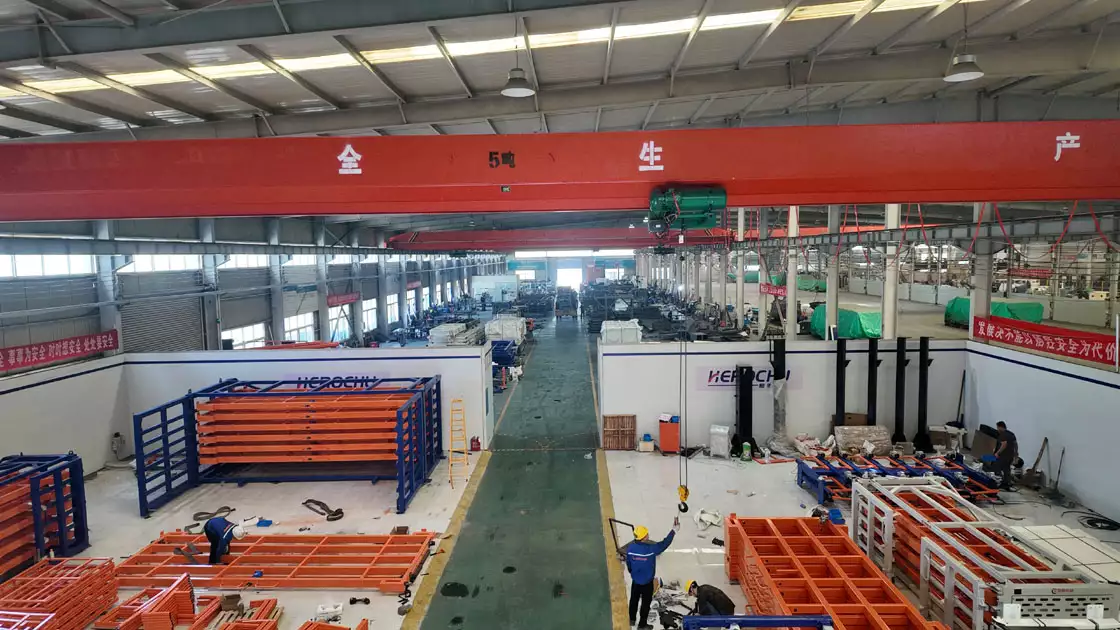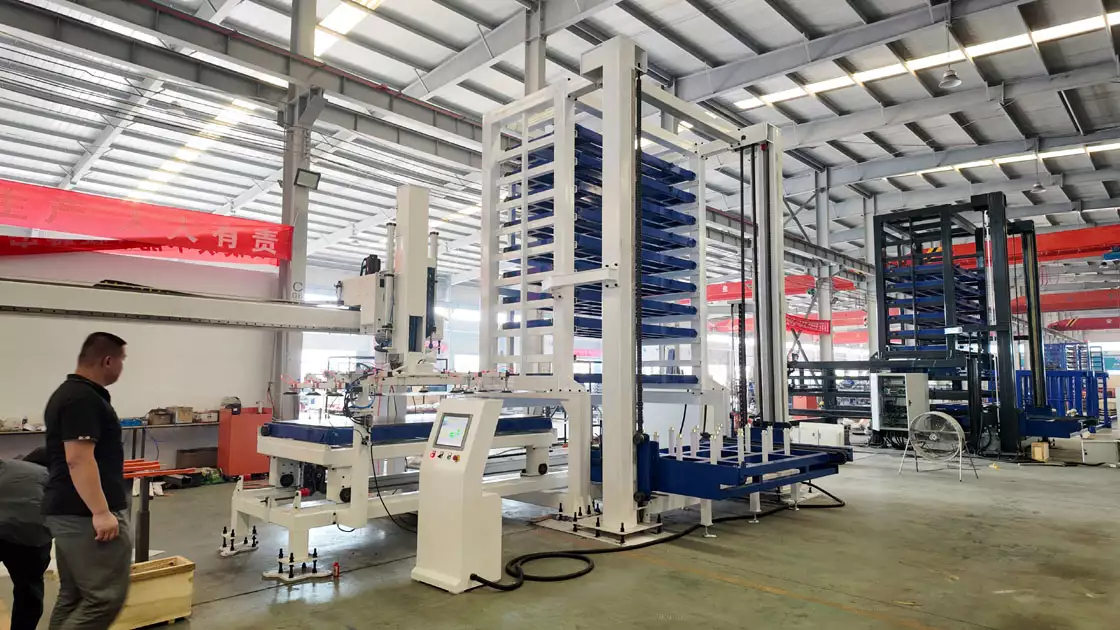
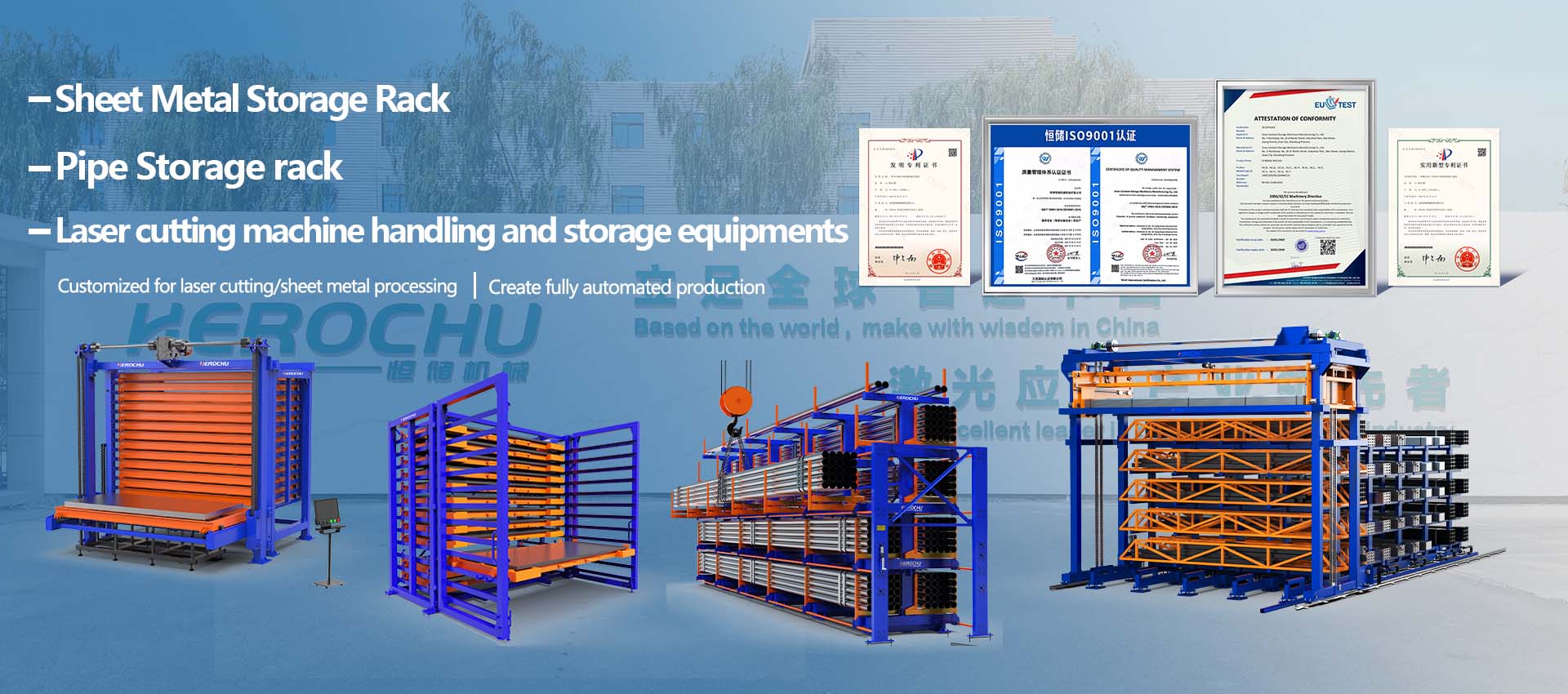
Floor space in a metal fabrication facility is not a fixed asset — it contracts every time a new machine arrives, a production cell expands, or an order backlog forces raw material staging into aisles that were designed for forklift traffic. A vertical metal offcut storage rack, heavy duty by specification, reclaims floor area by moving remnants upward into a compact drawer column instead of spreading them outward across pallets, shelving units, and open floor zones.
Herochu’s HC-V vertical offcut storage rack compresses what would occupy 20 to 30 square meters of horizontal pallet storage into a footprint of roughly 3 to 5 square meters — a reduction in floor consumption approaching 75 percent. For a shop leasing industrial space at competitive rates, this floor recovery translates into production square footage that generates revenue rather than storing yesterday’s cutting waste.
Why Vertical Storage Changes the Economics of Offcuts
Offcuts are awkward inventory. They are too small to return to the supplier, too large to scrap without documenting the cost, and too irregular to stack neatly. The typical response is to pile them in a designated corner — a zone that grows organically as cutting volume increases and shrinks only when someone with a truck and free time hauls a load to the scrap yard.
The problem with this approach is not just the lost floor space. Offcuts sitting in a pile lose traceability. A worker who needs a 300 mm × 200 mm piece of 3 mm 304 stainless for a rush order will check the scrap pile first because it is faster than cutting from a full sheet. If the pile is disorganized, the search fails, the worker cuts a fresh piece from stock, and the offcut that could have done the job stays in the pile — now buried deeper.
A Herochu vertical metal offcut storage rack changes this dynamic by giving every offcut a recoverable location. Each drawer in the HC-V system holds material of a known grade, thickness range, or dimensional category. A shop supervisor can walk to the rack, pull one drawer labeled “304 SS, 1.5–3.0 mm, small blanks,” and visually scan the contents in under 10 seconds. If the needed piece is there, it goes to the production cell. If not, the worker knows immediately — no digging through a pile to reach the same conclusion after five minutes.
Quantifying the Floor Recovery
Consider a fabrication shop that currently stores offcuts on five standard pallets arranged across a 6 m × 4 m area (24 m²). Each pallet holds a haphazard stack of pieces, and operators need walking clearance on at least two sides of each pallet to inspect the contents. The real consumed floor area, including access lanes, approaches 35 m².
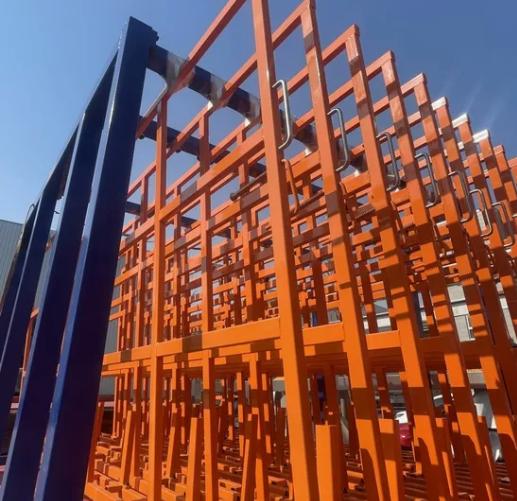
A single Herochu HC-V3015-15 rack occupies 2.7 m × 1.7 m = 4.6 m² of floor area — and it stores the offcut equivalent of roughly four to five fully loaded pallets because the 15-drawer vertical arrangement holds material across 15 discrete layers within the same footprint. The shop recovers approximately 30 m² of floor space, enough to install a small press brake, a deburring station, or additional staging area for in-process work.
For shops with tighter layouts — narrow-bay buildings, leased units in multi-tenant industrial parks, or production floors where machine density is already at capacity — this floor recovery can postpone or eliminate the need for a building expansion. The avoided capital cost of additional square footage often exceeds the purchase price of the rack by a substantial margin.
Offcut Management as a Lean Manufacturing Practice
Lean manufacturing principles treat disorganized material as a form of waste — not scrap waste, but motion waste and waiting waste. Motion waste occurs when a worker walks 40 meters across the shop to search through a scrap pile, finds nothing useful, and walks back empty-handed. Waiting waste occurs when a CNC laser sits idle because the operator is searching for a remnant that would allow the machine to start the next nest immediately.
Herochu’s vertical metal offcut storage rack reduces both forms of waste by co-locating offcuts in a structured retrieval zone. When the rack sits within 10 meters of the cutting station, the laser operator can check offcut availability during the nesting software’s calculation cycle — a 15-second task that determines whether the machine uses a remnant or consumes a fresh sheet. The operator’s decision is data-driven rather than guesswork, and the machine’s material utilization rate improves as a direct consequence.
Material Preservation in Vertical Configuration
Flat stacking causes surface damage through friction. A 12 mm carbon steel plate resting on top of a 1.5 mm brushed stainless sheet will leave scratches in the stainless surface even if nobody moves either piece — the weight alone generates enough contact pressure to mark the material. If the plates are shifted during stacking or retrieval, the abrasion intensifies.
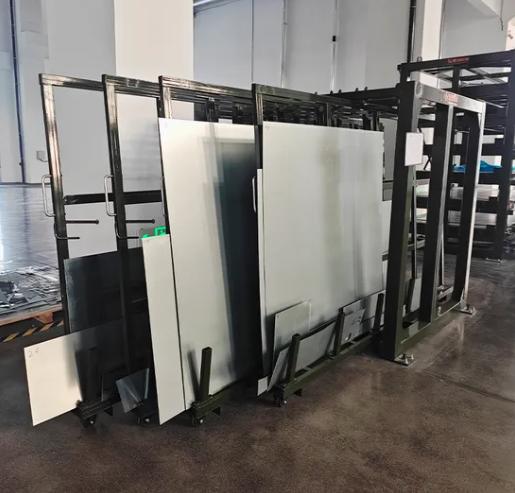
A Herochu vertical metal offcut storage rack eliminates plate-to-plate contact. Each drawer holds a single layer of offcuts, separated from the drawer above by the steel deck. The drawer deck supports the load, not the material stored below it. This physical isolation protects the surface finish of aluminum sheets, pre-painted steel, galvanized stock, and polished stainless — materials whose value depends partly on cosmetic condition.
For service centers that sell remnants by weight or piece count, the preserved surface condition maintains the resale value of the material. A scratched stainless remnant sells at a discount or goes to scrap pricing. The same piece stored in a clean drawer retains near-original value.
Inventory Visibility and Reorder Avoidance
A well-organized offcut rack doubles as a visual inventory tool. When the supervisor opens drawers during the morning walkthrough, the quantity of remnants in each category is immediately visible. If the “5 mm carbon steel, medium blanks” drawer is nearly full, the production schedule can prioritize jobs that consume that material before ordering new stock. If the “2 mm aluminum, large offcuts” drawer is nearly empty, the purchasing department knows that the next aluminum order should include full sheets rather than assuming offcuts will cover small-part requirements.
This visibility prevents over-ordering — a common outcome when the purchasing department cannot see what is already on the shop floor and buys material based on the bill of materials alone, unaware that usable remnants could cover 15 to 25 percent of the requirement.
Heavy-Duty Specification for Industrial Environments
Herochu builds the HC-V vertical offcut storage rack on the same Q235B structural steel frame as the rest of the roll-out rack series, rated for 1,000 kg per drawer as standard. The powder-coated finish withstands the workshop atmosphere — humidity, airborne oil mist, welding fume residue — without surface degradation over a multi-year service interval. The drawer guide rails use hardened steel ball-bearing carriages that maintain their rolling tolerance after tens of thousands of extension cycles, so the smooth pull-out characteristic does not degrade as the rack ages.
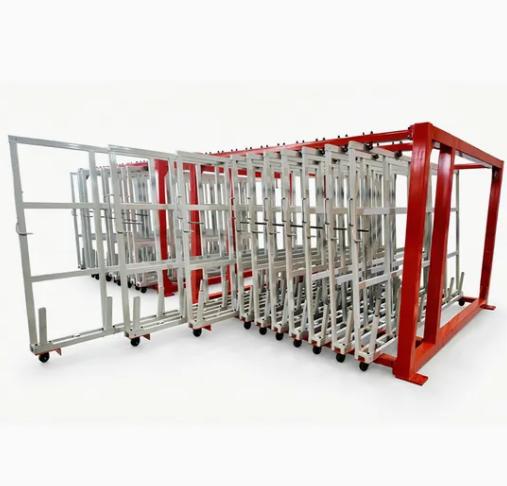
For shops investing in lean material flow and looking to convert remnant storage from a cost center into a working asset, Herochu’s heavy duty vertical metal offcut storage rack delivers measurable floor recovery, faster material access, and a systematic approach to offcut reuse that pays back through reduced raw material purchasing and avoided scrap disposal fees.