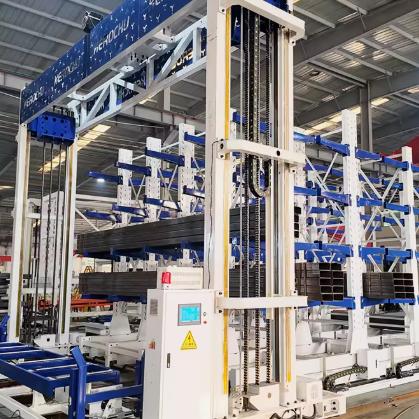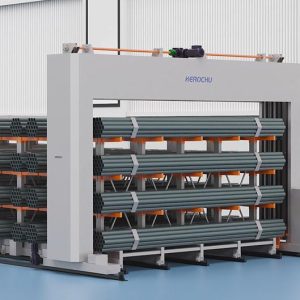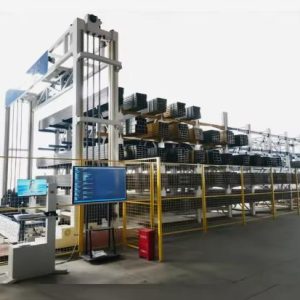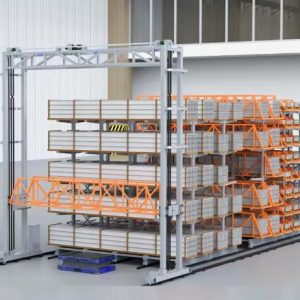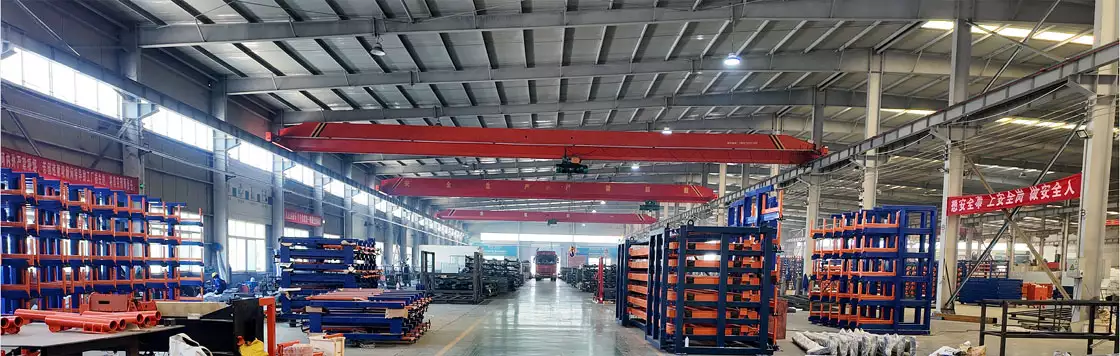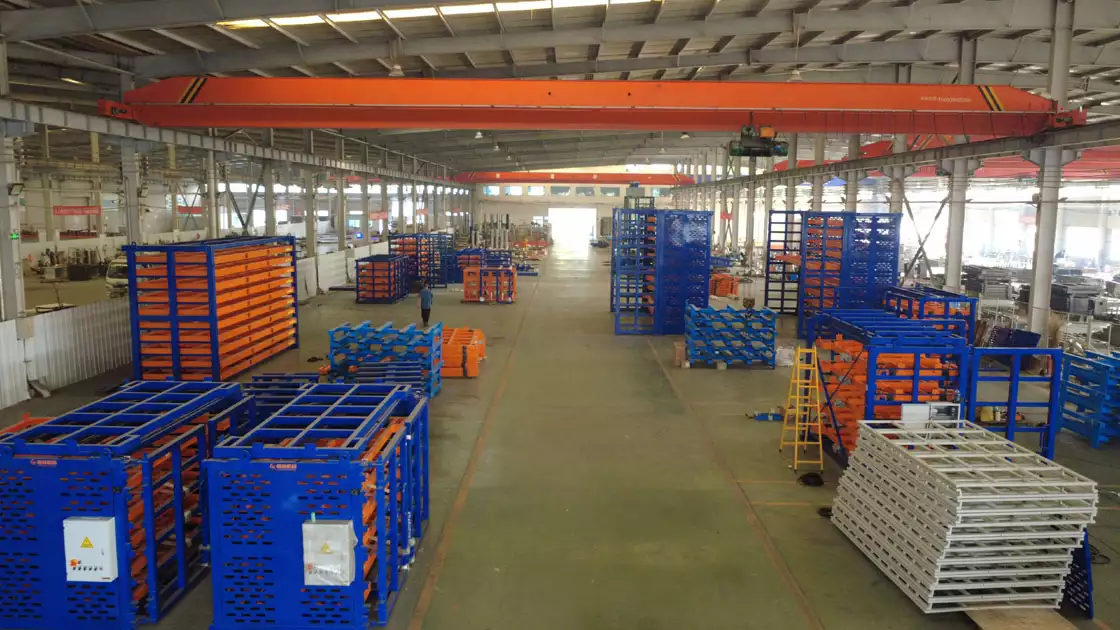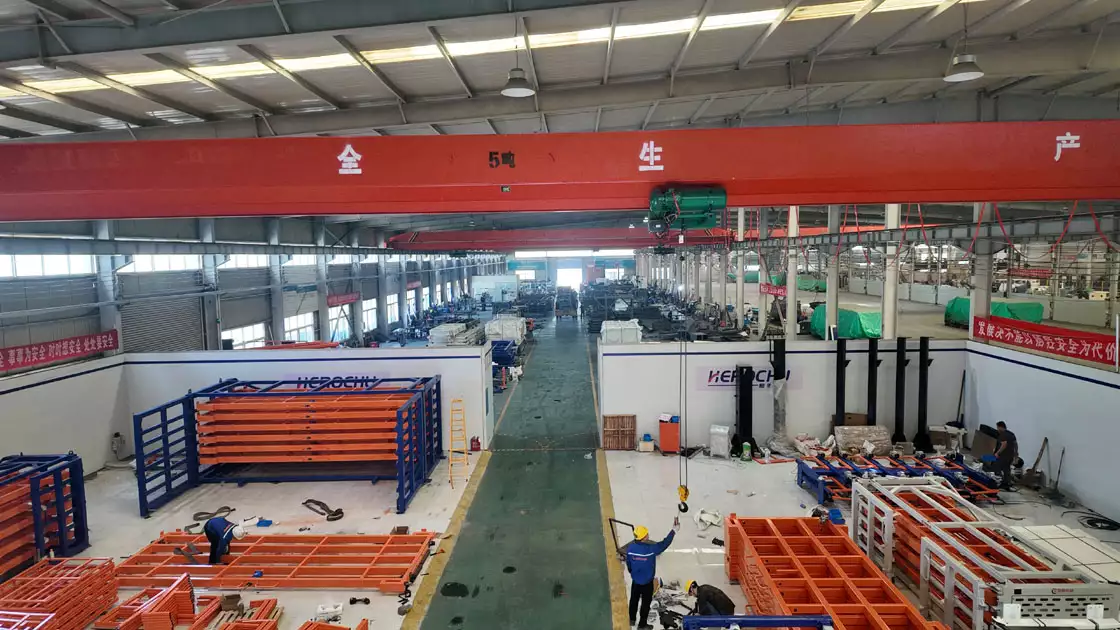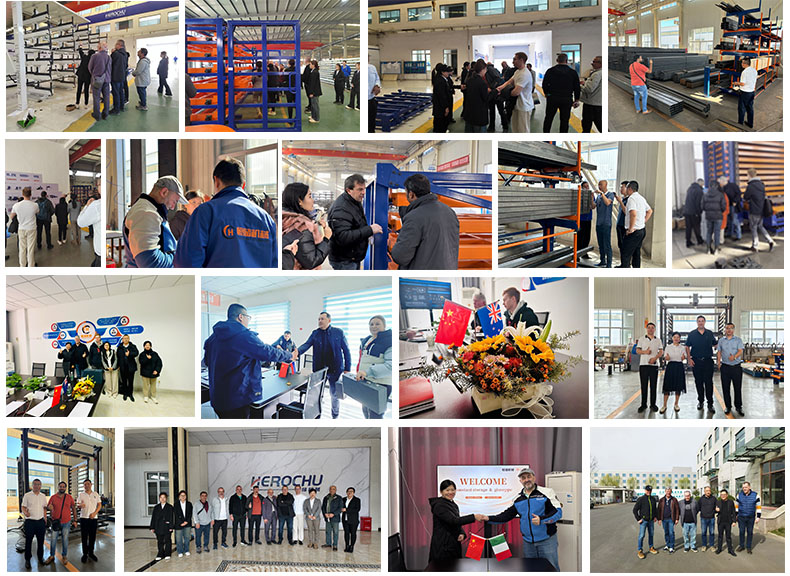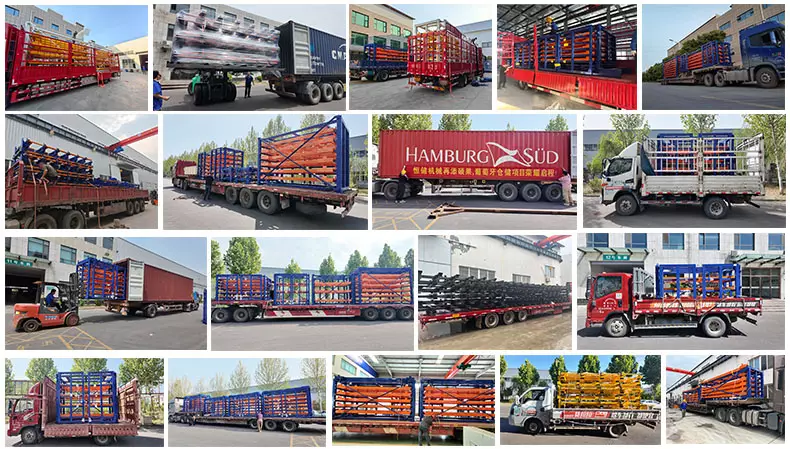
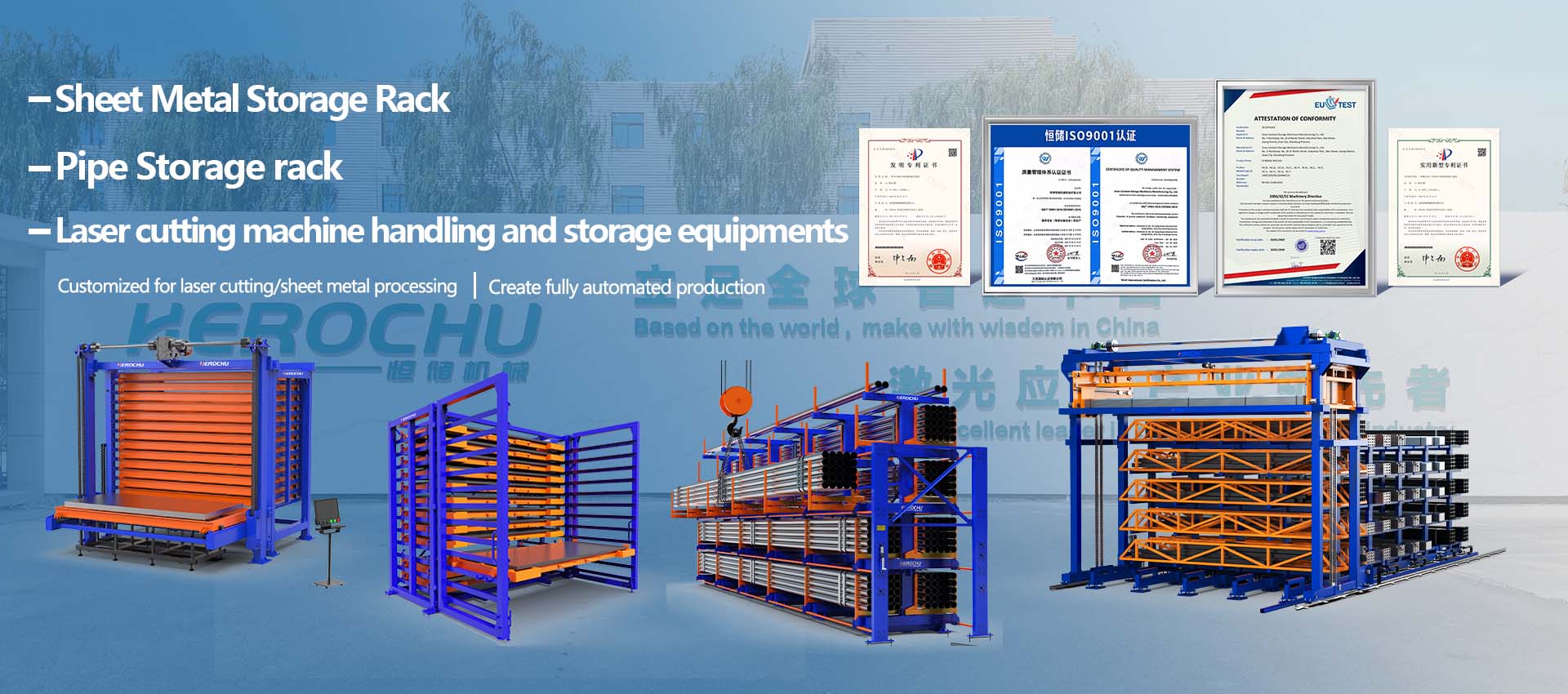
Metal service centers, structural steel fabricators, and tube processing plants share a familiar bottleneck: the sprawling floor space consumed by heavy pipes, bars, and long profiles stored in horizontal A-frames or stacked on dunnage. These manual arrangements swallow thousands of square feet, expose workers to repetitive lifting injuries, and make inventory counts a matter of walking the yard with a clipboard. Herochu addresses this problem at its root with an automated storage and retrieval system purpose-built for heavy-duty pipe and bar racks — a vertical, gantry-driven solution that condenses chaotic floor storage into a digitally managed multi-level rack structure.
The Core Architecture
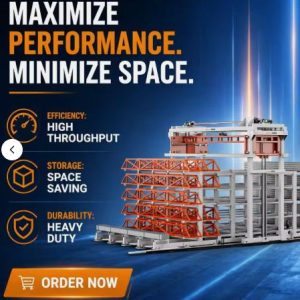
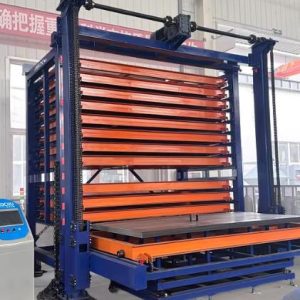
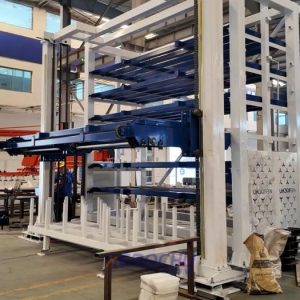
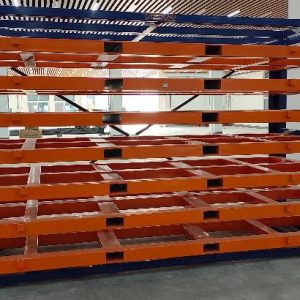
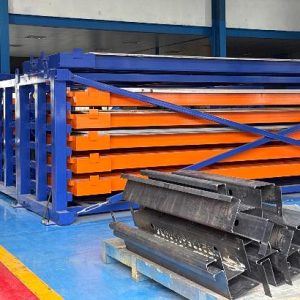
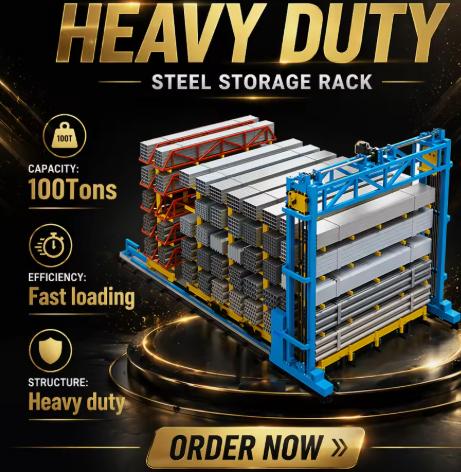
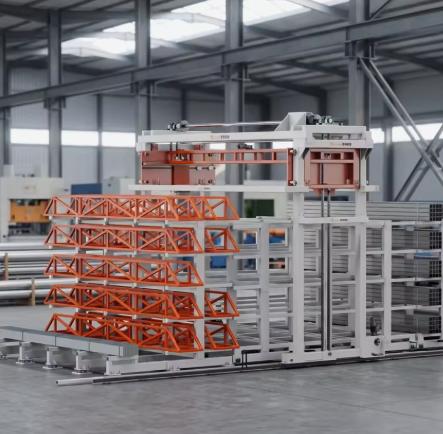
The system replaces horizontal sprawl with vertical density. Herochu configures each installation around the customer’s material mix: pipe lengths from 6,000 mm to 8,000 mm, alloy types, diameter ranges, and daily throughput requirements. The rack structure rises from five to thirteen levels depending on ceiling clearance, with each shelf tier engineered for loads reaching 3,000 kg to 5,000 kg per level. The rack itself is fabricated from Q235B structural steel, welded and bolted into a rigid frame that resists deflection under asymmetric loading — a critical factor when one side of a bay holds full bundles of 8-meter Schedule 80 pipe while the opposite side sits empty.
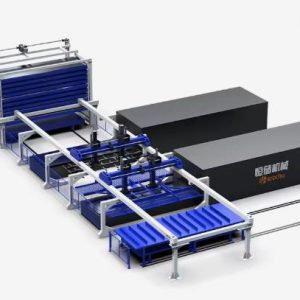
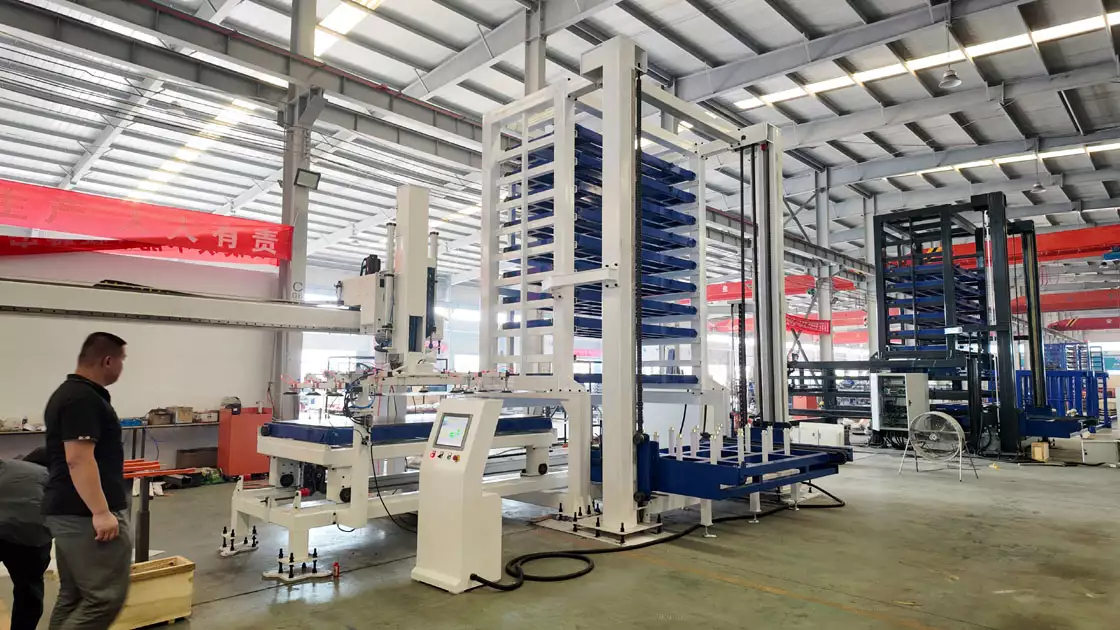
Between the rack towers runs a motorized gantry crane traveling on precision ground rails. This gantry carries the lifting carriage and gripping mechanism that does the actual work of picking and placing material bundles. Horizontal travel operates at 5 to 30 meters per minute, vertical lift at 5 to 15 meters per minute, with positioning repeatability held to ±2 mm. The gantry does not drift into position by dead reckoning — it reads absolute encoder feedback from the rail and rack coordinates mapped during commissioning.
How Automated Retrieval Works
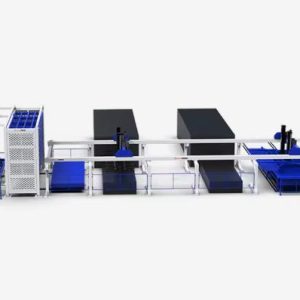
An operator at the central touchscreen panel selects a material entry from the inventory database. The selection triggers the gantry to travel to the designated rack bay, align the lifting forks or cradle with the target shelf, extract the bundle, and deliver it to the ground-level retrieval station. The full cycle — from screen tap to material at the pickup point — typically completes within 90 seconds.
The retrieval process eliminates three manual steps that dominate conventional pipe yards: locating the correct bundle (which in a disorganized yard can take ten minutes of crane maneuvering), rigging it for lift, and transporting it across the facility. With the Herochu automated storage and retrieval system for heavy-duty pipe and bar racks, the material arrives at a fixed workstation where a forklift or overhead crane picks it up for its next production step.
Inventory Without the Clipboard
Each storage location is assigned a digital address. When a bundle enters the system, the operator logs its specifications — material grade, heat number, dimensions, remaining length if partially consumed, and supplier batch. The PLC-based control software stores this data and displays it in a real-time dashboard. A facility manager can see, at a glance, exactly how many tons of 6-inch Schedule 40 carbon steel pipe remain in stock, which heat numbers they belong to, and where each bundle sits.
This digital twin eliminates physical inventory walks. It also prevents the common error of cutting from the wrong heat number — a mistake that costs fabricators rework, material waste, and certification headaches when traceability matters. Herochu builds the inventory module to export data in formats compatible with common ERP platforms, so procurement can trigger reorders automatically when stock dips below defined thresholds.
Material Compatibility Across the Size Spectrum
One design challenge for automated pipe storage is the wide range of material dimensions a typical facility handles. The same system might need to store 20-foot lengths of 12-inch structural tubing alongside short remnants under 3 feet. Herochu addresses this with configurable shelf layouts. Deep bays accept full-length stock while subdivided compartments with adjustable dividers corral short pieces and loose bars that would otherwise end up in scrap bins or lean-to piles along the factory wall. This full-size compatibility means the system absorbs nearly all the facility’s long-material inventory rather than leaving the awkward odds and ends on the floor.
Safety and Ergonomics
Manual pipe handling carries a well-documented injury risk. A single length of 8-inch Schedule 80 pipe weighs over 200 pounds; a full bundle multiplies that force to the ton range. Forklift operators navigating tight aisles between stacked pipe racks face crush hazards, tip-over risks, and repetitive strain from constant maneuvering. The Herochu gantry ASRS removes personnel from the storage aisle entirely. Workers interact with the system at the control panel and the retrieval station — both positioned outside the rack footprint. Mechanical handling eliminates the variables of human error: no dropped bundles, no shifting loads, no misjudged clearances.
Scale and Future Expansion
The modular rack design supports phased deployment. A facility can start with six towers configured for current throughput and add towers later without re-engineering the control system. The gantry rail extends in sections, and additional rack columns bolt to the existing frame. Herochu sizes the initial control architecture to accommodate the planned full build-out, so expansion becomes a mechanical installation rather than a controls retrofit.
This approach suits manufacturers who anticipate volume growth or who prefer to validate the system with a pilot deployment before committing to a facility-wide installation. It also allows shops processing multiple material types — pipe, structural tube, bar stock — to dedicate separate rack zones with different shelf configurations under a single gantry control umbrella.
The Bottom Line
Floor space reclaimed by vertical pipe storage converts directly to revenue-generating production area. A typical installation recovering 60 to 70 percent of the former pipe storage footprint can house additional CNC saws, laser tube cutters, or welding cells in that freed space. Combined with the labor savings from automated retrieval and the inventory accuracy from digital tracking, the system typically achieves payback within 18 to 24 months of operation. For fabricators and service centers managing thousands of tons of long material annually, the Herochu automated pipe storage and retrieval system represents a structural improvement to material flow — not just a storage upgrade.