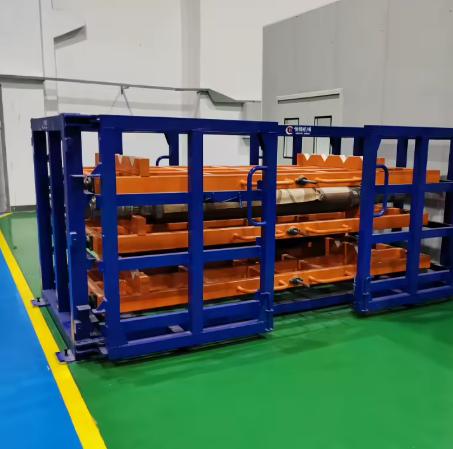
Will a drawer rack scratch stainless sheets during retrieval?
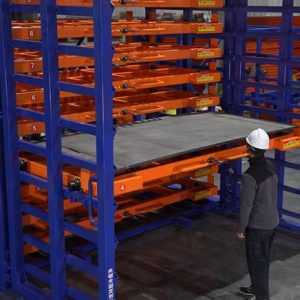
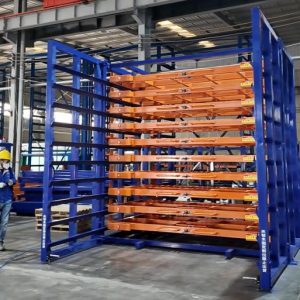
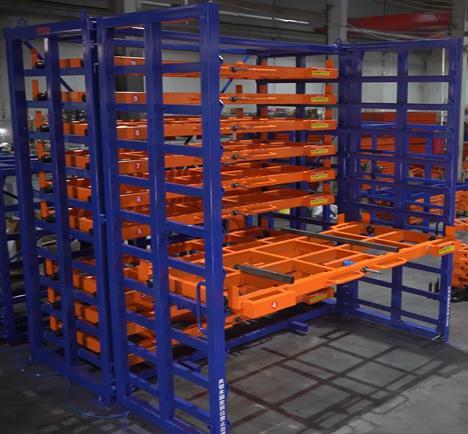
The risk is lower than with stack shuffling because the target drawer is extended and the sheet is lifted from an exposed face, not dragged across other sheets. The drawer itself moves under the load, so the sheet stays stationary relative to the drawer surface during pull-out.
Can the rack handle both stainless and aluminum in the same unit?
Yes. The multi-layer drawer format separates materials by tier, and Herochu builds drawer dimensions and clear space to match the sheet formats in use, including 4×8 ft and 5×10 ft products. Label slots on each drawer front keep material identification visible.
Does the hand crank work for a 5-ton stainless load?
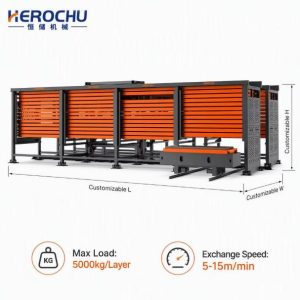
For single-layer loads up to 5 tons and six layers or fewer, the hand crank is the standard operating method. Herochu also offers electric roll-out configurations when layer counts or load weights push beyond the comfortable manual range.
Can one person really pull out a drawer carrying several tons?
Yes. The hand crank drives a gear mechanism that multiplies torque, so the operator turns a handle rather than pulling the load. On Herochu HC-B series racks, a single operator can extend a drawer carrying three to five tons without forklift assistance.
Does a drawer rack need a forklift every time a sheet is retrieved?
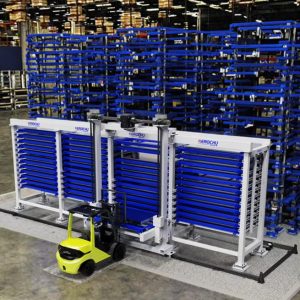
No. The drawer brings the sheet to the aisle. A crane, vacuum lifter, or forklift is used to lift the exposed sheet off the drawer, but the drawer itself is extended by hand crank or remote control. That separation is what removes the forklift from the access step.
How much floor space does a drawer rack actually save?
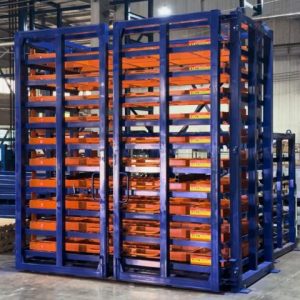
Facilities using drawer-type sheet storage report floor-space savings of up to 80% compared with disorganized floor stacking and fixed rack layouts, because the system uses vertical height and requires only a narrow operator aisle.