Manual Loading Vacuum Manipulator for Metal Sheets
The phrase “manual loading” in a product description can create the wrong impression. It suggests a device that assists an operator without changing the fundamental nature of the task—a slightly easier version of what was already happening. A well-designed manual loading vacuum manipulator for metal sheets does something different. It removes the weight from the operator entirely while leaving positioning decisions under human control. The distinction is worth examining for shops that have ruled out full automation but still need to stop lifting 300kg plates by hand.
Manual Loading Vacuum Manipulator for Metal Sheets
The phrase “manual loading” in a product description can create the wrong impression. It suggests a device that assists an operator without changing the fundamental nature of the task—a slightly easier version of what was already happening. A well-designed manual loading vacuummanipulator for metal sheets does something different. It removes the weight from the operator entirely while leaving positioning decisions under human control. The distinction is worth examining for shops that have ruled out full automation but still need to stop lifting300kgplates by hand.
What the operator actually does
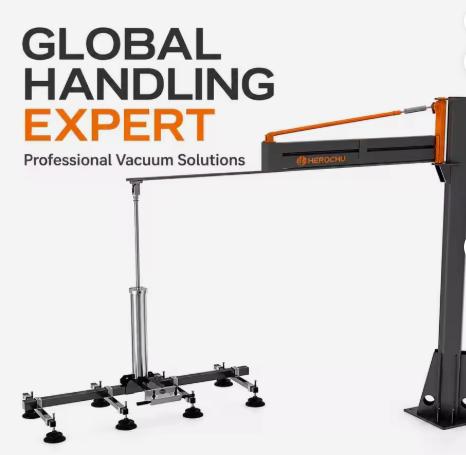
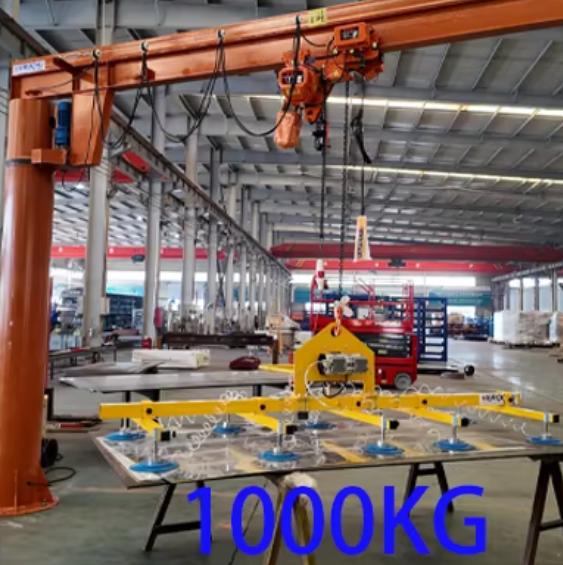
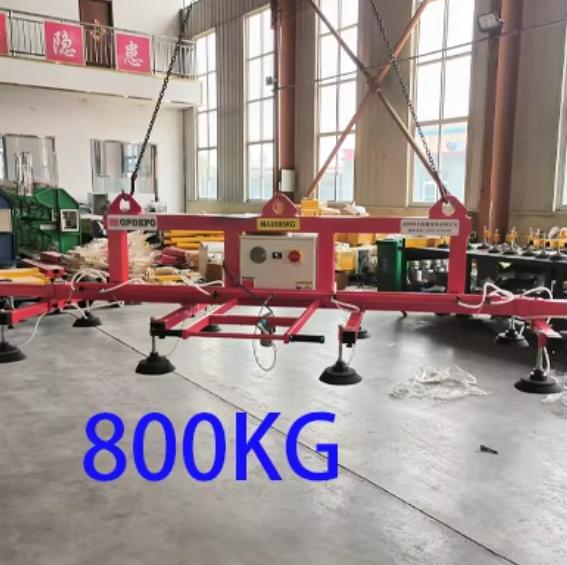
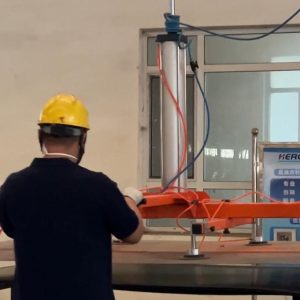
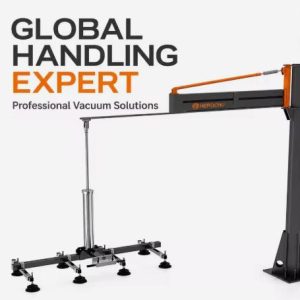
In a Herochumanual loadingvacuum manipulator, the operator’s physical input is limited to guidance. The pneumatic circuit carries the weight. The boom balances the load so that a 500kgsteel plate moves with roughly the effort required to push an empty shopping cart. The operator positions the vacuum frame over the sheet, opens the valve to engage suction, guides the balanced load across the floor, and releases at the destination.
This division of labor is deliberate. Full robotic loading requires programming, fixturing, and a consistent input stream. Many fabrication shops do not have that consistency—they run mixed jobs, varying plate sizes, and short batches where setup time for automation would exceed the labor it replaces. A manual manipulator adapts to the next job in seconds because the operator is the program.
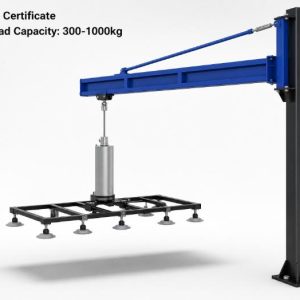
Herochu builds the HC-RP series around this principle. The pneumatic balance system means the load stays where the operator puts it, at any point in the travel arc. There is no drift, no creep, and no need to hold a control valve open to maintain position. The operator stops moving, and the plate stops.
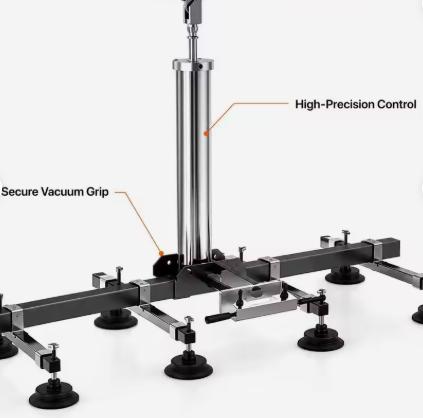
The eight-cup array on Herochu manual manipulators uses 200 mm polyurethane cups. The cup material resists cutting fluid, drawing oil, and the general grime of a working shop floor. More importantly, the cups flex to conform to surfaces that are not perfectly flat—warped edges, cut remnants, slightly dished plates. A rigid cup would leak at the first imperfection. A flexible cup maintains seal.
The practical result is that the same manipulator handles carbonsteel, stainless, and aluminum without configuration changes. Stainless presents a smoother surface than carbon steel, which actually improves seal quality. Aluminum’s oxide layer does not interfere with vacuum adhesion. Shops processing mixed materials on shared equipment do not need to swap handling devices between jobs.
Sheet separation is the other material-handling problem that vacuum systems must address. Thin plates stacked under their own weight can adhere through a combination of surface tension and air exclusion. Lifting the top sheet often brings the second with it. Herochu incorporates a separation function that breaks the adhesion before the lift proceeds, preventing double-sheet picks that can damage downstream equipment or cause positioning errors.
The case for manual control is strongest in high-mix environments. A shop that cuts fifty different part numbers in a week does not benefit from a loading system that requires reprogramming between jobs. The operator sees the plate, knows the destination, and moves it. The manipulator removes the physical strain without introducing a programming interface.
Herochu offers both manual and automatic control options on the same platform. The manual version uses direct valve control and guided boom motion. The automatic version adds servo-driven actuators and a computer-controlled positioning system with ±2 mm repeatability. The choice depends on production patterns, not on a judgment about which technology is “better.” A job shop with variable flow will often get more throughput from a manual unit than an automatic one that sits idle during changeovers.
The safety case for a manual manipulator is not weaker than for an automated one—it is simply different. Herochu equips the manual units with the same gas cut-off protection as the automated versions. If air pressure drops, a check valve locks the vacuum circuit and holds the plate. The operator lowers the load manually rather than watching it fall.
The pneumatic architecture contributes to safety in a less obvious way: there are no electrical components near the lifting point. In shops where oil mist or metal dust is present, eliminating spark risk at the vacuum head is a meaningful precaution. The control valves are manual, the motion is air-balanced, and the failure modes are predictable and slow rather than sudden and energetic.
The maintenance reality
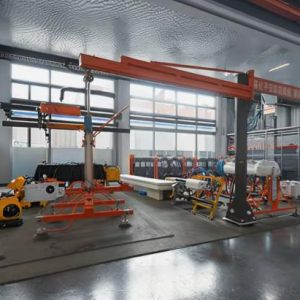
Manual manipulators have fewer components that can fail. There is no servo drive to tune, no encoder to align, no PLC to troubleshoot. The vacuum cups wear and are replaced with a bolt-on procedure. The pneumatic seals eventually degrade and are replaced as a routine maintenance item. Herochu designs the boom for disassembly without specialized tools, which matters in a shop where the manipulator is one of twenty machines and cannot afford a week of downtime for a seal replacement.
For operations that have been handling sheet metal manually and considering their first mechanical assist, the manual vacuum manipulator is often the appropriate entry point. It addresses the immediate physical hazard without committing the shop to an automation workflow it is not yet organized to support.
FAQ
Here are some frequently asked questions about our sheet metal racks and pipe storage solutions. We hope you find them helpful!
Q1: Can I request a custom size or color? Absolutely. We offer complimentary design services and deliver efficient, tailored solutions to meet your specific requirements.
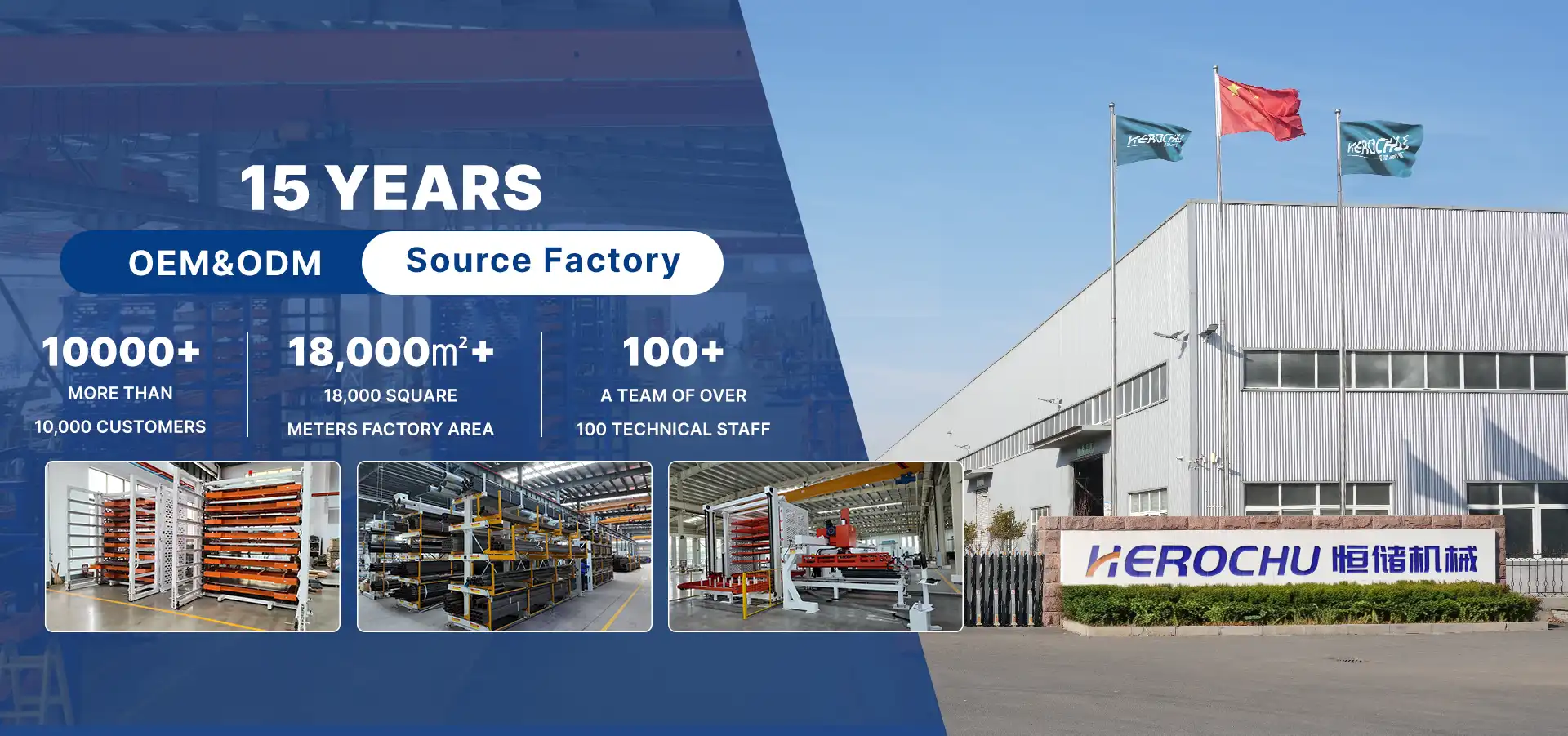
Q2: Are you a manufacturer or a distributor? We are a direct manufacturer with over 15 years of industry experience and expertise.
Q3: Is there a minimum order quantity? No. We welcome orders of any size, starting from a single unit.
Q4: How can I get detailed product information? Click the “Get a Quote” button to receive product images, detailed specifications, and videos. Our team is always ready to assist.
Q5: How do I provide my storage rack requirements? Simply share the type, dimensions, and quantity of materials you plan to store, along with any other specific needs. We will develop a professional storage solution for you. Alternatively, leave your contact details for a personalized consultation.
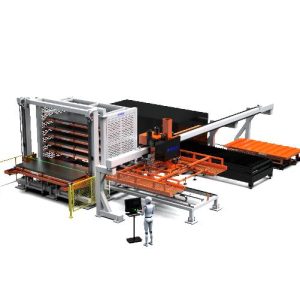
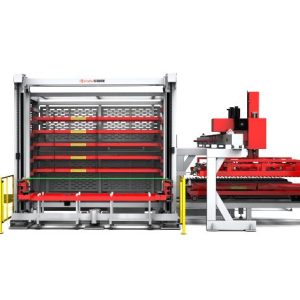
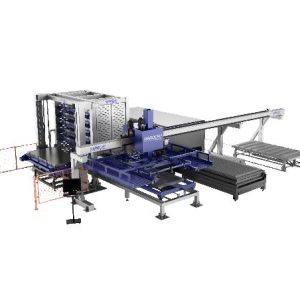
Q6: Do you offer automated loading systems or robotic arms? Yes. We provide loading robotic arms and integrated loading/unloading systems tailored to your laser cutting machine’s table size and material handling method (e.g., board rack, exchange platform, or material warehouse). Contact us with your details for a customized proposal.
Q7: Do you provide on-site installation and debugging? Yes. Our technicians can travel to your facility for installation and debugging, ensuring successful operation. We have served clients globally, including in the USA, South Korea, Russia, Qatar, Mexico, South Africa, Egypt, and Lebanon.
Q8: How do you ensure product quality? Our quality assurance includes:
A team of over 40 technical engineers for professional debugging and support.
A dedicated quality control department compliant with ISO9001 standards.
CE certification for all exports.
Rigorous load testing before shipment to ensure structural safety and reliability.
Q9: Where is your factory located? Our modern 10,000-square-meter manufacturing facility is located in Jiyang Industrial Park, Jinan, Shandong, China.
Q10: How can I evaluate your company’s capabilities? We offer virtual video factory tours and warmly welcome on-site visits.
Q11: What does your company specialize in? Jinan Constant Storage Machinery Manufacturing Co., Ltd. is a high-tech enterprise specializing in the R&D, production, sales, installation, and service of intelligent storage solutions. Our product range includes sheet material warehouses, drawer-style shelves, cantilever racks, servo manipulators, gantry loaders, and fully automated handling systems. Supported by a skilled technical team and advanced equipment, we are committed to delivering high-performance storage products and solutions to customers worldwide.
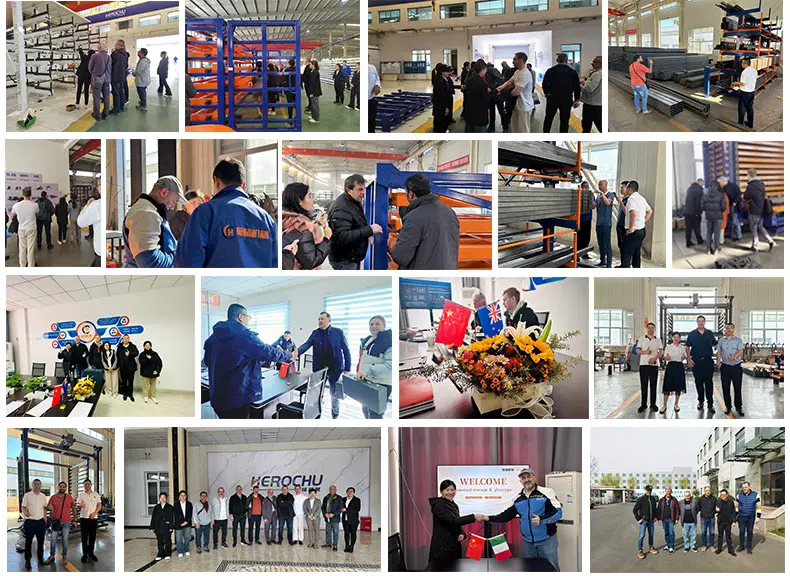
Customer visit
Herochu has always been adhering to the market-centric approach to meet customer requirements to the maximum extent, and the business philosophy of “creating brands with heart and gaining reputation with sincerity”. It provides customers with high-quality products and services with rigorous military quality, professionalism, and excellence, and has won unanimous praise in the Chinese aerospace, Chinese weapons, Chinese railways, automobile manufacturing, engineering machinery, non-ferrous metal titanium alloy and other industries.