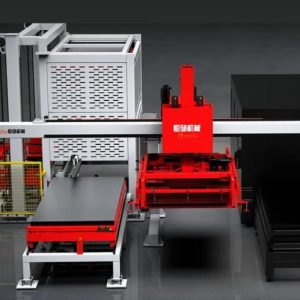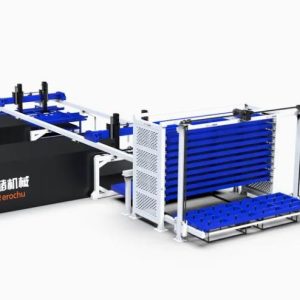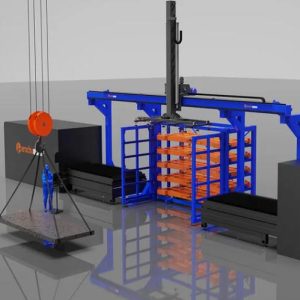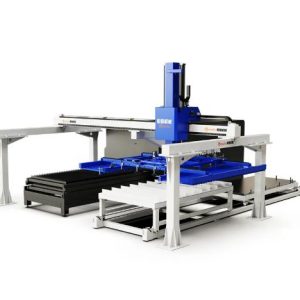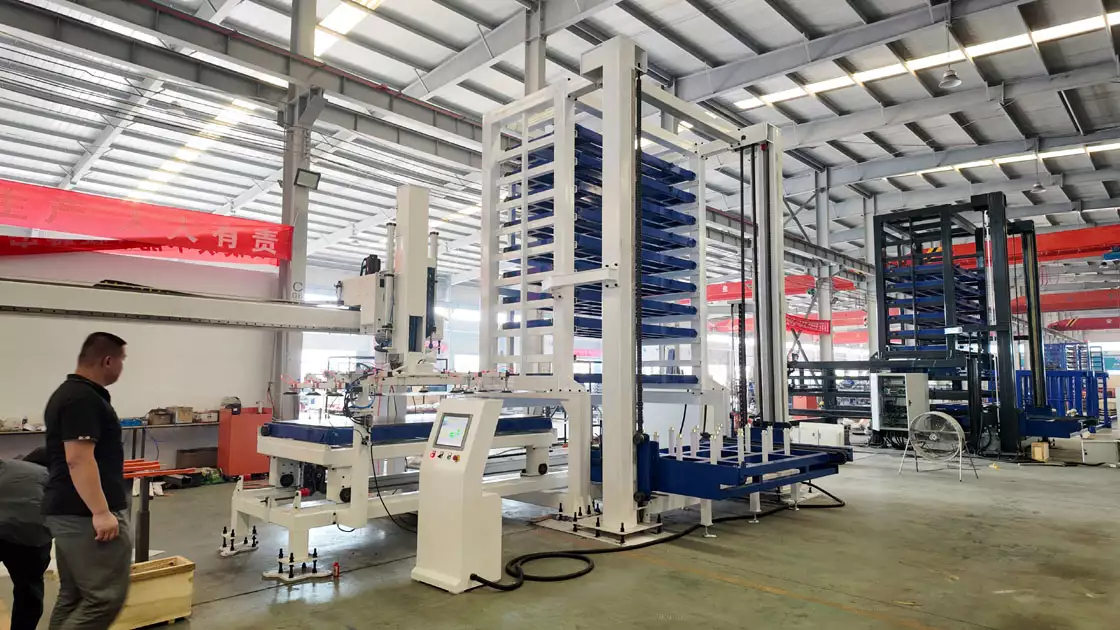
Most gantry loading systems are sold as fixed configurations: a specific sheet size range, a specific load capacity, a specific span between storage and cutting bed. That works when the production floor follows a predictable layout. It fails when the warehouse is positioned at an angle to the laser, or when the material mix includes both 1.5 m and 6 m sheets, or when the existing storage tower was installed a decade before the automation upgrade.
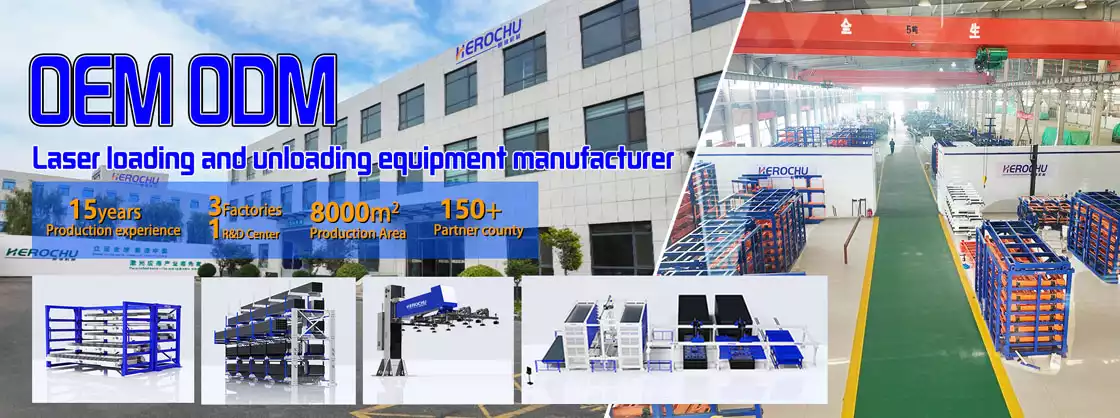
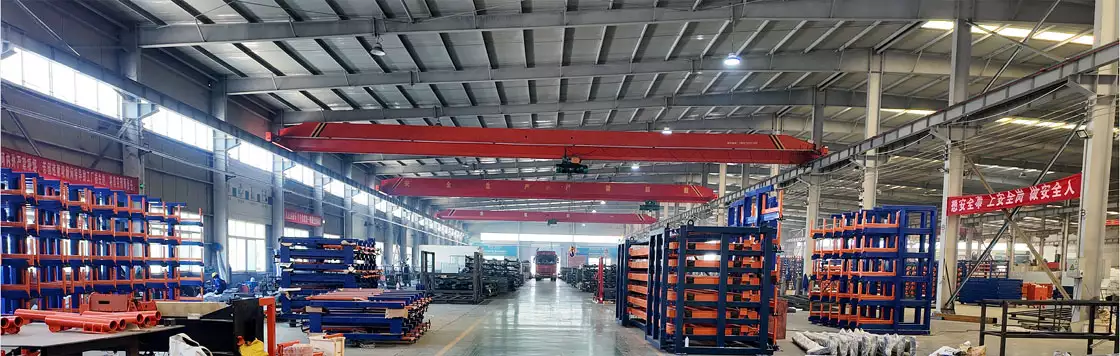
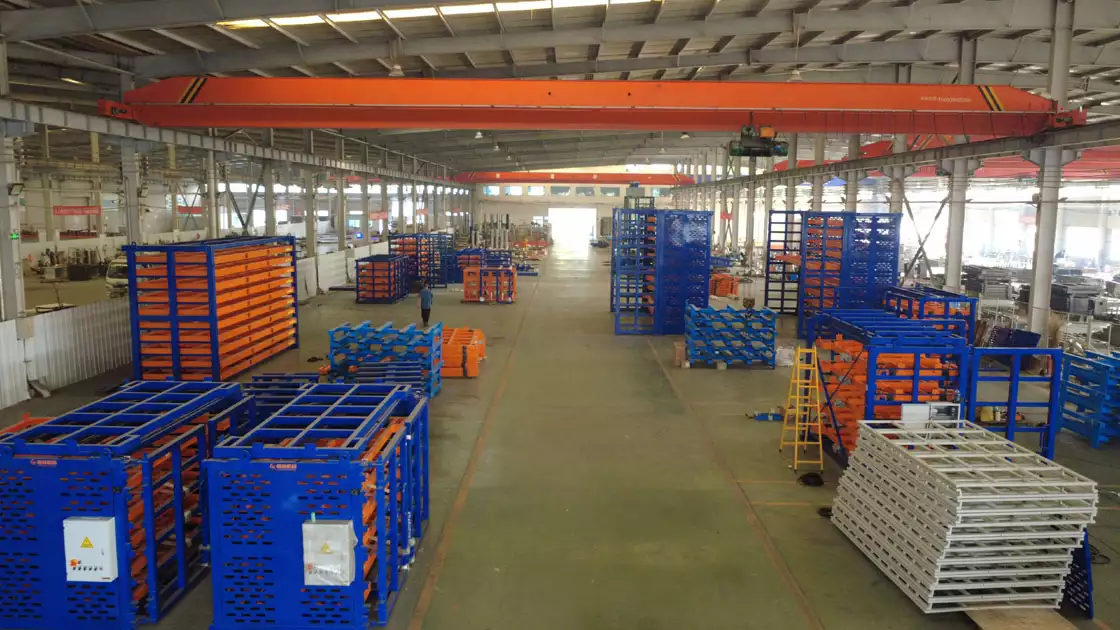
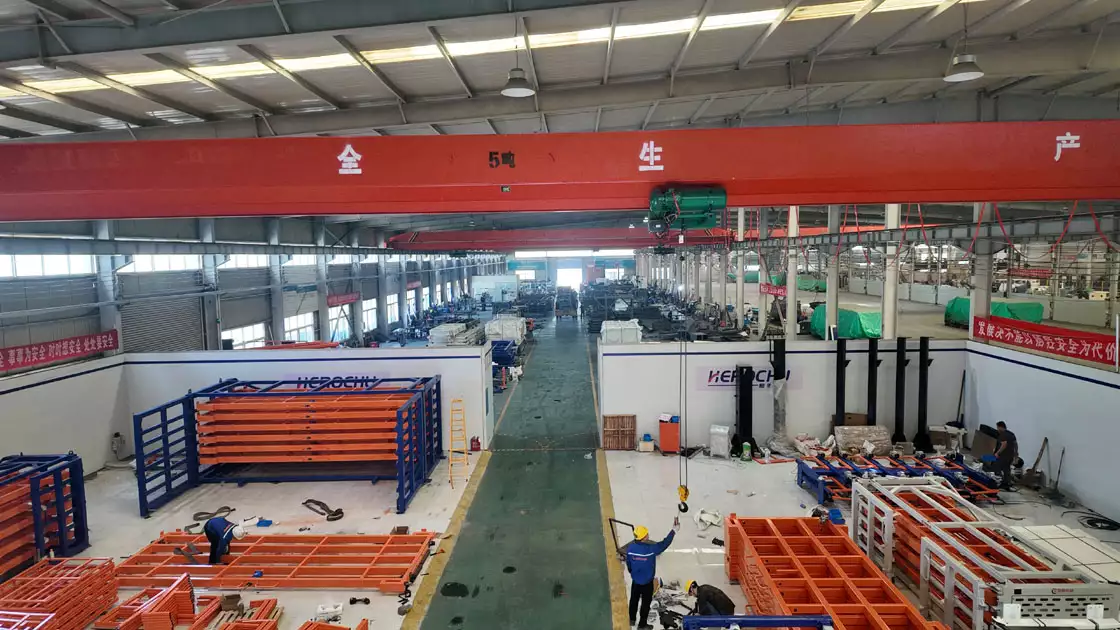
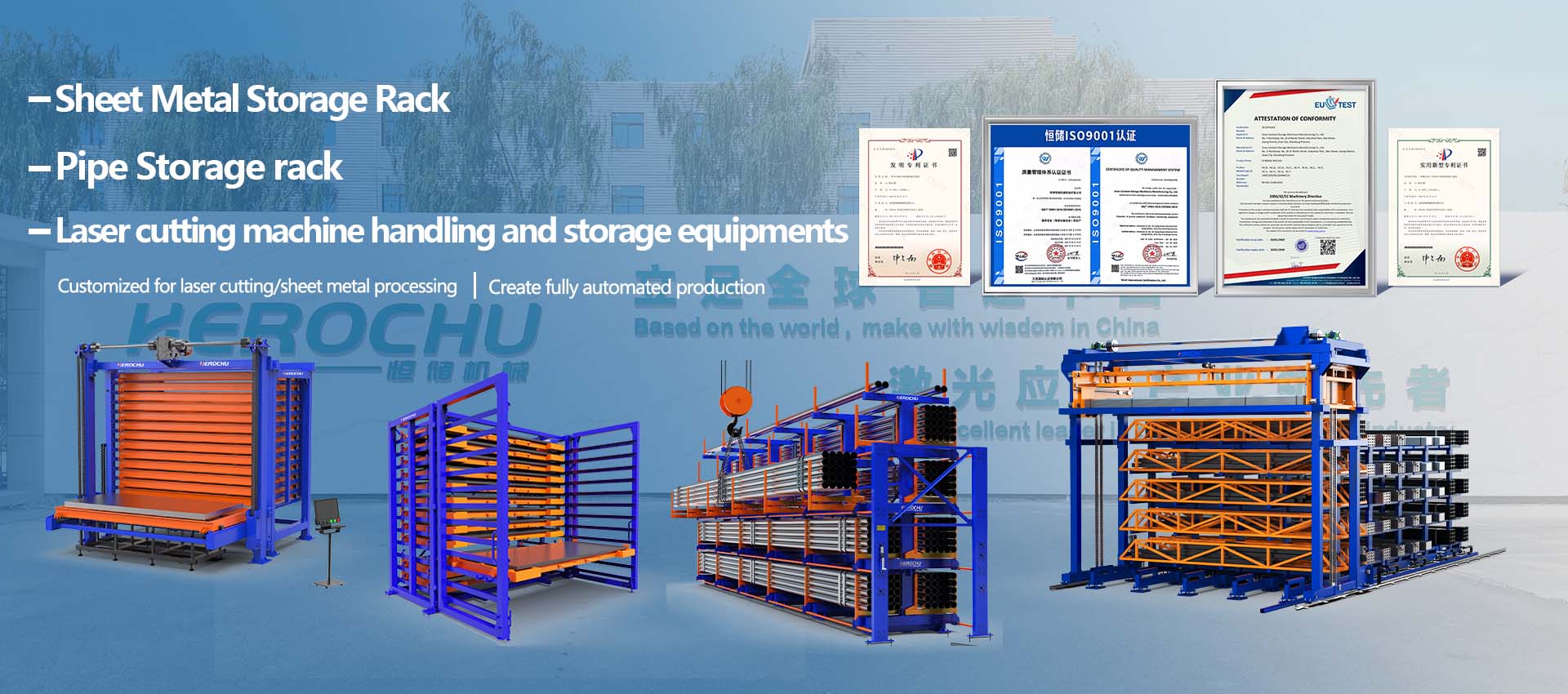
Herochu builds custom gantry robotic arms for loading and unloading to address these situations. The engineering team starts with the production floor as it exists, not as a catalog assumes it should be.
What “Custom” Actually Covers
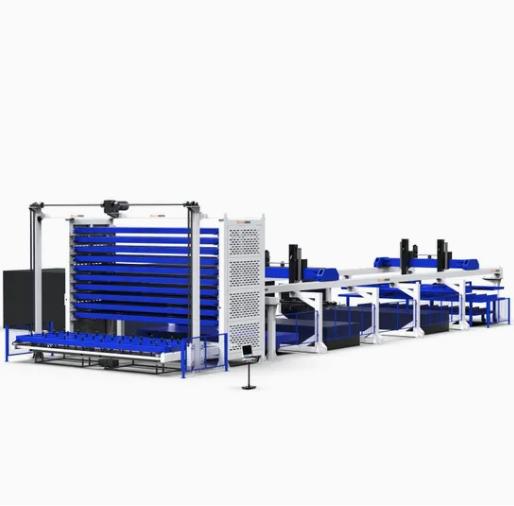
A custom gantry robotic arm is not a standard unit with a few extra options. It is an engineered system where the critical dimensions—span, height, travel length, and manipulator head geometry—are determined by the application.
Span and Travel: The gantry bridge must cover the distance from the storage rack to the laser shuttle table. If that distance exceeds standard rail lengths, Herochu engineers a splice-free rail system or a different structural approach. If the laser is positioned perpendicular to the storage aisle rather than in line, the gantry may require a rotating manipulator head or a dual-axis travel path.
Load Capacity: The standard range of 100–500 kg covers most sheet metal. But some operations handle thicker plate, heavier stacks, or composite materials that push beyond that envelope. Herochu adjusts the structural cross-section, motor sizing, and vacuum array configuration to match the actual load profile. A 3T skip load capacity is available for remnant handling and skeleton removal.
Sheet Dimensions: The standard models cover 2500×1300 mm through 6000×1500 mm. Custom gantry robotic arms for loading and unloading can be configured for wider sheets, longer sheets, or mixed-format handling where the manipulator must detect and adapt to different sheet sizes within the same production batch.
The Vacuum and Gripper Configuration
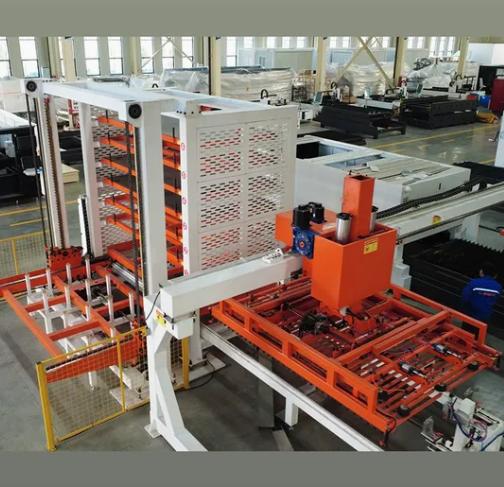
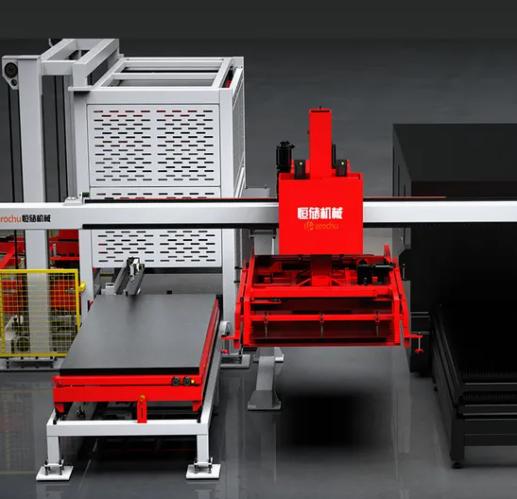
The end effector is where customization becomes most visible. Herochu equips custom gantry arms with a hybrid vacuum suction and mechanical gripper system. Vacuum handles loading: the suction array lifts raw sheets from the stack, with independently controlled cups that can be activated or deactivated based on sheet geometry. This matters when handling pre-cut sheets or irregular blanks where a fixed suction pattern would lose vacuum through open areas.
Grippers handle unloading. After the laser completes a cut, mechanical forks or clamps lift the finished part and skeleton off the cutting bed. This is a different mechanical requirement than vacuum lifting: the gripper must contend with cut edges, drop-outs, and irregular shapes. A vacuum-only system would struggle with skeletons that have no continuous surface. The Herochu composite head switches between vacuum and gripper modes automatically based on the task.
Control System Flexibility
Custom hardware demands custom control logic. Herochu uses a PLC architecture with a touchscreen HMI that allows operators to adjust parameters without external programming tools. Vacuum activation sequences, sheet separation timing, acceleration profiles, and positioning offsets are all accessible through the interface.
For integration with existing production software, the control system supports OPC-UA and standard fieldbus protocols. It can receive job data from an MES or ERP system, retrieving the correct sheet from storage based on the next cutting program. It can also report material consumption and equipment status back to the same systems.
The Engineering Process
A custom gantry robotic arm for loading and unloading begins with a site assessment. Herochu engineers review the floor plan, the storage configuration, the laser model, the material specifications, and the production schedule. From that review, they determine whether a standard model can be adapted or whether a new design is required.
For most applications, the answer falls somewhere in between. The core gantry structure may remain standard, but the rail length, manipulator head, or control parameters are customized. This approach keeps lead times reasonable while ensuring the system fits the actual production environment.
When Custom Makes Sense
Custom gantry systems are not the right answer for every fabricator. If the production floor matches a standard configuration—storage in line with the laser, sheet sizes within the standard range, load weights under 500 kg—a catalog model will typically deliver the same performance at lower cost and faster delivery.
Custom becomes necessary when the standard model cannot physically perform the task. Examples include:
- Storage towers positioned on a different elevation than the laser bed
- Laser machines from different manufacturers with incompatible shuttle table heights
- Sheet dimensions outside the standard range, particularly very long or very wide formats
- Load requirements exceeding standard capacity
- Existing safety fencing or structural columns that constrain gantry travel
In these cases, forcing a standard system into a non-standard space leads to compromises that undermine the automation investment. A custom gantry robotic arm for loading and unloading is engineered to the space, not adapted to it.
ROI Considerations
Custom engineering carries a cost premium, but it also carries a productivity premium. A system that fits the production flow precisely eliminates the workarounds and manual interventions that standard equipment often requires. The custom gantry loads faster, positions more accurately, and integrates more cleanly with the existing control architecture.
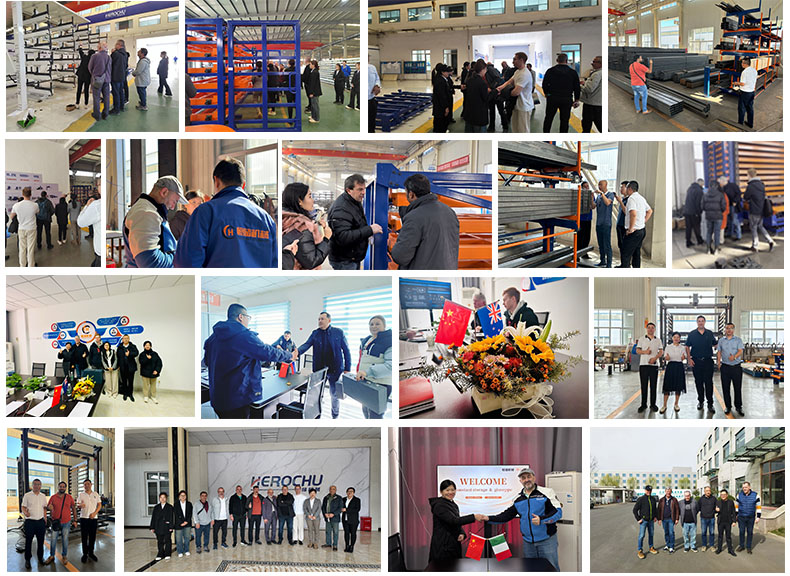
Herochu provides full technical documentation, including load calculations, motion profiles, and maintenance schedules, so that the custom system is not a black box. The engineering team remains available for commissioning support and remote diagnostics after installation.
For fabricators whose production environment does not match the catalog, the custom path is often the only path to genuine automation. The alternative—a standard system that almost works—is rarely satisfying over the equipment’s service life.