
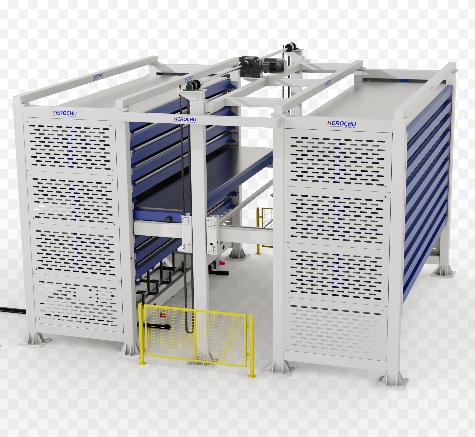
Double-Tower Sheet Material Storage Facility Design Guide
A storage facility is more than a rack. It is an integrated system — structure, controls, software, and workflow — designed to move material from receipt through storage to production with minimal manual intervention and complete inventory visibility. A double-tower sheet material storage facility engineered by Herochu treats the storage structure as one component of that system, with the control software and the production integration doing the work that turns stored metal into scheduled, retrievable inventory. Herochu’s engineering team designs the facility around the material flow, not around the rack.
Double-Tower Sheet Material Storage Facility Design Guide
A storage facility is more than a rack. It is an integrated system — structure, controls, software, and workflow — designed to move material from receipt through storage to production with minimal manual intervention and complete inventory visibility. A double-tower sheet material storage facility engineered by Herochu treats the storage structure as one component of that system, with the control software and the production integration doing the work that turns stored metal into scheduled, retrievable inventory. Herochu’s engineering team designs the facility around the material flow, not around the rack.
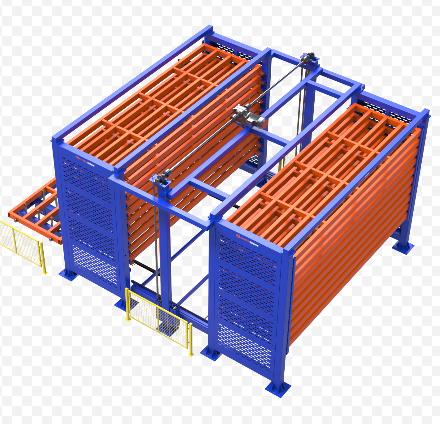
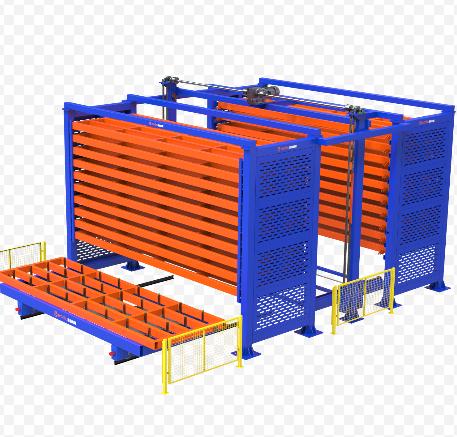
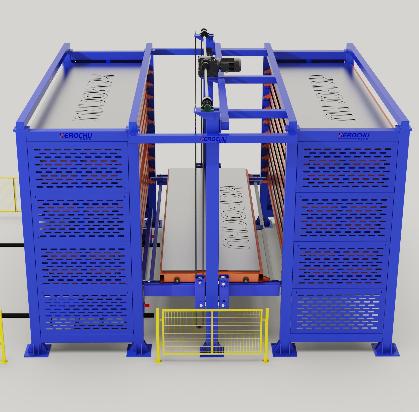
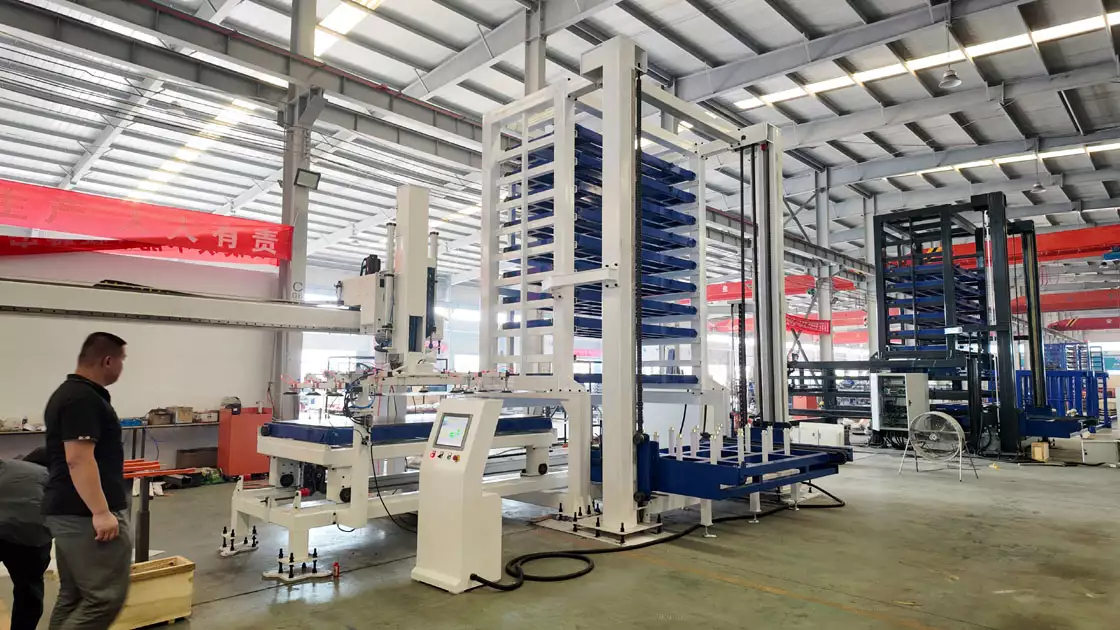
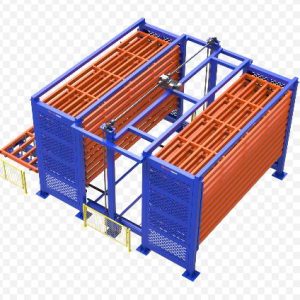
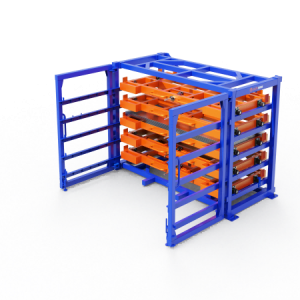
The double-tower layout places two vertical storage structures on either side of a central elevator and shuttle aisle. Sheet material — carbon steel, stainless, aluminum, copper, brass — enters the facility, is assigned a storage layer in one of the two towers, and sits there until the production schedule calls for it. The retrieval cycle, the inventory data, and the downstream material flow are all part of the facility design Herochu engineers from the ground up, not afterthoughts bolted onto a storage rack.
Dual Material Intake
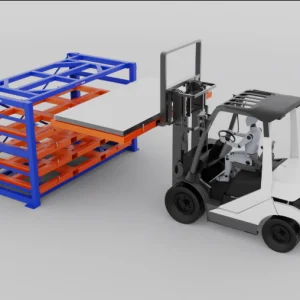
Sheet material enters the facility through one of two paths. Forklift trucks deliver palletized or crated sheet to the intake station, where it is transferred to a storage cassette. Overhead cranes deliver larger or heavier plates — 6-meter formats, thick plate — directly to the cassette without ground-level forklift traffic. Both methods feed the same central elevator, which loads the cassette into the assigned layer on either tower.
This dual intake is not redundancy. It is workflow engineering. A facility handling a mix of small-format sheet and large-format plate needs both intake methods because forklifts are efficient for palletized material and cranes are efficient for oversized plate. Forcing one method to handle both is slower and riskier. The double-tower facility accommodates both because the central elevator and cassette system is the common interface — the intake method delivers material to the cassette, and the system handles the rest.
PLC Touchscreen and Operator Interface
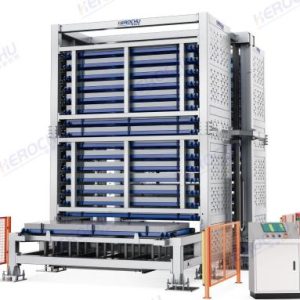
The facility control runs through a PLC touchscreen at the operator station. From it, the operator manages material intake, layer assignment, retrieval requests, and real-time inventory review. The interface displays material dimensions, weight, grade, and quantity — live data that updates with every retrieval and every offcut return.
One-touch material delivery is the operational shorthand. The operator does not walk to the tower, locate a layer, extract a cassette manually, and return it. The operator selects the material at the touchscreen, the PLC identifies the storage layer, the elevator travels to that height, the shuttle extracts the cassette, and the system lowers it to the discharge position. The operator’s role is request and review, not retrieval labor. This is what automated operation means at the facility level — not a motor that moves a rack, but a control system that manages the material flow.
ERP and MES Integration
The facility connects to the factory’s ERP and MES platforms. Real-time material status — what is in storage, where, how much, what grade, what thickness — flows to the inventory management system. Retrieval counts and weight data flow with it. When a laser cutting cell schedules a job that calls for a specific grade and thickness, the scheduling system can query the storage facility directly for availability and location.
Predictive inventory replenishment is the downstream effect. When stock of a specific material falls below a configured threshold, the ERP integration flags it — before the material runs out mid-job and stalls a cutting bed. Dynamic job scheduling uses the same data: the production scheduler knows what material is available and routes jobs to machines based on real inventory state, not on a spreadsheet that was accurate yesterday.
Offcut and Return Material Tracking
Sheet material does not leave storage in one direction. A laser cutting bed consumes a full sheet, but the remnant — the offcut — comes back. In a manual storage operation, that offcut goes onto a rack somewhere, someone writes its dimensions on a label, and the label is wrong or missing within a week. The offcut becomes invisible inventory — material the plant owns but cannot find.
The double-tower facility logs offcuts automatically. When a cassette returns to storage with a partial sheet, the control system records the returned material — dimensions, grade, thickness — and assigns it to a storage layer. The inventory record updates. The next time a job calls for a small piece of that grade and thickness, the system knows the offcut exists and retrieves it. Material utilization rises. Scrap falls. And the inventory data stays accurate without manual entry.
Gantry Manipulator and Laser Cell Integration
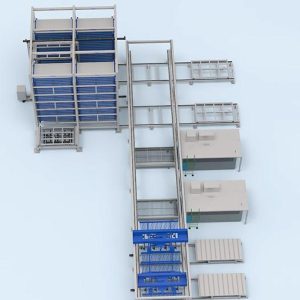
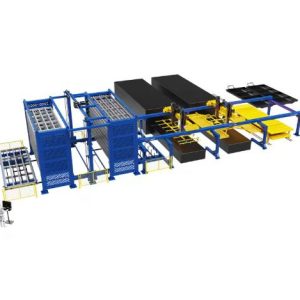
The facility’s discharge station feeds an outbound material handling system. In the integrated configuration, that system is an overhead bilateral gantry truss with electric loading and unloading manipulators. A single central manipulator serves both storage towers — picking raw sheet or plate from the discharge position and transferring it directly to a fiber laser cutting bed, a tube laser, or a press brake feeding station.
This is where the facility stops being a storage operation and becomes a production cell. The storage towers hold the raw inventory. The gantry manipulator moves it to the cutting bed. The laser cuts it. The offcut returns to storage. The cycle repeats, coordinated by the PLC and the ERP integration, without a forklift entering the storage volume and without an operator hunting for material on a rack. For plants running toward lights-out production — unattended overnight shifts where the cutting bed runs without an operator present — this Herochu integration is the material supply infrastructure that makes it possible.
Open and Closed Storage Configurations
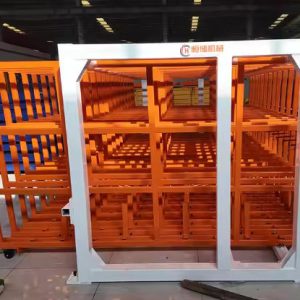
The facility offers open or enclosed storage configurations. An enclosed structure protects sensitive metals — stainless, aluminum, copper — from dust, oxidation, and humidity, which matters in plants where the storage environment is not climate-controlled or where airborne contamination from adjacent processes would degrade stored material. An open configuration prioritizes rapid access to high-frequency materials, trading environmental protection for cycle speed.
The choice is a facility design decision, not a product variant decision. A plant storing cosmetic stainless for food-grade fabrication likely needs the enclosed configuration. A plant storing structural carbon plate for heavy fabrication likely needs the open configuration. The double-tower architecture accommodates both because the enclosure is a structural and environmental addition to the same storage and extraction system.
Strategic Outcome
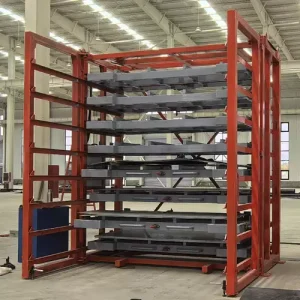
A double-tower sheet material storage facility, as an integrated system, delivers four outcomes that matter to plant operations. Storage density rises — vertical capacity up to fifteen layers within the existing building footprint, doubling or more over flat racking. Labor drops — the retrieval cycle is automated, the forklift shuttle disappears, and the dedicated material handler role shrinks. Material damage falls — drawer cassettes and guided extraction replace fork contact and manual stacking. And CNC or laser uptime climbs — the cutting bed no longer waits for raw material, because the storage facility delivers it on schedule under system control.
Herochu’s double-tower facility line — from the HC-S3015-2-63 through the HC-S6020-2-155 — is engineered around those outcomes. The structure, the controls, the software integration, and the manipulator interface are designed as a system, not assembled from components. That is the difference between a storage facility and a storage rack, and it is the reason the double-tower architecture has become the reference configuration for integrated sheet metal production cells.
FAQ
Here are some frequently asked questions about our sheet metal racks and pipe storage solutions. We hope you find them helpful!
Q1: Can I request a custom size or color?
Absolutely. We offer complimentary design services and deliver efficient, tailored solutions to meet your specific requirements.
Q2: Are you a manufacturer or a distributor?
We are a direct manufacturer with over 15 years of industry experience and expertise.
Q3: Is there a minimum order quantity?
No. We welcome orders of any size, starting from a single unit.
Q4: How can I get detailed product information?
Click the “Get a Quote” button to receive product images, detailed specifications, and videos. Our team is always ready to assist.
Q5: How do I provide my storage rack requirements?
Simply share the type, dimensions, and quantity of materials you plan to store, along with any other specific needs. We will develop a professional storage solution for you. Alternatively, leave your contact details for a personalized consultation.
Q6: Do you offer automated loading systems or robotic arms?
Yes. We provide loading robotic arms and integrated loading/unloading systems tailored to your laser cutting machine’s table size and material handling method (e.g., board rack, exchange platform, or material warehouse). Contact us with your details for a customized proposal.
Q7: Do you provide on-site installation and debugging?
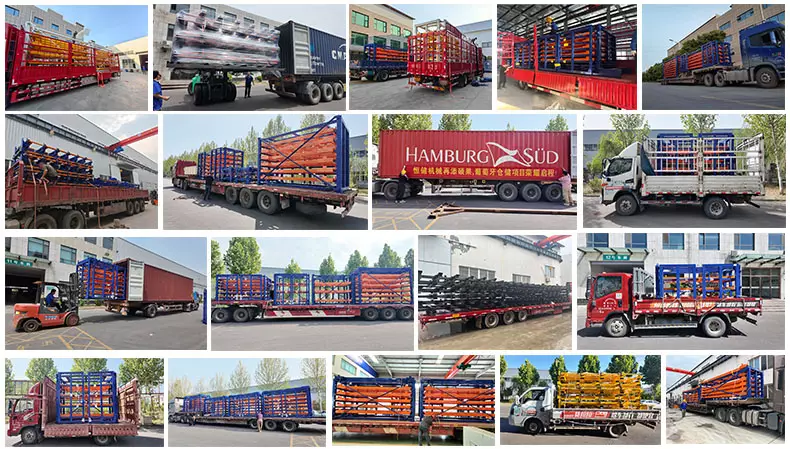
Yes. Our technicians can travel to your facility for installation and debugging, ensuring successful operation. We have served clients globally, including in the USA, South Korea, Russia, Qatar, Mexico, South Africa, Egypt, and Lebanon.
Q8: How do you ensure product quality?
Our quality assurance includes:
A team of over 40 technical engineers for professional debugging and support.
A dedicated quality control department compliant with ISO9001 standards.
CE certification for all exports.
Rigorous load testing before shipment to ensure structural safety and reliability.
Q9: Where is your factory located?
Our modern 10,000-square-meter manufacturing facility is located in Jiyang Industrial Park, Jinan, Shandong, China.
Q10: How can I evaluate your company’s capabilities?
We offer virtual video factory tours and warmly welcome on-site visits.
Q11: What does your company specialize in?
Jinan Constant Storage Machinery Manufacturing Co., Ltd. is a high-tech enterprise specializing in the R&D, production, sales, installation, and service of intelligent storage solutions. Our product range includes sheet material warehouses, drawer-style shelves, cantilever racks, servo manipulators, gantry loaders, and fully automated handling systems. Supported by a skilled technical team and advanced equipment, we are committed to delivering high-performance storage products and solutions to customers worldwide.
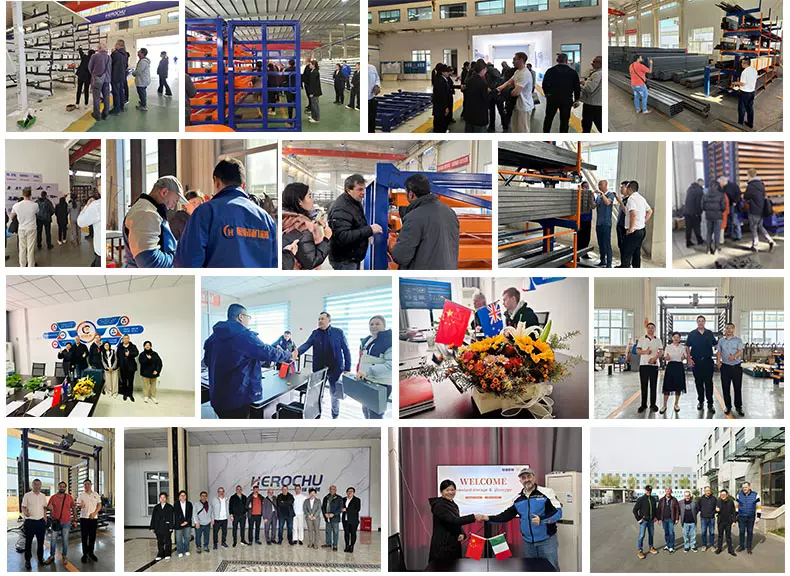
Customer visit
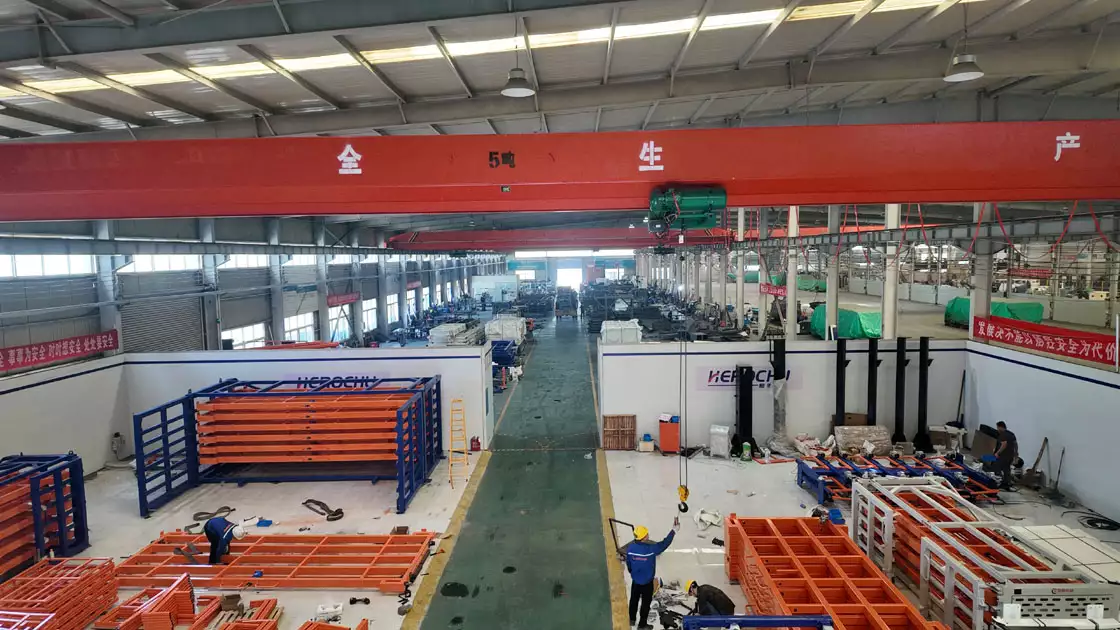
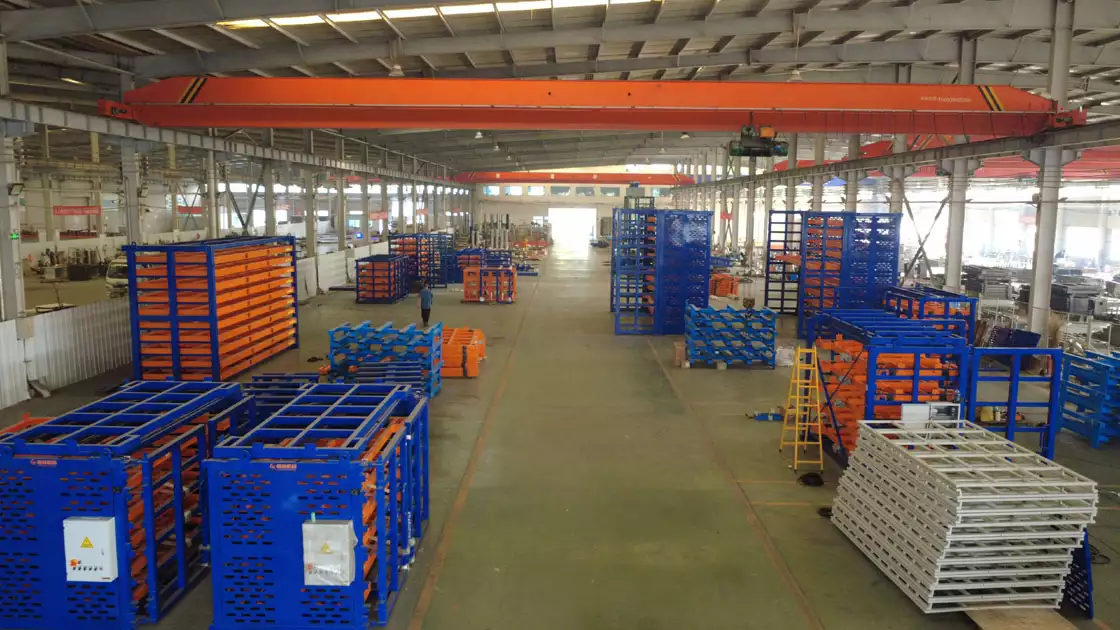
Herochu has always been adhering to the market-centric approach to meet customer requirements to the maximum extent, and the business philosophy of “creating brands with heart and gaining reputation with sincerity”. It provides customers with high-quality products and services with rigorous military quality, professionalism, and excellence, and has won unanimous praise in the Chinese aerospace, Chinese weapons, Chinese railways, automobile manufacturing, engineering machinery, non-ferrous metal titanium alloy and other industries.
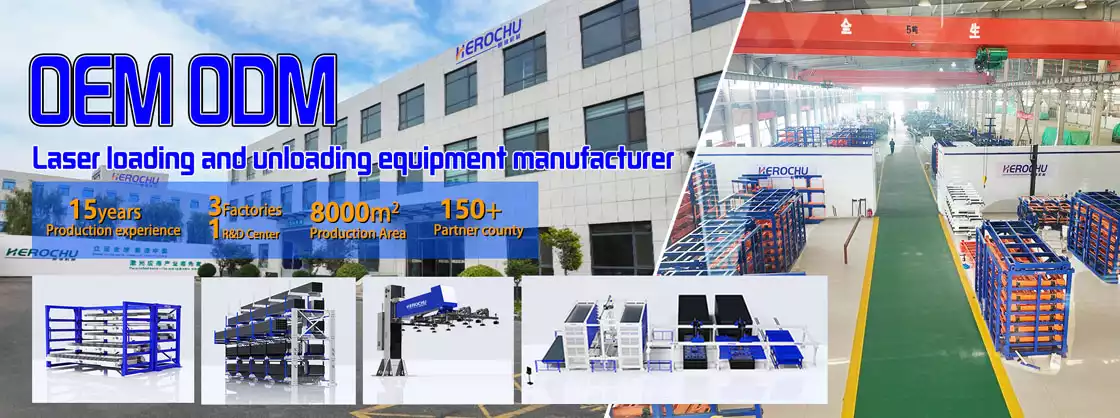
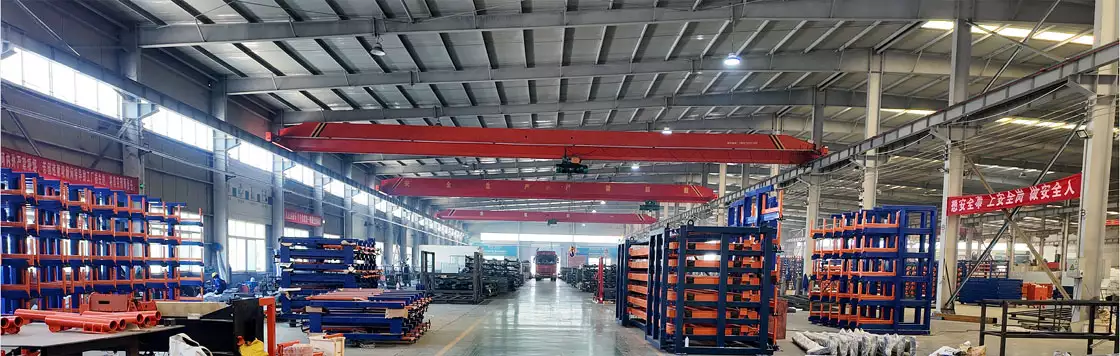
Factory

Hot Selling Machines
-
Manual Metal Plate Storage Rack
Hand Crank Operated 6-Layer Steel Plate Rack 1.5m×3m 10 Ton — Safety, Durability, and Operational Reliability
Read moreRated 0 out of 5 -
Vertical metal sheet racks
Vertical Sheet Metal Storage Rack 1500×3000mm Hand Crank 6-Layer
Read moreRated 0 out of 5 -
Manual Metal Plate Storage Rack
Factory Workshop Hand Crank Steel Plate Rack 3000×1500mm 10T
Read moreRated 0 out of 5 -
Manual Metal Plate Storage Rack
Hand Crank Sheet Metal Storage Rack 1.5×3m 10T 6-Layer
Read moreRated 0 out of 5 -
Automated Double Tower Storage System
Double-Tower Sheet Material Storage Facility Design Guide
Read moreRated 0 out of 5 -
Automated Double Tower Storage System
Double-Tower Vertical Steel Plate Storage Depot Overview
Read moreRated 0 out of 5 -
Automated Double Tower Storage System
Automated Twin-Tower Sheet ASRS Storage Tower Explained
Read moreRated 0 out of 5 -
Automated Double Tower Storage System
High-Density Twin-Tower Sheet Storage Warehouse Guide
Read moreRated 0 out of 5
Related products
-
Heavy duty sheet metal storage racks
Custom Heavy Duty Pallet Rack Prices Starting at $5,500
Read moreRated 0 out of 5 -
Fabrication shop sheet metal storage racks
Fabrication shop sheet metal storage rack
Read moreRated 0 out of 5
Product Categories