Six-meter bundles are the standard transport unit for structural hollow sections and purlins. Steel distributors receive square tubes, round tubes, and C or Z purlins in bundles of ten to thirty pieces, often 1 to 3 tons at a time, and the way those bundles are stored decides how fast they move back out. Left on the floor, they sit in layers — the lower bundles carry the full stack, labels are buried, and pulling one profile means lifting everything above it. The Herochu heavy duty cantilever rack is built around the 6-meter bundle: open arms, clear labeling, and crane access from above. This article explains the layout, the loading method, and why CE-certified construction matters in a working warehouse.
Built around the 6-meter bundle
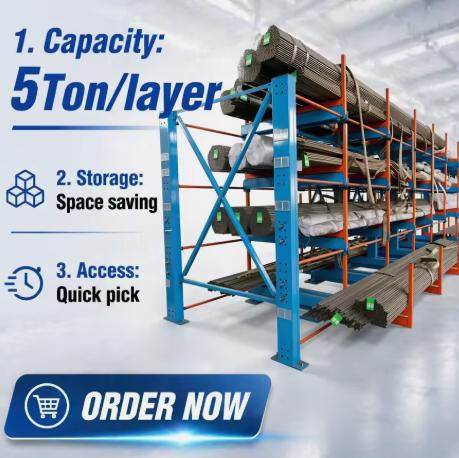
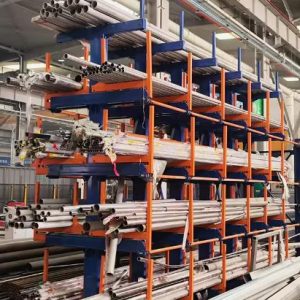
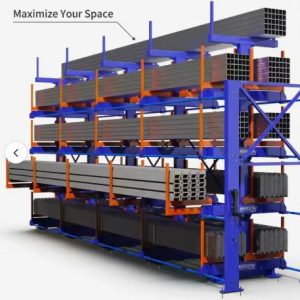
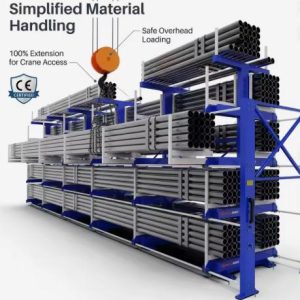
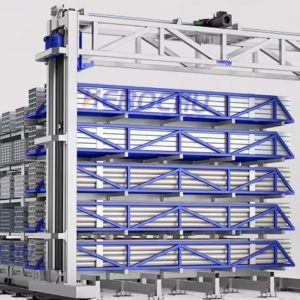
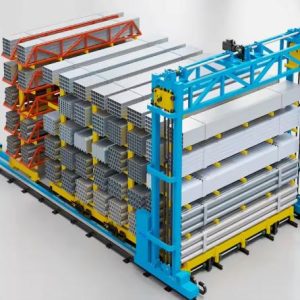
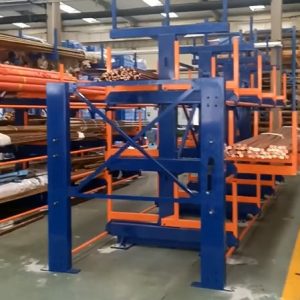
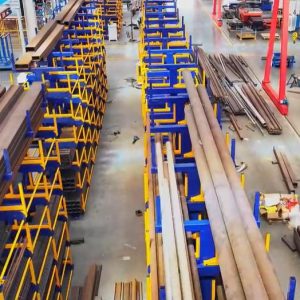
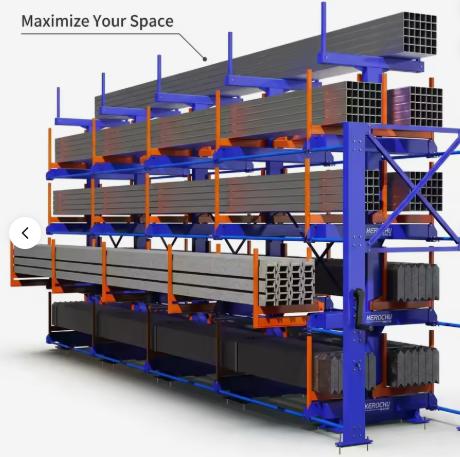
The rack uses a single cantilever layout — a row of upright frames with arms projecting from one side, or from both sides in the double-sided version. Arm spacing is set to match 6-meter stock, so each bundle is supported at several points along its length instead of balancing near the middle. Because the front of the rack stays open, a bundle can be placed or removed straight from the side, and individual pieces can be pulled without disturbing the rest. The same arms carry plywood and lumber, steel bars, PVC pipe, and metal tubes — any long material that does not fit a conventional pallet rack.
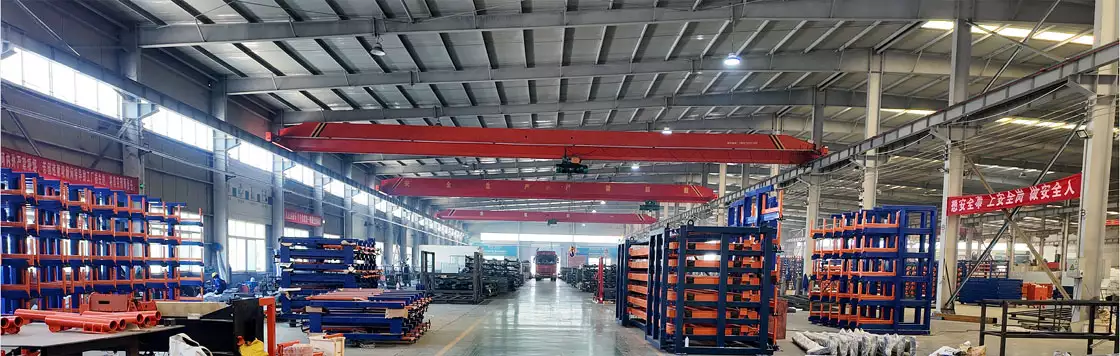
Crane-friendly overhead loading
Long bundles are easiest to move with an overhead crane, and the rack is designed around that fact. Safe overhead loading means the top of the rack stays clear of beams and tie members that would block a hook from lowering a bundle straight into place. A crane operator positions the sling over the target arms, lowers the bundle, releases, and the job is done — no fork truck maneuvering in a narrow aisle, no sideways swing to align. For plants that load with a fork truck instead, the open bay accepts forks at any level. Either way, one operator handles a full 6-meter bundle without a second person guiding from the floor.
CE-certified construction for industrial duty
The rack carries CE certification, which documents compliance with the applicable safety and structural requirements for industrial storage equipment. For a buyer that means the design has been checked against defined load and stability criteria, and the manufacturer accepts responsibility for it. Certification is not decoration: it gives the warehouse manager a document trail for insurance and safety audits, and it tells the maintenance crew which load figures to work against. The frame uses heavy structural I-beam sections sized for cantilever bending, with welded base plates and tie rods connecting the upright frames into a stable row. The CE declaration file ships with the rack, and Herochu keeps the supporting calculations on record.
Manual crank adjustment for precise positioning
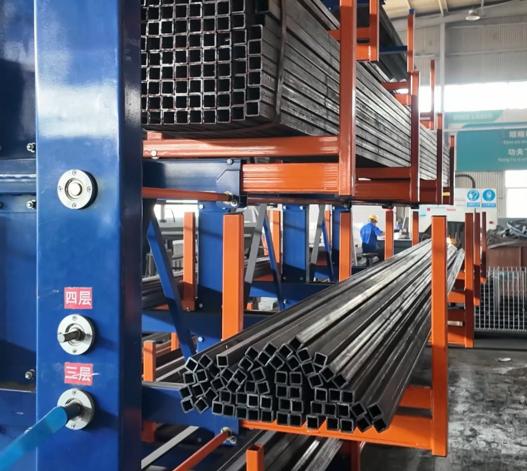
Arm positions are adjustable, and the adjustment runs through a manual crank. Turning the crank moves an arm along the upright to the required height, so spacing can be matched to bundle thickness — wide gaps for round tubes, tighter gaps for flat bars and purlins. The crank action is simple, which is exactly the point on equipment that gets adjusted a few times a year: no hydraulics to bleed, no motors to service. Assembly and maintenance follow the same logic; the single cantilever layout keeps the parts count low and the access points obvious. The crank is a standard item on every Herochu cantilever rack, and spare arms are stocked for field expansion.
One rack, several material families
A 6-meter bay stores more than tubes. Typical mixed inventories include:
- Square tubes and rectangular hollow sections
- Round tubes and pipes
- C purlins, Z purlins, and steel lintels
- Plywood sheets and lumber packs
- Steel bars and reinforcing bar
- PVC and other plastic pipe
Because each arm set holds one bundle, the rack keeps every SKU visible. Painted labels or a simple marking system on the uprights turn a wall of steel into a findable inventory, and the bundle stays intact until the picking order arrives.
Space and safety in the same move
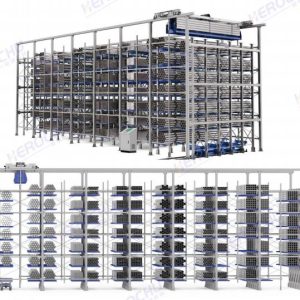
The vertical layout stacks bundles upward instead of outward, so the floor area per stored ton drops compared with floor stacking or A-frame racks. The open front also removes the most common injury pattern in pipe stores: workers leaning into a stack to reach a lower bundle. Every bundle sits at arm height, within reach of the crane hook and clear of the walking aisle. Travel paths shorten as well — a crane moves in a straight line from the receiving bay to the rack face, and the same hook serves every arm. For a distributor handling several 6-meter sizes a day, the difference is measurable in both square meters and lost-time incidents.
FAQ
How many bundles fit on one arm? That depends on the arm load rating and the bundle weight. A typical arm rated for 2–3 tons holds one heavy 6-meter bundle of round tube or two lighter purlin bundles, with the total never exceeding the rated capacity.
Can the rack be extended later? Yes. Additional upright frames and arms are added at the end of the row, and the tie rods are extended to match. Ordering the rack with a planned expansion bay makes the later addition straightforward.
What floor is required? A level concrete floor with adequate bearing capacity, with the base plates anchored. CE-certified racks ship with the anchoring specification.
Specify the bay around your bundle list
Arm rating, height, bay length, and side layout are set from the bundle list — bundle weight, bundle width, and the number of bundles per size. Send Herochu the list, and the rack is engineered to match, with CE certification and manual crank adjustment included. Contact Herochu for a layout drawing and a load calculation for your 6-meter bundles.