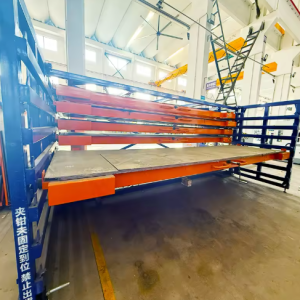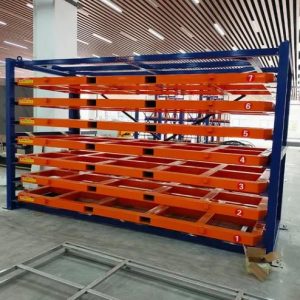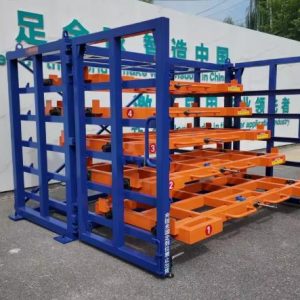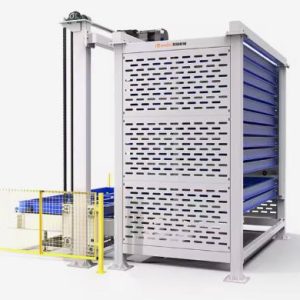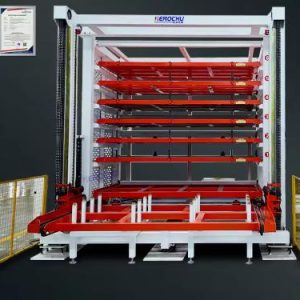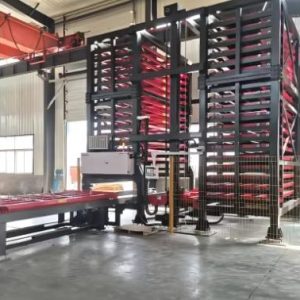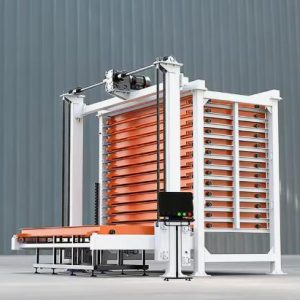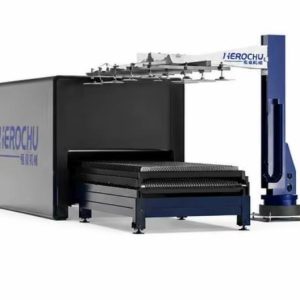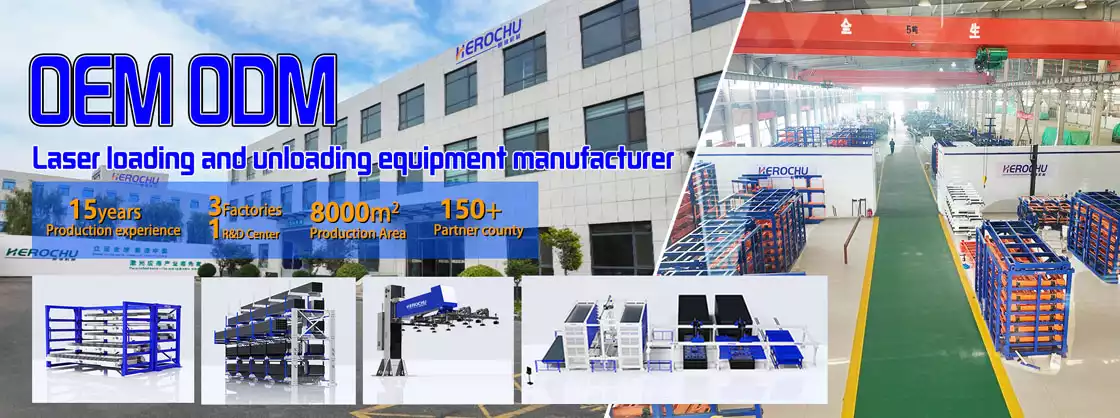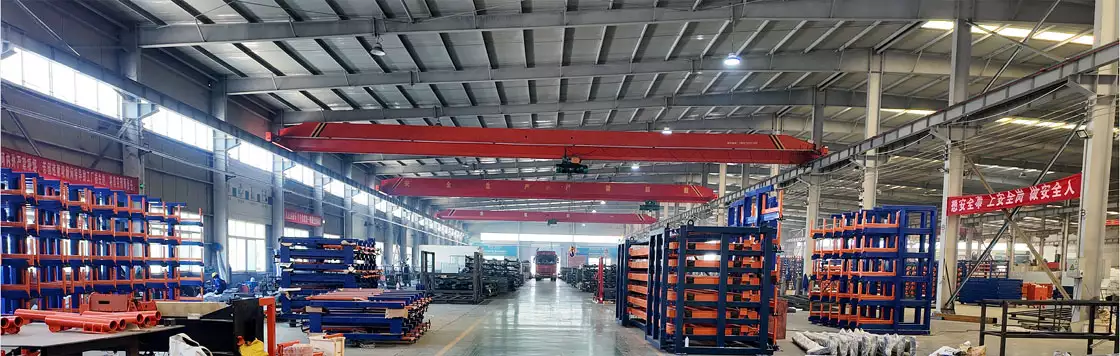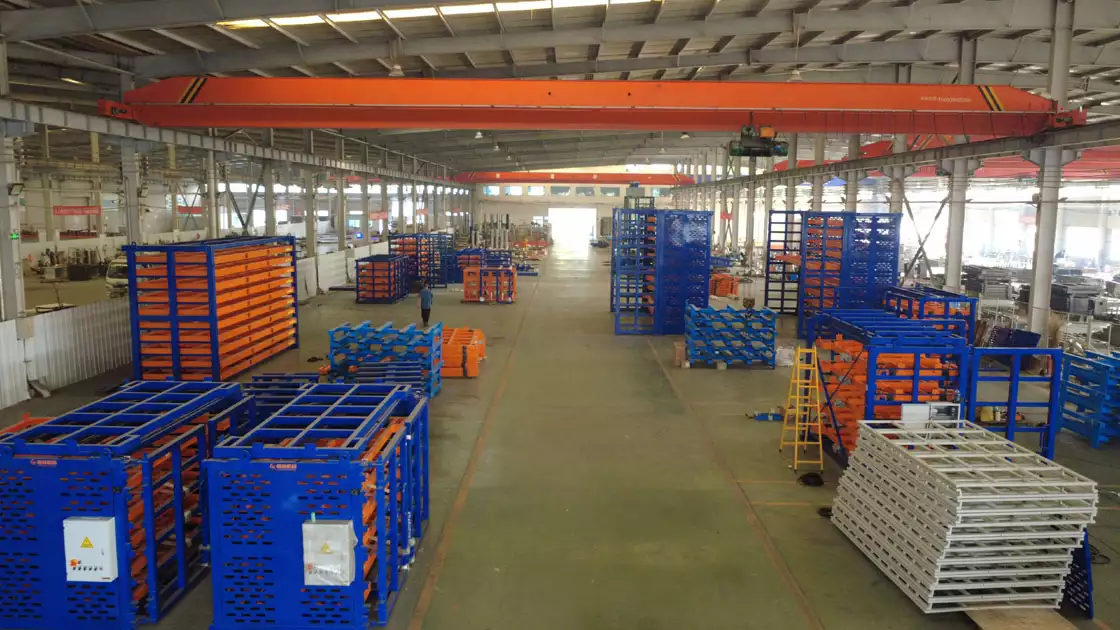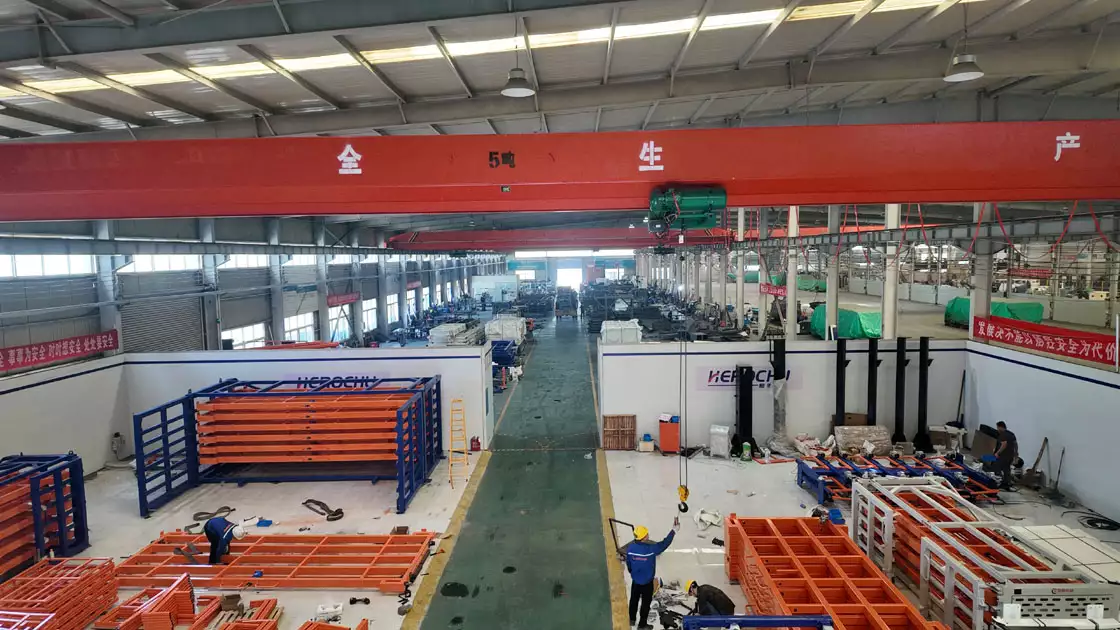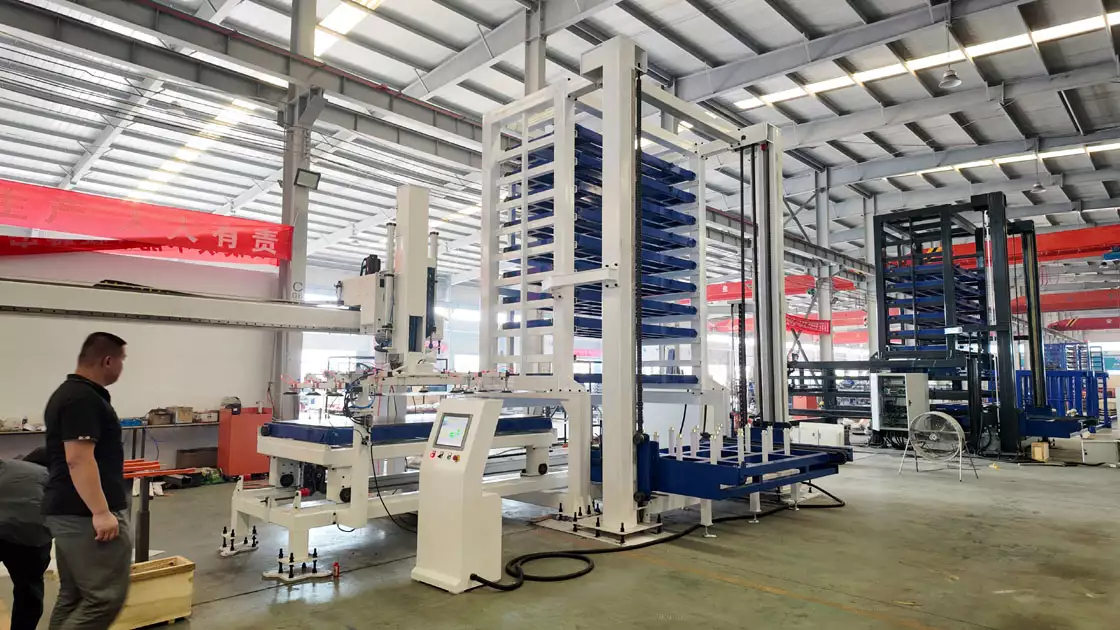
Sheet metal moves constantly in a fabrication shop: from the receiving bay into storage, from storage to the shear, laser cutter, or press brake, and back again when offcuts are kept for later jobs. Most shops still hold that material in flat stacks on the floor. Floor stacks consume expensive floor space, put scratches and distortion into the lower sheets, and turn every retrieval into a two-person crane operation. A manual roll-out sheet metal rack for fabrication replaces the floor stack with an organized vertical system that a single operator can run without any powered equipment. Herochu builds this type of rack as a core product line, engineered around the material flow of real fabrication shops rather than generic warehouse palletizing.
Why Fabrication Shops Outgrow Flat Stacking
Flat stacking looks simple and cheap at first, but the costs compound. Sheets at the bottom of a stack carry the weight of everything above them. Weeks of that pressure cause surface scratches, pits, and subtle bending deformation that show up later as rejected parts or scrapped material. Stainless and aluminum sheets are especially vulnerable because their finished surfaces are easily marred. The traditional fix — lifting each sheet off the stack with an overhead crane — is one of the most hazardous routines in a fab shop. Swinging loads, pinched fingers, and plates that shift mid-lift contribute to injuries and compensation claims.
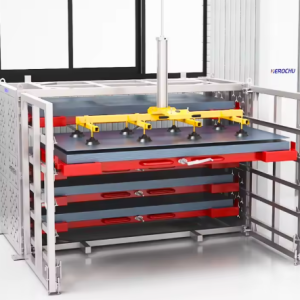
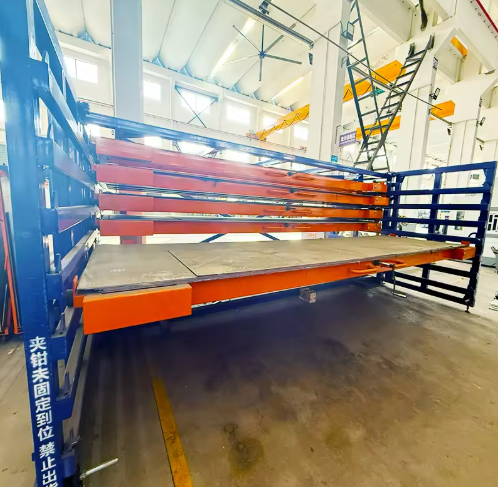
A manual roll-out sheet metal rack removes both problems at once. Each sheet lies flat on its own drawer, isolated from every other sheet. Nothing is stacked, nothing is squeezed, and nothing rubs against an abrasive neighbor. The drawer extends fully, so the operator reaches the sheet from the side instead of from under a suspended load.
How the Rack Works in Daily Production
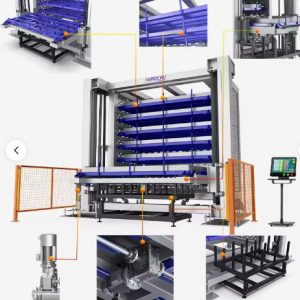
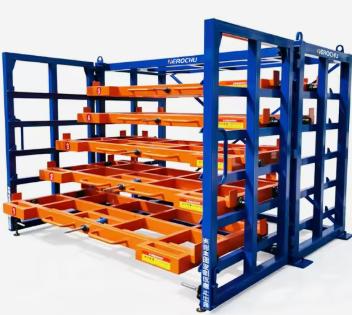
The operating sequence is short and repeatable. The operator turns a hand crank to bring the required tier forward, the drawer extends on precision rollers, and the sheet is placed or removed with a forklift, an overhead crane, or by hand for lighter panels. Herochu fits each rack with a mechanical assistance system, so even a fully loaded multi-ton drawer moves smoothly and holds position where the operator needs it. Retrieval is fast: Herochu measures up to 70 percent less retrieval time compared with digging through a floor stack.
For a press brake operator, that difference shows up in every job. Instead of waiting for a crane and a second person to pull a blank out of a pile, the operator cranks open the right tier and takes the sheet directly to the machine. For laser cutting cells running nested programs, the same speed keeps the machine fed and reduces idle time between batches. Storage stops being a bottleneck and starts behaving like part of the production line.
Load Ratings and Standard Models
Herochu offers the rack in five standard models, and every model can be supplied with a customized number of tiers. Per-tier capacity ranges from 3,000 kg to 5,000 kg depending on the model:
| Model No. | Sheet Dimensions (mm) | Layers | Max. Load per Level (kg) |
|---|---|---|---|
| HC-B2513-63 | 2500 x 1300 | 6 (customizable) | 3000 |
| HC-B3015-63 | 3000 x 1500 | 6 (customizable) | 3000 |
| HC-B4015-63 | 4000 x 1500 | 6 (customizable) | 3000 |
| HC-B4020-65 | 4000 x 2000 | 6 (customizable) | 5000 |
| HC-B6020-65 | 6000 x 2000 | 6 (customizable) | 5000 |
Clear space between tiers is 120 mm in the standard layout and can be enlarged for thicker plate. The 6,000 x 2,000 mm model suits the full-length plate common in structural and heavy fabrication.
Protection Without Compromise
Material damage is not a cosmetic issue in fabrication; it is a cost issue. A scratched stainless sheet may be rejected for architectural work, and a bent plate can jam a laser cutting bed or throw off press brake tolerances. Herochu’s design addresses each failure mode directly. Sheets rest flat and alone on their drawer, so there is no point loading and no friction between stacked surfaces. Continuous trays carry inclined plastic supports that hold each sheet in place, preventing slippage and keeping the sensitive face away from metal contact. Loading and unloading follow a straight, controlled path, which removes the scraping motion that causes most surface damage.
FIFO Discipline, Less Wasted Material
A rack with visible, accessible tiers makes first-in, first-out stock control practical instead of theoretical. Older plate stays at the front where it is used first, so steel does not sit long enough to rust, oxidize, or become obsolete against changing job requirements. Shops reduce inventory backlog, write off less material, and keep a clearer picture of what is actually on hand. For fabricators who quote jobs from stock, that visibility has a direct effect on margins.
Turning Storage Space into Production Space
By building upward instead of outward, a manual roll-out sheet metal rack can cut the floor area dedicated to raw material by up to 80 percent. That reclaimed square footage is not empty space; it is capacity. Many Herochu customers use it to add another press brake, set up a new welding station, or open up walkways around existing machines. Increasing usable production space is often cheaper than expanding the building, and clear aisles improve workflow safety at the same time.
Customized to Your Plate Sizes and Workflow
No two fab shops store the same mix of material. Herochu customizes the number of drawers from three to eight, the shelf height, and the overall dimensions to fit the available space and the sheet sizes in your inventory — standard 4’x8′ or 5’x10′ panels, 6,000 mm plate, or non-standard blanks. The main frame is fabricated from Q235B high-strength steel with a dual-beam design, precision welded and finished with a durable powder coating, so the rack is built for a service life of more than a decade in a busy shop. Because it is manual, it needs no power supply, no compressed air, and almost no maintenance beyond routine lubrication.
For fabrication shops that want faster, safer, and more organized sheet handling without investing in powered automation, the manual roll-out sheet metal rack is a proven starting point. Contact Herochu with your sheet sizes and floor plan, and the engineering team will specify a configuration that matches your workflow.