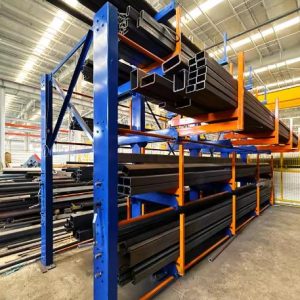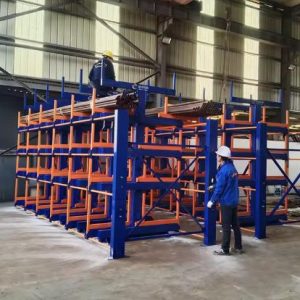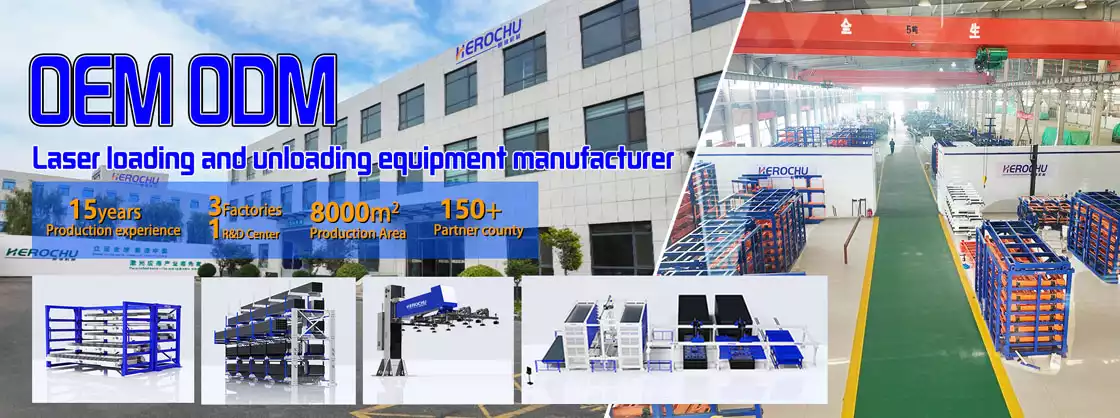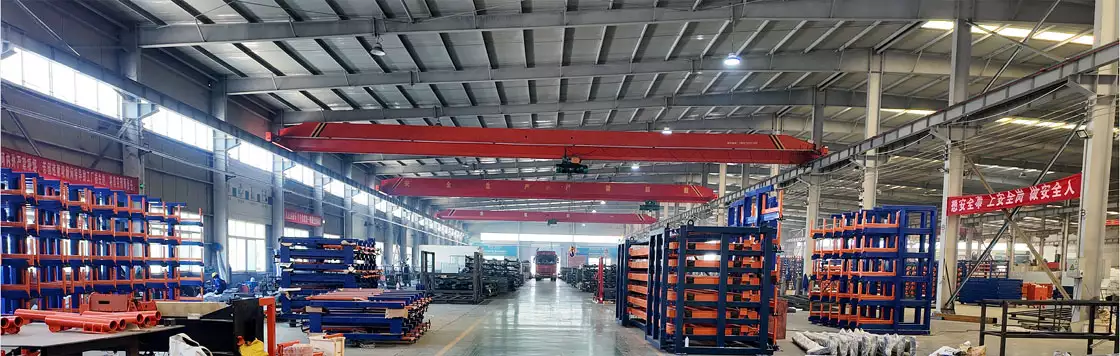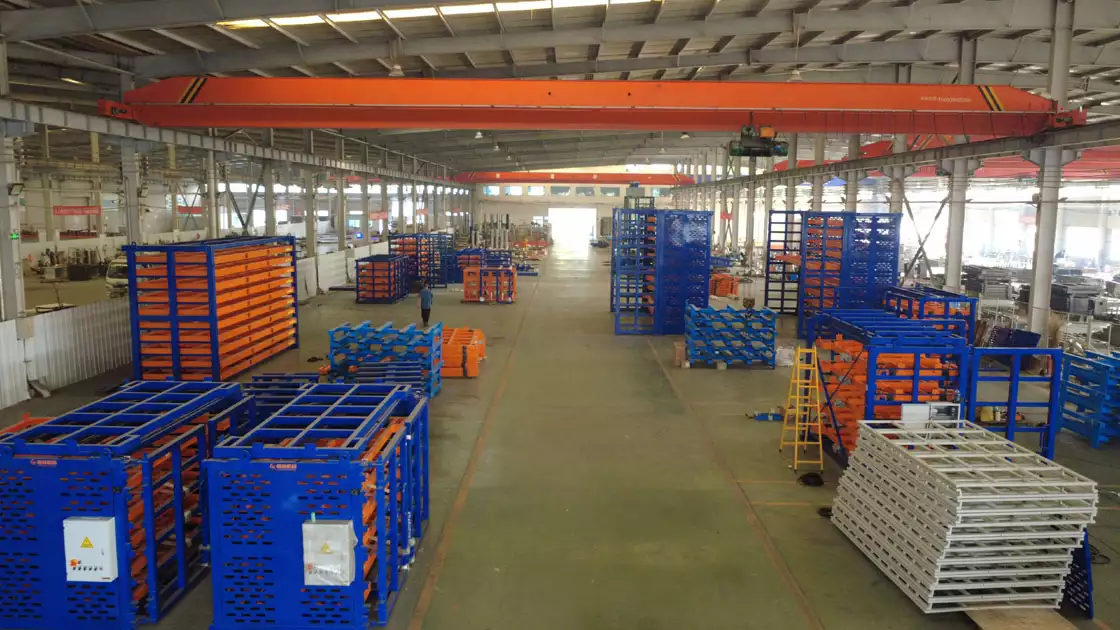
Walk into a fabrication plant that still stores plate stock on floor-level pallets or cantilever racks, and the inefficiency is visible from the doorway. Half the bay is occupied by material that is not being processed. Forklifts weave through narrow aisles to reach stacks buried three rows deep. Operators spend minutes per sheet just locating and extracting the right piece. The machines — lasers, plasmas, press brakes — wait.
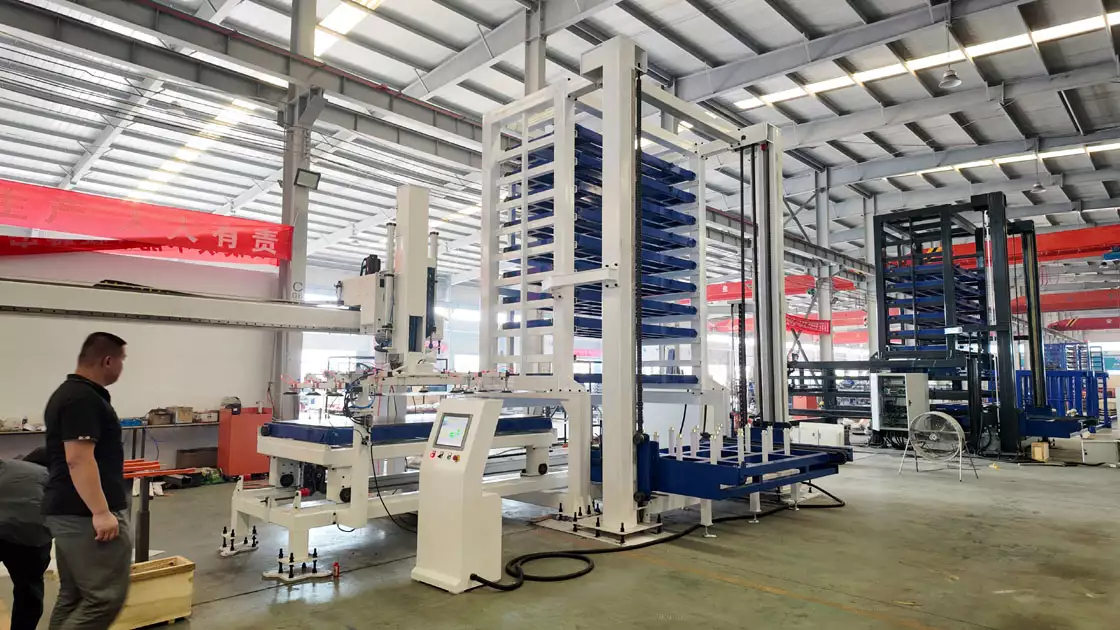
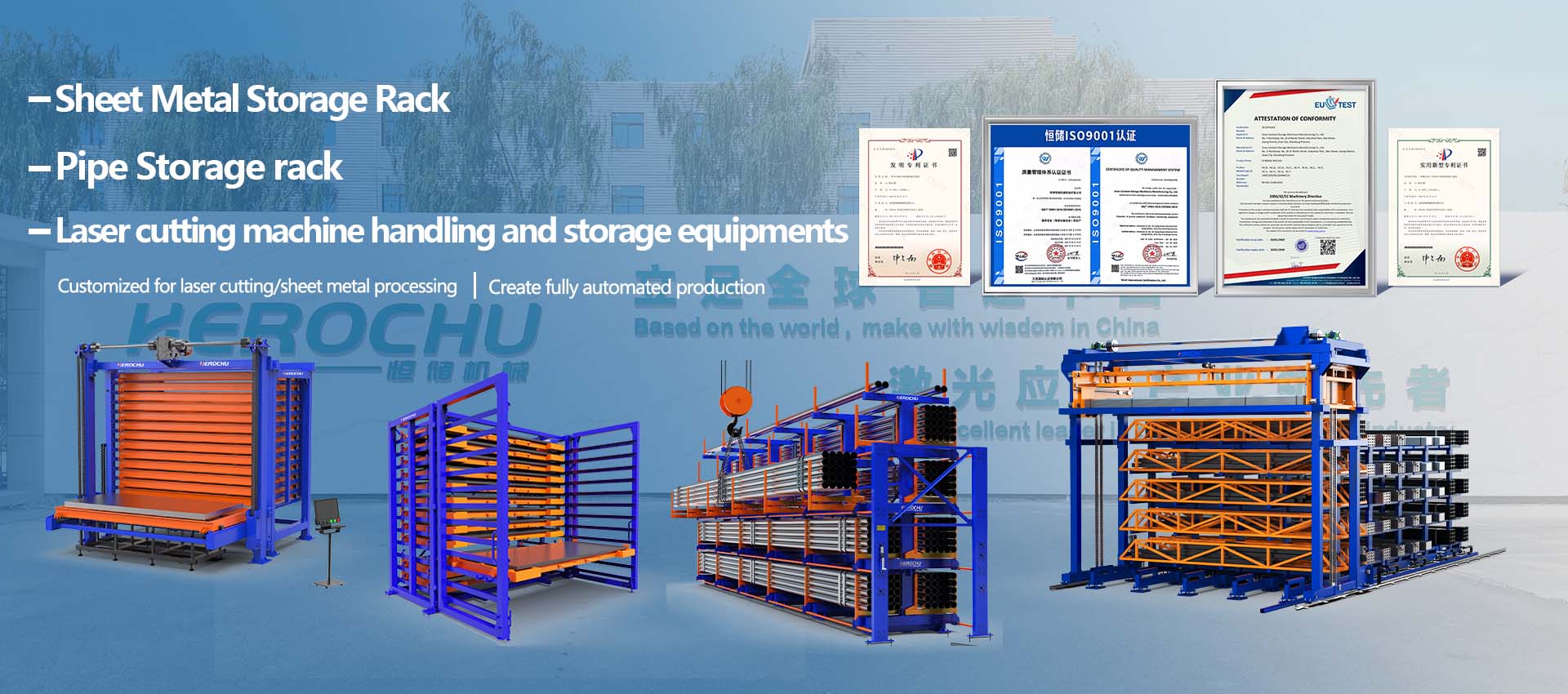
A smart multi-level metal sheet storage tower from Herochu compresses that sprawl into a vertical footprint that occupies a fraction of the floor area while making every stored sheet instantly retrievable through a touchscreen interface. The tower does not merely store material. It digitizes it, tracks it, and delivers it to the production line on command, turning inventory from a static asset into a dynamically managed resource that feeds factory automation systems in real time.
The Vertical Storage Principle and Floor Space Arithmetic
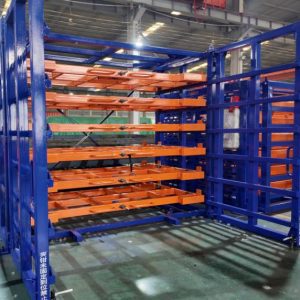
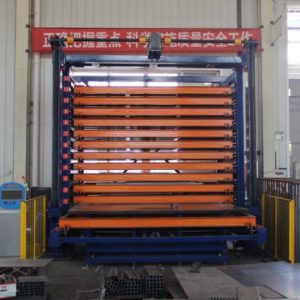
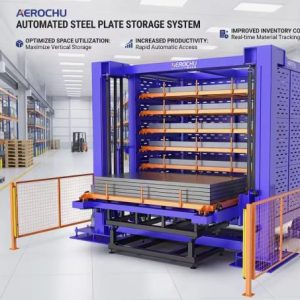
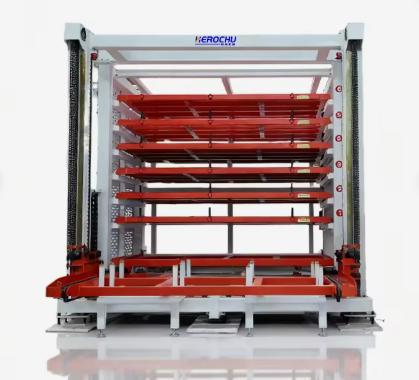
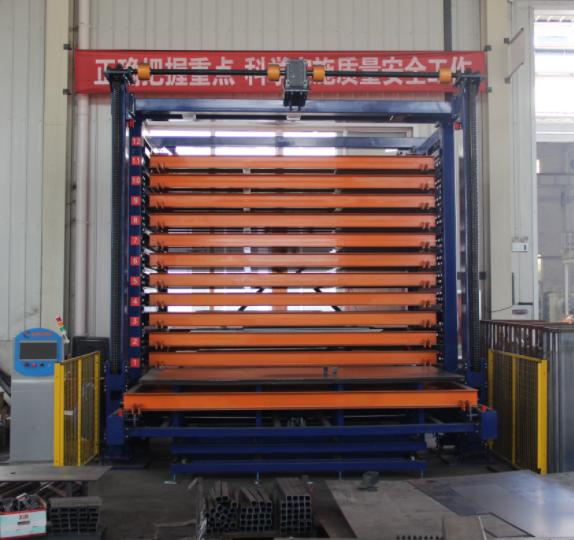
The core advantage of multi-level vertical storage is geometric: stacking sheets upward instead of spreading them outward. A single Herochu tower with ten storage levels and two storage columns — twenty storage positions in total — holds the equivalent material of twenty floor-level pallets or cantilever bays. The floor area consumed is roughly the footprint of four pallets.
For a plant processing thirty to fifty different sheet specifications — different grades, different thicknesses, different dimensions — the space savings compound. Instead of dedicating an entire bay to plate inventory, the tower consolidates everything into a machine-sized footprint adjacent to the processing equipment. The freed floor area becomes available for additional machine tools, secondary processing workstations, or expanded assembly area — capacity that directly generates revenue rather than simply housing inventory.
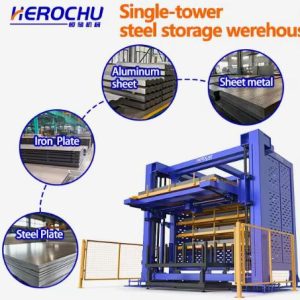
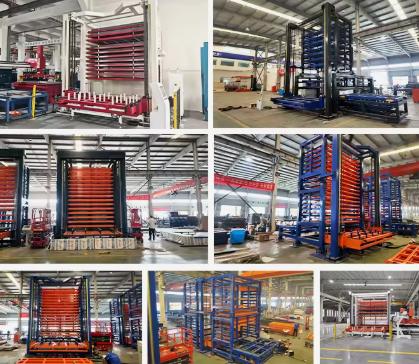
Herochu’s modular design philosophy allows single-tower, twin-tower, and multi-tower configurations to scale with the plant’s storage requirements. A small job shop might start with a single six-level tower. As order volume grows, a second tower can be installed adjacent to the first, sharing the intake and discharge stations while doubling storage density. A high-volume contract manufacturer might deploy four towers arranged in a two-by-two grid, each tower assigned to a specific material category — one for mild steel, one for stainless, one for aluminum, one for specialty alloys — with the WMS coordinating retrieval across all four as a unified inventory pool.
PLC Touchscreen Control and One-Touch Material Delivery
The operator interface on a Herochu smart storage tower reduces material retrieval to a sequence that takes under ten seconds of human interaction. The touchscreen panel, mounted at the operator station adjacent to the discharge area, displays the current inventory map organized by material grade, thickness, and sheet dimensions. The operator selects the required material from the list, confirms the quantity, and presses a single button. The tower handles everything after that.
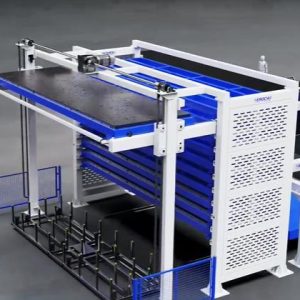
Behind the screen, the Siemens S7 PLC processes the retrieval command through a sequence of automated steps. It identifies the storage location of the requested material. It commands the elevator carriage to travel to the correct level. It extends the drawer assembly to present the sheet stack to the vacuum end-effector. The end-effector grips the top sheet, verifies single-sheet pickup through the double-sheet detection circuit, retracts from the shelf, and deposits the sheet onto the discharge conveyor or shuttle table. Total cycle time from button press to material delivery ranges from thirty to ninety seconds depending on tower height and travel distance.
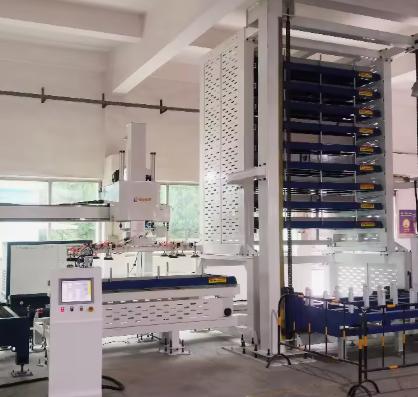
The same interface handles inbound material receiving. When a new bundle of plate stock arrives, the operator scans the barcode on the mill certificate, confirms the material specification on the touchscreen, and places the sheet on the intake station. The tower takes over from there, measuring the sheet, assigning a storage location, and logging the transaction in the WMS database. No manual data entry. No clipboard. No lag between physical receipt and digital inventory update.
Real-Time Material Visibility Across the Factory Floor
One of the least appreciated costs of manual sheet storage is the time production staff spend searching for material. An operator walks to the storage area, checks several racks because the labeling is inconsistent, finds a stack that looks right, measures the thickness with a caliper to confirm, and then signals for a forklift. Multiply that by twenty or thirty retrievals per shift, and the accumulated non-value-adding minutes represent a substantial fraction of a full-time employee’s day.
The Herochu tower eliminates that search time entirely. The touchscreen shows exactly what material is available, where it sits, and its current allocation status — available, reserved for a scheduled job, or on quality hold. The display updates in real time because every storage transaction is a logged database event. If a sheet gets retrieved for a rush order, the inventory count decrements immediately. If the receiving dock accepts a new bundle, the available stock increments before the bundle finishes its first elevator ride.
For production managers, this visibility extends to planning decisions. When the morning production meeting reviews the day’s schedule, the manager can pull up the WMS dashboard and confirm that every required material grade and thickness is physically present and unallocated in the tower. If a gap exists — the 3 mm stainless that was supposed to arrive yesterday has not shown up — the manager knows before the shift starts, not when the laser operator walks over to ask where the material is.
Factory Automation Integration: From Tower to Machine
A smart storage tower earns the “factory automation” label when it connects not just to the operator panel but to the plant’s broader control architecture. Herochu achieves this through the Siemens S7 PLC’s native industrial networking capabilities, which include Profinet, Ethernet/IP, and Modbus TCP support.
On a fully integrated production line, the sequence runs without operator initiation. The MES releases a cutting program to the laser’s CNC controller and simultaneously sends a material request to the tower’s WMS. The tower retrieves the specified sheet and delivers it to the laser’s shuttle table. The laser loads the sheet, executes the program, and ejects the cut parts and skeleton. The tower’s extraction gripper removes the skeleton, and the WMS logs the material consumption against the work order. The operator’s role shifts from material handling to process monitoring — watching cut quality, checking part dimensions, and managing exceptions rather than feeding the machine.
This level of integration requires upfront configuration — mapping the MES work-order fields to the WMS material parameters, defining the communication protocol between the tower PLC and the machine CNC, and tuning the handshake timing so the tower presents the next sheet exactly when the shuttle table is ready to receive it. Herochu’s commissioning team handles this configuration during installation, with remote support available afterward for plants that add new machine tools or upgrade their MES software.
Modular Customization for Diverse Plant Layouts
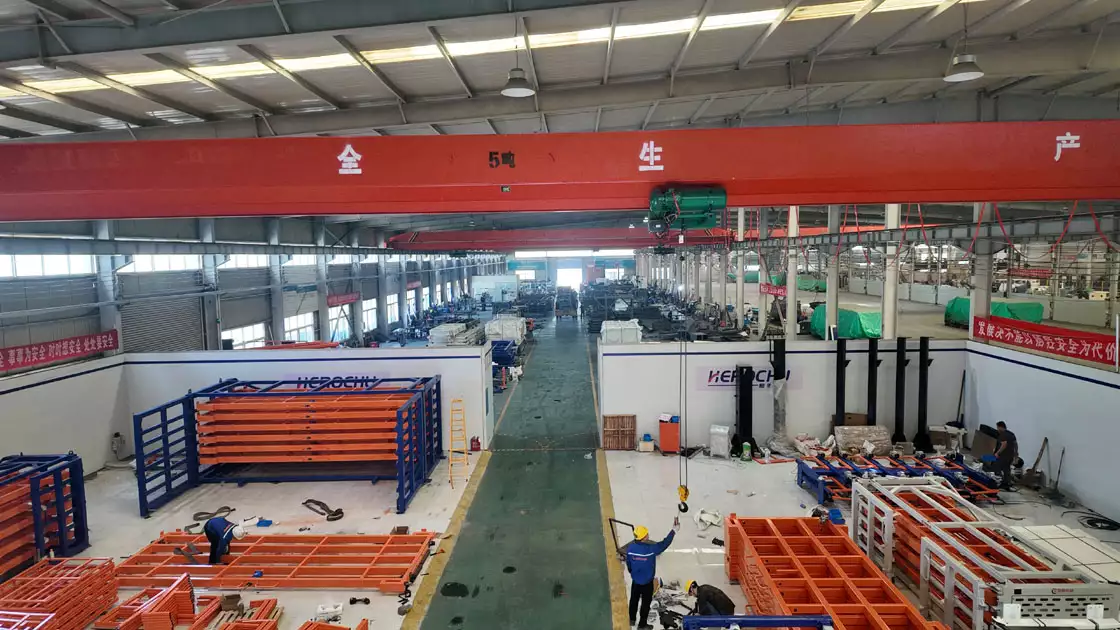
No two fabrication plants share an identical floorplan. Ceiling heights vary. Aisle widths differ. Some plants need the tower positioned directly adjacent to a laser; others need it serving multiple machines through a transfer shuttle network. Herochu’s modular design accommodates this variety through configurable parameters rather than custom engineering for every installation.
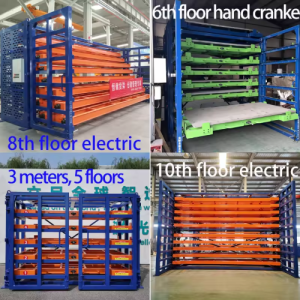
Tower height adjusts in single-level increments from six to fifteen layers, matching the available vertical clearance while maximizing storage density. Clearance between stored sheets is configurable in 10 mm increments, allowing the plant to balance storage density against accessibility for the vacuum end-effector. Drawer extension direction — forward or lateral — adapts to whether the tower feeds a machine in front of it or a transfer shuttle running alongside it.
Electrical configuration covers 220V single-phase and 380V three-phase at both 50 Hz and 60 Hz, eliminating the need for site-specific transformer installations. The control cabinet footprint is standardized so that the plant’s electrical contractor can prepare the power drop and network connection before the tower arrives, minimizing on-site installation time.
The WMS software is similarly modular. A single-tower license covers all standard functionality. Multi-tower expansion licenses add coordinated inventory management across towers. ERP integration modules are available for common platforms, with custom connectors developed when a plant runs a proprietary or industry-specific ERP that lacks a standard interface.
Specifying the Right Tower for a Given Application
Selecting the correct Herochu smart storage tower starts with three data points: the maximum sheet dimensions the plant processes, the number of distinct material specifications held in inventory, and the daily retrieval volume.
Sheet dimensions determine the tower model. The HC-S3015-63 handles stock up to 3000 x 1500 mm, a common size for job shops and light fabrication. The HC-S4015-85 and HC-S4020-85 cover the 4000 mm range typical in mid-volume production. The HC-S6020-105 extends to 6000 x 2000 mm for structural fabricators and heavy equipment manufacturers.
The number of distinct material specifications — grades, thicknesses, surface finishes — determines how many storage positions the tower needs. If the plant stocks twenty different sheet types and wants at least two sheets of each type available at all times, the tower needs forty storage positions minimum, which translates to a specific combination of levels and columns.
Daily retrieval volume determines whether a single-tower or multi-tower configuration is appropriate. A single elevator column can execute roughly 25 to 40 retrieval cycles per hour depending on average travel distance. If the plant’s production schedule requires 50 retrievals per hour, a twin-tower configuration with parallel elevator columns meets the demand while maintaining response time.
Herochu’s application engineering team runs these calculations during the quoting process, modeling different configurations against the customer’s actual production data to identify the setup that meets throughput requirements at the lowest capital cost.
The Economic Case for Vertical Automated Storage
Three cost categories shift when a plant moves from manual sheet storage to a smart multi-level tower.
Floor space cost drops first. Consolidating plate inventory from a warehouse bay into a tower footprint frees square footage for revenue-generating uses. At typical industrial lease rates, the space savings alone can offset a meaningful portion of the tower’s monthly financing cost.
Labor cost shifts from material handling to production. One tower operator replaces two or three material handlers whose hours get redirected to secondary operations, quality inspection, or additional machine tending. The labor savings are not a headcount reduction in most cases — they are a productivity increase, with the same workforce producing more output per shift.
Machine utilization rises because the tower eliminates the idle intervals when cutting equipment waits for material. A laser that runs at 65% utilization under manual loading can reach 85% to 90% with automated material delivery. Those additional cutting hours generate additional revenue without additional capital equipment — the most direct path to return on investment.
A Herochu smart multi-level metal sheet storage tower for factory automation is not a storage upgrade. It is a production velocity upgrade that happens to include storage. By digitizing inventory, automating retrieval, and integrating with the plant’s control network, the tower removes the material handling bottleneck that limits how fast the rest of the factory can run.