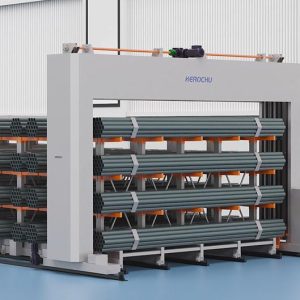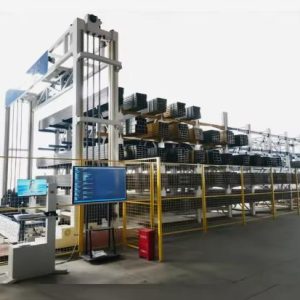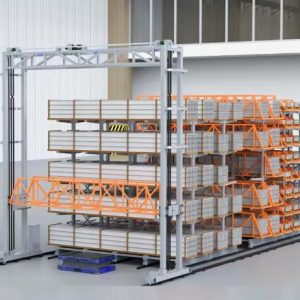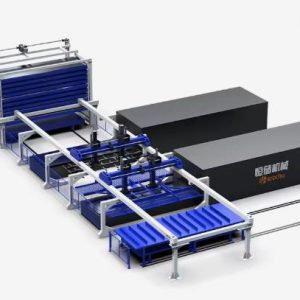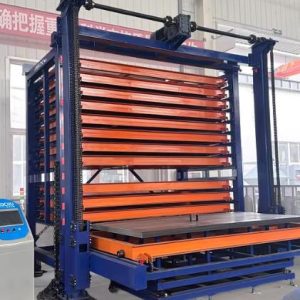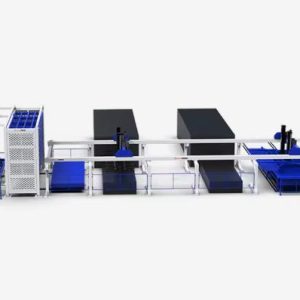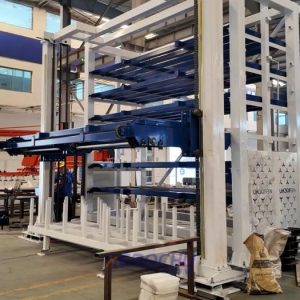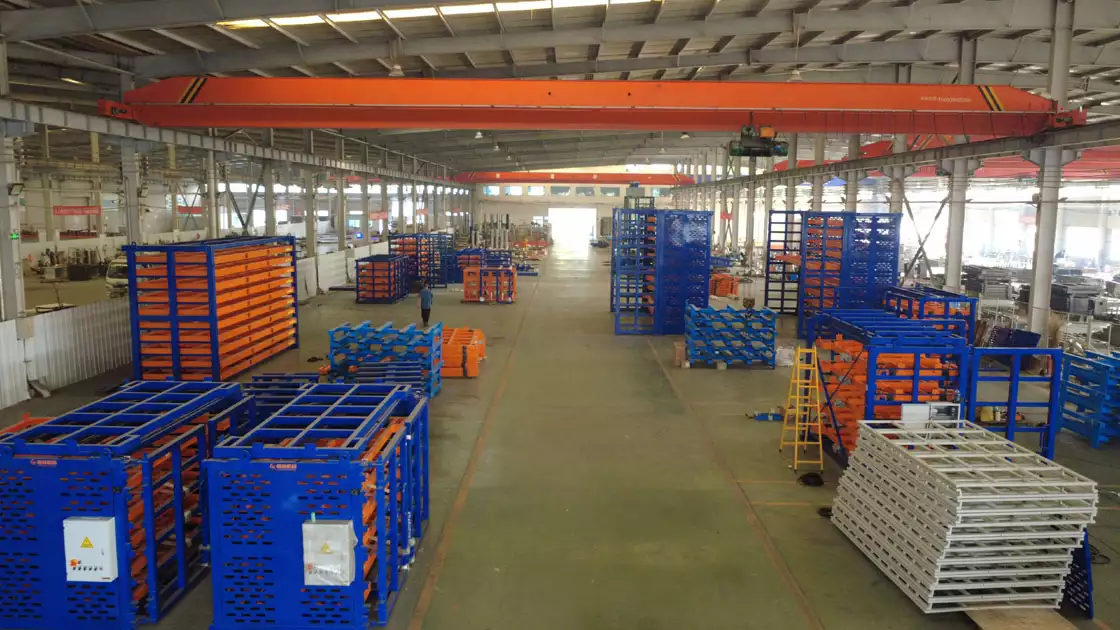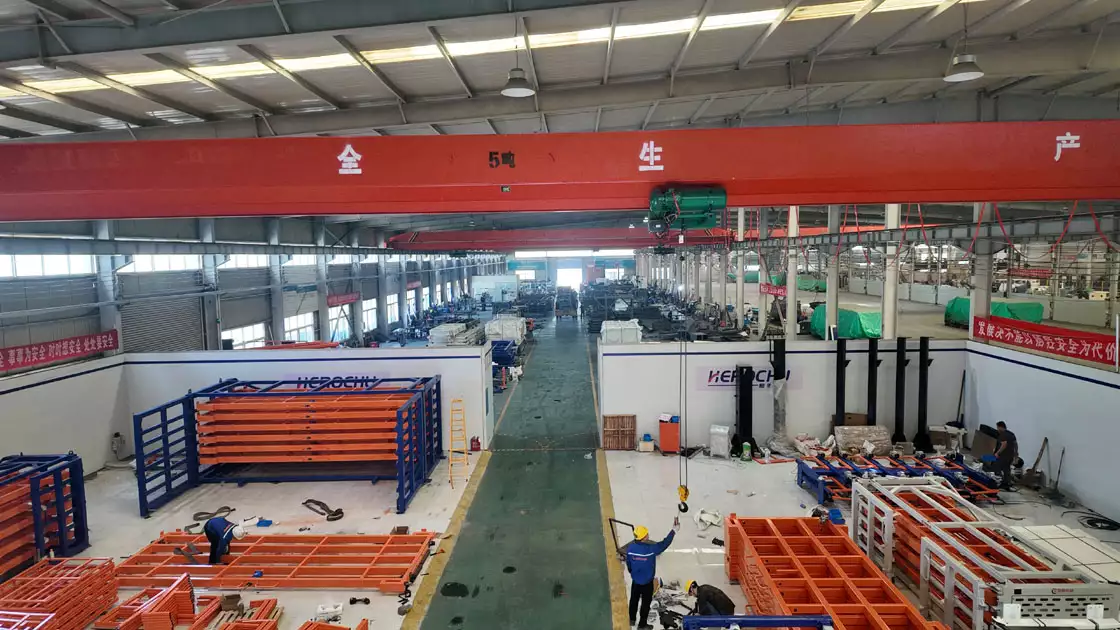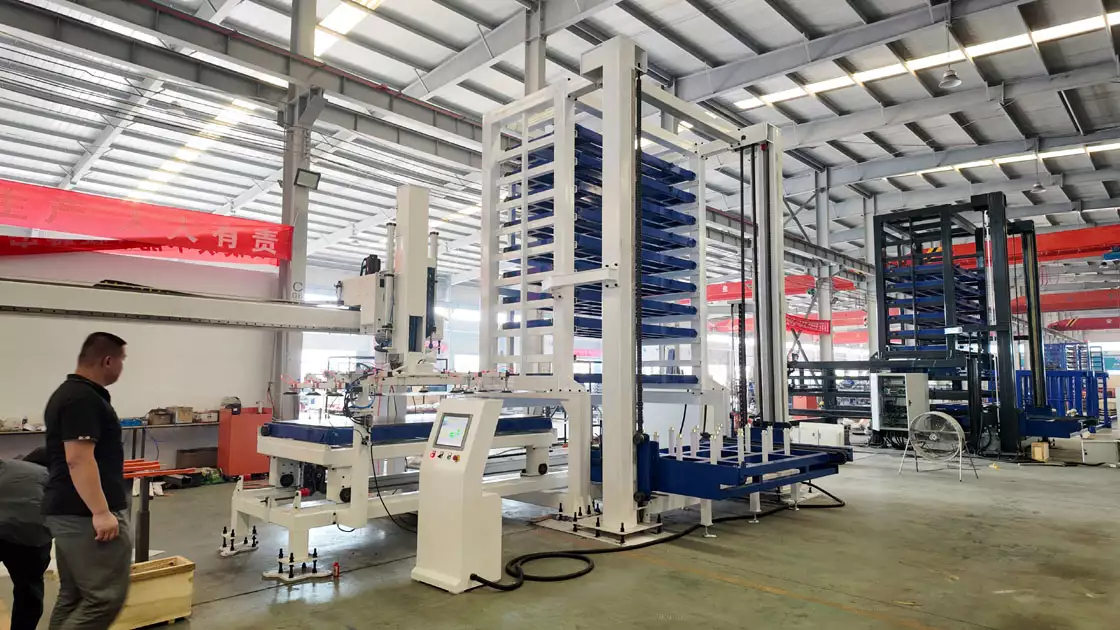
The difference between a fabrication shop that runs one shift of cutting per day and one that achieves continuous 24-hour production is rarely a question of machine capability. Modern laser cutting systems are mechanically capable of running unattended for hours at a stretch. What stops them is the absence of material at the cutting bed when a job finishes and the next nest is ready to load. Herochu’s Smart Vertical Storage Racking with Automated Loading bridges this gap by combining intelligent inventory management software, sensor-rich material handling hardware, and direct integration with laser cell control systems into a single automated loading platform.
Predictive Inventory Management and AI-Driven Retrieval
Conventional automated storage systems operate on a reactive logic: the cutting machine requests a sheet, the storage system retrieves it. Herochu’s smart racking platform replaces this call-and-response pattern with predictive sequencing driven by production schedule analysis. The onboard PLC software ingests the next several hours of cutting jobs from the factory ERP or production scheduling system, evaluates material requirements across all queued nests, and pre-positions cassettes in the retrieval order that minimizes cumulative gantry travel.
The algorithm accounts for more than simple proximity. It weights retrieval priority by job urgency, groups jobs calling for the same material grade to reduce cassette cycling, and staggers heavy-sheet and light-sheet retrievals to balance motor thermal load on the lifting axis drive. Over weeks of operation, the system builds a usage pattern profile for each stored material type and adjusts its pre-positioning strategy to reflect actual consumption trends rather than theoretical production schedules that may shift during a shift.
Machine learning components within the controller analyze historical retrieval logs to identify inefficiencies in the storage layout. If a particular material grade stored in a distant cassette position is consistently consumed at high rates, the system recommends a physical relocation of that inventory to a position closer to the loading station. The recommendation appears as a maintenance task on the HMI that the operator can execute during a scheduled break, after which the system updates its internal location map automatically. This continuous optimization loop squeezes incremental seconds out of every retrieval cycle, and those seconds compound into additional cutting hours over a monthly production calendar.
Sensor Architecture for Damage Prevention
Material handling automation in steel processing carries a unique risk profile that warehouse automation in lighter industries does not face. A sheet of 6,000 mm by 2,000 mm steel plate weighing five metric tons carries enough inertial energy during transfer to destroy both itself and the machinery moving it if control is lost. Herochu addresses this through a layered sensor architecture that detects fault conditions at multiple stages before they escalate into mechanical collisions.
The first layer is the dual-needle sheet separation system paired with magnetic thickness verification. When the vacuum gripper descends to pick a sheet from a cassette stack, two tapered separation needles inject compressed air between the top sheet and the one beneath it. The air pulse breaks any oil-film adhesion or light surface rust bonding that might cause two sheets to lift as one. Simultaneously, a magnetic induction thickness gauge positioned adjacent to the gripper frame measures the actual thickness of the captured material and compares it against the expected value from the inventory database. A discrepancy of more than 0.2 mm triggers an abort and alerts the operator to a potential double-feed or material misidentification.
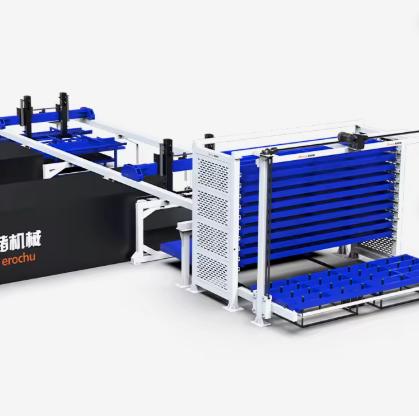
The second layer is the load cell array integrated into the lifting carriage. Weight measurement during the initial lift stroke confirms that the combined mass of the sheet plus gripper frame matches the expected value within a tolerance band. An underweight reading suggests a partial pick where only a corner of the sheet was engaged; an overweight reading triggers the double-feed alarm. The system will not initiate horizontal travel until weight verification passes, preventing the scenario where a partially gripped sheet slips during gantry movement and drops onto equipment or walkways below.
The third layer is the collision avoidance grid built from laser distance sensors mounted on the leading and trailing edges of the manipulator carriage. These sensors scan the travel path ahead and behind during every movement, stopping travel instantly if an obstruction—a forgotten maintenance tool, a misaligned cassette, or an operator who has entered the gated area—enters the detection zone. Recovery from a collision avoidance stop requires a manual reset by a supervisor through the HMI, ensuring that the cause of the stop is investigated before production resumes.
PLC and HMI Architecture
The control cabinet at the heart of every Herochu smart racking installation houses an industrial PLC running a deterministic real-time operating system. All axis drives—horizontal gantry, vertical lift, vacuum pump, pneumatic solenoid banks, and auxiliary functions—communicate with the PLC through a deterministic fieldbus that guarantees command execution within a fixed cycle time regardless of network traffic. This determinism is essential for coordinated multi-axis moves where a communication delay on one drive while another continues moving results in mechanical binding or lost position.
The operator-facing touchscreen HMI runs on an industrial panel PC rated for the dust, vibration, and temperature swings of a fabrication shop floor. The home screen displays a live warehouse map with color-coded cassette status indicators: green for available inventory, yellow for cassette in motion or reserved for an active job, red for empty or fault condition, and gray for positions disabled for maintenance. Touching any cassette icon opens a detail view showing material grade, dimensions, remaining sheet count, aggregate weight, date of last inbound receipt, and date of last retrieval—a complete audit trail for every stored position.
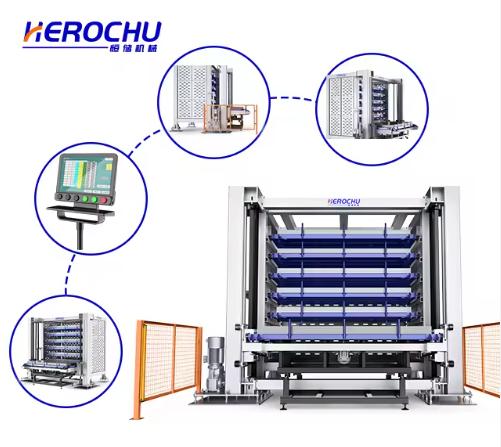
Below the warehouse map, a job queue panel shows upcoming retrieval commands with estimated time to delivery. A production supervisor can reprioritize jobs by dragging them within the queue, and the system recalculates the optimal retrieval sequence immediately. This responsiveness to shifting production priorities distinguishes the Herochu system from hard-coded retrieval logic that cannot adapt to an urgent customer order inserted mid-shift.
ERP Connectivity and Closed-Loop Material Tracking
The Herochu smart racking platform connects to the factory ERP system through standard industrial communication protocols including Ethernet/IP, PROFINET, and Modbus TCP. The bidirectional data flow enables automatic inventory reconciliation: when the ERP issues a work order consuming a specific quantity of a given material, the racking system’s actual dispense count is reported back, and any discrepancy between planned and actual consumption is flagged on the ERP dashboard without manual counting or data entry.
Real-time inventory visibility extends to the procurement workflow. When a material grade’s on-hand quantity drops below a user-defined reorder point, the racking system generates an automatic replenishment request to the ERP’s purchasing module. This closed-loop link between physical inventory and procurement prevents the stockout condition where a cutting schedule calls for material that exists in the ERP database but has actually been consumed and not yet reconciled—a common source of production stoppages in manually inventoried shops.
For service centers and job shops that bill customers by material usage, the transaction log maintained by the Herochu controller provides an auditable chain of custody from receipt to consumption. Each sheet retrieval is stamped with date, time, operator ID, job number, and material heat number where available. This granularity supports accurate customer billing and, in regulated industries such as pressure vessel fabrication, provides the material traceability documentation required by inspection authorities.
Floor Space and Throughput Outcomes
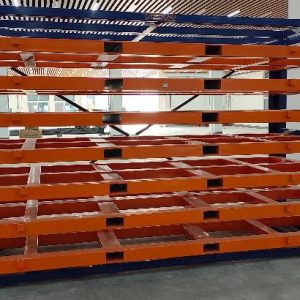
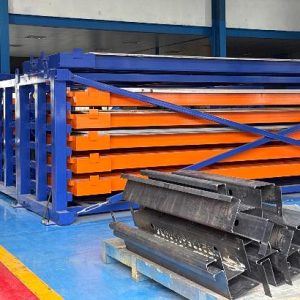
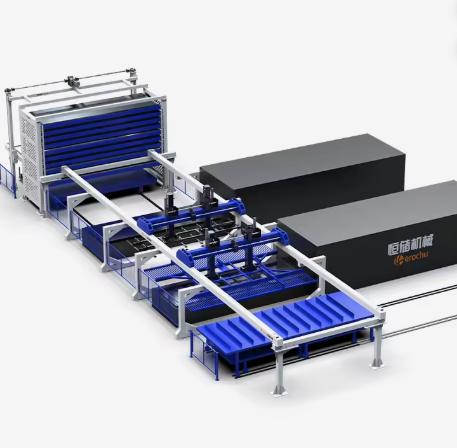
The physical footprint of a Herochu smart vertical racking installation depends on the sheet dimensions and storage depth required. A system handling 4,000 mm by 2,000 mm sheets with eight storage levels occupies approximately 50 to 70 square meters of floor area while providing storage capacity equivalent to 300 to 400 square meters of conventional ground-level racking with forklift access aisles. The vertical orientation recovers square footage that can house additional cutting capacity or eliminate the need for off-site warehouse leasing.
Throughput gains follow directly from the reduction in material changeover time. Manual sheet loading on a large-format laser typically consumes 8 to 15 minutes per changeover including skeleton removal, crane travel, rigging adjustment, and positioning verification. The Herochu automated loading sequence completes the same operation in 90 to 120 seconds without operator involvement. Across a two-shift operation running eight changeovers per shift, this difference recovers approximately two hours of cutting time per machine per day—the equivalent of adding a quarter shift of production without adding headcount or floor space.