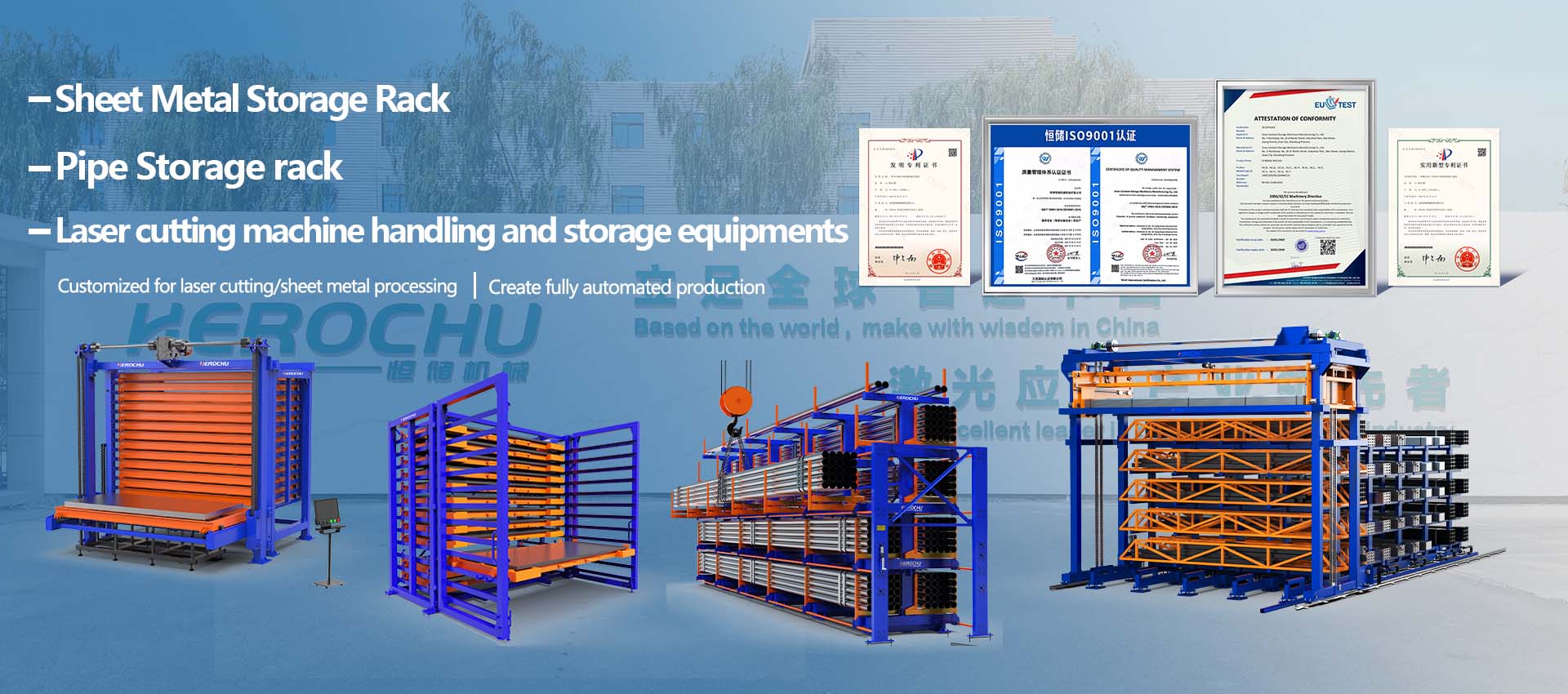
Laser cutting systems in modern fabrication shops have reached a performance threshold where the cutting cycle itself is no longer the bottleneck. Fiber laser sources now deliver kilowatt-level power that slices through mild steel plate at rates exceeding 30 meters per minute on thin gauge material. The real constraint sits upstream: the minutes—sometimes tens of minutes—lost every time an operator must stop a machine, clear the skeleton from the previous nest, and manually load the next fresh sheet. Herochu’s Automated Tower Storage system targets this inter-nest productivity gap directly, collapsing material changeover into a tightly orchestrated sequence that runs in under two minutes without manual intervention.
Vertical Carousel Architecture
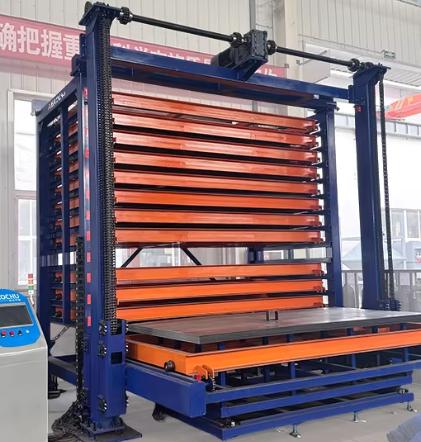
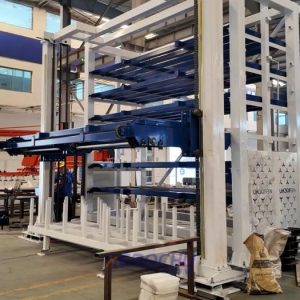
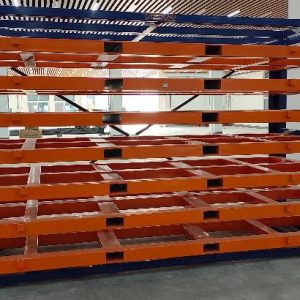
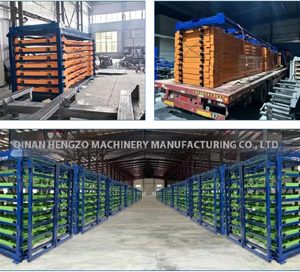
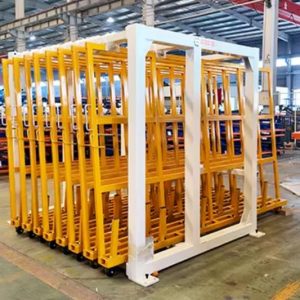
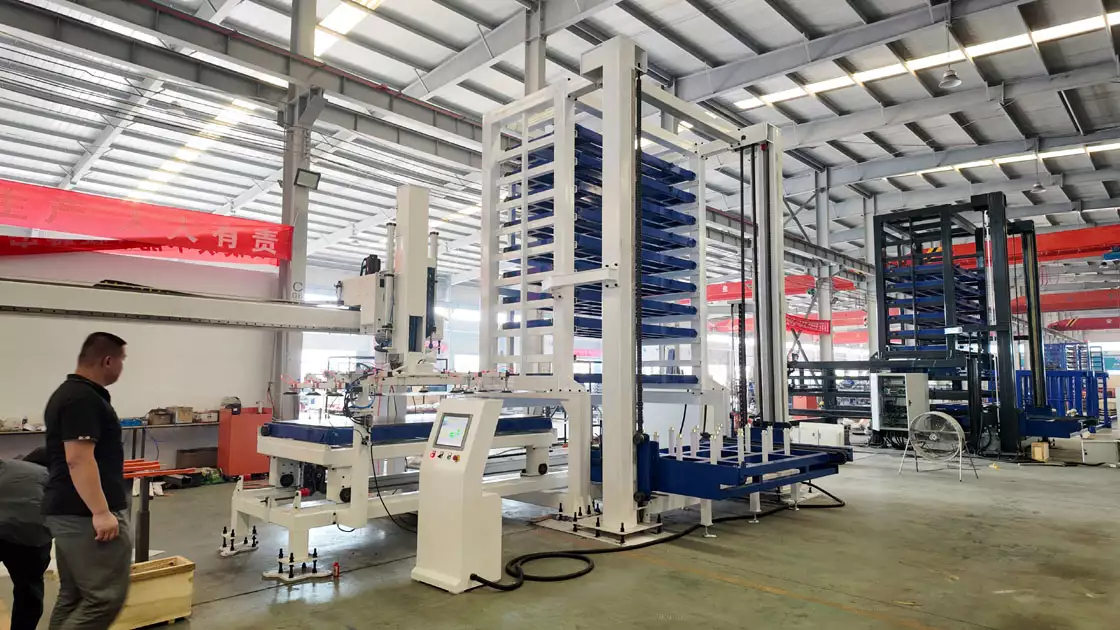
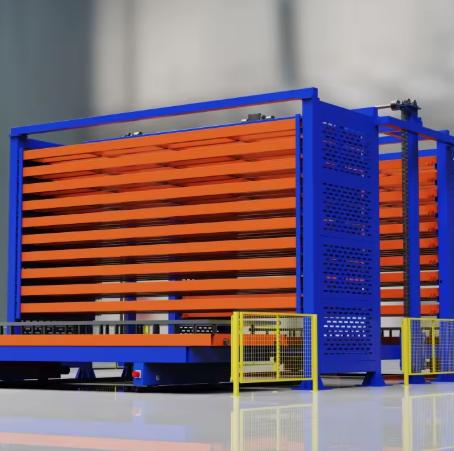
The Herochu tower storage design centers on a vertical loop rotating carousel that consolidates sheet buffering into a footprint of 10 to 14 square meters. Within this compact envelope, the system houses up to eight independently addressable storage levels, each built around a cassette rated for 5,000 kilograms. The carousel drive uses a motorized chain or belt loop with position encoding at every stop, ensuring the correct cassette aligns with the loading station on every cycle regardless of chain stretch or thermal expansion accumulated over extended operation.
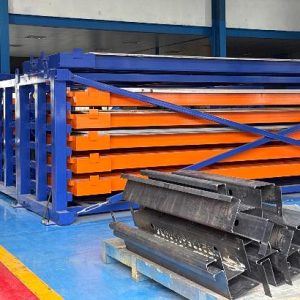
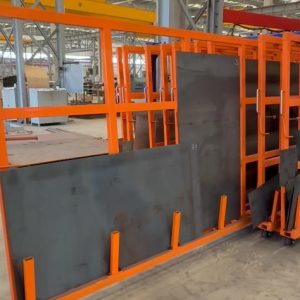
Cassette construction relies on welded Q235B steel frames with machined locating features that register against mating surfaces on the carousel carriage. This mechanical registration—rather than purely encoder-based positioning—provides the repeatability needed for automated sheet extraction where a few millimeters of misalignment can cause vacuum cup seal failure or edge collision during the pick cycle. Each cassette’s load is continuously monitored through strain-gauge load cells integrated into the carriage bearings, feeding weight data to the central PLC for inventory tracking and overload prevention.
Five-Stage Auto-Feeding Sequence
The automated material changeover follows a five-stage sequence that Herochu engineers refined through iterative cycle-time analysis on live production floors. Stage one begins with skeleton extraction: after the laser completes its cut program, the tower’s manipulator arm extends into the cutting bed area, engages the remaining skeleton frame, and lifts it clear of the slats. The skeleton is deposited into a dedicated scrap bin or conveyor positioned alongside the tower structure.
Stage two executes skeleton discharge to clear the cutting bed completely. The manipulator verifies bed clearance through a laser distance sensor sweep before proceeding to stage three—the single-sheet retrieval cycle. Here, a vacuum gripper matrix descends onto the top sheet within the designated cassette. Dual-needle sheet separation injects compressed air between the top and second sheet while magnetic thickness sensing confirms that only one sheet is captured. This double-sheet detection protocol is critical; a single undetected double-feed can destroy a laser cutting head valued in the tens of thousands of dollars.
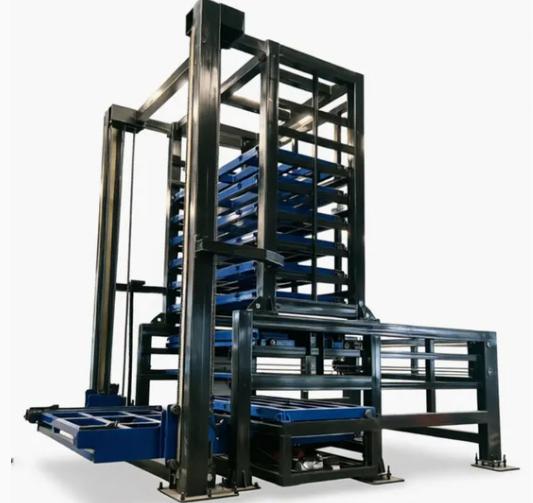
Stage four transfers the sheet to the cutting bed with precision placement. The manipulator travels along linear guides at 5 to 15 meters per minute, decelerating through a controlled ramp to place the sheet against mechanical or laser-edge positioning stops. Stage five resets the inventory counter for the source cassette and logs the transaction to the ERP database, completing the closed-loop material tracking chain. The full five-stage sequence runs from 90 to 120 seconds depending on sheet dimensions and travel distances within the specific installation layout.
Vacuum Gripper Technology
The vacuum end-effector is the critical interface between storage and cutting machine, and Herochu invests substantial engineering effort in its reliability. The gripper frame carries a rectangular array of silicone-lipped suction cups, each plumbed to an independent solenoid valve controlled by the PLC. Before initiating a pick, the controller checks the cassette’s inventory record for sheet dimensions and activates only the subset of cups positioned over the sheet surface. Cups that would fall outside the sheet boundary remain valved shut, maintaining full system vacuum on the active cups.
A vacuum reservoir tank sized for twice the required evacuation volume provides instantaneous clamping force without waiting for the pump to build pressure on each cycle. Vacuum sensors at the manifold monitor pressure decay and trigger an immediate abort and retry if vacuum drops below the holding threshold during transit. This fail-safe architecture prevents a sheet release over the cutting bed or, more critically, over an operator walkway.
Multi-Carousel Scalability
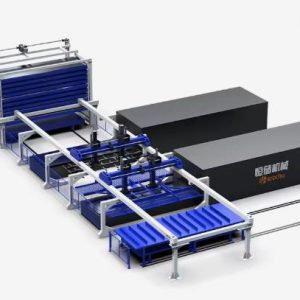
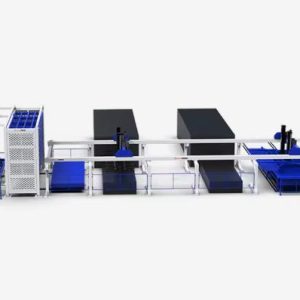
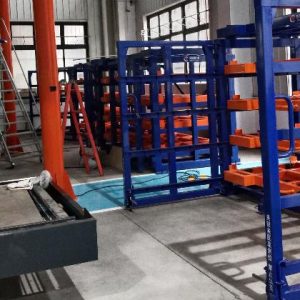
A single Herochu tower carousel keeps one laser cutting machine continuously fed. When a facility operates two, three, or more lasers on the same shop floor, the tower concept scales through multi-carousel configurations linked by a shared overhead gantry system. In this arrangement, each carousel serves as a dedicated material buffer for its assigned machine while the common gantry handles inter-carousel material transfer and incoming sheet pallet loading from the receiving dock.
The gantry runs on elevated runway beams that span the carousel row without consuming additional floor space. Gantry end-effectors are equipped with quick-change mounting plates, allowing the system to swap between vacuum grippers for sheet handling and mechanical clamps for skeleton removal within a single cycle or during scheduled maintenance windows. The shared-gantry architecture reduces the per-machine cost of automation while maintaining the cycle time advantage of dedicated carousel buffering at each cutting station.
Integration with Laser Cell Workflow
The Herochu tower system connects to the laser cutting cell through a standardized communication protocol that exchanges job queue data, material specifications, and completion confirmations. When the laser CAM software generates a nest, it communicates the required sheet grade, thickness, and dimensions to the tower PLC. The tower’s inventory database matches the requested material against available cassettes, selects the optimal source based on retrieval distance and remaining stock, and stages the cassette at the pick position while the current cut job finishes.
This pre-staging logic eliminates the waiting period between skeleton extraction and fresh sheet delivery. The tower begins rotating the target cassette into position before the laser controller even issues the material call. When the laser bed is clear, the manipulator arm is already descending onto the sheet, and the transfer begins immediately. Over a full production shift, this concurrency saves 8 to 12 minutes of cumulative idle time per machine compared to systems that sequence retrieval only after receiving the material request.
Maintenance and Operational Reliability
Rotating carousel machinery requires disciplined preventive maintenance to sustain cycle-time performance over multi-shift operation. Herochu provides a maintenance schedule keyed to operating hours, with chain tension checks, drive sprocket wear inspection, and vacuum system filter replacement as primary service items. All wear components are selected from standard industrial supply-chain sources to avoid single-source procurement constraints.
The PLC logs cycle counts, motor current draw, and vacuum pump duty cycles continuously. Maintenance alerts trigger on the HMI when any parameter drifts outside its baseline range, enabling condition-based servicing rather than fixed-interval replacement that may be either premature or too late. This predictive approach keeps the tower online during production windows and shifts all non-emergency maintenance into scheduled downtime.