
Heavy Duty Smart Warehouse for Profiles: Herochu 500-Tonne High-Density Storage
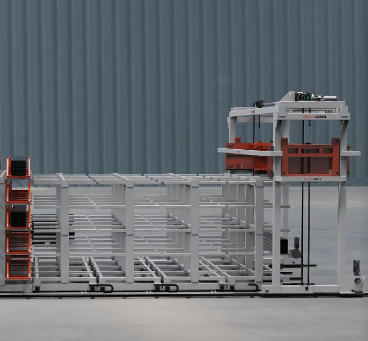
The term “heavy duty” in industrial storage typically implies robust construction and high load capacity. The term “smart” implies software-driven optimization. A heavy duty smart warehouse for profiles must deliver both simultaneously—and must do so within the physical constraints of real factory buildings, not idealized greenfield sites. The Herochu heavy duty smart warehouse for profiles achieves this through three integrated innovations: narrow-aisle gantry architecture, per-level weight-aware load assignment, and dynamic slotting optimization that relocates frequently accessed profiles without operator intervention.
Heavy Duty Smart Warehouse for Profiles: Herochu 500-Tonne High-Density Storage
The term “heavy duty” in industrial storage typically implies robust construction and high load capacity. The term “smart” implies software-driven optimization. A heavy duty smart warehouse for profiles must deliver both simultaneously—and must do so within the physical constraints of real factory buildings, not idealized greenfield sites. The Herochu heavy duty smart warehouse for profiles achieves this through three integrated innovations: narrow-aisle gantry architecture, per-level weight-aware load assignment, and dynamic slotting optimization that relocates frequently accessed profiles without operator intervention.
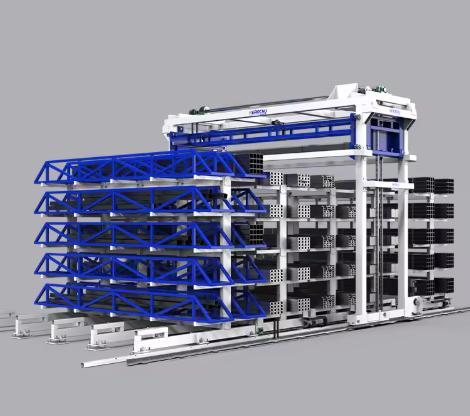
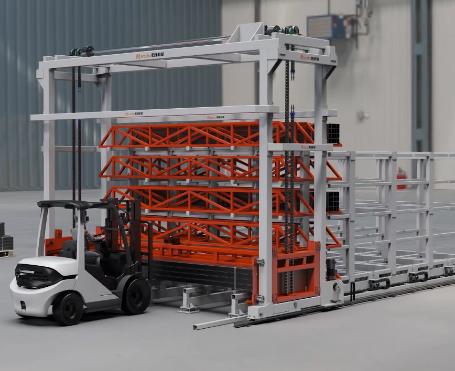
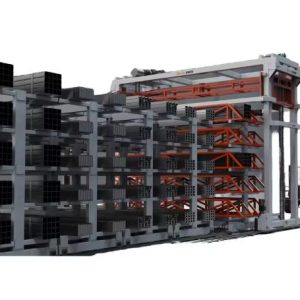
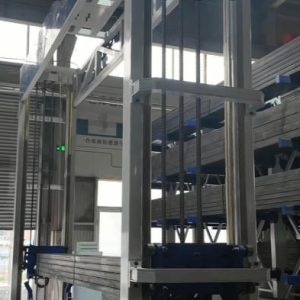
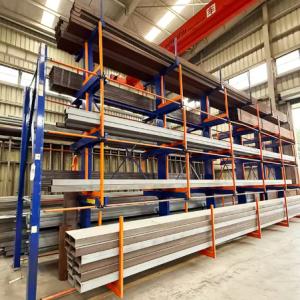
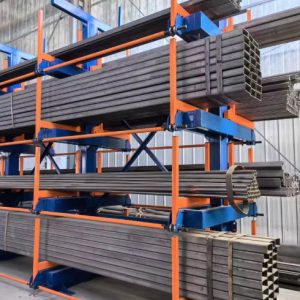
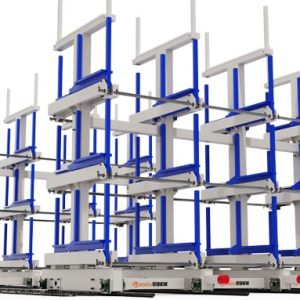
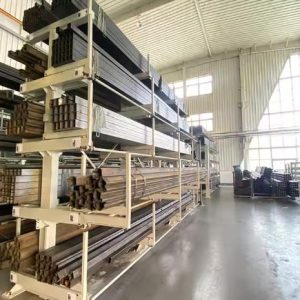
Consider a typical profile warehouse before automation. Profiles are stored on cantilever racks arranged in rows with aisles between them. Each aisle must be wide enough for a forklift to enter, turn, and extract a 12-meter bar. Standard aisle width for a 3-tonne counterbalance forklift handling long loads is 3.5 to 4 meters. The racks themselves occupy perhaps 2 meters of width per row (including overhang). The ratio of storage width to aisle width is therefore 2:3.5, meaning that over 60% of the warehouse floor area is dedicated to movement rather than storage. A heavy duty smart warehouse for profiles using the Herochu system flips this ratio. The gantry travels on fixed rails and requires no turning aisle. Aisle width is reduced to 1.2 meters—just enough clearance for the gripper arms to extend and retract without contacting adjacent profiles. The storage towers occupy 2.5 meters of width. The storage-to-aisle ratio becomes 2.5:1.2, or 68% storage area. Combined with vertical stacking up to 13 levels, the volumetric storage density increases by a factor of 5 to 7 compared to conventional racking.
The 500-tonne capacity claim is based on a specific but realistic scenario: standard 12-meter bar length, 10 storage levels, mixed profile types including round pipe, square tube, flat bar, and structural sections, with an average density of 4.5 tonnes per cubic meter (accounting for air gaps between profiles). The footprint of approximately 200 square meters represents a single storage zone 20 meters long by 10 meters wide, containing four towers each 2.5 meters wide, with two 1.2-meter aisles and end clearances. Within this zone, the system can store up to 500 tonnes of mixed profiles. To put that number in perspective, 500 tonnes of structural steel is enough to frame a small commercial building. In a traditional warehouse, storing 500 tonnes of mixed profiles would require 800 to 1,200 square meters of floor space plus the associated turning aisles.
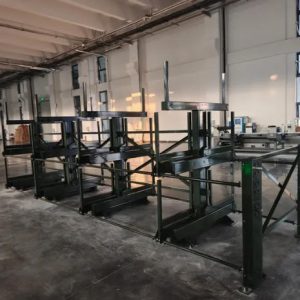
The physical construction of the heavy duty smart warehouse for profiles begins with the main structure: vertical columns fabricated from heavy-gauge steel sections, typically H-beams or welded box columns. These columns are anchored to a reinforced concrete foundation designed for the specific load distribution of the installed configuration. Between columns, horizontal braces provide lateral stability against seismic or wind loads, though the system is intended for indoor installation so wind is rarely a factor. The storage supports are bolted to the columns at the selected heights. For heavy duty applications, the 5-tonne per level support option is recommended, which uses thicker support arms (12mm steel plate instead of 8mm) and additional gusset plates at the attachment points.
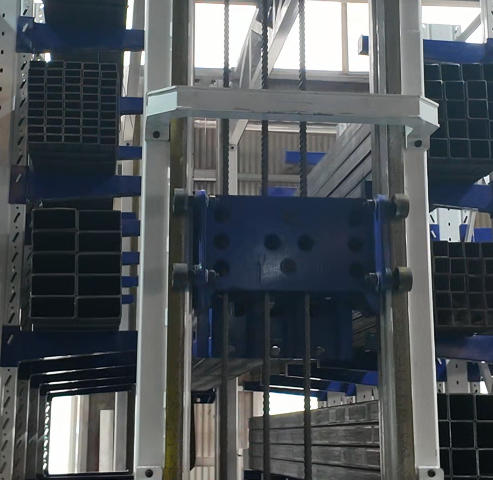
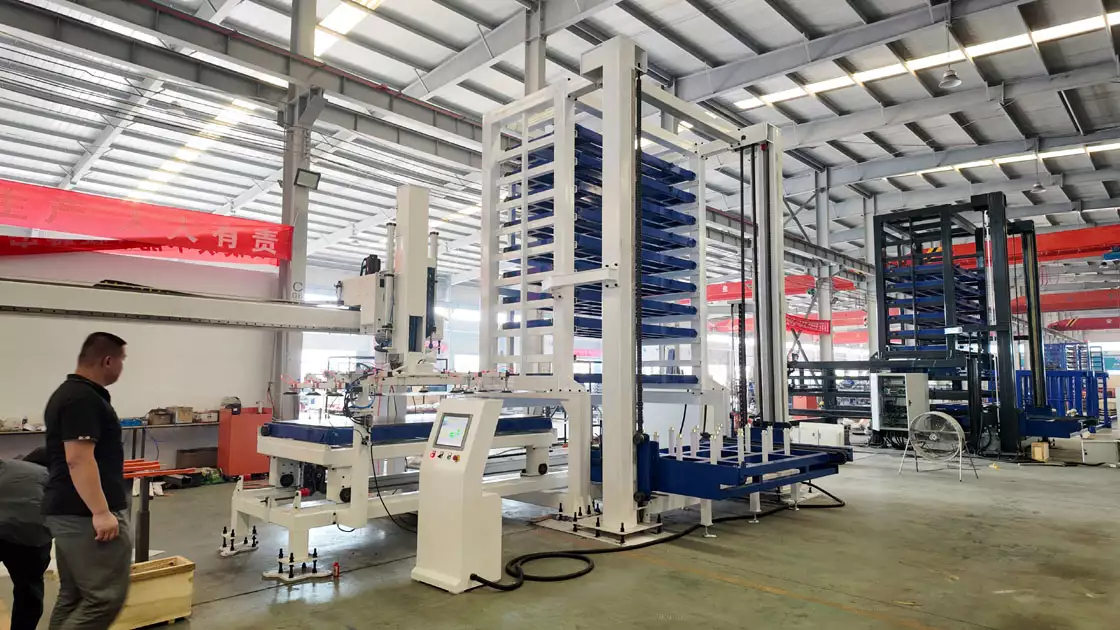
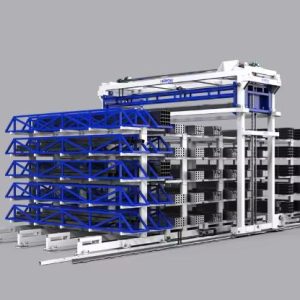
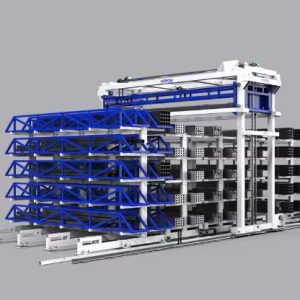
The gantry robot serving this heavy duty warehouse is correspondingly robust. The main bridge is a fabricated steel truss spanning the full width of the storage zone. Travel on the linear guide rails is powered by dual synchronized chain drives, one on each side of the bridge, to prevent skewing. The lifting carriage runs on vertical rails attached to the bridge face, with a chain drive providing vertical motion. Maximum lift capacity is 5 tonnes, matching the heaviest per-level load rating. The gripper mechanism uses four independently actuated arms, each capable of 1.25 tonnes of lift, with load sharing controlled by the carriage’s central controller. If one arm encounters higher resistance (for example, if a profile is slightly bent and binds against adjacent stored material), the controller adjusts the other arms to compensate, ensuring the load remains level during extraction.
What makes this a smart warehouse rather than merely an automated one is the decision-making layer embedded in the warehouse control software. The system continuously monitors five variables: (1) the current weight on each storage position, measured by strain gauge sensors integrated into the support arms; (2) the dwell time of each profile—how long it has been in storage; (3) the access frequency of each profile type, tracked by SKU or by physical dimensions; (4) the current queue depth at the inbound and outbound stations; and (5) the available empty positions across all storage levels. Using this data, the system performs three optimization routines.
The first optimization routine is dynamic slotting. When a profile is retrieved and placed on the outbound station, the system does not simply return the gripper to a home position. Instead, it checks whether any other profiles in the warehouse are candidates for relocation. Frequent-access profiles are moved to positions closer to the outbound station during periods of low activity—typically overnight or during scheduled breaks. This relocation happens automatically, without operator involvement, and is invisible to the downstream process. The result is that frequently requested profiles are always stored in the most accessible locations, reducing average retrieval time by 30 to 40% compared to static slotting.
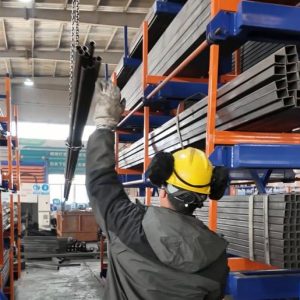
The second optimization routine is weight-aware placement. When the gantry picks a multi-ton bundle from the inbound station, it first weighs the load using integrated strain gauge sensors in the gripper arms. Based on that weight, the system selects an appropriate storage location. Heavy loads—those above 3 tonnes—are assigned to lower levels, typically levels 1 through 4. This maintains the overall stability of the tower by keeping the center of mass low. It also reduces vertical lifting energy consumption because the gantry does not need to lift heavy loads to high elevations. Light loads, below 1 tonne, can go to higher levels. Medium loads fill the middle levels. This dynamic assignment occurs automatically for every putaway and continuously optimizes as inventory changes. If a heavy load is retrieved and later replaced with a lighter one, the system may reassign that level to a different weight class.
The third optimization routine is seasonal and demand-based zoning. The system tracks access frequency by month, week, and day of week. Profiles that are only accessed during certain seasons—for example, pipe used for outdoor irrigation systems, which is mostly sold in spring and summer—are consolidated into a dedicated zone, typically in a less accessible part of the warehouse. This frees up prime locations near the outbound station for high-turnover profiles. Conversely, when a seasonal profile’s demand period approaches, the system pre-positions a buffer stock of that profile in the high-access zone before the first order arrives.
The heavy duty smart warehouse for profiles also includes a predictive maintenance module. The system tracks the number of cycles on each chain drive, the distance traveled on each linear guide rail, and the cumulative load lifted by each gripper arm. When any component approaches its rated service life, the system generates a maintenance alert specifying the component, its location, and the estimated remaining life in cycles or hours. For critical components such as the main drive chains, the system can be configured to automatically order replacement parts from Herochu’s spare parts inventory, with delivery scheduled to arrive before the predicted failure date.
Energy consumption is a consideration in any heavy duty installation. The Herochu system uses regenerative drives on the vertical lifting motors. When the gripper carriage descends under load, the motor acts as a generator, feeding power back into the facility’s electrical grid or into a local energy storage bank. In a typical 500-tonne warehouse performing 500 putaway/retrieval cycles per day, the regenerative braking recovers approximately 15 to 20% of the energy used for lifting. Horizontal travel uses less energy and is not regenerative.
For factories considering a heavy duty smart warehouse for profiles, Herochu provides a free initial assessment based on submitted inventory data and facility drawings. The assessment includes a projected storage density, throughput capacity, and ROI calculation. Multiple case studies are available from installations in the automotive supply chain, construction material distribution, and industrial fabrication sectors.
FAQ
Here are some frequently asked questions about our sheet metal racks and pipe storage solutions. We hope you find them helpful!
Q1: Can I request a custom size or color?
Absolutely. We offer complimentary design services and deliver efficient, tailored solutions to meet your specific requirements.
Q2: Are you a manufacturer or a distributor?
We are a direct manufacturer with over 15 years of industry experience and expertise.
Q3: Is there a minimum order quantity?
No. We welcome orders of any size, starting from a single unit.
Q4: How can I get detailed product information?
Click the “Get a Quote” button to receive product images, detailed specifications, and videos. Our team is always ready to assist.
Q5: How do I provide my storage rack requirements?
Simply share the type, dimensions, and quantity of materials you plan to store, along with any other specific needs. We will develop a professional storage solution for you. Alternatively, leave your contact details for a personalized consultation.
Q6: Do you offer automated loading systems or robotic arms?
Yes. We provide loading robotic arms and integrated loading/unloading systems tailored to your laser cutting machine’s table size and material handling method (e.g., board rack, exchange platform, or material warehouse). Contact us with your details for a customized proposal.
Q7: Do you provide on-site installation and debugging?
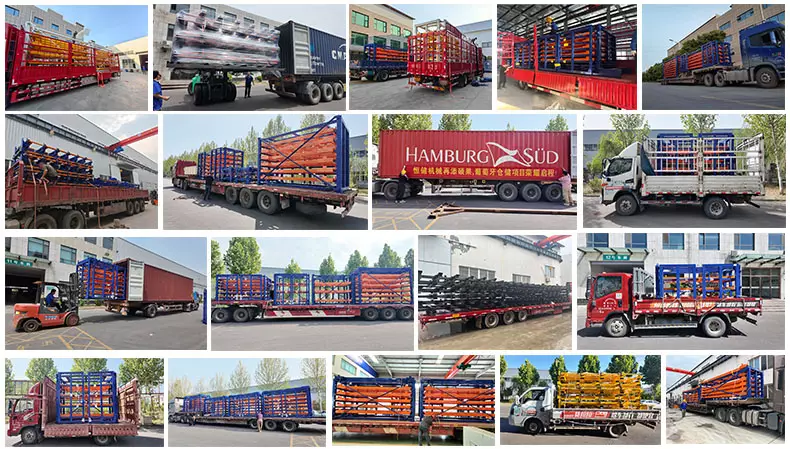
Yes. Our technicians can travel to your facility for installation and debugging, ensuring successful operation. We have served clients globally, including in the USA, South Korea, Russia, Qatar, Mexico, South Africa, Egypt, and Lebanon.
Q8: How do you ensure product quality?
Our quality assurance includes:
A team of over 40 technical engineers for professional debugging and support.
A dedicated quality control department compliant with ISO9001 standards.
CE certification for all exports.
Rigorous load testing before shipment to ensure structural safety and reliability.
Q9: Where is your factory located?
Our modern 10,000-square-meter manufacturing facility is located in Jiyang Industrial Park, Jinan, Shandong, China.
Q10: How can I evaluate your company’s capabilities?
We offer virtual video factory tours and warmly welcome on-site visits.
Q11: What does your company specialize in?
Jinan Constant Storage Machinery Manufacturing Co., Ltd. is a high-tech enterprise specializing in the R&D, production, sales, installation, and service of intelligent storage solutions. Our product range includes sheet material warehouses, drawer-style shelves, cantilever racks, servo manipulators, gantry loaders, and fully automated handling systems. Supported by a skilled technical team and advanced equipment, we are committed to delivering high-performance storage products and solutions to customers worldwide.
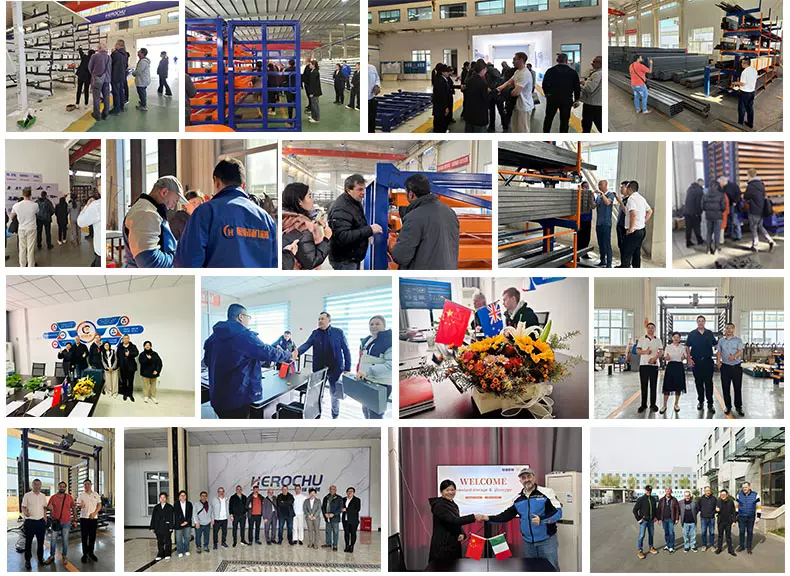
Customer visit
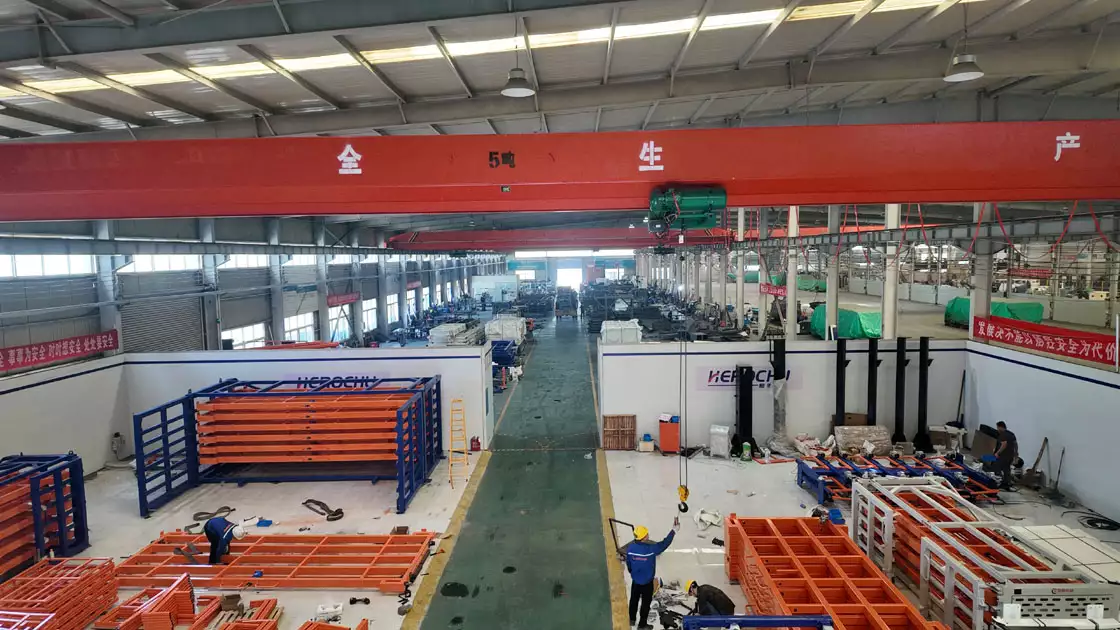
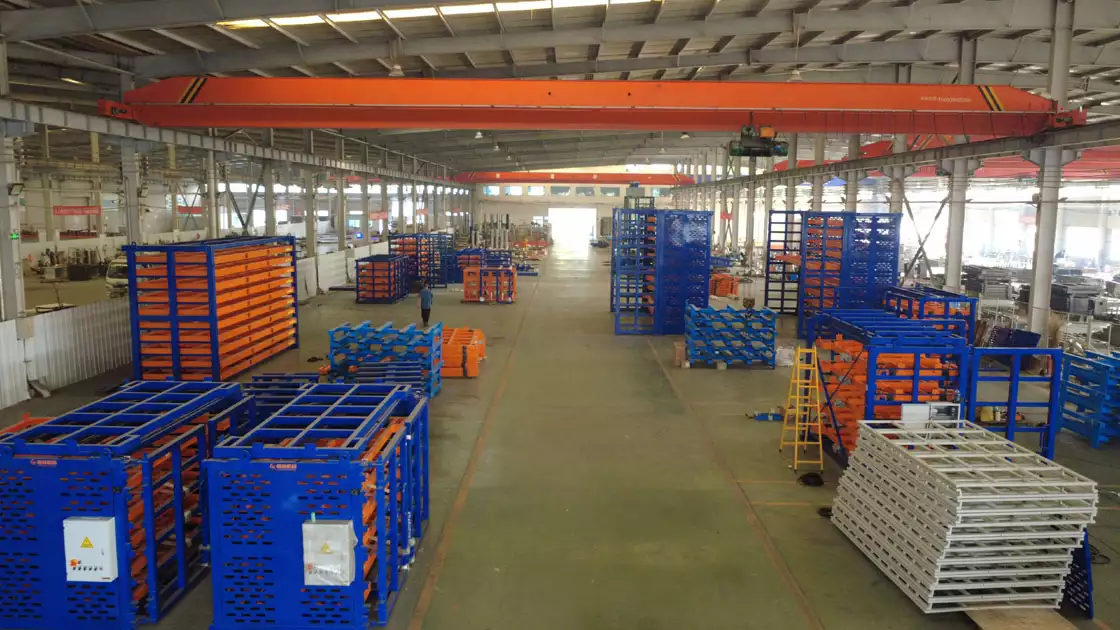
Herochu has always been adhering to the market-centric approach to meet customer requirements to the maximum extent, and the business philosophy of “creating brands with heart and gaining reputation with sincerity”. It provides customers with high-quality products and services with rigorous military quality, professionalism, and excellence, and has won unanimous praise in the Chinese aerospace, Chinese weapons, Chinese railways, automobile manufacturing, engineering machinery, non-ferrous metal titanium alloy and other industries.
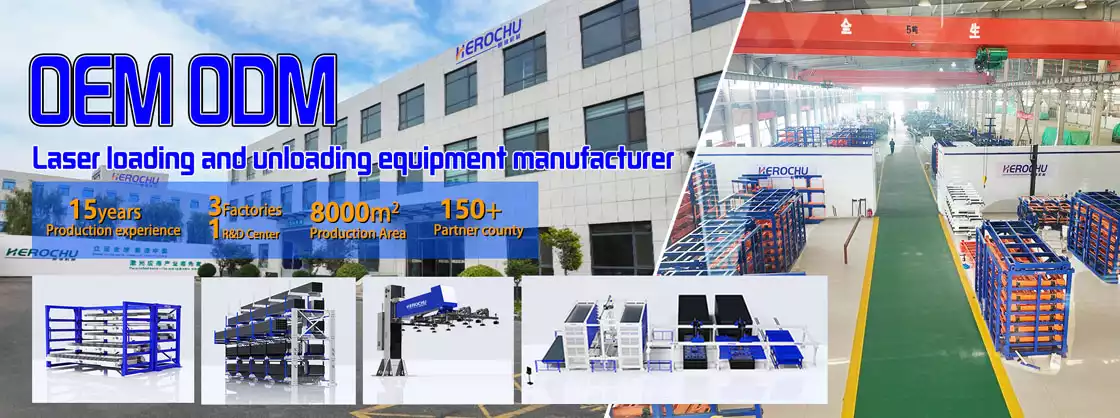
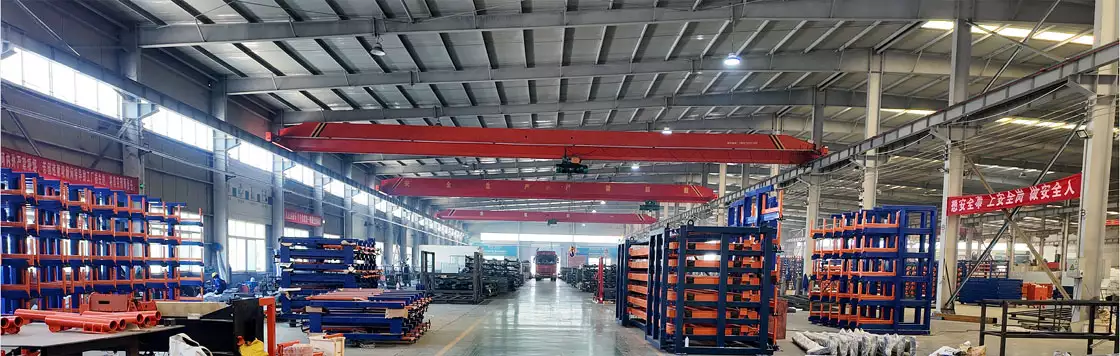
Factory

Hot Selling Machines
-
Automated Pipe Storage Systems
Automatic Storage Solutions for Metal Pipe and Profiles: The High-Capacity Standard
Read moreRated 0 out of 5 -
Automated Pipe Storage Systems
Auto-Classified Industrial Profile Storage System: Herochu Self-Optimizing Warehouse
Read moreRated 0 out of 5 -
Automated Pipe Storage Systems
Heavy Duty Smart Warehouse for Profiles: Herochu 500-Tonne High-Density Storage
Read moreRated 0 out of 5 -
Automated Pipe Storage Systems
Automated Adjustable Steel Pipes Racks: Herochu Multi-Layer Configurable Storage System
Read moreRated 0 out of 5 -
Automated Pipe Storage Systems
Automatic Storage Solutions for Metal Pipe: Herochu High-Density Intelligent Warehouse
Read moreRated 0 out of 5 -
Pipe Storage Rack
6-Meter Long Steel Pipe Storage Rack: Technical Specifications and Engineering
Read moreRated 0 out of 5 -
Heavy Duty Cantilever Racking Systems
High-Capacity Heavy Duty Shelf Factory Pipe Storage: Maximizing Space and Efficiency
Read moreRated 0 out of 5 -
Pipe Storage Rack
Heavy Duty Pipe Storage Rack: The Ultimate Solution for 6-Meter Long Steel Pipe Storage
Read moreRated 0 out of 5
Related products
-
Heavy Duty Cantilever Racking Systems
Vertical pipe Storage Rack | Heavy duty pipe storage rack
Read moreRated 0 out of 5
Product Categories