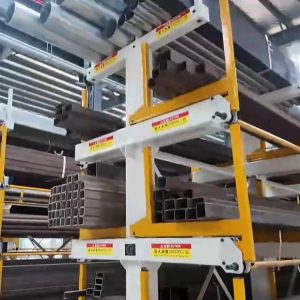
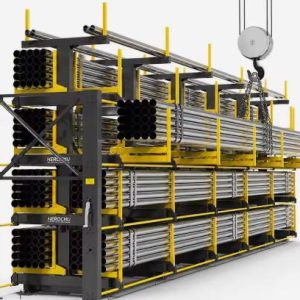
Mobile Telescopic Cantilever Rack System for Heavy Pipe & Profile Storage
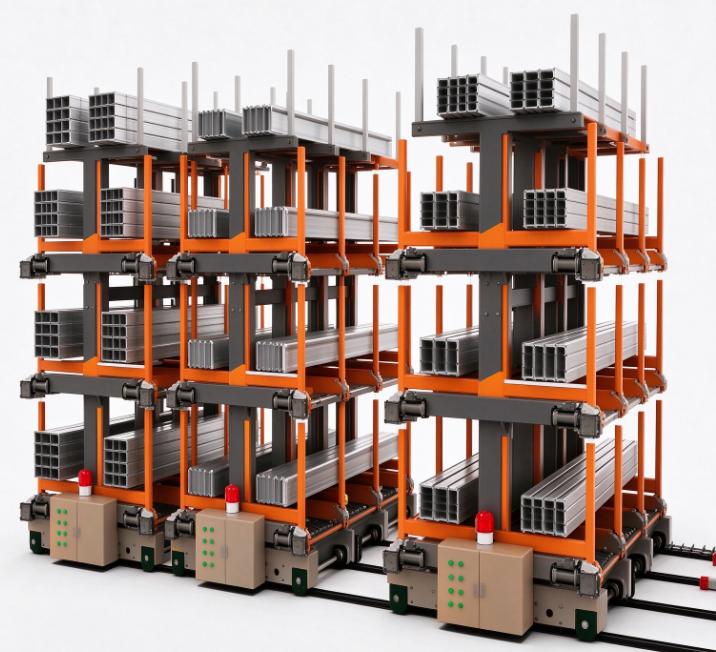
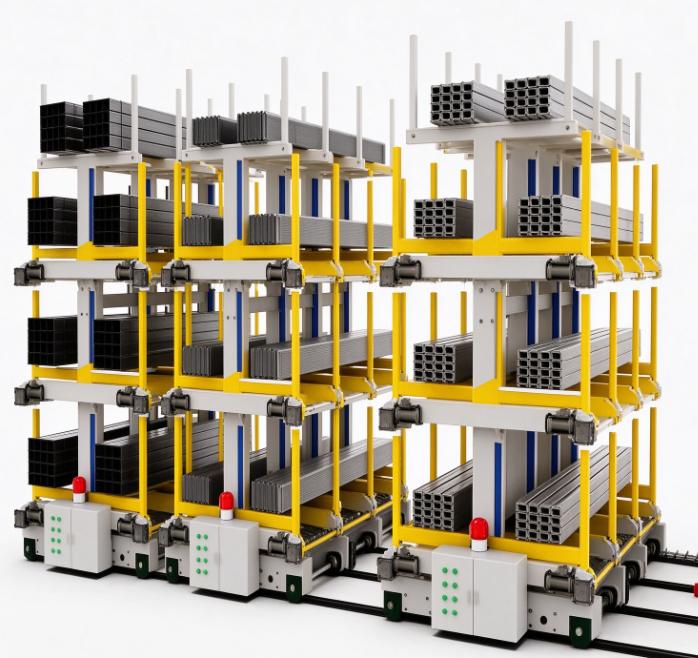
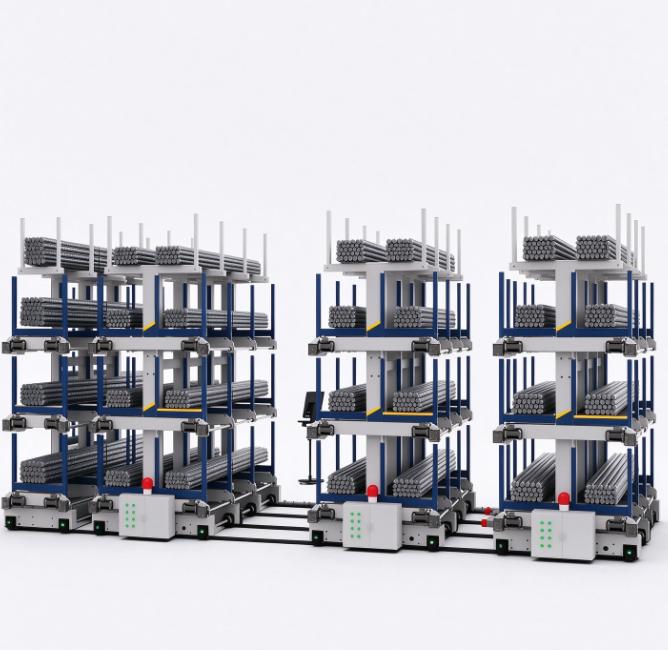
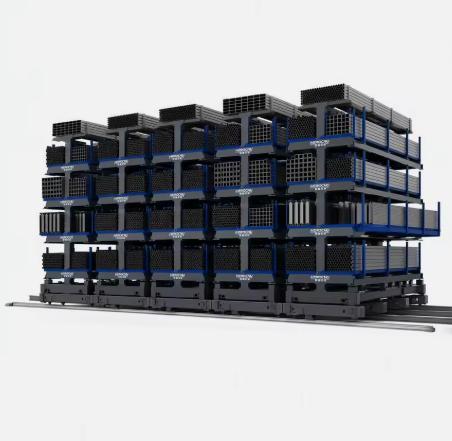
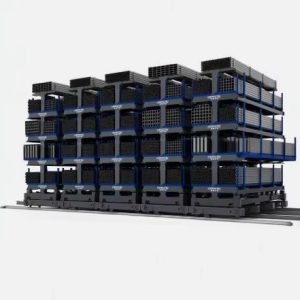
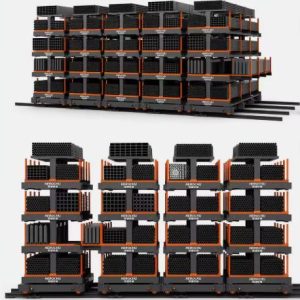
A mobile telescopic cantilever rack system combines two mechanisms that are often specified separately: the tower moves along a floor rail to open a shared aisle, and the storage level extends outward to present the load. For heavy pipe and profile storage, the combination is more than a convenience. It changes the structural requirements, the safety envelope, and the way the system is specified against a real inventory.
Mobile Telescopic Cantilever Rack System for Heavy Pipe & Profile Storage
A mobiletelescopiccantilever rack system combines two mechanisms that are often specified separately: the tower moves along a floor rail to open a shared aisle, and the storage level extends outward to present the load. For heavypipe and profile storage, the combination is more than a convenience. It changes the structural requirements, the safety envelope, and the way the system is specified against a real inventory.
Herochu’s HC-G series is dimensioned across 6,000 mm, 9,000 mm, and 12,000 mm material lengths, with 3,000 kg to 5,000 kg per level and customized layer and tower counts. This guide covers the specification decisions that determine whether a mobile telescopic system performs as intended—or becomes a high-densitylayout that operators work around rather than with.
Start With the Load, Not the Rack
Cantilever rack selection begins with the heaviest expected load, not the average load or the catalogue price. For heavy pipe and profiles, the load profile includes the material length, the bundle depth, the gross weight including bands and dunnage, and the number of supports the material needs to avoid sagging between arms.
The load per arm is calculated by dividing the total level weight by the number of supporting arms. But that arithmetic alone does not confirm capacity. A 2,400 kg load spread across three arms puts 800 kg on each arm; the arm rating at the specific arm length, the upright rating, and the bay rating still have to be checked. The lowest of those three governs the usable capacity.
For a mobile telescopic system, the load calculation also has to account for the telescopic mechanism. The extending level adds a moving interface between the load and the tower. That interface has its own rated capacity, and the published per-level load rating assumes the load is distributed within the telescopic level’s design envelope. A concentrated load near the tip of an extended arm produces a different bending moment than the same load distributed across the full arm length.
The Three-Capacity Rule in a Telescopic System
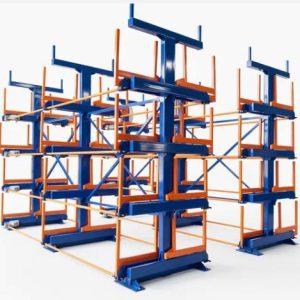
Every cantilever system has an arm rating, an upright rating, and a total bay rating. The arm rating is always quoted at a specific arm length, and the same arm profile at a longer extension will be rated below its shorter-length figure because the bending moment at the arm-to-column connection grows with the load’s distance from the column.
In a telescopic system, the effective arm length changes during the extension. The load rating of the level must therefore be understood at the extended position, not only at the retracted position. A buyer specifying a 5,000 kg per-level system should confirm that the rating applies to the level in its working extension and to the load distribution expected in service. If the supplier cannot state the arm, upright, and bay ratings separately, the specification is incomplete for a heavy-duty application.
Herochu specifies the HC-G6053EM-5 at 3,000 kg maximum load per level and the HC-G9055EM-7 and HC-G12065EM-7 at 5,000 kg per level, with layer counts customized to the installation. The company certifies its systems to CE, UE, and ISO 9001, which provides a documentation basis for the load ratings used in the layout.
Aisle Geometry and the Mobile Telescopic Advantage
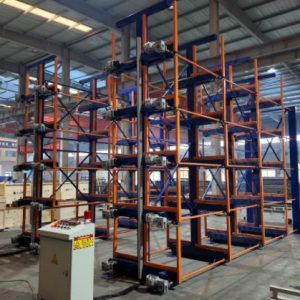
A mobile telescopic system does not eliminate the aisle; it makes the aisle a shared resource. The towers sit on floor-mounted rails with a shared picking aisle, and the motorized drive moves the required tower group into the open position. The telescopic level then extends into the aisle, so the operator does not have to reach deep into the rack.
This two-stage access affects aisle width planning. The aisle has to be wide enough for the tower group to travel and for the telescopic level to extend with the load in place, but it does not have to serve every tower as a permanent lane. Industry data on mobile cantilever configurations show space savings of up to 40% compared with conventional cantilever layouts, with capacity increases up to 80% in the same footprint.
The trade-off is that the aisle is a controlled zone. When a tower is moving or a telescopic level is extending, the aisle is occupied by the mechanism. Safety controls, interlocks, and operating procedures have to reflect that the aisle is not a passive space. Herochu’s electric series uses a dedicated motor per level and single-button control, with a Siemens PLC as the control platform. The PLC layer is where travel limits, extension limits, and interlock logic are implemented, so the control specification is as important as the structural specification.
Safety Factors for Heavy Pipe and Profile Storage
Heavy pipe and profiles concentrate load and raise the consequence of deflection. A cantilever arm is permitted to deflect under normal design load—typically up to arm length divided by 180—but residual deflection after the load is removed should not exceed 10% of the normal deflection under load. That residual-deflection check is a practical inspection point: an arm that stays bent after unloading has been overloaded or damaged, and its effective rating has changed even if it still looks functional.
A minimum safety factor of 20–25% above the calculated maximum arm load is a common baseline for static loads, and a factor of 1.5 is more appropriate where forklifts operate close to the rack. In a mobile telescopic system, the moving interface and the aisle activity make the higher factor the more defensible choice for heavy pipe and profiles.
Load placement follows the same principle as any cantilever system: heavier material on lower levels, lighter material above, and the load’s center of gravity kept as low as the layout allows. The telescopic mechanism does not change the tower’s stability requirements; it changes how the load is presented, not how the tower resists the overturning moment.
Frequently Asked Questions
What is the difference between a mobile cantilever rack and a mobile telescopic cantilever rack? A mobile cantilever rack moves the tower along a floor rail to open a shared aisle. A mobile telescopic cantilever rack adds a second movement: the storage level extends outward from the tower to present the load. The telescopic motion reduces the depth the operator has to reach and changes the load-rating conditions at the extended position.
How do I calculate the load per arm for heavy pipe? Divide the total weight of the level by the number of supporting arms, then apply a safety factor of at least 20–25% for static loads, or 1.5 where forklifts operate close to the rack. Confirm the arm rating at the actual arm length, the upright rating, and the bay rating; the lowest of the three governs the usable capacity.
Can a mobile telescopic cantilever rack handle 12-meter profiles? Yes, when the tower and arms are dimensioned for the length and weight. Herochu’s HC-G12065EM-7 is built for 12,000 mm material with 5,000 kg per level and a customized layer count. The telescopic extension presents the level to the handling equipment, and the arm spacing is set by the stiffness of the material, not by a standard bay dimension.
What control platform does Herochu use for its mobile cantilever systems? Herochu’s HC-G series uses Siemens PLC as the control method, with a dedicated motor per level and single-button control for independent tier extension. The PLC platform supports travel limits, extension interlocks, and integration with the facility’s operating procedures—capabilities that matter when the aisle is a shared, moving zone.
How does a mobile telescopic system compare with a static cantilever layout for heavy pipe? The mobile telescopic system uses a shared aisle instead of a permanent aisle per tower run, which recovers floor space and can increase capacity within the same footprint. The telescopic level reduces the reach required for retrieval. The static layout is simpler and may have a lower initial cost for a single tower group, but it locks the aisle into the floor plan permanently.
FAQ
Here are some frequently asked questions about our sheet metal racks and pipe storage solutions. We hope you find them helpful!
Q1: Can I request a custom size or color? Absolutely. We offer complimentary design services and deliver efficient, tailored solutions to meet your specific requirements.
Q2: Are you a manufacturer or a distributor? We are a direct manufacturer with over 15 years of industry experience and expertise.
Q3: Is there a minimum order quantity? No. We welcome orders of any size, starting from a single unit.
Q4: How can I get detailed product information? Click the “Get a Quote” button to receive product images, detailed specifications, and videos. Our team is always ready to assist.
Q5: How do I provide my storage rack requirements? Simply share the type, dimensions, and quantity of materials you plan to store, along with any other specific needs. We will develop a professional storage solution for you. Alternatively, leave your contact details for a personalized consultation.
Q6: Do you offer automated loading systems or robotic arms? Yes. We provide loading robotic arms and integrated loading/unloading systems tailored to your laser cutting machine’s table size and material handling method (e.g., board rack, exchange platform, or material warehouse). Contact us with your details for a customized proposal.
Q7: Do you provide on-site installation and debugging? Yes. Our technicians can travel to your facility for installation and debugging, ensuring successful operation. We have served clients globally, including in the USA, South Korea, Russia, Qatar, Mexico, South Africa, Egypt, and Lebanon.
Q8: How do you ensure product quality? Our quality assurance includes:
A team of over 40 technical engineers for professional debugging and support.
A dedicated quality control department compliant with ISO9001 standards.
CE certification for all exports.
Rigorous load testing before shipment to ensure structural safety and reliability.
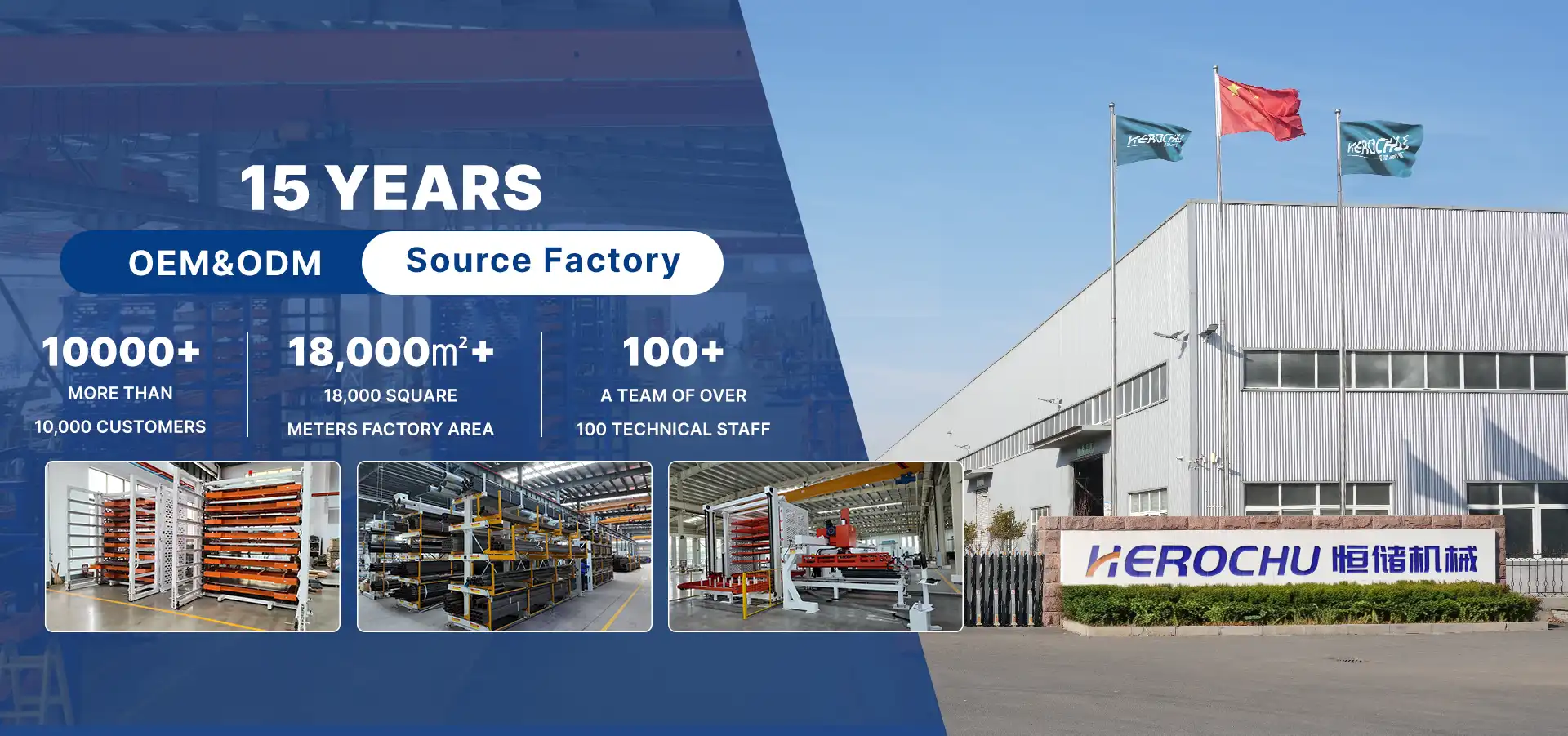
Q9: Where is your factory located? Our modern 10,000-square-meter manufacturing facility is located in Jiyang Industrial Park, Jinan, Shandong, China.
Q10: How can I evaluate your company’s capabilities? We offer virtual video factory tours and warmly welcome on-site visits.
Q11: What does your company specialize in? Jinan Constant Storage Machinery Manufacturing Co., Ltd. is a high-tech enterprise specializing in the R&D, production, sales, installation, and service of intelligent storage solutions. Our product range includes sheet material warehouses, drawer-style shelves, cantilever racks, servo manipulators, gantry loaders, and fully automated handling systems. Supported by a skilled technical team and advanced equipment, we are committed to delivering high-performance storage products and solutions to customers worldwide.
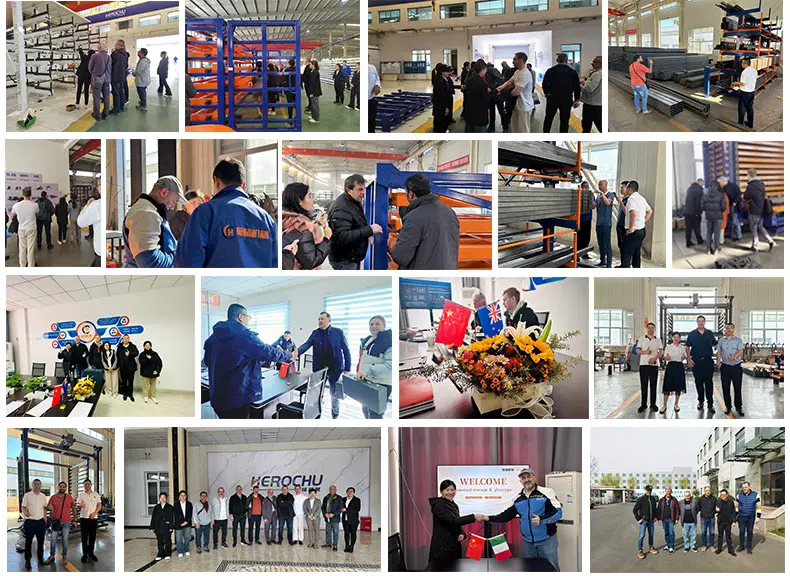
Customer visit
Herochu has always been adhering to the market-centric approach to meet customer requirements to the maximum extent, and the business philosophy of “creating brands with heart and gaining reputation with sincerity”. It provides customers with high-quality products and services with rigorous military quality, professionalism, and excellence, and has won unanimous praise in the Chinese aerospace, Chinese weapons, Chinese railways, automobile manufacturing, engineering machinery, non-ferrous metal titanium alloy and other industries.